
BuddhistCatholicContemplativeEvangelicalGeneral ChristianHinduJewishLatter-day SaintMuslimNew VisionsProgressive Christian
Beliefs
- Buddhist
- Catholic
- Contemplative
- Evangelical
- General Christian
- Hindu
- Jewish
- Latter-day Saint
- More Voices
- Muslim
- New Visions
- Pagan
- Progressive Christian
Topics
- Religion News
- Food and Religion
- Sports and Religion
- Religious Art
- Religious Music and Entertainment
- Religious Events
- History and Religion
- Style and Religion
- Politics and Religion
- Women in Religion
- Recreation Outdoors and Religion
- Business Finance and Religion
- Careers Workplace and Religion
- Education and Religion
- Family Parenting and Religion
- Health Fitness and Religion
- Home and Religion
- Relationships and Religion
- Technology and Religion
- Travel and Religion
Columnists
- Buddhist Columnists
- Business Finance and Religion Columnists
- Careers Workplace and Religion Columnists
- Catholic Columnists
- Contemplative Columnists
- Education and Religion Columnists
- Evangelists Columnists
- Family Parenting and Religion Columnists
- General Christian Columnists
- Health Fitness and Religion Columnists
- Hindu Columnists
- History and Religion Columnists
- Home and Religion Columnists
- Jewish Columnists
- More Voices Columnists
- Latter Day Columnists
- Muslim Columnists
- New Visions Columnists
- Nonreligious Columnists
- Pagan Columnists
- Politics and Religion Columnists
- Progressive Columnists
- Recreation Outdoors and Religion Columnists
- Relationships and Religion Columnists
- Religion News Columnists
- Religious Art Columnists
- Religious Events Columnists
- Religious Music and Entertainment Columnists
- Sports and Religion Columnists
- Style and Religion Columnists
- Technology and Religion Columnists
- Travel and Religion Columnists
- Women in Religion Columnists
Resource Library
- 2026 Calendar
- Library of World Religions
- The 100 Most Holy Places on Earth
- Patheos Answers
- Podcasts
- Videos
- Faith Leaders Database
- Anglican Episcopalian
- Bahai
- Baptist
- Buddhism
- Christianity
- Confucianism
- Eastern Orthodoxy
- Hinduism
- Holiness and Pentecostal
- ISKCON
- Islam
- Judaism
- Lutheran
- Methodist
- The Church of Jesus Christ of Latter-day Saints
- New Age
- Paganism
- Presbytarian and Reformed
- Protestantism
- Religion Behind the Scenes
- Roman Catholic
- Scientology
- Shia Islam
- Sikhism
- Sufism
- Sunni Islam
- Taoism
- Zen
- See all religions
Research Tools
 Ad-Free & Subscriber Log-In Subscription Support
Ad-Free & Subscriber Log-In Subscription Support
Follow Patheos 

- Trending:
- Forgiveness
- |
- Marriage
- |
- Consciousness
- |
- Death Penalty
- |
- Election
- |
- Halloween
 One Degree to Another
- Home
- Evangelical
- The Best Quotes from The Prodigal Prophet
The Best Quotes from The Prodigal Prophet
Last updated on: October 4, 2018 at 10:49 am by Scott Slayton
The Best Quotes from The Prodigal Prophet 2018-10-04T10:49:34-05:00 Scott Slayton
Patheos Explore the world's faith through different perspectives on religion and spirituality! Patheos has the views of the prevalent religions and spiritualities of the world.
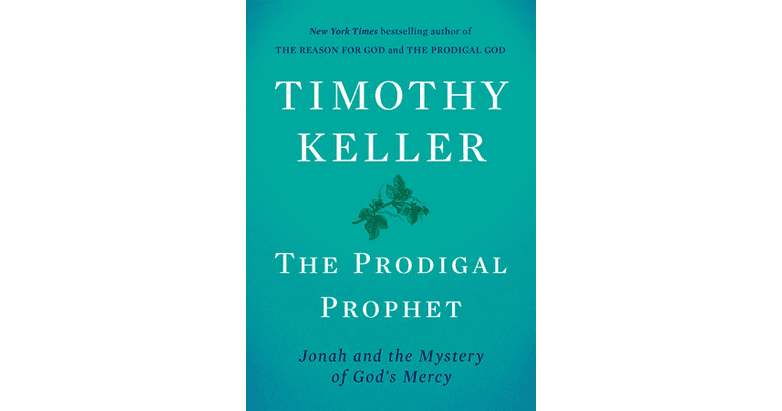
This week, Tim Keller released his latest book, The Prodigal Prophet. In it, he shows the radical grace of God that saved a city from destruction, frustrated a prophet, and changes our lives. In the first half of the book, he walks through the text of Jonah, showing the structure and meaning of the text. Then, he goes through the book a second time to help us understand how the message of Jonah should change our relationship to God’s word, God’s world, and God’s grace.
As Keller always does, he demonstrates how the message of Jonah gives us a greater understanding of the work of Jesus Christ. He does this both by delving into the heart of what Jonah did and showing it how it points Christ and by showing how all of Jonah’s failings point to our great need for Jesus. In addition, in his application he probes our hearts, causing us to see the depth of our sin and idolatry, but never losing sight of the grace of God which both forgives our sin and does the slow work of changing us at the core of who we are.
Here are the best quotes from The Prodigal Prophet.
“Despite the literary sophistication of the text, many modern readers still dismiss the work because the text tells us that Jonah was saved from the storm when swallowed by a “great fish” (Jonah 1:17). How you respond to this will depend on how you read the rest of the Bible. If you accept the existence of God and the resurrection of Christ (a far greater miracle), then there is nothing particularly difficult about reading Jonah literally…The fish is mentioned only in two brief verses and there are no descriptive details. It is reported more as a simple fact of what happened. So let’s not get distracted by the fish.” (3-4)
“Many of the students have noticed that in the first half Jonah plays “the prodigal son” of Jesus’s famous parable (Luke 15:11-24), who ran from his father. In the second half of the book, however, Jonah is like the “older brother” (Luke 15:25-32), who obeys God his father but berates him for his graciousness to repentant sinners.” (6-7)
“The Bible does not say that every difficulty is the result of sin–but it does teach that every sin will bring you into difficulty.” (24)
“The results of sin are often more like the physical response you have to a debilitating dose of radiation. You don’t suddenly feel pain the moment you are exposed. It isn’t like a bullet or sword tearing into you. You feel quite normal. Only later do you experience symptoms, but by then it is too late.” (26)
“Most often the storms of life come upon us not as the consequence of a particular sin but as the unavoidable consequence of living in a fallen, troubled world.” (27)
“As hard as it is to discern God’s loving and wise purposes behind many of our trials and difficulties, it would be even more hopeless to imagine that he has no control over them or that our sufferings are random and meaningless.” (30)
“We are also shown that the way to ‘love’ our neighbors is not merely through sentiment but through costly, sacrificial, practical action to meet material and economic needs.” (42)
“Jonah refused God’s mission largely because he did not want to extend mercy to pagans.” (59)
“Often the first step in coming to one’s senses spiritually is when we finally start thinking of somebody–anybody–other than ourselves.” (60)
“When Jesus speaks of ‘the sign of Jonah’ and calls himself ‘greater than Jonah’ (Matthew 12:41), he means that, as Jonah was sacrificed to save the sailors, so he would die to save us. Of course, the differences between Jonah and Jesus are many and profound. Jonah was cast out for his own sins, but that was not true of Jesus (Hebrews 4:15). Jonah only came near to death and went under the water, while Jesus actually died and came under the weight of our sin and punishment.” (63)
“When Jesus Christ first came into this world, bearing our humanity, and later went to the cross, bearing our sin, he became the greatest example and fulfillment of the pattern of true love–substitutionary sacrifice.” (64)
“A God who substitutes himself for us and suffers so that we may go free is a God you can trust. Jonah mistrusted the goodness of God, but he didn’t know about the cross. What is our excuse?” (66)
“With 20/20 hindsight, we can see that the most important lessons we have learned in life are the result of God’s severe mercies. They are events that were difficult or even excruciating at the time but later came to yield more good in our lives than we could have foreseen.” (70)
“No human heart will dare to believe in such free, costly grace unless it is the only hope.” (79)
“Salvation belongs to God alone, to no one else. If someone is saved, it is wholly God’s doing. It is not a matter of God saving you partly and you saving yourself partly. No. God saves us. We do not and cannot save ourselves. That’s the gospel.” (80)
“God has created the world so that cruelty, greed, and exploitation have natural, disintegrative consequences that are a manifestation of his anger toward evil.” (94)
“Some years ago I was preaching on this passage in Jonah, and after the sermon a listener expressed his displeasure. He did not feel I should have criticized Jonah. ‘Jonah was just a good patriot,’ he told me. ‘We should all be patriots.’ I answered him that while love of country and your people is a good thing, like any other love, it can become inordinate. If love for your country’s interests leads you to exploit people, or in this case, to root for an entire class of people to be spiritually lost, then you love your nation more than God. That is idolatry, by any definition.” (103)
“Jesus is the prophet Jonah should have been. Yet, of course, he is infinitely more than that. Jesus did not merely weep for us; he died for us. Jesus went outside the city, hoping to witness its condemnation, but Jesus went outside the city to die on a cross to accomplish its salvation.” (124)
“On the cross the justice of God exacted full punishment for sin and in the same moment provided a free salvation to all who believe.” (131)
“If you want to understand your own behavior, you must understand that all sin against God is grounded in a refusal to believe that God is more dedicated to our good, and more aware of what that is, than we are. We distrust God because we assume he is not truly for us, that if we give him complete control, we will be miserable.” (137)
“Sin always begins with the character assassination of God. We believe that God has put us in a world of delights but has determined that he will not give them to us if we obey him.” (138)
“Individual Christians can and should be involved politically, as a way of loving our neighbors.” (164)
“The gospel gives us the ability and the resources to love people who reject both our beliefs and us personally.” (169)
“If you have a new relationship with God, it must affect all your other relationships.” (196)
“Unless we see what it cost him to save us, we won’t be glad to obey and serve him, regardless of the cost to us.” (206)
“The only thing that releases us from the grip of idols is a heart grasp of the radical grace of God.” (218)
“In ourselves we are lost, flawed, and undeserving, but in Christ we are completely accepted and delighted in by the one in the universe we adore the most.” (220)
“The only way we could know these things is if Jonah told others. What kind of man would let the world see what a fool he was? Only someone who had become joyfully secure in God’s love. Only someone who believed that he was simultaneously sinful but completely accepted. In short, someone who has found in the gospel of grace the very power of God (Romans 1:16). If it can change Jonah, it can change anyone.” (228)
You can find more from “The Best Quotes” series here.
Related Posts:
“The Best Quotes from The Gospel“
“The Best Quotes from Remember Death“
Previous Post

October 1, 2018
How to Stop Spreading Lies on the Internet
Next Post

October 9, 2018 What are the Marks of Genuine Friendship?
Browse Our Archives
Select a Category Bible Books Church Life Marriage Parenting Photos The Ministry Uncategorized
Select a Month August 2021 July 2021 June 2021 February 2021 December 2020 November 2020 October 2020 March 2020 July 2019 April 2019 December 2018 November 2018 October 2018 September 2018 August 2018 July 2018 June 2018 May 2018 April 2018 March 2018 February 2018 January 2018 December 2017 November 2017 October 2017 September 2017 August 2017 July 2017 June 2017 May 2017 April 2017 March 2017 February 2017 January 2017 December 2016 November 2016 October 2016 September 2016 August 2016 July 2016 June 2016 May 2016 April 2016 March 2016 February 2016 January 2016 December 2015 November 2015 October 2015 September 2015 August 2015 July 2015 May 2015 April 2015 March 2015 February 2015 January 2015 December 2014 November 2014 October 2014 September 2014 August 2014 July 2014 June 2014 May 2014 April 2014 March 2014 February 2014 January 2014 December 2013 November 2013 October 2013 September 2013 August 2013 July 2013
Follow Us!
TAKE THE
Religious Wisdom Quiz
What did the Israelites carry through the wilderness that symbolized God's presence?
Select your answer to see how you score.
Ark of the Covenant Scroll of Moses Burning torch Golden Calf
Related posts from One Degree to Another

The Best Quotes from Gentle and Lowly
The Best Quotes from The Possibility of Prayer

The Best Quotes from Your Future Self Will...

TRENDING AT PATHEOS Evangelical

The REST of Your Life: A Creative Wrestles...
This week I had a conversation with a good friend from church....

How the author of the world's best hymn...
I've been working with John Newton for a while now. This makes...

Long before this Lectio Divina, Psalm 130 - the song - started...

What About the Trees? Another Living Parable
After I finished writing the last article about falling leaves as a...

Why Classical Education Is a Conversation, Not a...
Come and Read: Joy in Classical Education When I was a little...

Cornell University has received a great deal of negative publicity and intense...
view all Evangelical blogs
Ad-Free & Subscriber Log-In Subscription Support
- About Us
- 2026 Calendar
- Videos
- Podcasts
- Library of World Religions
- Faith In Media Tracker
- Advertise With Us
- Write for Us
- Privacy Policy
- Terms of Service
- Do Not Sell My Data
- Contact Us
- Radiant Digital
- Manage Newsletter Subscriptions
- Unsubscribe From Notifications
- Sitemap
Copyright 2008-2026, Patheos. All rights reserved.
Subscription Support Ad-Free & Subscriber Log-In
Follow Patheos