
BuddhistCatholicContemplativeEvangelicalGeneral ChristianHinduJewishLatter-day SaintMuslimNew VisionsProgressive Christian
Beliefs
- Buddhist
- Catholic
- Contemplative
- Evangelical
- General Christian
- Hindu
- Jewish
- Latter-day Saint
- More Voices
- Muslim
- New Visions
- Pagan
- Progressive Christian
Topics
- Religion News
- Food and Religion
- Sports and Religion
- Religious Art
- Religious Music and Entertainment
- Religious Events
- History and Religion
- Style and Religion
- Politics and Religion
- Women in Religion
- Recreation Outdoors and Religion
- Business Finance and Religion
- Careers Workplace and Religion
- Education and Religion
- Family Parenting and Religion
- Health Fitness and Religion
- Home and Religion
- Relationships and Religion
- Technology and Religion
- Travel and Religion
Columnists
- Buddhist Columnists
- Business Finance and Religion Columnists
- Careers Workplace and Religion Columnists
- Catholic Columnists
- Contemplative Columnists
- Education and Religion Columnists
- Evangelists Columnists
- Family Parenting and Religion Columnists
- General Christian Columnists
- Health Fitness and Religion Columnists
- Hindu Columnists
- History and Religion Columnists
- Home and Religion Columnists
- Jewish Columnists
- More Voices Columnists
- Latter Day Columnists
- Muslim Columnists
- New Visions Columnists
- Nonreligious Columnists
- Pagan Columnists
- Politics and Religion Columnists
- Progressive Columnists
- Recreation Outdoors and Religion Columnists
- Relationships and Religion Columnists
- Religion News Columnists
- Religious Art Columnists
- Religious Events Columnists
- Religious Music and Entertainment Columnists
- Sports and Religion Columnists
- Style and Religion Columnists
- Technology and Religion Columnists
- Travel and Religion Columnists
- Women in Religion Columnists
Resource Library
- 2026 Calendar
- Library of World Religions
- The 100 Most Holy Places on Earth
- Patheos Answers
- Podcasts
- Videos
- Faith Leaders Database
- Anglican Episcopalian
- Bahai
- Baptist
- Buddhism
- Christianity
- Confucianism
- Eastern Orthodoxy
- Hinduism
- Holiness and Pentecostal
- ISKCON
- Islam
- Judaism
- Lutheran
- Methodist
- The Church of Jesus Christ of Latter-day Saints
- New Age
- Paganism
- Presbytarian and Reformed
- Protestantism
- Religion Behind the Scenes
- Roman Catholic
- Scientology
- Shia Islam
- Sikhism
- Sufism
- Sunni Islam
- Taoism
- Zen
- See all religions
Research Tools
 Ad-Free & Subscriber Log-In Subscription Support
Ad-Free & Subscriber Log-In Subscription Support
Follow Patheos 

- Trending:
- Forgiveness
- |
- Marriage
- |
- Consciousness
- |
- Death Penalty
- |
- Election
- |
- Halloween
 One Degree to Another
- Home
- Evangelical
- How to Remember the Bible Verses You Memorize
How to Remember the Bible Verses You Memorize
Last updated on: August 8, 2018 at 11:11 am by Scott Slayton
How to Remember the Bible Verses You Memorize 2018-08-08T11:11:26-05:00 Scott Slayton
Patheos Explore the world's faith through different perspectives on religion and spirituality! Patheos has the views of the prevalent religions and spiritualities of the world.

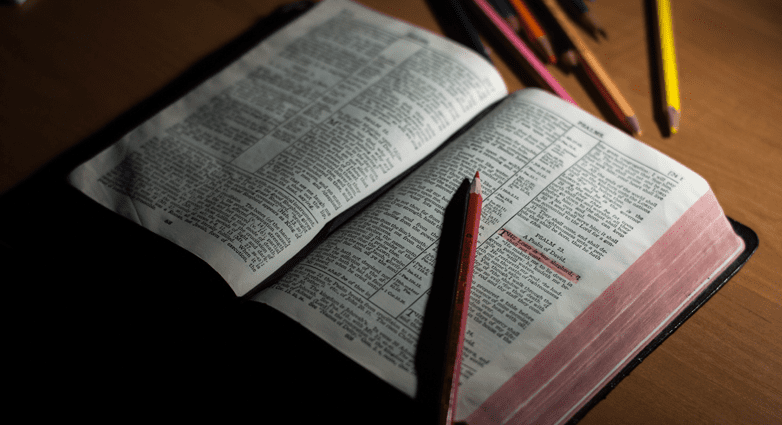
John-Mark Smith/Pexels
The discipline of memorizing Bible verses pays great dividends in the life of a Christian. Having Scripture stored up in our hearts helps us to remember God’s promises in tough times, flee from sin in moments of temptation, possess greater confidence in sharing the Gospel, and give fresh words of encouragement to struggling Christians.
The problem for us is that while memorizing a verse presents a challenge, remembering it in three months is a great difficulty. We often find ourselves wanting to quote something that we spent two days memorizing but cannot remember the exact wording of the verse or the precise reference to save our lives.
How can we remember the Bible verses that we memorized a week, a month, or a year ago?
Memorize Bible Verses for the Long Haul
We often fail to learn Bible verses well the first time we memorize them. We can’t remember them a month later because we never really got them into our minds and hearts the first time.
When you memorize a Bible verse, make sure that you are learning the precise wording of the verse and the exact reference. Do not be content with forgetting whether the verse says “so that” or “in order to.” The scholars who worked on the translation that you use made the choices they did for good reasons, so learn it as it is printed on the page.
In addition, think of memorizing Bible verses as a multi-day task. Too often, when we memorize a Bible verse, we work on it for one day, say it somewhat correctly, and then move on to the next verse. If you struggle to remember a verse a month after you memorized it, work on memorizing it for three days instead of just one day. The first day, read it repeatedly until you have the flow of the verse. On the second day, read the verse out loud several times again, then cover up the verse and say it at least five times, only looking at it to make sure that you said it correctly. Use the last day to read the verse out loud again. Then say the verse multiple times without looking at it. If you memorized it correctly, move on to the next verse you want to learn. If not, work on it one more day to make sure that you have it down.
Memorize Bible Verses in Their Context
Often our Scripture memory consists of individual verses we learned from many different books of the Bible. We struggle to remember what they say because we plucked them out of their context and we have no frame of reference for remembering what the verse said.
One tactic that will help you down the road is memorizing the entire paragraph where the verse you want to memorize is found. For example, let’s say you want to memorize Romans 3:23. “For all have sinned and fall short of the glory of God.” That seems easy enough to remember, but our minds are clouded with lots of information. So, in order to better recall the verse in the future, memorize Romans 3:21-26 instead of just Romans 3:23.
This approach has practical and theological advantages. Practically, you get into the flow of how Paul wrote the letter and this always helps recall move more smoothly. You start with the first few words of a paragraph and the rest has a way of coming back to you as you pick up momentum. Theologically, this method helps you to keep Bible verses in their proper theological context. You won’t quote Philippians 4:13 to get your team psyched up for the baseball game when you remember that Paul was initially speaking of his learning to be content in whatever position he found himself.
Review Bible Verses on a Schedule
In order to remember the Bible verses that you memorize, you must get on a review schedule. Ideally, you would spend a few days memorizing a verse and then the next couple of days reviewing it. Then, let it sit for a couple of days and review it again. After that, review it next week, the in two weeks, and then in a month. Determine the maximum amount of time that you can allow between reviews to keep the verse fresh in your mind. (For me, it’s three months. And honestly, this may be too long. I worked back through some verses I had not reviewed in three months and struggled with them mightily.)
Here is one area where our smartphones can be an aid to our devotional lives, as there are several helpful Scripture memory apps on the market. Both Fighter Verses and Verses have great interfaces and use multiple types of interactive quizzes to memorize Scripture. (Fighter Verses also has music and other resources to aid in memory.) My personal favorite, though, is ScriptureTyper. For me, ScritptureTyper allows me to keep verses in collections the way I prefer to have them and puts verses on a review schedule. You can manually set the maximum time allowed between reviews.
Put Bible Verses You Have Forgotten in a “Microwave”
Using a review schedule to keep our Scripture memory fresh will reveal verses that have slipped from your grasp. You may stumble through portions of the verse or have forgotten it completely. When this happens, you need to pull this verse out and treat it like you are memorizing it for the first time. Think of it as sticking leftovers in the microwave. (I borrowed this terminology from my father-in-law, Mark McCullough, who is the pastor at First Baptist Church in Frisco City, Alabama.)
The first day you put the verse in the microwave, read it out loud multiple times and then cover it up to try to say it from memory. On the second day, read it out loud a few times and say it from memory again. The final day should consist of ensuring you have it fully memorized. After you have done this, review it once a week for the next month to ensure you have it down before putting it on a less consistent review schedule.
I know this sounds like a lot of effort. It is, and it is worth every second to have God’s word stored up in our hearts.
Related Posts:
“Eight Passages Every Christian Should Memorize“
“The First 15 Bible Verses a Christian Should Memorize“
For Further Reading:
Spiritual Disciplines for the Christian Life by Donald Whitney
His Word in My Heart by Janet Pope
Previous Post
May 17, 2017
The Best Quotes from Reset
Next Post

June 28, 2017 Why I Need My Friends to Judge Me
Browse Our Archives
Select a Category Bible Books Church Life Marriage Parenting Photos The Ministry Uncategorized
Select a Month August 2021 July 2021 June 2021 February 2021 December 2020 November 2020 October 2020 March 2020 July 2019 April 2019 December 2018 November 2018 October 2018 September 2018 August 2018 July 2018 June 2018 May 2018 April 2018 March 2018 February 2018 January 2018 December 2017 November 2017 October 2017 September 2017 August 2017 July 2017 June 2017 May 2017 April 2017 March 2017 February 2017 January 2017 December 2016 November 2016 October 2016 September 2016 August 2016 July 2016 June 2016 May 2016 April 2016 March 2016 February 2016 January 2016 December 2015 November 2015 October 2015 September 2015 August 2015 July 2015 May 2015 April 2015 March 2015 February 2015 January 2015 December 2014 November 2014 October 2014 September 2014 August 2014 July 2014 June 2014 May 2014 April 2014 March 2014 February 2014 January 2014 December 2013 November 2013 October 2013 September 2013 August 2013 July 2013
Follow Us!
TAKE THE
Religious Wisdom Quiz
Which prophet was a shepherd and a sycamore-fig farmer?
Select your answer to see how you score.
Amos Micah Daniel Joel
Related posts from One Degree to Another

The Lord is Near in Our Pain- 1...

Why I Switched from a Digital Bible to...

The First 15 Verses that Every Christian Should...

TRENDING AT PATHEOS Evangelical

The REST of Your Life: A Creative Wrestles...
This week I had a conversation with a good friend from church....

How the author of the world's best hymn...
I've been working with John Newton for a while now. This makes...

Long before this Lectio Divina, Psalm 130 - the song - started...

What About the Trees? Another Living Parable
After I finished writing the last article about falling leaves as a...

Why Classical Education Is a Conversation, Not a...
Come and Read: Joy in Classical Education When I was a little...

Cornell University has received a great deal of negative publicity and intense...
view all Evangelical blogs
Ad-Free & Subscriber Log-In Subscription Support
- About Us
- 2026 Calendar
- Videos
- Podcasts
- Library of World Religions
- Faith In Media Tracker
- Advertise With Us
- Write for Us
- Privacy Policy
- Terms of Service
- Do Not Sell My Data
- Contact Us
- Radiant Digital
- Manage Newsletter Subscriptions
- Unsubscribe From Notifications
- Sitemap
Copyright 2008-2026, Patheos. All rights reserved.
Subscription Support Ad-Free & Subscriber Log-In
Follow Patheos