
BuddhistCatholicContemplativeEvangelicalGeneral ChristianHinduJewishLatter-day SaintMuslimNew VisionsProgressive Christian
Beliefs
- Buddhist
- Catholic
- Contemplative
- Evangelical
- General Christian
- Hindu
- Jewish
- Latter-day Saint
- More Voices
- Muslim
- New Visions
- Pagan
- Progressive Christian
Topics
- Religion News
- Food and Religion
- Sports and Religion
- Religious Art
- Religious Music and Entertainment
- Religious Events
- History and Religion
- Style and Religion
- Politics and Religion
- Women in Religion
- Recreation Outdoors and Religion
- Business Finance and Religion
- Careers Workplace and Religion
- Education and Religion
- Family Parenting and Religion
- Health Fitness and Religion
- Home and Religion
- Relationships and Religion
- Technology and Religion
- Travel and Religion
Columnists
- Buddhist Columnists
- Business Finance and Religion Columnists
- Careers Workplace and Religion Columnists
- Catholic Columnists
- Contemplative Columnists
- Education and Religion Columnists
- Evangelists Columnists
- Family Parenting and Religion Columnists
- General Christian Columnists
- Health Fitness and Religion Columnists
- Hindu Columnists
- History and Religion Columnists
- Home and Religion Columnists
- Jewish Columnists
- More Voices Columnists
- Latter Day Columnists
- Muslim Columnists
- New Visions Columnists
- Nonreligious Columnists
- Pagan Columnists
- Politics and Religion Columnists
- Progressive Columnists
- Recreation Outdoors and Religion Columnists
- Relationships and Religion Columnists
- Religion News Columnists
- Religious Art Columnists
- Religious Events Columnists
- Religious Music and Entertainment Columnists
- Sports and Religion Columnists
- Style and Religion Columnists
- Technology and Religion Columnists
- Travel and Religion Columnists
- Women in Religion Columnists
Resource Library
- 2026 Calendar
- Library of World Religions
- The 100 Most Holy Places on Earth
- Patheos Answers
- Podcasts
- Videos
- Faith Leaders Database
- Anglican Episcopalian
- Bahai
- Baptist
- Buddhism
- Christianity
- Confucianism
- Eastern Orthodoxy
- Hinduism
- Holiness and Pentecostal
- ISKCON
- Islam
- Judaism
- Lutheran
- Methodist
- The Church of Jesus Christ of Latter-day Saints
- New Age
- Paganism
- Presbytarian and Reformed
- Protestantism
- Religion Behind the Scenes
- Roman Catholic
- Scientology
- Shia Islam
- Sikhism
- Sufism
- Sunni Islam
- Taoism
- Zen
- See all religions
Research Tools
 Ad-Free & Subscriber Log-In Subscription Support
Ad-Free & Subscriber Log-In Subscription Support
Follow Patheos 

- Trending:
- Forgiveness
- |
- Marriage
- |
- Consciousness
- |
- Death Penalty
- |
- Election
- |
- Halloween
 One Degree to Another
- Home
- Evangelical
- Choosing Courage over Outrage
Choosing Courage over Outrage
Last updated on: October 10, 2016 at 11:39 pm by Scott Slayton
Choosing Courage over Outrage 2016-10-10T23:39:11-05:00 Scott Slayton
Patheos Explore the world's faith through different perspectives on religion and spirituality! Patheos has the views of the prevalent religions and spiritualities of the world.
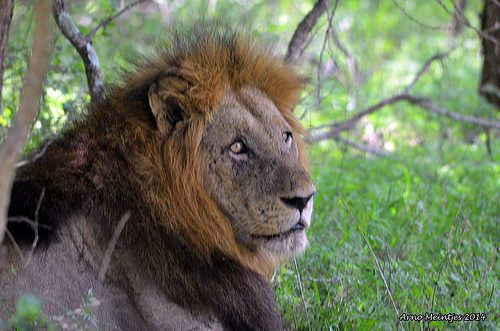
photo credit: Arno Meintjes Wildlife DSC_1030 via photopin (license)
You can tell a lot about a culture by what they put in “scare quotes.” This year I have seen “conscience” and “religious liberty” more times than I can count. What’s interesting about these two particular phrases is that I’ve seen my more liberal friends using “religious liberty” and my conservative friends using “conscience.” In both cases, they have seen people marching outside of the mainstream and they use the scare quotes to mock the reasons they give for not falling into line with everyone else.
We don’t admire courage anymore; at least not real courage. In our culture, the quiet, settled resolve to do the right thing in the face of overwhelming opposition has been drowned in a sea of manufactured outrage. Outrage should not be confused with courage, even though it often tries to dress in courage’s clothing. Outrage bullies the courageous into silence. Courage quietly does the right thing and invites others to join in on the journey. Outrage demands that everyone fall in line or face its wrath. Courage points people in the right direction but doesn’t seek to impose its will on them. Outrage costs nothing because it joins a chorus of voices. Courage stands alone and knows that no price can be paid for a clear conscience. Outrage only lasts until the newest controversy comes along. Courage perseveres even when everyone else has moved on to other things.
In Proverbs 28:1, Solomon says that “The wicked flee when no one is pursuing, but the righteous are bold as a lion.” In this short Proverb Solomon contrasts the response of the righteous and the wicked in the face of adversity. The wicked run away from trouble even when no one is pursuing. Following the path of least resistance, they run headlong into the easy way. In our culture, getting outraged with the crowd is the easy way. Running away from facing real problems and joining in the deafening chorus addressing the latest manufactured crisis is the path of least resistance. Sending out a strongly worded tweet and signing online petitions feel like doing something courageous, but they are a cheap alternative.
“The righteous are bold as a lion.” There’s something interesting I’ve noticed about the lions at the zoo. We go several times a year, and I can count on one hand the times I have heard the lion roar. Often they are lying on a rock or quietly prowl around their cage, but I remember the times I have heard the roar because I hear the power behind it. The lion is quiet and majestic, but he means business when he bears his fangs and never backs down from a fight.
In the same way, the truly courageous do not have to make pretensions at courage. They possess it without pomp or circumstance. They have the willingness to take a principled stand without backing down, but they don’t go around picking fights. Courage doesn’t set out to be recognized or win acclaim, but it jumps into action when the right time comes.
The difference between the righteous and the wicked is not that one lives in fear and the other lives without it. They both live with a fear, but they fear different things and their fear has a different source. Solomon closed out the first paragraph of Proverbs by saying, “the fear of the Lord is the beginning of knowledge.” The righteous person fears the Lord. He lives in a reverent awe of who God is and recognizes that every single step is lived before his ever-present eye.
Since the righteous person fears God, he has nothing else to fear. Since fearing the Lord is rooted in his sovereignty and power, the wise person knows there is nothing in the world that bless in the way that they Lord blesses or bring judgment in the way he brings judgment. The wise person acts with courage in the face of opposition because he knows whatever man may do to him pales in comparison to the devastating effects that would follow from being unfaithful to the Lord, but he also knows the blessings of obeying the Lord are infinitely more glorious than whatever gain might come from bowing before the wishes of a sinful world.
The wicked has a completely different kind of fear. With no fear of God before his eyes, his is a slave to the opinion of others and his own sinful appetites. He has to live in fear of rejection and want. The desire for the acclaim of man is so strong for him that a principled stand based on the truth alone is the farthest thing from his mind and heart. The truth is for sale, and it can be bought with money, a promotion, a slap on the back, or a retweet. Without the fear of God to guide him, he stays in a constant state of fear as he continually aims at the moving target of man’s praise. When the fear of losing man’s praise comes, he will flee before the real danger has even manifested itself. Unfortunately, he does not know that a far worse fate than what man can do awaits him.
In 2 Corinthians 5:6, Paul says, “So we are always of good courage.” The word he uses here for “courage” connotes a boldness and a confidence. Then he moves into a discussion about the ultimate hope and confidence a Christian has that to be absent from the body is to be present with the Lord. Paul risked himself so often for the sake of the Gospel and was willing to put himself at odds with so many people because he had a hope that was secure. Because Jesus offered him an inexpressibly glorious future, Paul risked life, limb, and reputation in this present evil age.
The days in which we live demand real courage. The pressure for Christians to cave on both Christian doctrine and Christian ethics becomes more intense every day as the perpetual outrage machine churns on. We may not be called to risk everything in exactly the way the Apostle Paul did or stand courageously like Martin Luther, but we will have a thousand little tests of courage along the way. Are we willing to have the difficult conversation? Do we hold the rope on historic Christian doctrine even when everyone tells us that we should abandon it? Will we refuse to wrap Christianity in the cheap garb of a hateful nationalism? These pressures and more will face us continually, and only when we remember the only one who should be feared that we will stand in the difficult day.
Related Posts:
“Colin Kaepernick and the Perpetual Outrage Machine“
For Further Reading:
Onward by Russell Moore
Previous Post

October 7, 2016
A Few Good Reads
Next Post

October 13, 2016 Why Christians Need the Gospel Every Day
Browse Our Archives
Select a Category Bible Books Church Life Marriage Parenting Photos The Ministry Uncategorized
Select a Month August 2021 July 2021 June 2021 February 2021 December 2020 November 2020 October 2020 March 2020 July 2019 April 2019 December 2018 November 2018 October 2018 September 2018 August 2018 July 2018 June 2018 May 2018 April 2018 March 2018 February 2018 January 2018 December 2017 November 2017 October 2017 September 2017 August 2017 July 2017 June 2017 May 2017 April 2017 March 2017 February 2017 January 2017 December 2016 November 2016 October 2016 September 2016 August 2016 July 2016 June 2016 May 2016 April 2016 March 2016 February 2016 January 2016 December 2015 November 2015 October 2015 September 2015 August 2015 July 2015 May 2015 April 2015 March 2015 February 2015 January 2015 December 2014 November 2014 October 2014 September 2014 August 2014 July 2014 June 2014 May 2014 April 2014 March 2014 February 2014 January 2014 December 2013 November 2013 October 2013 September 2013 August 2013 July 2013
Follow Us!
TAKE THE
Religious Wisdom Quiz
What does "Abaddon" mean in Hebrew?
Select your answer to see how you score.
The Evil One Destruction The Deceiver The Lord’s Wrath
Related posts from One Degree to Another

The Lord is Near in Our Pain- 1...

Why You Should Embrace Boredom

Love is the Mark of a Christian

TRENDING AT PATHEOS Evangelical

The REST of Your Life: A Creative Wrestles...
This week I had a conversation with a good friend from church....

How the author of the world's best hymn...
I've been working with John Newton for a while now. This makes...

Long before this Lectio Divina, Psalm 130 - the song - started...

What About the Trees? Another Living Parable
After I finished writing the last article about falling leaves as a...

Why Classical Education Is a Conversation, Not a...
Come and Read: Joy in Classical Education When I was a little...

Cornell University has received a great deal of negative publicity and intense...
view all Evangelical blogs
Ad-Free & Subscriber Log-In Subscription Support
- About Us
- 2026 Calendar
- Videos
- Podcasts
- Library of World Religions
- Faith In Media Tracker
- Advertise With Us
- Write for Us
- Privacy Policy
- Terms of Service
- Do Not Sell My Data
- Contact Us
- Radiant Digital
- Manage Newsletter Subscriptions
- Unsubscribe From Notifications
- Sitemap
Copyright 2008-2026, Patheos. All rights reserved.
Subscription Support Ad-Free & Subscriber Log-In
Follow Patheos