
BuddhistCatholicContemplativeEvangelicalGeneral ChristianHinduJewishLatter-day SaintMuslimNew VisionsProgressive Christian
Beliefs
- Buddhist
- Catholic
- Contemplative
- Evangelical
- General Christian
- Hindu
- Jewish
- Latter-day Saint
- More Voices
- Muslim
- New Visions
- Pagan
- Progressive Christian
Topics
- Religion News
- Food and Religion
- Sports and Religion
- Religious Art
- Religious Music and Entertainment
- Religious Events
- History and Religion
- Style and Religion
- Politics and Religion
- Women in Religion
- Recreation Outdoors and Religion
- Business Finance and Religion
- Careers Workplace and Religion
- Education and Religion
- Family Parenting and Religion
- Health Fitness and Religion
- Home and Religion
- Relationships and Religion
- Technology and Religion
- Travel and Religion
Columnists
- Buddhist Columnists
- Business Finance and Religion Columnists
- Careers Workplace and Religion Columnists
- Catholic Columnists
- Contemplative Columnists
- Education and Religion Columnists
- Evangelists Columnists
- Family Parenting and Religion Columnists
- General Christian Columnists
- Health Fitness and Religion Columnists
- Hindu Columnists
- History and Religion Columnists
- Home and Religion Columnists
- Jewish Columnists
- More Voices Columnists
- Latter Day Columnists
- Muslim Columnists
- New Visions Columnists
- Nonreligious Columnists
- Pagan Columnists
- Politics and Religion Columnists
- Progressive Columnists
- Recreation Outdoors and Religion Columnists
- Relationships and Religion Columnists
- Religion News Columnists
- Religious Art Columnists
- Religious Events Columnists
- Religious Music and Entertainment Columnists
- Sports and Religion Columnists
- Style and Religion Columnists
- Technology and Religion Columnists
- Travel and Religion Columnists
- Women in Religion Columnists
Resource Library
- 2026 Calendar
- Library of World Religions
- The 100 Most Holy Places on Earth
- Patheos Answers
- Podcasts
- Videos
- Faith Leaders Database
- Anglican Episcopalian
- Bahai
- Baptist
- Buddhism
- Christianity
- Confucianism
- Eastern Orthodoxy
- Hinduism
- Holiness and Pentecostal
- ISKCON
- Islam
- Judaism
- Lutheran
- Methodist
- The Church of Jesus Christ of Latter-day Saints
- New Age
- Paganism
- Presbytarian and Reformed
- Protestantism
- Religion Behind the Scenes
- Roman Catholic
- Scientology
- Shia Islam
- Sikhism
- Sufism
- Sunni Islam
- Taoism
- Zen
- See all religions
Research Tools
 Ad-Free & Subscriber Log-In Subscription Support
Ad-Free & Subscriber Log-In Subscription Support
Follow Patheos 

- Trending:
- Forgiveness
- |
- Marriage
- |
- Consciousness
- |
- Death Penalty
- |
- Election
- |
- Halloween
 One Degree to Another
- Home
- Evangelical
- The State of Alabama vs. Jesus
The State of Alabama vs. Jesus
Last updated on: September 16, 2015 at 12:36 pm by Scott Slayton
The State of Alabama vs. Jesus 2015-09-16T12:36:31-05:00 Scott Slayton
Patheos Explore the world's faith through different perspectives on religion and spirituality! Patheos has the views of the prevalent religions and spiritualities of the world.
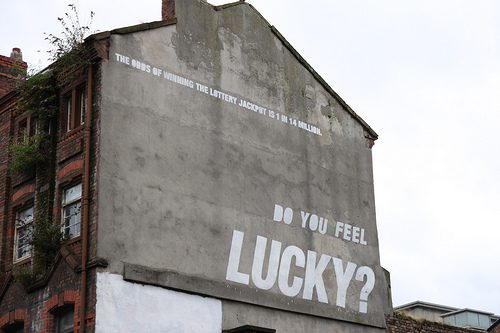
photo credit: UK Stint 2008 via photopin (license)
“Teacher, which is the great commandment in the Law?” And he said to him, “You shall love the Lord your God with all your heart and with all your soul and with all your mind. This is the great and first commandment. And a second is like it: You shall love your neighbor as yourself.”
Matthew 22:36-39
When Jesus said “love your neighbor as yourself” he was not introducing a new teaching. “Love the Lord your God with all your heart and with all your soul and with all your mind” summarizes the first four of the Ten Commandments. Honor your father and mother, do not murder, do not commit adultery, do not steal, do not bear false witness, and do not covet can all be summed up in the phrase “you shall love your neighbor as yourself.” After all, if you love your neighbor you won’t covet his life, steal from him, lie to him or about him, sleep with his wife, or kill him. Moses further explains how God’s people love their neighbor in Leviticus 19 and many of the commands center on how they treated the poor among them. When they harvested their fields, God called them to leave the edges unharvested so there would be food for the poor and the sojourner. They should avoid oppressing their neighbor or robbing him.
King Solomon’s advice to his son in the book of Proverbs echoes these commands. While instructing his son to work hard and shun laziness so he will avoid poverty, he also strongly cautions his son not to oppress the poor or take advantage of them. “Whoever oppresses the poor to increase his own wealth, or gives to the rich, will only come to poverty.” “Do not rob the poor, because he is poor, or crush the afflicted at the gate.” “Open your mouth, judge righteously, defend the rights of the poor and needy.” The prophets denounce the rich and leaders of the people who trample the rights of the poor and take advantage of them. “The LORD will enter into judgment with the elders and princes of his people: ’It is you who have devoured the vineyard, the spoil of the poor is in your houses. What do you mean by crushing my people, by grinding the face of the poor? declares the Lord GOD of hosts.” (Isaiah 3:14-15) “Therefore because you trample on the poor and you exact taxes of grain from him, you have built houses of hewn stone, but you shall not dwell in them; you have planted pleasant vineyards, but you shall not drink their wine.” (Amos 5:11) The New Testament builds on this foundation by showing how God’s people should demonstrate generosity to the poor among them and not show partiality to the rich.
This review of what it means to love your neighbor has been rendered necessary by a financial crisis in the state of Alabama. The Alabama Legislature met for two special sessions to find solutions for overcoming a budget shortfall of over $200 million. Predictably, many believe the answer to our budget problem’s are staring us right in the face and see a lottery as the overwhelming answer to the large shortfall. Today al.com carried a Guest Opinion from 2014 Democratic Nominee for Governor, Parker Griffith. In his post “The people suffer while Montgomery burns” he advocates for the State Legislature to remove Governor Robert Bentley from office. In his lengthy argument against Governor Bentley and for his vision for the future of Alabama he says “A quick vote on a state lottery, an expanded relationship with the Poarch Creek Indians, expansion of Medicaid, the very issues I campaigned on last year, would create jobs, begin to fix our budget problems and set Alabama on an upward path. Without these actions, we will face the long, slow, tortured dismantlement of the life and governorship of the hapless Robert Bentley.” In his estimation Alabama will be on the economic mend when we approve a state lottery and expand casino gambling. He says we need to do so because our current situation punishes the poor, children, and the elderly.
To listen to Mr. Griffith and those who would echo his sentiments, you would believe that enacting a state lottery would end poverty, care for the sick, and provide endless college scholarships for our state’s students. If only we would approve a lottery, our economic problems would be a thing of the past and we could usher in a utopian future without want, sickness, or a lack of access to higher education. Facts are our friends and a simple perusal of evidence offered in many other states shows the lottery is a tax on the poor which increasingly benefits only the state coffers and middle to upper class families. A study from the California Budget Project concluded higher lottery sales would impact lower income families more than other families since these families spend more per capita on tickets than middle and upper income families. Two university professors in Florida studied which groups benefit most from lottery-funded scholarships. Hear their ominous words as they describe the characteristics of counties who “win” from lottery scholarships verses those who “lose” from the lottery. “There is little new information that comes from comparing the means of the independent variables for the losing and winning counties. Once again, we find that the losing counties have significantly higher percentages of older citizens (60 and over) and poorer citizens (incomes of $40,000 and less). In contrast, the winning counties have higher percentages of well-educated (college and graduate degrees) and high income ($60,000 and more) citizens as well as a higher percentage of 18-24 year olds and Asians. Politically, the citizens that drive the popularity of the FBF scholarship are the well-heeled, middle and upper income households who have college-aged children. These citizens are motivated by their own self-interest to support this extremely inequitable redistribution scheme, and they have the means and the connections to influence the political process.” (Source) Through their research they discovered the lottery redistributes income, but not from the rich to the poor. The Florida lottery produced what they call a “Reverse Robin Hood Effect.” The lottery robs from the poor and gives to the rich and middle class. To be more specific, their research demonstrated that the lottery takes from the elderly and minorities to send the children of affluent white families to college. (You can find more research like this at stoppredatorygambling.org.)
Parker Griffith’s article included this horrid depiction of the people who put Governor Bentley in office through their votes. “So Alabama remains in a backwater, punishing the poor, the children and the elderly while leaving church on Sunday morning feeling superior to their neighbors and denying the facts that confront them daily.” He paints those who disagree with his policy as morally superior hypocrites who don’t care about the poor. In doing so he ignores the facts which should be plain as day, lottery advocates in Alabama are enemies of the poor. While they may portray themselves as the saviors of the poor, the facts demonstrate they will fleece the poor and downtrodden to fatten the state coffers and provide discounted educations higher income families. Those who defy the odds and win the lottery don’t receive the government’s money; they experience a windfall at the expense of those who played the lottery and lost. The lottery robs from the poor to benefit the rich and our elected state leaders. Advocates of this farce cannot claim to care about the poor or their neighbors when their cure is worse than the disease.
Many will object that people are going to play the lottery anyway, so we should stop trying to legislate morality and quit sending money to other states when it could benefit Alabama. I would offer two points in rebuttal. First, every law is an enforcement of someone’s “morality.” The forty hour work week, child labor laws, and the minimum wage were all enacted to create a more just society. (And they did.) Read the speeches of Theodore Roosevelt as he argued for these reforms and you will hear a man compelled by a moral compass who was willing to have his name mocked to enforce his morality on the “Titans of Industry.” For a more recent example we should look to the jailing of Kim Davis. Throngs of people called for her to be found in contempt of court because she should not be able to use her office to “hate” and “discriminate.” This is a moral position which finds discrimination immoral and wants to use the force of law to stamp it out. We need to admit our inconsistency on this point and retire the phrase “legislate morality.” Secondly we need to be willing to lose money to neighboring states if it means the poor in Alabama do not have easy access to the lottery. If someone wants to gamble they can find means to do so which do not involve the state of Alabama being their bookmaker.
What is the answer to care for our poor neighbors? A state-run lottery will fleece and oppress them; and we cannot claim to love our neighbors while advocating for their exploitation. The words of the Apostle Paul in 2 Corinthians point us to the solution. He writes to the Corinthian church and encourages them to show generosity to the poor. Listen to how he appealed to them. “For you know the grace of our Lord Jesus Christ, that though he was rich, yet for your sake he became poor, so that you by his poverty might become rich.” Paul reminded them of Jesus who gave his life for them. He laid aside the riches of heaven and poured out his life to show grace to those who might believe. Through his poverty we experience the riches of being made a fellow heir along with him. Experiencing Jesus’ generosity compels those who believe to show generosity as well. The answer for poverty in our midst is not a state run moneymaking scheme, but a powerful remembrance of God’s grace which binds us to show the generosity we have received. A revival of belief in the Gospel leads people to a life of hard work, compassion, and generosity. This reality reminds us of the limits of even the best governments, for they cannot compel faith and the new birth. Our state government’s shortfall has plastered a serious problem in front of our faces, now God’s people must point take responsibility and point to the infinitely able solution which is found in Christ alone.
Related Posts:
“The Bible and the Alabama Legislature”
For Further Reading:
Money, Possessions, and Eternity by Randy Alcorn
Previous Post

September 7, 2015
David and Goliath
Next Post

September 21, 2015 David and Jonathan
Browse Our Archives
Select a Category Bible Books Church Life Marriage Parenting Photos The Ministry Uncategorized
Select a Month August 2021 July 2021 June 2021 February 2021 December 2020 November 2020 October 2020 March 2020 July 2019 April 2019 December 2018 November 2018 October 2018 September 2018 August 2018 July 2018 June 2018 May 2018 April 2018 March 2018 February 2018 January 2018 December 2017 November 2017 October 2017 September 2017 August 2017 July 2017 June 2017 May 2017 April 2017 March 2017 February 2017 January 2017 December 2016 November 2016 October 2016 September 2016 August 2016 July 2016 June 2016 May 2016 April 2016 March 2016 February 2016 January 2016 December 2015 November 2015 October 2015 September 2015 August 2015 July 2015 May 2015 April 2015 March 2015 February 2015 January 2015 December 2014 November 2014 October 2014 September 2014 August 2014 July 2014 June 2014 May 2014 April 2014 March 2014 February 2014 January 2014 December 2013 November 2013 October 2013 September 2013 August 2013 July 2013
Follow Us!
TAKE THE
Religious Wisdom Quiz
Who sang the song of deliverance after the Red Sea crossing?
Select your answer to see how you score.
Aaron Hur Caleb Miriam
Related posts from One Degree to Another

The Lord is Near in Our Pain- 1...

Why You Should Embrace Boredom

Why I Switched from a Digital Bible to...

Love is the Mark of a Christian
TRENDING AT PATHEOS Evangelical

The REST of Your Life: A Creative Wrestles...
This week I had a conversation with a good friend from church....

How the author of the world's best hymn...
I've been working with John Newton for a while now. This makes...

Long before this Lectio Divina, Psalm 130 - the song - started...

What About the Trees? Another Living Parable
After I finished writing the last article about falling leaves as a...

Why Classical Education Is a Conversation, Not a...
Come and Read: Joy in Classical Education When I was a little...

Cornell University has received a great deal of negative publicity and intense...
view all Evangelical blogs
Ad-Free & Subscriber Log-In Subscription Support
- About Us
- 2026 Calendar
- Videos
- Podcasts
- Library of World Religions
- Faith In Media Tracker
- Advertise With Us
- Write for Us
- Privacy Policy
- Terms of Service
- Do Not Sell My Data
- Contact Us
- Radiant Digital
- Manage Newsletter Subscriptions
- Unsubscribe From Notifications
- Sitemap
Copyright 2008-2026, Patheos. All rights reserved.
Subscription Support Ad-Free & Subscriber Log-In
Follow Patheos