
BuddhistCatholicContemplativeEvangelicalGeneral ChristianHinduJewishLatter-day SaintMuslimNew VisionsProgressive Christian
Beliefs
- Buddhist
- Catholic
- Contemplative
- Evangelical
- General Christian
- Hindu
- Jewish
- Latter-day Saint
- More Voices
- Muslim
- New Visions
- Pagan
- Progressive Christian
Topics
- Religion News
- Food and Religion
- Sports and Religion
- Religious Art
- Religious Music and Entertainment
- Religious Events
- History and Religion
- Style and Religion
- Politics and Religion
- Women in Religion
- Recreation Outdoors and Religion
- Business Finance and Religion
- Careers Workplace and Religion
- Education and Religion
- Family Parenting and Religion
- Health Fitness and Religion
- Home and Religion
- Relationships and Religion
- Technology and Religion
- Travel and Religion
Columnists
- Buddhist Columnists
- Business Finance and Religion Columnists
- Careers Workplace and Religion Columnists
- Catholic Columnists
- Contemplative Columnists
- Education and Religion Columnists
- Evangelists Columnists
- Family Parenting and Religion Columnists
- General Christian Columnists
- Health Fitness and Religion Columnists
- Hindu Columnists
- History and Religion Columnists
- Home and Religion Columnists
- Jewish Columnists
- More Voices Columnists
- Latter Day Columnists
- Muslim Columnists
- New Visions Columnists
- Nonreligious Columnists
- Pagan Columnists
- Politics and Religion Columnists
- Progressive Columnists
- Recreation Outdoors and Religion Columnists
- Relationships and Religion Columnists
- Religion News Columnists
- Religious Art Columnists
- Religious Events Columnists
- Religious Music and Entertainment Columnists
- Sports and Religion Columnists
- Style and Religion Columnists
- Technology and Religion Columnists
- Travel and Religion Columnists
- Women in Religion Columnists
Resource Library
- 2026 Calendar
- Library of World Religions
- The 100 Most Holy Places on Earth
- Patheos Answers
- Podcasts
- Videos
- Faith Leaders Database
- Anglican Episcopalian
- Bahai
- Baptist
- Buddhism
- Christianity
- Confucianism
- Eastern Orthodoxy
- Hinduism
- Holiness and Pentecostal
- ISKCON
- Islam
- Judaism
- Lutheran
- Methodist
- The Church of Jesus Christ of Latter-day Saints
- New Age
- Paganism
- Presbytarian and Reformed
- Protestantism
- Religion Behind the Scenes
- Roman Catholic
- Scientology
- Shia Islam
- Sikhism
- Sufism
- Sunni Islam
- Taoism
- Zen
- See all religions
Research Tools
 Ad-Free & Subscriber Log-In Subscription Support
Ad-Free & Subscriber Log-In Subscription Support
Follow Patheos 

- Trending:
- Forgiveness
- |
- Marriage
- |
- Consciousness
- |
- Death Penalty
- |
- Election
- |
- Halloween
 One Degree to Another
- Home
- Evangelical
- Why You Should Read the Psalms
Why You Should Read the Psalms
Last updated on: August 4, 2015 at 4:56 pm by Scott Slayton
Why You Should Read the Psalms 2015-08-04T16:56:07-05:00 Scott Slayton
Patheos Explore the world's faith through different perspectives on religion and spirituality! Patheos has the views of the prevalent religions and spiritualities of the world.
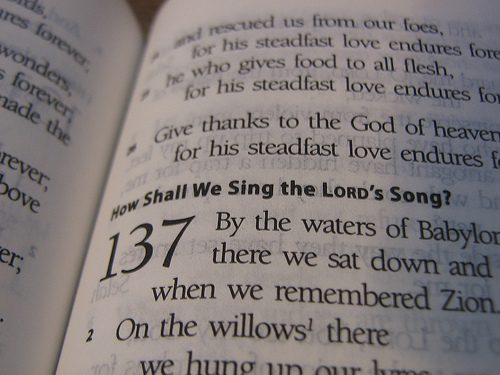
photo credit: Typography via photopin (license)
Yesterday my Bible reading brought me to the Psalms. Wanting to read slowly and meditatively, I sensed my heart begin to stir as I read these prayers and songs composed by God’s people hundreds of years before the birth of Jesus. Because of the wide variety of Psalms, they stir and help the Christian in a myriad of ways. Here are three reasons you need to give greater attention to the Psalms.
The Psalms Present Us With a Full-Orbed View of God
The Psalm writers praise God for what theologians have often called his transcendence. “O LORD, our Lord, how majestic is your name in all the earth! You have set your glory above the heavens.” In this quote from Psalm 8:1, David points to the majesty and glory of God. God is altogether unlike us. He eternally exists in perfect holiness and splendor. The Lord of the Psalms dwells in heaven, does what he pleases, and his very being should inspire the highest praise from his people. When we are tempted to have a domesticated view of God, the Psalms provide the resources to recapture our view of God as he actually is.
God’s transcendence should not make us think he is detached from the lives of his people. Just as the Psalm writers extol the transcendence of God, they also consistently point us to his nearness. The writers point to God as a hiding place in whom they can take refuge to find peace and safety. The almighty, transcendent God uses his limitless power to protect his people. In addition the Psalm writers appeal to God’s grace, compassion, and patience. For them, God’s transcendence and immanence don’t contradict each other, instead they are complementary attributes. God’s grace and care for his people is only effective because of his glory, holiness, and strength. If you struggle with believing God is distant from you, read the Psalms. You will see he is high and lofty, but he also stoops to come near to us.
The Psalms Give Us a Vocabulary for Our Emotions
When I was younger I wondered why many of the Psalms sounded so whiny. After walking through more years of life these are the heart cries of people who have dealt with real world pain. Many of the Psalms show their writers in dangerous or difficult situations. Their prayers reflect an honesty we often find embarrassing as they wonder why God seems to have abandoned them and why the wicked seem to be flourishing. When you find yourself walking through a struggle, the Psalms give you the words to work through your pain. They help you understand where you are and point to the solution found in our all-powerful God.
We also discover a vocabulary for praise in the Psalms. Often we only thank God for our temporal blessings. The Psalms teach us how to praise God for his being, his compassion, his deliverance, and his blessings. For the person who struggles understanding how to express praise and thanksgiving, reading through the Psalms will give you the vocabulary to do so.
The Psalms Encourage Us in Our Prayers
How often do we go to pray and don’t even know where to start? Start reading and praying through the Psalms. You can either pray the Psalms as they are written or use the words of the Psalms as a launch pad into your own prayers. To do the latter you read a line or a couple of verses and begin to pray based on what you read. Was there something in the verse you could praise God for? Or did you see a sin you should repent of or a petition you needed to echo in your own life. Maybe the Psalm reflects the pain you currently experience and provides you with a model for how to pray through it. Christian struggling to pray, read the Psalms for the sake of your prayers.
For an introduction to the Psalms read Psalm 1 and know meditating on the following chapters will plant you like a tree by streams of water. If your walk with the Lord has been dry, turn to David’s intensely personal words in Psalm 63. Psalm 3 would be a great help to anyone wrestling with fear. The 145th Psalm helps the Christian understand both God’s immanence and his transcendence. When you have struggled with sin pray through the words of Psalm 51. Read Psalm 95 before you gather with God’s people for worship this coming Sunday.
What is your favorite Psalm and which ones should you start reading next?
Related Posts:
“Why You Should Read the Bible”
“When Prayer is Difficult”
For Further Reading:
How to Read the Psalms by Tremper Longman III
Praying the Bible by Donald Whitney
Previous Post

July 23, 2015
The Humbling Power of God's Grace
Next Post

August 10, 2015 Hannah and Samuel
Browse Our Archives
Select a Category Bible Books Church Life Marriage Parenting Photos The Ministry Uncategorized
Select a Month August 2021 July 2021 June 2021 February 2021 December 2020 November 2020 October 2020 March 2020 July 2019 April 2019 December 2018 November 2018 October 2018 September 2018 August 2018 July 2018 June 2018 May 2018 April 2018 March 2018 February 2018 January 2018 December 2017 November 2017 October 2017 September 2017 August 2017 July 2017 June 2017 May 2017 April 2017 March 2017 February 2017 January 2017 December 2016 November 2016 October 2016 September 2016 August 2016 July 2016 June 2016 May 2016 April 2016 March 2016 February 2016 January 2016 December 2015 November 2015 October 2015 September 2015 August 2015 July 2015 May 2015 April 2015 March 2015 February 2015 January 2015 December 2014 November 2014 October 2014 September 2014 August 2014 July 2014 June 2014 May 2014 April 2014 March 2014 February 2014 January 2014 December 2013 November 2013 October 2013 September 2013 August 2013 July 2013
Follow Us!
TAKE THE
Religious Wisdom Quiz
True or False: Paul told the Thessalonians that those who are unwilling to work should not eat.
Select your answer to see how you score.
FALSE TRUE
Related posts from One Degree to Another

The Lord is Near in Our Pain- 1...

Why I Switched from a Digital Bible to...

The First 15 Verses that Every Christian Should...

TRENDING AT PATHEOS Evangelical

The REST of Your Life: A Creative Wrestles...
This week I had a conversation with a good friend from church....

How the author of the world's best hymn...
I've been working with John Newton for a while now. This makes...

Long before this Lectio Divina, Psalm 130 - the song - started...

What About the Trees? Another Living Parable
After I finished writing the last article about falling leaves as a...

Why Classical Education Is a Conversation, Not a...
Come and Read: Joy in Classical Education When I was a little...

Cornell University has received a great deal of negative publicity and intense...
view all Evangelical blogs
Ad-Free & Subscriber Log-In Subscription Support
- About Us
- 2026 Calendar
- Videos
- Podcasts
- Library of World Religions
- Faith In Media Tracker
- Advertise With Us
- Write for Us
- Privacy Policy
- Terms of Service
- Do Not Sell My Data
- Contact Us
- Radiant Digital
- Manage Newsletter Subscriptions
- Unsubscribe From Notifications
- Sitemap
Copyright 2008-2026, Patheos. All rights reserved.
Subscription Support Ad-Free & Subscriber Log-In
Follow Patheos