
BuddhistCatholicContemplativeEvangelicalGeneral ChristianHinduJewishLatter-day SaintMuslimNew VisionsProgressive Christian
Beliefs
- Buddhist
- Catholic
- Contemplative
- Evangelical
- General Christian
- Hindu
- Jewish
- Latter-day Saint
- More Voices
- Muslim
- New Visions
- Pagan
- Progressive Christian
Topics
- Religion News
- Food and Religion
- Sports and Religion
- Religious Art
- Religious Music and Entertainment
- Religious Events
- History and Religion
- Style and Religion
- Politics and Religion
- Women in Religion
- Recreation Outdoors and Religion
- Business Finance and Religion
- Careers Workplace and Religion
- Education and Religion
- Family Parenting and Religion
- Health Fitness and Religion
- Home and Religion
- Relationships and Religion
- Technology and Religion
- Travel and Religion
Columnists
- Buddhist Columnists
- Business Finance and Religion Columnists
- Careers Workplace and Religion Columnists
- Catholic Columnists
- Contemplative Columnists
- Education and Religion Columnists
- Evangelists Columnists
- Family Parenting and Religion Columnists
- General Christian Columnists
- Health Fitness and Religion Columnists
- Hindu Columnists
- History and Religion Columnists
- Home and Religion Columnists
- Jewish Columnists
- More Voices Columnists
- Latter Day Columnists
- Muslim Columnists
- New Visions Columnists
- Nonreligious Columnists
- Pagan Columnists
- Politics and Religion Columnists
- Progressive Columnists
- Recreation Outdoors and Religion Columnists
- Relationships and Religion Columnists
- Religion News Columnists
- Religious Art Columnists
- Religious Events Columnists
- Religious Music and Entertainment Columnists
- Sports and Religion Columnists
- Style and Religion Columnists
- Technology and Religion Columnists
- Travel and Religion Columnists
- Women in Religion Columnists
Resource Library
- 2026 Calendar
- Library of World Religions
- The 100 Most Holy Places on Earth
- Patheos Answers
- Podcasts
- Videos
- Faith Leaders Database
- Anglican Episcopalian
- Bahai
- Baptist
- Buddhism
- Christianity
- Confucianism
- Eastern Orthodoxy
- Hinduism
- Holiness and Pentecostal
- ISKCON
- Islam
- Judaism
- Lutheran
- Methodist
- The Church of Jesus Christ of Latter-day Saints
- New Age
- Paganism
- Presbytarian and Reformed
- Protestantism
- Religion Behind the Scenes
- Roman Catholic
- Scientology
- Shia Islam
- Sikhism
- Sufism
- Sunni Islam
- Taoism
- Zen
- See all religions
Research Tools
 Ad-Free & Subscriber Log-In Subscription Support
Ad-Free & Subscriber Log-In Subscription Support
Follow Patheos 

- Trending:
- Forgiveness
- |
- Marriage
- |
- Consciousness
- |
- Death Penalty
- |
- Election
- |
- Halloween
 One Degree to Another
- Home
- Evangelical
- The Flood
The Flood
Last updated on: March 3, 2014 at 3:44 pm by Scott Slayton
The Flood 2014-03-03T15:44:27-05:00 Scott Slayton
Patheos Explore the world's faith through different perspectives on religion and spirituality! Patheos has the views of the prevalent religions and spiritualities of the world.
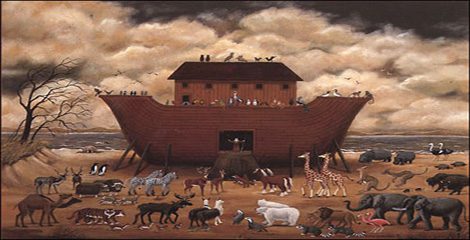 As I blog through the Bible chapter by chapter, there are going to be occasions where it is necessary to stop and work through several chapters together before looking at them individually. The flood in Genesis 6-9 begs for a larger consideration before working through the details in each individual chapter.
Often when we think of the flood, our minds turn to Sunday School images of animals climbing on two by two. As we get older, we start to think about the horrible suffering which took place in the flood. If you are the Bible nerd type, you wonder what on earth is going on with the “sons of God” and “daughters of men.” None of these details are the main point of the flood narrative.
The narrative of the flood begins in Genesis 6:10 and concludes at 9:19. Commentators have detected a chiastic structure in writer’s presentation of the flood. This type of structure presents topics in order and reverses the order in the second half of the passage. When this takes place, whatever is in the center of the structure is the writer’s main point. You can see the structure of the flood narrative below. (This structure is slightly adapted from Kenneth Mathews’ commentary on Genesis 1:1-11:26.)
Introduction (6:9–10)
A Violence in Creation (6:11–12)
B Resolution to Destroy (6:13–22)
C Command to enter the ark (7:1–10)
D Beginning of the flood (7:11–16)
E The rising flood waters (7:17–24)
God Remembers Noah (8:1a)
E’ The receding flood waters (8:1b–5)
D’ The drying of the earth (8:6–14)
C’ Command to leave the ark (8:15–19)
B’ Resolution to preserve order (8:20–22)
A’ Blessing and Peace (9:1–17)
Conclusion (9:18–19)
Notice the center of the flood narrative. “But God remembered Noah and all the beasts and all the livestock that were with him in the ark.” The word “remember” in the Bible does not mean God had forgotten about Noah and the animals on the ark. The word is covenantal and has overtones of calling a promise back to memory. God promised Noah at the beginning of the narrative that He would bring his family safely through the flood. Now the earth is flooded and God “remembers” His promise to Noah. Notice the very next thing that happens. “And God made a wind blow over the earth, and the waters subsided.” God remembers Noah and those on the ark, so He causes a wind to blow over the earth so that the waters subside. God remembers His promise and acts to fulfill it.
The flood narrative teaches us that God is faithful to His promises. God makes promises, remembers them, and acts on behalf of His people to fulfill them. This truth carries tremendous implications for Christians. The Christians stands on the receiving end of many tremendous promises. God will not remember our sins. He grants us an inheritance in Christ. He will never leave us nor forsake us. These promises form a bedrock for confident Christian living. Living as a Christian means walking by faith in these promises throughout everything life throws at us. When we are tempted to believe God has abandoned us, we remember He will never leave us. Those who are pulled to love this present world and all it offers can remind themselves of the massive inheritance awaiting those who are in Christ. Men and women struggling with chronic guilt draw encouragement from God’s promise to forgive when we confess our sins.
Related Posts:
“Genesis 4”
“Genesis 5“
Previous Post

February 24, 2014
The Bible and the Alabama Legislature
Next Post

March 10, 2014 Why the Bible Doesn't Have Much "Marriage Advice"
Browse Our Archives
Select a Category Bible Books Church Life Marriage Parenting Photos The Ministry Uncategorized
Select a Month August 2021 July 2021 June 2021 February 2021 December 2020 November 2020 October 2020 March 2020 July 2019 April 2019 December 2018 November 2018 October 2018 September 2018 August 2018 July 2018 June 2018 May 2018 April 2018 March 2018 February 2018 January 2018 December 2017 November 2017 October 2017 September 2017 August 2017 July 2017 June 2017 May 2017 April 2017 March 2017 February 2017 January 2017 December 2016 November 2016 October 2016 September 2016 August 2016 July 2016 June 2016 May 2016 April 2016 March 2016 February 2016 January 2016 December 2015 November 2015 October 2015 September 2015 August 2015 July 2015 May 2015 April 2015 March 2015 February 2015 January 2015 December 2014 November 2014 October 2014 September 2014 August 2014 July 2014 June 2014 May 2014 April 2014 March 2014 February 2014 January 2014 December 2013 November 2013 October 2013 September 2013 August 2013 July 2013
Follow Us!
TAKE THE
Religious Wisdom Quiz
What does "Pentateuch" mean?
Select your answer to see how you score.
Sacred Teachings Holy Writings Five Scrolls God's Law
Related posts from One Degree to Another

The Lord is Near in Our Pain- 1...

Why You Should Embrace Boredom

Why I Switched from a Digital Bible to...

Love is the Mark of a Christian
TRENDING AT PATHEOS Evangelical

The REST of Your Life: A Creative Wrestles...
This week I had a conversation with a good friend from church....

How the author of the world's best hymn...
I've been working with John Newton for a while now. This makes...

Long before this Lectio Divina, Psalm 130 - the song - started...

What About the Trees? Another Living Parable
After I finished writing the last article about falling leaves as a...

Why Classical Education Is a Conversation, Not a...
Come and Read: Joy in Classical Education When I was a little...

Cornell University has received a great deal of negative publicity and intense...
view all Evangelical blogs
Ad-Free & Subscriber Log-In Subscription Support
- About Us
- 2026 Calendar
- Videos
- Podcasts
- Library of World Religions
- Faith In Media Tracker
- Advertise With Us
- Write for Us
- Privacy Policy
- Terms of Service
- Do Not Sell My Data
- Contact Us
- Radiant Digital
- Manage Newsletter Subscriptions
- Unsubscribe From Notifications
- Sitemap
Copyright 2008-2026, Patheos. All rights reserved.
Subscription Support Ad-Free & Subscriber Log-In
Follow Patheos