
BuddhistCatholicContemplativeEvangelicalGeneral ChristianHinduJewishLatter-day SaintMuslimNew VisionsProgressive Christian
Beliefs
- Buddhist
- Catholic
- Contemplative
- Evangelical
- General Christian
- Hindu
- Jewish
- Latter-day Saint
- More Voices
- Muslim
- New Visions
- Pagan
- Progressive Christian
Topics
- Religion News
- Food and Religion
- Sports and Religion
- Religious Art
- Religious Music and Entertainment
- Religious Events
- History and Religion
- Style and Religion
- Politics and Religion
- Women in Religion
- Recreation Outdoors and Religion
- Business Finance and Religion
- Careers Workplace and Religion
- Education and Religion
- Family Parenting and Religion
- Health Fitness and Religion
- Home and Religion
- Relationships and Religion
- Technology and Religion
- Travel and Religion
Columnists
- Buddhist Columnists
- Business Finance and Religion Columnists
- Careers Workplace and Religion Columnists
- Catholic Columnists
- Contemplative Columnists
- Education and Religion Columnists
- Evangelists Columnists
- Family Parenting and Religion Columnists
- General Christian Columnists
- Health Fitness and Religion Columnists
- Hindu Columnists
- History and Religion Columnists
- Home and Religion Columnists
- Jewish Columnists
- More Voices Columnists
- Latter Day Columnists
- Muslim Columnists
- New Visions Columnists
- Nonreligious Columnists
- Pagan Columnists
- Politics and Religion Columnists
- Progressive Columnists
- Recreation Outdoors and Religion Columnists
- Relationships and Religion Columnists
- Religion News Columnists
- Religious Art Columnists
- Religious Events Columnists
- Religious Music and Entertainment Columnists
- Sports and Religion Columnists
- Style and Religion Columnists
- Technology and Religion Columnists
- Travel and Religion Columnists
- Women in Religion Columnists
Resource Library
- 2026 Calendar
- Library of World Religions
- The 100 Most Holy Places on Earth
- Patheos Answers
- Podcasts
- Videos
- Faith Leaders Database
- Anglican Episcopalian
- Bahai
- Baptist
- Buddhism
- Christianity
- Confucianism
- Eastern Orthodoxy
- Hinduism
- Holiness and Pentecostal
- ISKCON
- Islam
- Judaism
- Lutheran
- Methodist
- The Church of Jesus Christ of Latter-day Saints
- New Age
- Paganism
- Presbytarian and Reformed
- Protestantism
- Religion Behind the Scenes
- Roman Catholic
- Scientology
- Shia Islam
- Sikhism
- Sufism
- Sunni Islam
- Taoism
- Zen
- See all religions
Research Tools
 Ad-Free & Subscriber Log-In Subscription Support
Ad-Free & Subscriber Log-In Subscription Support
Follow Patheos 

- Trending:
- Forgiveness
- |
- Marriage
- |
- Consciousness
- |
- Death Penalty
- |
- Election
- |
- Halloween
 One Degree to Another
- Home
- Evangelical
- Genesis 5
Genesis 5
Last updated on: February 18, 2014 at 5:04 pm by Scott Slayton
Genesis 5 2014-02-18T17:04:41-05:00 Scott Slayton
Patheos Explore the world's faith through different perspectives on religion and spirituality! Patheos has the views of the prevalent religions and spiritualities of the world.
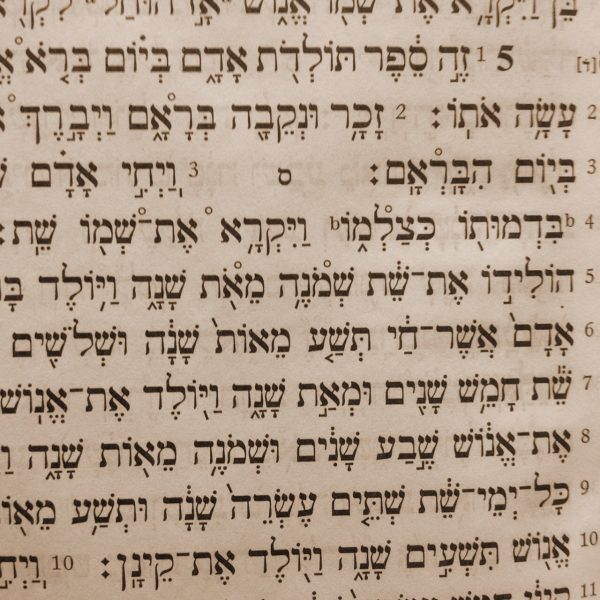
Genesis 5 is the first of many biblical genealogies. While these “lists of names” trip up a large number of Bible readers, these inspired records are of strategic importance. Some of them make a theological point and some serve as introductions to new sections. Others are celebrations of God’s promise to multiply His people. These chapters should not be skipped and deserve our attention and thought.Typically there are two types of genealogies in the Bible. One is a branch genealogy. It follows all a person’s descendants. For example, a man might have three sons. The branch genealogy will trace the lineage of all three sons and the sons of all three sons, giving a complete picture of the first person’s descendants. Genesis 5 is what has been termed a linear genealogy. It begins with a central figure and focuses on one son in each generation. In this chapter we see a straight line from Adam to Noah.
The chapter begins with the phrase “this is the book of the generations of Adam.” Many see this formula as an introduction for new sections in the book of Genesis and this section covers the genealogy and reasons for God’s wrath before the flood. The writer reiterated man’s creation in God’s image and God’s blessing of the man and woman.
As the writer introduced each generation, he followed a similar pattern. “X lived for X years and fathered Y. He lived X more years after fathering Y and then he died.” In doing so, he reminded readers of Adam and Seth before he introduced them to Enosh, Kenan, Mahalalel, Jared, Enoch, Methuselah, Lamech, and Noah. The genealogy ends by naming the three sons of Noah. The only break from the pattern in the genealogy is Enoch. He didn’t die. We read that he walked with God and God “took him.” The writer does not elaborate on what happened and we are left to speculate that God simply took him into heaven and he did not go through the typical experience of death. Hebrews 11 confirms that this was the case.
This passage underscores a couple of important points. It demonstrates the reality of death in a post Fall world. Apart from Enoch, every person in this genealogy died and it reminds us that every person will face death unless Jesus comes back first. This terrifying reality forces every person to remember that they will eventually stand before God to give an account for the deeds done in their body. People do not have forever to decide if they are going to repent and come to Christ, so they must urgently make up their minds about what they are going to do with Jesus. The certainty of death also forces the Christian to consider how they are stewarding the one life that God has given them. This life should not be wasted, but instead should be lived for the glory of God.
Genesis 5 also continues the theme of the coming Redeemer who would liberate God’s people. They knew that there was a seed of the woman who would crush the head of the serpent, and every person mentioned in this genealogy is not the One. It could be argued that the entire Old Testament is a story of possible deliverers who either falls morally or fails to produce a lasting change in God’s people. Then they all die and the couple who don’t are taken directly into heaven. This prepares us for Jesus who never sins, produces a lasting change in His people, and is raised from the dead never to die again.
Related Posts:
“Genesis 3“
Previous Post

February 11, 2014
Genesis 4
Next Post

February 19, 2014 Loving Difficult People
Browse Our Archives
Select a Category Bible Books Church Life Marriage Parenting Photos The Ministry Uncategorized
Select a Month August 2021 July 2021 June 2021 February 2021 December 2020 November 2020 October 2020 March 2020 July 2019 April 2019 December 2018 November 2018 October 2018 September 2018 August 2018 July 2018 June 2018 May 2018 April 2018 March 2018 February 2018 January 2018 December 2017 November 2017 October 2017 September 2017 August 2017 July 2017 June 2017 May 2017 April 2017 March 2017 February 2017 January 2017 December 2016 November 2016 October 2016 September 2016 August 2016 July 2016 June 2016 May 2016 April 2016 March 2016 February 2016 January 2016 December 2015 November 2015 October 2015 September 2015 August 2015 July 2015 May 2015 April 2015 March 2015 February 2015 January 2015 December 2014 November 2014 October 2014 September 2014 August 2014 July 2014 June 2014 May 2014 April 2014 March 2014 February 2014 January 2014 December 2013 November 2013 October 2013 September 2013 August 2013 July 2013
Follow Us!
TAKE THE
Religious Wisdom Quiz
What was rebuilt in Jerusalem under Zerubbabel and Joshua the high priest?
Select your answer to see how you score.
The city gates The palace The wall The altar and Temple
Related posts from One Degree to Another

TRENDING AT PATHEOS Evangelical

The REST of Your Life: A Creative Wrestles...
This week I had a conversation with a good friend from church....

How the author of the world's best hymn...
I've been working with John Newton for a while now. This makes...

Long before this Lectio Divina, Psalm 130 - the song - started...

What About the Trees? Another Living Parable
After I finished writing the last article about falling leaves as a...

Why Classical Education Is a Conversation, Not a...
Come and Read: Joy in Classical Education When I was a little...

Cornell University has received a great deal of negative publicity and intense...
view all Evangelical blogs
Ad-Free & Subscriber Log-In Subscription Support
- About Us
- 2026 Calendar
- Videos
- Podcasts
- Library of World Religions
- Faith In Media Tracker
- Advertise With Us
- Write for Us
- Privacy Policy
- Terms of Service
- Do Not Sell My Data
- Contact Us
- Radiant Digital
- Manage Newsletter Subscriptions
- Unsubscribe From Notifications
- Sitemap
Copyright 2008-2026, Patheos. All rights reserved.
Subscription Support Ad-Free & Subscriber Log-In
Follow Patheos