
BuddhistCatholicContemplativeEvangelicalGeneral ChristianHinduJewishLatter-day SaintMuslimNew VisionsProgressive Christian
Beliefs
- Buddhist
- Catholic
- Contemplative
- Evangelical
- General Christian
- Hindu
- Jewish
- Latter-day Saint
- More Voices
- Muslim
- New Visions
- Pagan
- Progressive Christian
Topics
- Religion News
- Food and Religion
- Sports and Religion
- Religious Art
- Religious Music and Entertainment
- Religious Events
- History and Religion
- Style and Religion
- Politics and Religion
- Women in Religion
- Recreation Outdoors and Religion
- Business Finance and Religion
- Careers Workplace and Religion
- Education and Religion
- Family Parenting and Religion
- Health Fitness and Religion
- Home and Religion
- Relationships and Religion
- Technology and Religion
- Travel and Religion
Columnists
- Buddhist Columnists
- Business Finance and Religion Columnists
- Careers Workplace and Religion Columnists
- Catholic Columnists
- Contemplative Columnists
- Education and Religion Columnists
- Evangelists Columnists
- Family Parenting and Religion Columnists
- General Christian Columnists
- Health Fitness and Religion Columnists
- Hindu Columnists
- History and Religion Columnists
- Home and Religion Columnists
- Jewish Columnists
- More Voices Columnists
- Latter Day Columnists
- Muslim Columnists
- New Visions Columnists
- Nonreligious Columnists
- Pagan Columnists
- Politics and Religion Columnists
- Progressive Columnists
- Recreation Outdoors and Religion Columnists
- Relationships and Religion Columnists
- Religion News Columnists
- Religious Art Columnists
- Religious Events Columnists
- Religious Music and Entertainment Columnists
- Sports and Religion Columnists
- Style and Religion Columnists
- Technology and Religion Columnists
- Travel and Religion Columnists
- Women in Religion Columnists
Resource Library
- 2026 Calendar
- Library of World Religions
- The 100 Most Holy Places on Earth
- Patheos Answers
- Podcasts
- Videos
- Faith Leaders Database
- Anglican Episcopalian
- Bahai
- Baptist
- Buddhism
- Christianity
- Confucianism
- Eastern Orthodoxy
- Hinduism
- Holiness and Pentecostal
- ISKCON
- Islam
- Judaism
- Lutheran
- Methodist
- The Church of Jesus Christ of Latter-day Saints
- New Age
- Paganism
- Presbytarian and Reformed
- Protestantism
- Religion Behind the Scenes
- Roman Catholic
- Scientology
- Shia Islam
- Sikhism
- Sufism
- Sunni Islam
- Taoism
- Zen
- See all religions
Research Tools
 Ad-Free & Subscriber Log-In Subscription Support
Follow Patheos 

- Trending:
- Advent
- |
- Forgiveness
- |
- Thanksgiving
- |
- Election
- |
- Seasonal Holidays
- |
- Marriage
 Old Ways in Modern Times
- Home
- Pagan
- Home and Religion
- Friday the 13th: Unlucky or Untamed?
Friday the 13th: Unlucky or Untamed?
Last updated on: January 13, 2023 at 12:00 am by Charlotte Wilde
Friday the 13th: Unlucky or Untamed? 2023-01-12T17:52:53-06:00 Charlotte Wilde
Patheos Explore the world's faith through different perspectives on religion and spirituality! Patheos has the views of the prevalent religions and spiritualities of the world.
Friday the 13th is upon us. Indeed, today is the first of two Fridays that fall on the 13th day this year, with the latter arriving in October.
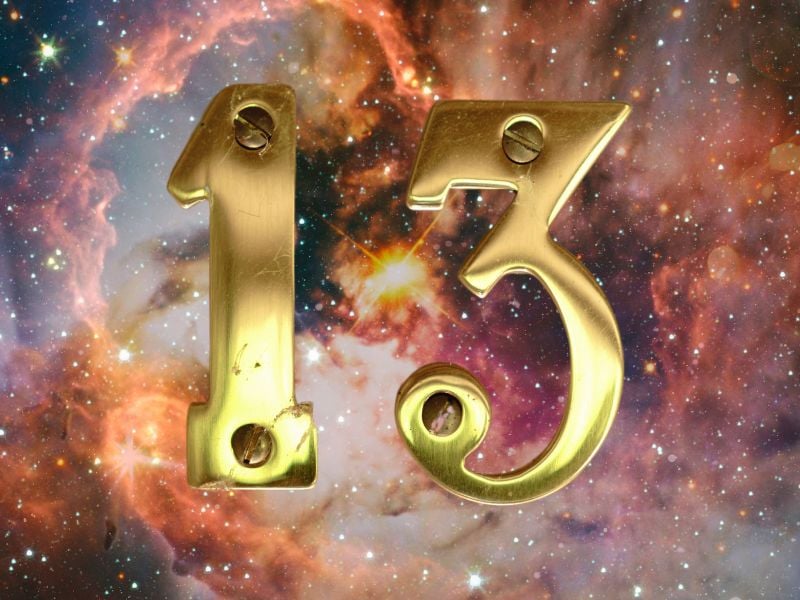
In Western culture, rarely is this date met with indifference. This date is often either feared or revered, depending on perspective. In fact, fear of this date is so prevalent there is a designated term for the condition: paraskevidekatriaphobia.
Alternatively, triskaidekaphobia is the psychological term for fear of the number 13. Author, Stephen King, has spoken about his triskaidekaphobia at length in a New York Times article in 1984. He stated that he frequently skips the 13th step and when he is reading, he refuses to stop on any page that’s digits equal 13. But Stephen King isn’t alone in this. Several other figures, such as Winston Churchill and Franklin Roosevelt, also suffered from this fear.
Origins:
Origins of this superstition are speculative, but it’s believed to have roots in both Norse Mythology and Christianity.
In Norse Mythology, Loki, the god of mischief, crashed a party in Valhalla, which triggered a tragic event leading to the death of Balder, the god of light. Loki was the 13th guest. In Christianity, Judas was the 13th guest at the Last Supper. These events likely contribute to some individuals’ refusal to be seated at a table with or gather in groups of 13.
The fear of Friday the 13th gradually took hold. One likely contributor to the day of the week is that Jesus was crucified on the Friday after the Last Supper. In Britain, Fridays were also the days that public hangings took place, and there were said to be 13 steps up to the gallows.
On the other hand, there is also a perceived sanctity of the number 12 and the perception of wholeness. After all, the Gregorian calendar concludes with 12 months, there are 12 zodiac signs, and 12 gods of Olympus. This sense of completion of the number 12 only served to ostracize the number 13 further.
Superstitions:
The number 13 is so feared that buildings and skyscrapers frequently omit the 13th floor. Rest assured, the floor still exists, but it will be relabeled as the 14th floor or some other categorical variant. According to a 2015 article in The Atlantic, 0.1% of people have an aversion to the 13th floor. Rather than miss out on revenues, buildings sidestep this potential loss by forgoing the number 13 altogether. Likewise, some planes skip the 13th row in a similar fashion.
The 13th major arcana card is the Death card which can appear to be an ominous sign to the untrained eye. Outwardly, the card appears to be foreboding. While it’s true this card isn’t exactly a walk in the park, tarot readers often see this card for its metaphorical implications rather than its literal translation.
In Numerology, the number 13 symbolizes karmic debt. Further, the number is also considered the bringer of change, much like the Death card in tarot. Nevertheless, to a large extent, 13 is a positive number in numerology.
However, it’s not all roses. Numerous notorious killers whose names equal 13 letters in length have been uncovered. John Wayne Gacy, Charles Manson, Jeffrey Dahmer, and Theodore Bundy are among some of the most prolific of these. While this is hardly conclusive evidence for 13 being an unlucky number, it’s enough to raise an eyebrow.
Tragic Incidents:
Over the years, there have been several tragic events that occurred on Friday the 13th. Statistically speaking, this should come as no surprise. Each year will have one to three Fridays that fall on the 13ths, and it would be far more peculiar if nothing terrible ever happened during them than if it did.
One prolific case was that of Kitty Genovese and the incident on Friday, March 13, 1964. If you’ve ever taken a psychology course, you’re likely familiar with her name. Her murder is frequently used to illustrate the bystander effect as 38 people watched her attack from their windows, but not one called the police.
Another particularly gruesome event occurred on Friday, October 13, 1972, when a rugby team crashed into the Andean mountains. Those who survived the crash were stranded in arctic temperatures with little resources. Out of survival, they turned to cannibalism. After 72 days, they were rescued after two members took the treacherous hike for help.
Conspiracy theories aside, Friday, September 13th, 1996, was also the date rapper Tupac Shakur died of injuries sustained in a drive-by shooting days prior. To this day, this case remains unsolved.
Historically, there have been many devastating events that occurred on Friday the 13th, such as floods, bombings, fires, and cyclones, along with a multitude of other tragedies. That said, these happenings often occur on other days without the stigma.
Patriarchal Undertones:
The number 13 is sacred to many pagans. After all, there are 13 moons and approximately 13 menstrual cycles per year, and in Wiccan traditions, covens frequently consist of 13 members. Several other cultures hold the number 13 in high regard as well. For instance, the number 13 is considered a lucky number in Italy. In Judaism, it is the 13th birthday is when Bar and Bat Mitzvahs are celebrated.
According to Huffington Post, “For up until the patriarchal revolution, both Fridays and 13s were held in the very highest esteem. Both the day and the number were associated with the Great Goddesses, and therefore, regarded as the sacred essence of luck and good fortune.”
Fridays are a day long associated with women and goddesses, as this is the day ruled by the planet Venus which is the planet of love, fertility, and attraction. Likewise, the “Great Goddesses” were goddesses that controlled the cycles of growth, fertility, and seasons. This goddess goes by many names, depending on their origin, but Frigg, Freya, Venus, and Aphrodite are among them. The name of Friday itself often corresponds with these goddesses in many languages.
Due to this, many see Friday the 13th as a product of a matriarchal society that collapsed as the patriarchal quest for power ensued. Rather than a day of demise and misfortune, it’s likely Friday the 13ths was once believed to be a day of reverence. As time progressed, this was further compounded by the media and pop culture, with movie franchises like the 1980s Friday the 13th depicting an unhinged matriarchial character.
So, what does Friday the 13th mean to you? Do you consider Friday the 13th something to be feared or a cause for celebration?
History and Religion
Previous Post

January 11, 2023
Ways to Meditate without Meditating
Next Post

January 18, 2023 Aquarius Season: A Modern Witch’s Guide to the Stars
Recent Comments
"You and me both!"
The Spring Equinox: Celebrating the Themes ..."
"I was just about to ask to see a photo before I audibly gasped reading ..."
The Spring Equinox: Celebrating the Themes ..."
"I can certainly see it having merit. Bare minimum, I can see where the idea ..."
St. Patricks Day: Saints, Snakes and ..."
"I definitely think the "Snakes of Ireland" thing could be true, given that in the ..."
St. Patricks Day: Saints, Snakes and ..."
Browse Our Archives
Select a Category Elements Folklore Herbs Occult History Seasons Stars Witch Tips
Select a Month December 2023 April 2023 March 2023 February 2023 January 2023 December 2022 November 2022
TAKE THE
Religious Wisdom Quiz
Who became Moses' spokesperson to Pharaoh?
Select your answer to see how you score.
Hur Joshua Aaron Miriam
Related posts from Old Ways in Modern Times

St. Patricks Day: Saints, Snakes and Pagans

Lupercalia: Origins and Modern-Day Celebrations

Seasons of the Human Experience

Taurus Season: A Modern Witch’s Guide to the...
TRENDING AT PATHEOS Pagan

To help with the upcoming holiday season, I'm introducing the Holiday Helper...

10 years of the Power Sigil & Moving...
Last week while reorganizing my studio space, I found the sketchbook that...

Why are younger seekers drawn to Paganism and...
One of the things I've noticed the most is that I'm far...

When we talk about Greek religion, we often begin with the dodekatheion—the...

I was recently chatting with someone on Instagram. She asked me what...

On July 23, I saw Christopher Nolan's The Odyssey which is Homer’s...
view all Pagan blogs
Ad-Free & Subscriber Log-In Subscription Support
- About Us
- 2026 Calendar
- Videos
- Podcasts
- Library of World Religions
- Faith In Media Tracker
- Advertise With Us
- Write for Us
- Privacy Policy
- Terms of Service
- Do Not Sell My Data
- Contact Us
- Radiant Digital
- Manage Newsletter Subscriptions
- Unsubscribe From Notifications
- Sitemap
Copyright 2008-2026, Patheos, part of the Radiant Digital network of media brands. All rights reserved.
Subscription Support Ad-Free & Subscriber Log-In
Follow Patheos