
BuddhistCatholicContemplativeEvangelicalGeneral ChristianHinduJewishLatter-day SaintMuslimNew VisionsProgressive Christian
Beliefs
- Buddhist
- Catholic
- Contemplative
- Evangelical
- General Christian
- Hindu
- Jewish
- Latter-day Saint
- More Voices
- Muslim
- New Visions
- Pagan
- Progressive Christian
Topics
- Religion News
- Food and Religion
- Sports and Religion
- Religious Art
- Religious Music and Entertainment
- Religious Events
- History and Religion
- Style and Religion
- Politics and Religion
- Women in Religion
- Recreation Outdoors and Religion
- Business Finance and Religion
- Careers Workplace and Religion
- Education and Religion
- Family Parenting and Religion
- Health Fitness and Religion
- Home and Religion
- Relationships and Religion
- Technology and Religion
- Travel and Religion
Columnists
- Buddhist Columnists
- Business Finance and Religion Columnists
- Careers Workplace and Religion Columnists
- Catholic Columnists
- Contemplative Columnists
- Education and Religion Columnists
- Evangelists Columnists
- Family Parenting and Religion Columnists
- General Christian Columnists
- Health Fitness and Religion Columnists
- Hindu Columnists
- History and Religion Columnists
- Home and Religion Columnists
- Jewish Columnists
- More Voices Columnists
- Latter Day Columnists
- Muslim Columnists
- New Visions Columnists
- Nonreligious Columnists
- Pagan Columnists
- Politics and Religion Columnists
- Progressive Columnists
- Recreation Outdoors and Religion Columnists
- Relationships and Religion Columnists
- Religion News Columnists
- Religious Art Columnists
- Religious Events Columnists
- Religious Music and Entertainment Columnists
- Sports and Religion Columnists
- Style and Religion Columnists
- Technology and Religion Columnists
- Travel and Religion Columnists
- Women in Religion Columnists
Resource Library
- 2026 Calendar
- Library of World Religions
- The 100 Most Holy Places on Earth
- Patheos Answers
- Podcasts
- Videos
- Faith Leaders Database
- Anglican Episcopalian
- Bahai
- Baptist
- Buddhism
- Christianity
- Confucianism
- Eastern Orthodoxy
- Hinduism
- Holiness and Pentecostal
- ISKCON
- Islam
- Judaism
- Lutheran
- Methodist
- The Church of Jesus Christ of Latter-day Saints
- New Age
- Paganism
- Presbytarian and Reformed
- Protestantism
- Religion Behind the Scenes
- Roman Catholic
- Scientology
- Shia Islam
- Sikhism
- Sufism
- Sunni Islam
- Taoism
- Zen
- See all religions
Research Tools
 Ad-Free & Subscriber Log-In Subscription Support
Ad-Free & Subscriber Log-In Subscription Support
Follow Patheos 

- Trending:
- Forgiveness
- |
- Marriage
- |
- Consciousness
- |
- Death Penalty
- |
- Election
- |
- Halloween
 Old Ways in Modern Times
- Home
- Pagan
- Home and Religion
- How do Pagans Celebrate the Winter Solstice in Yule?
How do Pagans Celebrate the Winter Solstice in Yule?
Last updated on: December 13, 2022 at 9:13 am by Charlotte Wilde
How do Pagans Celebrate the Winter Solstice in Yule? 2022-12-13T09:13:27-06:00 Charlotte Wilde
Patheos Explore the world's faith through different perspectives on religion and spirituality! Patheos has the views of the prevalent religions and spiritualities of the world.
The Winter Solstice is an annual occurrence that takes place on the shortest day of the year. This year, that day falls on December 21st. While the day of is often the pinnacle of the celebration, the days leading up to the festivities are equally as important.
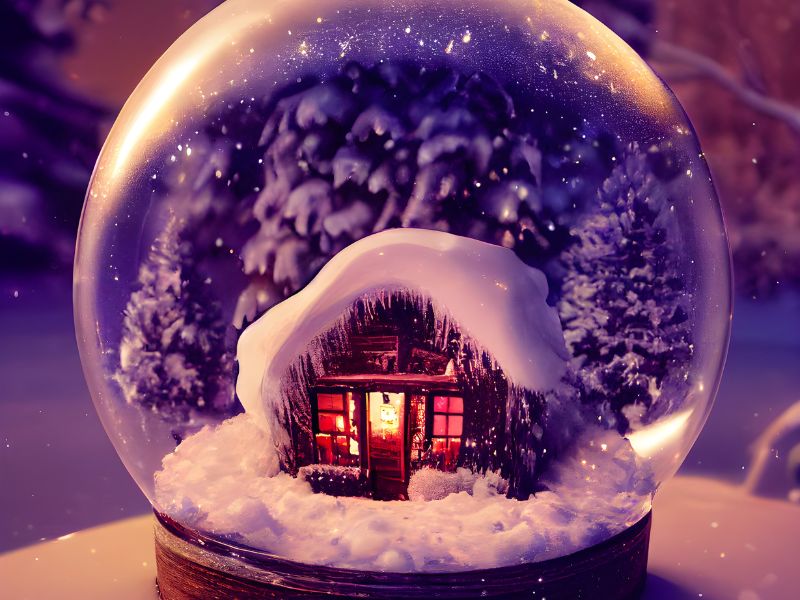
Qrisio via Adobe Stock
On the Wheel of the Year, Yule is the midpoint between Samhain and Imbolc. In Samhain, we honor our ancestors and the cycle of transformation and death. In Imbolc, we celebrate the emergence of spring and rebirth. Yule is the interim between the two and is a celebration honoring both death and rebirth.
The Yuletide season is a time of merriment for many pagans as we prep for the upcoming festivities and winter. We honor the solstice in various ways, as they often depend on our traditions and locations.
Crafting
The art of crafting is a time-honored tradition. In this instance, I am referring to mundane crafts rather than spellwork, but often the two can be combined. In preparation for decorating our homes and altars, many will create their decorations by hand.
One popular tradition for celebrating Yule is the creation of a Yule log. The Yule log is both a literal log and a tasty treat. Not simultaneously. For this section, I will be covering timber. Each type of wood has its own correspondences and can be chosen for that reason. For instance, birch could be used for protection, whereas oak or pine are great for prosperity. In modern times, after a log is cut, it can be taken indoors and decorated with evergreens and candles. Traditionally, the Yule log would be burned in the hearth for seasonal blessings.
Another popular craft of the season is the use of fresh citrus. One common tradition is creating a dried citrus garland to hang around our homes, on our trees, or across our mantles. Oranges have correspondences of good fortune and prosperity and are simple to make at home, with or without a dehydrator. This craft can be accomplished by thinly slicing oranges and allowing them to bake on the lowest oven setting for a few hours.
With citrus taking center stage, another craft that I’ve enjoyed since childhood is creating pomanders. Pomanders are created by piercing oranges with cloves for both prosperity and protection. If you’re looking to read more about this, you can find a how-to guide for this and other Yuletide crafts in my article “Winter Witchery: A Modern Witch’s Guide to the Season.”
Yule Craft Ideas:
- Pomanders
- Dried Citrus Garland
- Yule Log
- Witches Balls
- Cedar or Pine Herb Bundles
- Pentagram Ornaments made of Branches
Decorating
In the days leading up to the celebration, it is common for pagans to decorate their homes and altars.
Often practices include bringing evergreens into our living quarters. This tradition was taken, in part, from the ancient Roman festival, Saturnalia. This celebration was a midwinter festival of frolic and glee. During this time, the people would decorate their homes with evergreen boughs for protection and good fortune. It’s speculated that this very tradition planted the seedlings that morphed into the Yule trees that we know and love today.
Depending on my life circumstances, my own Yule tree has been everything from a robust fresh tree to a faux tree made from one strategically arranged strand of Christmas lights—with the latter being incredibly pet friendly—I might add. Nevertheless, the act of decorating doesn’t have to be historically pristine to be spiritually fulfilling.
Another common practice is bringing in other foliage of the season. Weather permitting, the best way to do this is to scan your own backyard and local landscape for materials, like pinecones or acorns, to gather. Items such as this house the seeds of the trees themselves and, as such, are symbolic of rebirth.
The winter season itself is one of hope, death, and rebirth. Historically, winter was a time of uncertainty for many. The festivals proceeding Yule are ones of harvest, and it was with great hope that those last harvests would ensure their survival through the winter.
Yule Altar Ideas:
- Holly Leaves
- Mistletoe
- Snowflake Symbols or Snow Globes
- Red, Green, Gold, and White Candles
- Pinecones
- Pomanders
- Bells
Feasting
What pagan celebration is complete without a feast? I can’t think of a single one where a meal isn’t in order. This feast can be with your immediate family, extended family, or simply for yourself.
When creating a feast for this sabbat, many may choose traditional foods such as winter vegetables, assorted nuts, and bread for the season. However, this is also an excellent time for baking. We can also use the assorted nuts in many baked goods. Like the seeds mentioned earlier, nuts carry the correspondence for prosperity and new beginnings.
There is also the tradition of the edible Yule Log. Unlike its wooden counterpart, the dessert is one way pagans can honor the season while satiating their taste buds. Making a Yule Log can be a lengthy process but also an enjoyable one. This method consists of baking a thin chocolate cake before layering it with a sweet filling, rolling it into a log shape, and frosting the outer portion to resemble a log.
If you’re looking for a recipe for this, you can find one here.
Gram’s Wassail Recipe:
Drinks are another popular tradition of the season, both alcoholic and nonalcoholic. Much like Yule logs, Wassail is another homonymous tradition. Wassailing was originally a form of caroling but is also a popular beverage choice of the season. The recipe below was passed down to my longtime friend and podcast cohost, Jaime Amanda, who graciously provided it for this article today.
Ingredients
- 2 gallons apple cider
- 2 cups fresh orange juice
- 1 cup white sugar
- 1 cup lemon juice
- 1 cup pineapple juice
- 1 cinnamon stick, broken into pieces
- 1 teaspoon whole cloves
Directions
- Stir apple cider, orange juice, sugar, lemon juice, and pineapple juice together in a large pot over medium-low heat.
- Place cinnamon and cloves in a tea ball and add to apple cider mixture; simmer until warmed through, about 15 minutes. Serve from the pot with a large ladle.
Rituals
Some common themes of Yule are new beginnings, introspection, reflection, and intention setting.
Creating a ritual for Yule should be personalized to both ourselves and our location. This may not be as necessary for locations that have all four seasons, but as a Florida native, my own are frequently spent in a tank top. Therefore, the likelihood of my procuring snow for a ritual is exceedingly rare.
That said, these coordinates do not deter me from spending Yule around a fire. Fire is a simple ritual that incorporates the solar elements of the sabbat. While the winter solstice is the shortest day and longest night of the year, each day grows longer from this point forward. Creating a fire is a way of honoring the sun and bringing the fire element to life on this sabbat. This fire can be as large as a bonfire or as small as lighting a candle.
Yule Spell Jar
Another ritual I like to do is creating a Yule spell jar for intentions. If you are limited on space or prefer a more subtle honoring, this is a great way to create an altar in tight quarters. To create this jar, you will need a wide-mouthed jar. This jar can be a mason jar or any cleaned container you’ve been saving for such an occasion.
Materials
- Salt for purification
- Pine for prosperity
- Rosemary for wisdom
- Juniper for health
- Nuts for new beginnings
- Red candle for courage
Directions
- In a wide-mouthed jar, add each ingredient. I like to assign each component its purpose as the ingredients are added.
- If desired, you can also write down your intentions on a small piece of paper. Roll this piece of paper tightly and tie it with a string. You can add this around the jar or directly into the jar.
- Depending on the size of the candle, this can be done in one sitting or prolonged over a period of days. The critical part is setting the intention before performing the spell. Alternatively, you can use red candle wax to seal the jar if desired.
So, How do Pagans Celebrate the Winter Solstice?
While there are many ways for pagans to celebrate Yule and honor the winter solstice, many practices will vary on tradition. However, the larger purpose is honoring the earth and our position within the cycle. It’s also a time to check in with ourselves and determine what we can let go of and aspire to.
Pagans come in many shapes and sizes, so our festivities may be simple or decadent. While the winter solstice is a time of celebration, these can range from intimate, solitary celebrations to more elaborate gatherings or rituals. Rarely will two look entirely the same.
What is consistent, though, whether we pay homage to yesteryear or we create a celebration unique to us, is that it is a period of honoring the cyclical nature of earth, ourselves, and life itself.
Religious Events
Previous Post

December 7, 2022
2023 Retrogrades: A Witch’s Guide for Reflection
Next Post

December 14, 2022 Winter Witchery: 5 Teas for the Season
Browse Our Archives
Select a Category Elements Folklore Herbs Occult History Seasons Stars Witch Tips
Select a Month December 2023 April 2023 March 2023 February 2023 January 2023 December 2022 November 2022
TAKE THE
Religious Wisdom Quiz
Where did Elisha multiply oil?
Select your answer to see how you score.
Jericho Zarephath Shunem Samaria
Related posts from Old Ways in Modern Times

St. Patricks Day: Saints, Snakes and Pagans

Aries Season: A Modern Witch’s Guide to the...
The Spring Equinox: Celebrating the Themes of Ostara

Let the Good Times Roll: Mardi Gras, Ashes,...
TRENDING AT PATHEOS Pagan

When we talk about Greek religion, we often begin with the dodekatheion—the...

I was recently chatting with someone on Instagram. She asked me what...

While there are many people who share their results, the end of...

On July 23, I saw Christopher Nolan's The Odyssey which is Homer’s...

As I write this two big events have just finished up. One...

Restoring the Watershed of Divine Love
Perhaps cooperation is not something we manufacture through legislation, ideology, or moral...
view all Pagan blogs
Ad-Free & Subscriber Log-In Subscription Support
- About Us
- 2026 Calendar
- Videos
- Podcasts
- Library of World Religions
- Faith In Media Tracker
- Advertise With Us
- Write for Us
- Privacy Policy
- Terms of Service
- Do Not Sell My Data
- Contact Us
- Radiant Digital
- Manage Newsletter Subscriptions
- Unsubscribe From Notifications
- Sitemap
Copyright 2008-2026, Patheos. All rights reserved.
Subscription Support Ad-Free & Subscriber Log-In
Follow Patheos