
BuddhistCatholicContemplativeEvangelicalGeneral ChristianHinduJewishLatter-day SaintMuslimNew VisionsProgressive Christian
Beliefs
- Buddhist
- Catholic
- Contemplative
- Evangelical
- General Christian
- Hindu
- Jewish
- Latter-day Saint
- More Voices
- Muslim
- New Visions
- Pagan
- Progressive Christian
Topics
- Religion News
- Food and Religion
- Sports and Religion
- Religious Art
- Religious Music and Entertainment
- Religious Events
- History and Religion
- Style and Religion
- Politics and Religion
- Women in Religion
- Recreation Outdoors and Religion
- Business Finance and Religion
- Careers Workplace and Religion
- Education and Religion
- Family Parenting and Religion
- Health Fitness and Religion
- Home and Religion
- Relationships and Religion
- Technology and Religion
- Travel and Religion
Columnists
- Buddhist Columnists
- Business Finance and Religion Columnists
- Careers Workplace and Religion Columnists
- Catholic Columnists
- Contemplative Columnists
- Education and Religion Columnists
- Evangelists Columnists
- Family Parenting and Religion Columnists
- General Christian Columnists
- Health Fitness and Religion Columnists
- Hindu Columnists
- History and Religion Columnists
- Home and Religion Columnists
- Jewish Columnists
- More Voices Columnists
- Latter Day Columnists
- Muslim Columnists
- New Visions Columnists
- Nonreligious Columnists
- Pagan Columnists
- Politics and Religion Columnists
- Progressive Columnists
- Recreation Outdoors and Religion Columnists
- Relationships and Religion Columnists
- Religion News Columnists
- Religious Art Columnists
- Religious Events Columnists
- Religious Music and Entertainment Columnists
- Sports and Religion Columnists
- Style and Religion Columnists
- Technology and Religion Columnists
- Travel and Religion Columnists
- Women in Religion Columnists
Resource Library
- 2026 Calendar
- Library of World Religions
- The 100 Most Holy Places on Earth
- Patheos Answers
- Podcasts
- Videos
- Faith Leaders Database
- Anglican Episcopalian
- Bahai
- Baptist
- Buddhism
- Christianity
- Confucianism
- Eastern Orthodoxy
- Hinduism
- Holiness and Pentecostal
- ISKCON
- Islam
- Judaism
- Lutheran
- Methodist
- The Church of Jesus Christ of Latter-day Saints
- New Age
- Paganism
- Presbytarian and Reformed
- Protestantism
- Religion Behind the Scenes
- Roman Catholic
- Scientology
- Shia Islam
- Sikhism
- Sufism
- Sunni Islam
- Taoism
- Zen
- See all religions
Research Tools
 Ad-Free & Subscriber Log-In Subscription Support
Ad-Free & Subscriber Log-In Subscription Support
Follow Patheos 

- Trending:
- Forgiveness
- |
- Marriage
- |
- Consciousness
- |
- Death Penalty
- |
- Election
- |
- Halloween
 Oikonomia
- Home
- Business, Finance and Religion
- Bruce Wayne: A Capitalist Superhero
Bruce Wayne: A Capitalist Superhero
Last updated on: July 5, 2016 at 11:57 pm by Acton Institute
Bruce Wayne: A Capitalist Superhero 2016-07-05T23:57:06-04:00 Acton Institute
Patheos Explore the world's faith through different perspectives on religion and spirituality! Patheos has the views of the prevalent religions and spiritualities of the world.
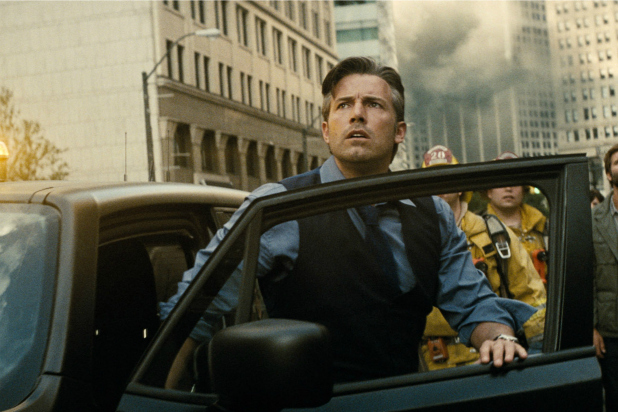 The real hero of the recently released Batman v. Superman film is an often overshadowed character, Bruce Wayne. Batman’s alter ego, Bruce Wayne is the CEO of Wayne Enterprises and the hero that Gotham, and in the case of this film, Metropolis needs too. Bruce Wayne is, in fact, a capitalist superhero.
In an opening scene, we find Wayne landing in the city of Metropolis as Superman and General Zod battle in the skies and skyscrapers above him. As citizens flee the ongoing destruction, Bruce Wayne does the opposite, dodging collapsing buildings and abandoned vehicles. We find that his goal is Wayne Tower, and his mission is to oversee the evacuation of his employees. Upon arriving at the tower Bruce immediately begins helping those around him, pulling a man from the rubble and saving a little girl from falling debris. Wayne does not sit back safely from afar and either mourn the loss of human capital or make mental notes to hire more employees. Neither does he do a cost-benefit analysis of trying to save those who work for him: instead he knows the value of human life and risks his own to save it.
Bruce is focused not only on short-term outcomes, but also long term effects. During the subsequent congressional hearings about Superman, we find that Bruce had created a victims’ fund for those affected by the disaster at Wayne Tower — another example of the value that Bruce Wayne places on those who are working for him. As a free agent in free society, Wayne would have been obligated contractually only to pay the wages and benefits that had been negotiated. In the face of disastrous situations, however, he uses the profits and capital he has acquired to benefit his immediate community – his employees. He goes beyond a mere contractual agreement and instead fulfills what he views is a moral obligation to the victims of the battle.
What we have in Bruce Wayne, CEO, then, is an embodiment of noblesse oblige, the idea that nobility (an elevated position in society) comes with certain responsibilities. The concept has been tainted in the minds of some by its association with hereditary aristocracy and paternalism, but the essential idea is praiseworthy. Those who hold the status of a Bruce Wayne are morally required to fulfill certain responsibilities to those less privileged than they. Wayne is a member of the Gotham nobility and his family has a long history with the city. His parents exemplify this. Thomas Wayne, the deceased patriarch of the family, even performs surgery on the son of a mobster so as to fulfill the Hippocratic Oath of his profession. These lessons are not lost on the son. He is well aware of his position within his city and the legacy that he has inherited. Bruce does not shirk such weight, but instead does his best to fulfill it.
This is not to say that Bruce Wayne is a god without faults. He is a fallen man, whose errors are laid before the audience to dissect. One clear fault is Bruce’s assumption that by simply fulfilling the material needs of the survivors he has done his part. This is most clearly evidenced in the character of Wallace Keefe, the very man that Bruce Wayne pulled from the rubble of the Wayne building in Metropolis. Wallace loses his legs in the aftermath of the battle, however, he refuses and returns all of Bruce Wayne’s checks. This blindsides Wayne. It seems that loathing for Superman may have caused Bruce to overlook the real needs of those around him. This failing also captures the complexity of our social obligations. Bruce had perhaps improperly delegated responsibility for keeping personal contacts with those in need. At least in the case of Wallace Keefe, money was not the assistance that he needed most.
These faults, however, do not diminish the heroism of Bruce Wayne. Instead they show that he is a human being trying to do the best he can to fulfill his calling. Though he often disguises himself behind the façade of a playboy or the cowl of the bat, Bruce is a virtuous man. Even when opportunities strike that might make him more money, Bruce sees beyond the digits inscribed on the check and looks to the people he does business with.
For instance, the villain Lex Luthor invites Wayne to a gala that he is hosting and extends an invitation to collaborate on a venture. Wayne hasn’t done business with Lex, but he knows who Luthor is, and that he is a villain of one kind or another. A mere businessman might see the potential in such a partnership and the wealth that could be gained. Bruce, however, has forgone any sort of business relationship with Lex out of obedience to his moral commitments. Bruce knows that there are more important things than mere cash flow and stock options, for what does it matter to Bruce to gain the world if he loses his soul? He conducts his business and deals with his business associates within the context of a moral measure and an understanding of more permanent things.
The depiction of business leaders in film is often more akin to Wall Street’s Gordon Gekko, or more recently, Melissa McCarthy’s character in The Boss. This trope is a greedy, selfish, and callous person who cares only for the bottom line and whatever it takes to reach it. Batman v. Superman offers a different view of corporate leadership.
Bruce Wayne is not a base and vain corporate elitist, but instead a good man who does business. He is the head of corporation who rushes in to help and who tends to his employees and their welfare. And he is a virtuous man who knows not to deal with vicious characters like Lex. What we have in Bruce is a model for a businessman. In cape and cowl he is a true hero, the Dark Knight. But in suit and tie, Bruce Wayne is the quintessential capitalist superhero, a shining example of corporate nobility.
Originally published at Acton Commentary
Image credit: Warner Bros., Batman v Superman: Dawn of Justice
Previous Post

June 29, 2016
Consider Hiring More Christians. Here’s Why.
Next Post

July 12, 2016 McDonald’s as Social Enterprise: Capitalism’s Community Center?
Browse Our Archives
Select a Category Art Charity Church Common Grace Culture Curriculum Economics Education Family Justice Order Theology Uncategorized Vocation Wisdom Wonder Work
Select a Month January 2017 December 2016 November 2016 October 2016 September 2016 August 2016 July 2016 June 2016 May 2016 April 2016 March 2016 February 2016 January 2016 December 2015 November 2015 October 2015 September 2015 August 2015 July 2015 June 2015 May 2015 April 2015 March 2015 February 2015 January 2015 December 2014 November 2014 October 2014 September 2014 August 2014
Follow Us!
TAKE THE
Religious Wisdom Quiz
Which empire conquered the Northern Kingdom of Israel?
Select your answer to see how you score.
Assyrian Persian Babylonian Egyptian
Related posts from Oikonomia

Thomas Sowell on the Origins of Prosperity

Politics, Character, and Competition


Are Christianity and Communism Mutually Exclusive?
TRENDING AT PATHEOS Business, Finance and Religion

St. Francis by Bill Droel Pope Leo XIV declares 2026 as “Year...

Catholics are schooled in the faith by memorizing dogmatic points and lots...

The Good News of Our Human Limitations -...
After another day of trying to meet deadlines and working on projects,...

Quiet Holy Attentiveness (podcast) with Sarah Clarkson
We know that quiet is an essential aspect of the spiritual life,...

Every Vocation Everywhere All At Once
What is a vocation? How does it endure through the years? Can...

I promise this is not going to become a Taylor Swift Studies...
view all Business, Finance and Religion blogs
Ad-Free & Subscriber Log-In Subscription Support
- About Us
- 2026 Calendar
- Videos
- Podcasts
- Library of World Religions
- Faith In Media Tracker
- Advertise With Us
- Write for Us
- Privacy Policy
- Terms of Service
- Do Not Sell My Data
- Contact Us
- Radiant Digital
- Manage Newsletter Subscriptions
- Unsubscribe From Notifications
- Sitemap
Copyright 2008-2026, Patheos. All rights reserved.
Subscription Support Ad-Free & Subscriber Log-In
Follow Patheos