
BuddhistCatholicContemplativeEvangelicalGeneral ChristianHinduJewishLatter-day SaintMuslimNew VisionsProgressive Christian
Beliefs
- Buddhist
- Catholic
- Contemplative
- Evangelical
- General Christian
- Hindu
- Jewish
- Latter-day Saint
- More Voices
- Muslim
- New Visions
- Pagan
- Progressive Christian
Topics
- Religion News
- Food and Religion
- Sports and Religion
- Religious Art
- Religious Music and Entertainment
- Religious Events
- History and Religion
- Style and Religion
- Politics and Religion
- Women in Religion
- Recreation Outdoors and Religion
- Business Finance and Religion
- Careers Workplace and Religion
- Education and Religion
- Family Parenting and Religion
- Health Fitness and Religion
- Home and Religion
- Relationships and Religion
- Technology and Religion
- Travel and Religion
Columnists
- Buddhist Columnists
- Business Finance and Religion Columnists
- Careers Workplace and Religion Columnists
- Catholic Columnists
- Contemplative Columnists
- Education and Religion Columnists
- Evangelists Columnists
- Family Parenting and Religion Columnists
- General Christian Columnists
- Health Fitness and Religion Columnists
- Hindu Columnists
- History and Religion Columnists
- Home and Religion Columnists
- Jewish Columnists
- More Voices Columnists
- Latter Day Columnists
- Muslim Columnists
- New Visions Columnists
- Nonreligious Columnists
- Pagan Columnists
- Politics and Religion Columnists
- Progressive Columnists
- Recreation Outdoors and Religion Columnists
- Relationships and Religion Columnists
- Religion News Columnists
- Religious Art Columnists
- Religious Events Columnists
- Religious Music and Entertainment Columnists
- Sports and Religion Columnists
- Style and Religion Columnists
- Technology and Religion Columnists
- Travel and Religion Columnists
- Women in Religion Columnists
Resource Library
- 2026 Calendar
- Library of World Religions
- The 100 Most Holy Places on Earth
- Patheos Answers
- Podcasts
- Videos
- Faith Leaders Database
- Anglican Episcopalian
- Bahai
- Baptist
- Buddhism
- Christianity
- Confucianism
- Eastern Orthodoxy
- Hinduism
- Holiness and Pentecostal
- ISKCON
- Islam
- Judaism
- Lutheran
- Methodist
- The Church of Jesus Christ of Latter-day Saints
- New Age
- Paganism
- Presbytarian and Reformed
- Protestantism
- Religion Behind the Scenes
- Roman Catholic
- Scientology
- Shia Islam
- Sikhism
- Sufism
- Sunni Islam
- Taoism
- Zen
- See all religions
Research Tools
 Ad-Free & Subscriber Log-In Subscription Support
Ad-Free & Subscriber Log-In Subscription Support
Follow Patheos 

- Trending:
- Forgiveness
- |
- Marriage
- |
- Consciousness
- |
- Death Penalty
- |
- Election
- |
- Halloween
 Oikonomia
- Home
- Business, Finance and Religion
- Love Is the Law of His Kingdom
Love Is the Law of His Kingdom
Last updated on: May 11, 2016 at 1:00 am by Acton Institute
Love Is the Law of His Kingdom 2016-05-11T01:00:23-04:00 Acton Institute
Patheos Explore the world's faith through different perspectives on religion and spirituality! Patheos has the views of the prevalent religions and spiritualities of the world.
 We are seeing a universal pursuit of equality, a yearning to eliminate all distinction based on birth or property and not on personal value, a strong push for independence and freedom. In church and state, in family and society, in vocation and business, each person wants to see their own rights defined, wants to cast their own vote, and wants to stand up for their own interests.
In this pursuit there is much that we can accept as required by the times in which we live, much that we can appreciate as completely legitimate. In the name of Christianity we cannot disapprove of much of this, for this religion, more than any other religion or ethics, has highlighted the value of the human personality. The human soul is more valuable than the whole world. But this pursuit may enjoy our sympathy and support—and can work beneficially—only to the degree that it is directed by religious-moral principles and is guided by the law of God.
The person who pursues simply and only independence ends up glorifying the will to power, the right of the strongest; and because such anarchy cannot be tolerated, he is one day reined in by someone stronger or forcibly put in chains by society itself. The individual and the community can live in peace, even as husband and wife, parents and children, government and citizens, employer and worker, only if a moral authority stands over them, defining the rights and duties of both and guarding the interests of each.
A Law Rooted in Conscience
And that in fact is the case. The individual person is not free; he cannot do what he wants. He is not only limited by his environment, but he also senses that he is bound by his conscience and is responsible for his thoughts, desires, and actions. Similarly, society is not sovereign and almighty, but bound to ordinances that God has established for it. For society itself is grounded in moral principles. Indeed, people committed to a materialist or socialist viewpoint have supposed that society with all its relationships and goods should be a product of economic, material circumstances. But this teaching directly contradicts reality.
Even though society exerts influence on its members, society itself is always composed of people who come not only with a body and a stomach, but also with a heart and a soul, an intellect and a conscience. No matter what interests may induce people to form a connection with each other, these are always people who are morally responsible and may not do whatever they may happen to desire or want. Sometimes, in fact, such connections are formed with a view to protecting spiritual and moral interests, such as, for example, science, art, charity, compassion, etc.
But even if it involves purely material interests, like developing a mine, cultivating the soil, producing various material goods, etc., then still these always involve people who are in a particular relationship with each other, who respect each other as people, and who are subject to a common law for all their thinking and acting.
Before anything else, a society is a complex composite of moral relationships. It matters very little if these moral relationships are incorporated into the law as legal regulations; occasionally codifying a right is proof that such moral relationships no longer possess adequate security in people’s consciences. But from their very origin, they rest in the spiritual, moral nature of the human person and their ultimate firm footing lies there; a law that is not rooted in conscience is powerless; a people’s economy is based on their ethics.
The Nursery of Love
If this indeed is the case, then once again we see the extraordinary significance that the family possesses for the moral well-being of society. For there in the family from the moment we enter the world we get to know all those relationships that we will enter later in society— relationships of freedom and connectedness, independence and dependence, authority and obedience, equality and difference.
And we get to know them in the family not in an abstract academic way, not by theoretical instruction, but practically, in and through life itself; all moral relationships are embedded and interwoven in the family, in the bonds of blood, and they are rooted in the origins of human existence. In the family we get to know the secret of life, the secret, namely, that not selfishness but self-denial and self-sacrifice, dedication and love, constitute the rich content of human living.
 And from the family we carry those moral relationships into society. One who has learned to honor his father later respects the authority of those through whom it has pleased God to rule over him. One who has truly loved his mother cannot violate another woman’s honor. One who views the family servants as housemates cannot become a tyrant over his own employees. The family is the nursery of love and inoculates society with such love.
We need that love if there is going to be any reform within society. Not selfishness, not greed, not thirst for domineering, but love is the foundation and the cement of the Christian society. Christianity is not the architect, but the soul of society. One who destroys the family is digging away the moral foundations on which society has been established as a moral institution.
But one who exalts the family and outfits leadership with love rather than selfishness, such a person does a work that pleases God. For God is love and love is the law of his kingdom.
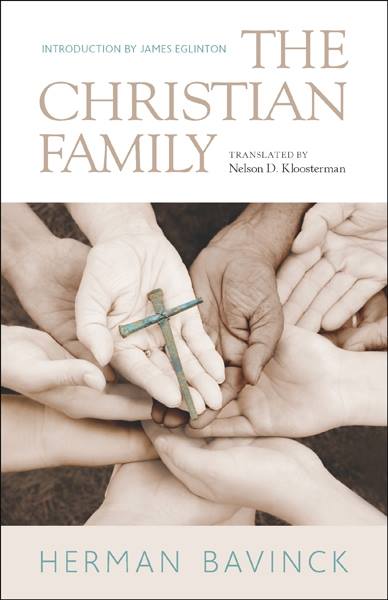
This is an adapted excerpt from The Christian Family, written by Herman Bavinck in 1912 and translated by Nelson Kloosterman in 2012. It is reprinted here with permission from Christian’s Library Press.
Photo credit: Eric Silva
Previous Post

May 3, 2016
Money and Moral Absolutes
Next Post

May 19, 2016 Why Cultural Capital Is Necessary for Economic Flourishing
Browse Our Archives
Select a Category Art Charity Church Common Grace Culture Curriculum Economics Education Family Justice Order Theology Uncategorized Vocation Wisdom Wonder Work
Select a Month January 2017 December 2016 November 2016 October 2016 September 2016 August 2016 July 2016 June 2016 May 2016 April 2016 March 2016 February 2016 January 2016 December 2015 November 2015 October 2015 September 2015 August 2015 July 2015 June 2015 May 2015 April 2015 March 2015 February 2015 January 2015 December 2014 November 2014 October 2014 September 2014 August 2014
Follow Us!
TAKE THE
Religious Wisdom Quiz
What does the voice in Revelation 6 say about food prices?
Select your answer to see how you score.
Free food for all Food will be multiplied A day's wages for a measure of wheat No one will go hungry
Related posts from Oikonomia


Lessons on Christian Vocation from ‘Chewbacca Mom’

Are Christianity and Communism Mutually Exclusive?

Help People, Not Banks: Reflections on the 2016...
TRENDING AT PATHEOS Business, Finance and Religion

St. Francis by Bill Droel Pope Leo XIV declares 2026 as “Year...

Catholics are schooled in the faith by memorizing dogmatic points and lots...

The Good News of Our Human Limitations -...
After another day of trying to meet deadlines and working on projects,...

Quiet Holy Attentiveness (podcast) with Sarah Clarkson
We know that quiet is an essential aspect of the spiritual life,...

Every Vocation Everywhere All At Once
What is a vocation? How does it endure through the years? Can...

I promise this is not going to become a Taylor Swift Studies...
view all Business, Finance and Religion blogs
Ad-Free & Subscriber Log-In Subscription Support
- About Us
- 2026 Calendar
- Videos
- Podcasts
- Library of World Religions
- Faith In Media Tracker
- Advertise With Us
- Write for Us
- Privacy Policy
- Terms of Service
- Do Not Sell My Data
- Contact Us
- Radiant Digital
- Manage Newsletter Subscriptions
- Unsubscribe From Notifications
- Sitemap
Copyright 2008-2026, Patheos. All rights reserved.
Subscription Support Ad-Free & Subscriber Log-In
Follow Patheos