
BuddhistCatholicContemplativeEvangelicalGeneral ChristianHinduJewishLatter-day SaintMuslimNew VisionsProgressive Christian
Beliefs
- Buddhist
- Catholic
- Contemplative
- Evangelical
- General Christian
- Hindu
- Jewish
- Latter-day Saint
- More Voices
- Muslim
- New Visions
- Pagan
- Progressive Christian
Topics
- Religion News
- Food and Religion
- Sports and Religion
- Religious Art
- Religious Music and Entertainment
- Religious Events
- History and Religion
- Style and Religion
- Politics and Religion
- Women in Religion
- Recreation Outdoors and Religion
- Business Finance and Religion
- Careers Workplace and Religion
- Education and Religion
- Family Parenting and Religion
- Health Fitness and Religion
- Home and Religion
- Relationships and Religion
- Technology and Religion
- Travel and Religion
Columnists
- Buddhist Columnists
- Business Finance and Religion Columnists
- Careers Workplace and Religion Columnists
- Catholic Columnists
- Contemplative Columnists
- Education and Religion Columnists
- Evangelists Columnists
- Family Parenting and Religion Columnists
- General Christian Columnists
- Health Fitness and Religion Columnists
- Hindu Columnists
- History and Religion Columnists
- Home and Religion Columnists
- Jewish Columnists
- More Voices Columnists
- Latter Day Columnists
- Muslim Columnists
- New Visions Columnists
- Nonreligious Columnists
- Pagan Columnists
- Politics and Religion Columnists
- Progressive Columnists
- Recreation Outdoors and Religion Columnists
- Relationships and Religion Columnists
- Religion News Columnists
- Religious Art Columnists
- Religious Events Columnists
- Religious Music and Entertainment Columnists
- Sports and Religion Columnists
- Style and Religion Columnists
- Technology and Religion Columnists
- Travel and Religion Columnists
- Women in Religion Columnists
Resource Library
- 2026 Calendar
- Library of World Religions
- The 100 Most Holy Places on Earth
- Patheos Answers
- Podcasts
- Videos
- Faith Leaders Database
- Anglican Episcopalian
- Bahai
- Baptist
- Buddhism
- Christianity
- Confucianism
- Eastern Orthodoxy
- Hinduism
- Holiness and Pentecostal
- ISKCON
- Islam
- Judaism
- Lutheran
- Methodist
- The Church of Jesus Christ of Latter-day Saints
- New Age
- Paganism
- Presbytarian and Reformed
- Protestantism
- Religion Behind the Scenes
- Roman Catholic
- Scientology
- Shia Islam
- Sikhism
- Sufism
- Sunni Islam
- Taoism
- Zen
- See all religions
Research Tools
 Ad-Free & Subscriber Log-In Subscription Support
Ad-Free & Subscriber Log-In Subscription Support
Follow Patheos 

- Trending:
- Forgiveness
- |
- Marriage
- |
- Consciousness
- |
- Death Penalty
- |
- Election
- |
- Halloween
 Oikonomia
- Home
- Business, Finance and Religion
- Raw Craft: The Art of Bookmaking and the Glory of Craftsmanship
Raw Craft: The Art of Bookmaking and the Glory of Craftsmanship
Last updated on: November 11, 2015 at 1:15 pm by Acton Institute
Raw Craft: The Art of Bookmaking and the Glory of Craftsmanship 2015-11-11T13:15:57-04:00 Acton Institute
Patheos Explore the world's faith through different perspectives on religion and spirituality! Patheos has the views of the prevalent religions and spiritualities of the world.
By Joseph Sunde
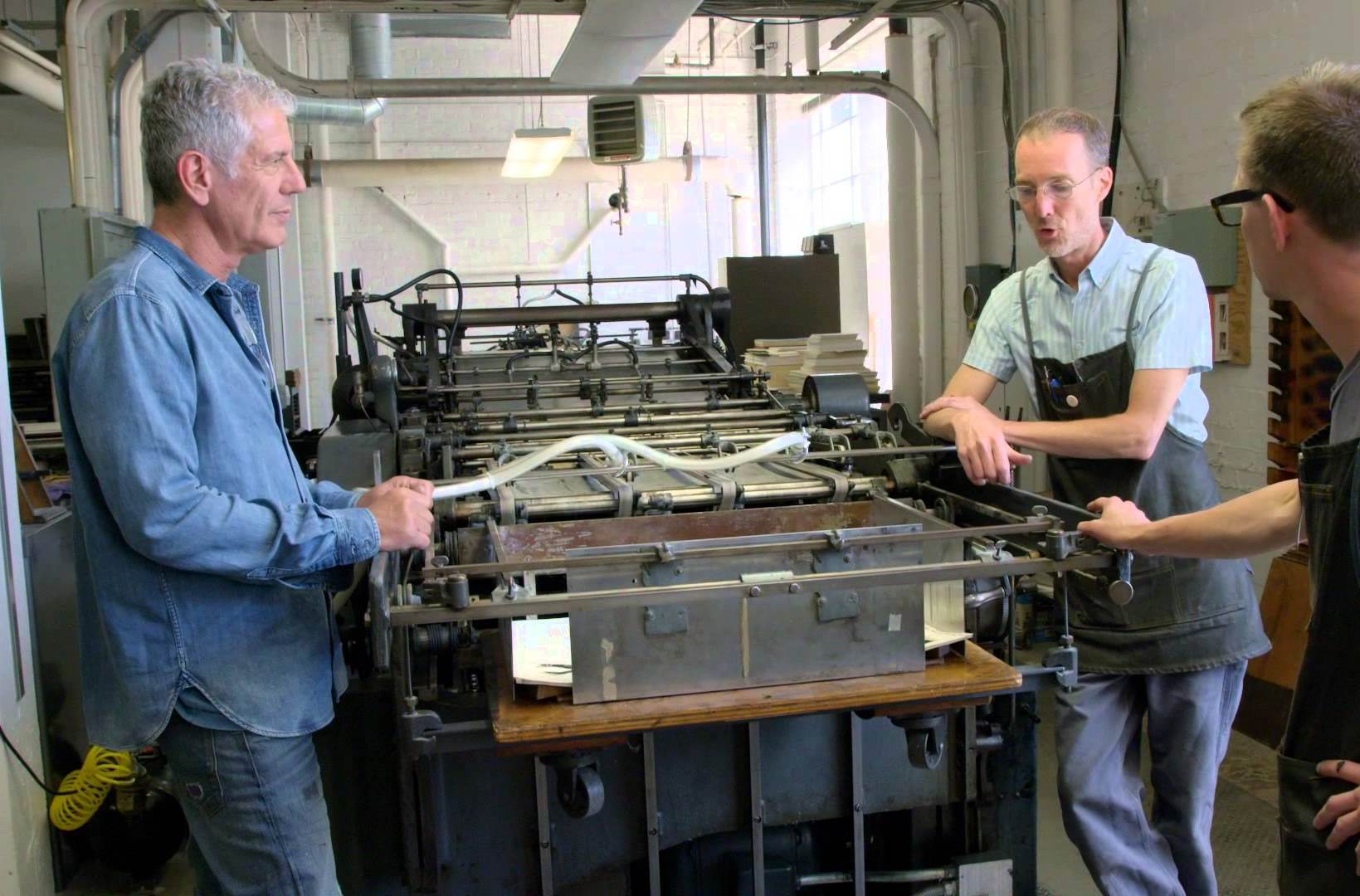 Throughout its history, the American economy has transitioned from agrarian to industrial to information-driven.
Given our newfound status, manual labor is increasingly cast down in the popular imagination, replaced by white-collar jobs, bachelor’s degrees, and ladder-climbing. Whether due to new avenues and opportunities or a more general distaste for the slow and mundane, work with the hands is either ignored or discouraged, both as vocational prospect and consumeristic priority.
Amid this sea of new efficiencies, the art of craftsmanship is at a particular disadvantage. Whereas things used to be made with a certain individual artistry (out of necessity, no doubt), so much has become industrialized and systematized. That shift has led to unprecedented blessings, to be sure, whether in time, money, energy, and convenience, and for those fruits we should be grateful and rejoice.
But even in an economy such as this, there remains a need, a market, a knack for the slow and steady. There remains room not just for the magnificence of a well engineered microchip, but for a masterfully carved table and an artfully tailored suit. Creative service comes in all kinds, and God has a plan to both meet our immediate needs and fill our bodies, souls, and spirits with beauty and wonder.
In a new video series called Raw Craft, famed travel geek Anthony Bourdain seeks to highlight the folks who are thriving on this frontier — the best of the best, who continue to create value in trades or methods that many consider dead or disposable. “The great cathedrals of France were designed by artists,” Bourdain says in one episode, “but they were built by craftsmen.”
Bourdain sits down with everyone from brewers to tailors, blacksmiths to instrument builders, but the episode on an age-old printer and bookmaker draws out all the right themes rather well:
Toward the end of the episode, Bourdain expresses the surprising awe of simply holding, touching, and smelling one of their finely made books, noting what he describes as a “metaphysical aspect” to the process and product. “There’s a heft to this,” he says, “You know somehow in a tactile way this is a well-made thing.”
In doing so, he unknowingly points to something profound about our God-given nature and destiny, not to mention the fruits of our labor. We are co-creators made in the image of a creative God, and the outcomes and byproducts of that divine relationship are often no less mysterious. There is something to behold and appreciate about our creations in and of themselves, and there’s a place in God’s economy for activities or processes that we might otherwise deem “useless” or inefficient.
As Lester DeKoster and Gerard Berghoef observe, when we put hands to matter, we partake in something more profound than we often realize:
The forms of work are countless, but the typical one is work with the hands. The Bible has reference to the sower, to the making of tents and of things out of clay, to tilling the fields and tending the vine. Handwork makes visible the plan in the mind, just as the deed makes visible the love in the heart. While the classic Greek mind tended to scorn work with the hands, the Bible suggests that something about it structures the soul.
Even amid our shifting civilizational priorities, and despite the temptations of consumerism, we now have the time, tools, and resources for the carefulness that craftsmanship requires. Oddly enough, and partly thanks to prosperity and efficiency, we now have new freedom and resources to pursue the goodness and beauty of craftsmanship — no longer out of a quest for self-sustenance, but for the service of all humankind.
More broadly, as society continues to blindly elevate this industry or occupation over that, and as our culture continues to assign status and value according to earthbound views of human worth and destiny, the church has the opportunity to lead the way forward in recognizing the glory of craftsmanship. We can affirm what Bourdain already senses to be true, pointing to the transcendent value behind it and the God-glorifying truth that lies ahead.
Originally published at the Acton PowerBlog
Photo credit: Raw Craft
Previous Post

November 10, 2015
What Christians Should Know About Consumption
Next Post

November 12, 2015 Abraham Kuyper’s Public Theology Today
Browse Our Archives
Select a Category Art Charity Church Common Grace Culture Curriculum Economics Education Family Justice Order Theology Uncategorized Vocation Wisdom Wonder Work
Select a Month January 2017 December 2016 November 2016 October 2016 September 2016 August 2016 July 2016 June 2016 May 2016 April 2016 March 2016 February 2016 January 2016 December 2015 November 2015 October 2015 September 2015 August 2015 July 2015 June 2015 May 2015 April 2015 March 2015 February 2015 January 2015 December 2014 November 2014 October 2014 September 2014 August 2014
Follow Us!
TAKE THE
Religious Wisdom Quiz
What vision did Daniel have of four beasts representing empires?
Select your answer to see how you score.
Four dragons Lion, bear, leopard, terrifying beast Ox, ram, goat, lion Horse, eagle, serpent, leopard
Related posts from Oikonomia

Thomas Sowell on the Origins of Prosperity


Lessons on Christian Vocation from ‘Chewbacca Mom’

Are Christianity and Communism Mutually Exclusive?
TRENDING AT PATHEOS Business, Finance and Religion

St. Francis by Bill Droel Pope Leo XIV declares 2026 as “Year...

Catholics are schooled in the faith by memorizing dogmatic points and lots...

The Good News of Our Human Limitations -...
After another day of trying to meet deadlines and working on projects,...

Quiet Holy Attentiveness (podcast) with Sarah Clarkson
We know that quiet is an essential aspect of the spiritual life,...

Every Vocation Everywhere All At Once
What is a vocation? How does it endure through the years? Can...

I promise this is not going to become a Taylor Swift Studies...
view all Business, Finance and Religion blogs
Ad-Free & Subscriber Log-In Subscription Support
- About Us
- 2026 Calendar
- Videos
- Podcasts
- Library of World Religions
- Faith In Media Tracker
- Advertise With Us
- Write for Us
- Privacy Policy
- Terms of Service
- Do Not Sell My Data
- Contact Us
- Radiant Digital
- Manage Newsletter Subscriptions
- Unsubscribe From Notifications
- Sitemap
Copyright 2008-2026, Patheos. All rights reserved.
Subscription Support Ad-Free & Subscriber Log-In
Follow Patheos