
BuddhistCatholicContemplativeEvangelicalGeneral ChristianHinduJewishLatter-day SaintMuslimNew VisionsProgressive Christian
Beliefs
- Buddhist
- Catholic
- Contemplative
- Evangelical
- General Christian
- Hindu
- Jewish
- Latter-day Saint
- More Voices
- Muslim
- New Visions
- Pagan
- Progressive Christian
Topics
- Religion News
- Food and Religion
- Sports and Religion
- Religious Art
- Religious Music and Entertainment
- Religious Events
- History and Religion
- Style and Religion
- Politics and Religion
- Women in Religion
- Recreation Outdoors and Religion
- Business Finance and Religion
- Careers Workplace and Religion
- Education and Religion
- Family Parenting and Religion
- Health Fitness and Religion
- Home and Religion
- Relationships and Religion
- Technology and Religion
- Travel and Religion
Columnists
- Buddhist Columnists
- Business Finance and Religion Columnists
- Careers Workplace and Religion Columnists
- Catholic Columnists
- Contemplative Columnists
- Education and Religion Columnists
- Evangelists Columnists
- Family Parenting and Religion Columnists
- General Christian Columnists
- Health Fitness and Religion Columnists
- Hindu Columnists
- History and Religion Columnists
- Home and Religion Columnists
- Jewish Columnists
- More Voices Columnists
- Latter Day Columnists
- Muslim Columnists
- New Visions Columnists
- Nonreligious Columnists
- Pagan Columnists
- Politics and Religion Columnists
- Progressive Columnists
- Recreation Outdoors and Religion Columnists
- Relationships and Religion Columnists
- Religion News Columnists
- Religious Art Columnists
- Religious Events Columnists
- Religious Music and Entertainment Columnists
- Sports and Religion Columnists
- Style and Religion Columnists
- Technology and Religion Columnists
- Travel and Religion Columnists
- Women in Religion Columnists
Resource Library
- 2026 Calendar
- Library of World Religions
- The 100 Most Holy Places on Earth
- Patheos Answers
- Podcasts
- Videos
- Faith Leaders Database
- Anglican Episcopalian
- Bahai
- Baptist
- Buddhism
- Christianity
- Confucianism
- Eastern Orthodoxy
- Hinduism
- Holiness and Pentecostal
- ISKCON
- Islam
- Judaism
- Lutheran
- Methodist
- The Church of Jesus Christ of Latter-day Saints
- New Age
- Paganism
- Presbytarian and Reformed
- Protestantism
- Religion Behind the Scenes
- Roman Catholic
- Scientology
- Shia Islam
- Sikhism
- Sufism
- Sunni Islam
- Taoism
- Zen
- See all religions
Research Tools
 Ad-Free & Subscriber Log-In Subscription Support
Ad-Free & Subscriber Log-In Subscription Support
Follow Patheos 

- Trending:
- Forgiveness
- |
- Marriage
- |
- Consciousness
- |
- Death Penalty
- |
- Election
- |
- Halloween
 Oikonomia
- Home
- Business, Finance and Religion
- The Magic of the Small Town Barbershop
The Magic of the Small Town Barbershop
Last updated on: October 6, 2015 at 11:59 pm by Acton Institute
The Magic of the Small Town Barbershop 2015-10-06T23:59:41-04:00 Acton Institute
Patheos Explore the world's faith through different perspectives on religion and spirituality! Patheos has the views of the prevalent religions and spiritualities of the world.
By Chris Horst
I pushed open the door of Center Court Barbershop and sat down, awaiting my turn. Center Court looked like a proper barbershop should look. Classic swivel chairs lined the mirrors. Longtime patrons, kids and adults alike, chatted about local news. Nobody rushed or hurried, despite the wait.
I stopped at Center Court on my way through Indiana, randomly finding it on my route through Wabash, Indiana. My barber, Jeff, recognized I was a first-time guest. We exchanged pleasantries and he then shared openly about why he had gotten into the business. He tried other careers, he said, but barbering was the first job that felt right.
“I take a lot of pride in what we do here,” Jeff shared. “We believe in the classic barbershop and the craft of it.”
He finished the haircut with an old-fashioned hot shave, carefully maneuvering his straight blade. He finished my cut and as he swept the floor, he handed me a Sharpie so I could sign their customer wall. I found an empty spot at eye-level and wrote “Chris Horst, Denver, CO” alongside hundreds of other signatures.
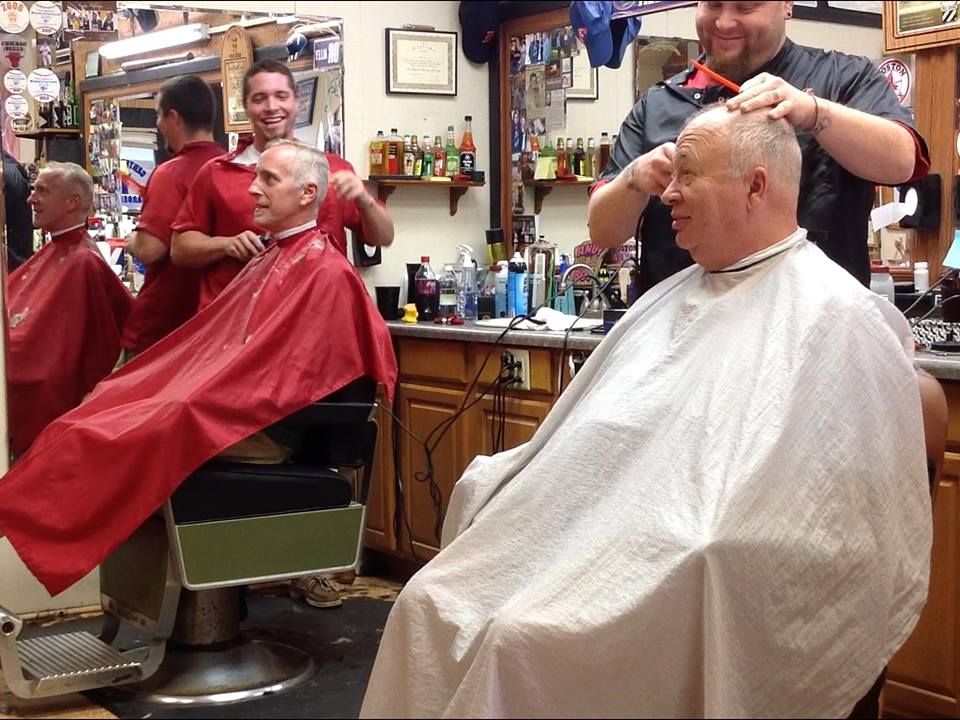
Center Court Barbershop (photo credit: Company web site)
I walked out of Center Court freshly attuned to why we celebrate small business in this country. Jeff knew his customers by name. He understood their needs and cultivated community while he worked. The barbershop’s core ingredients—its people, rituals, ambiance and craftsmanship—blended together perfectly. But I do wonder what differentiates the small business experience and reputation from that of their larger counterparts.
For over forty years, Gallup has tracked American confidence in our largest cultural institutions, such as the military, our medical system, public schools, and organized religion. The results are fascinating. Ranking second behind only the military, small business enjoys high levels of confidence from the American public. On the flipside, ranking near the bottom since the time Gallup began the study, is “big business.”
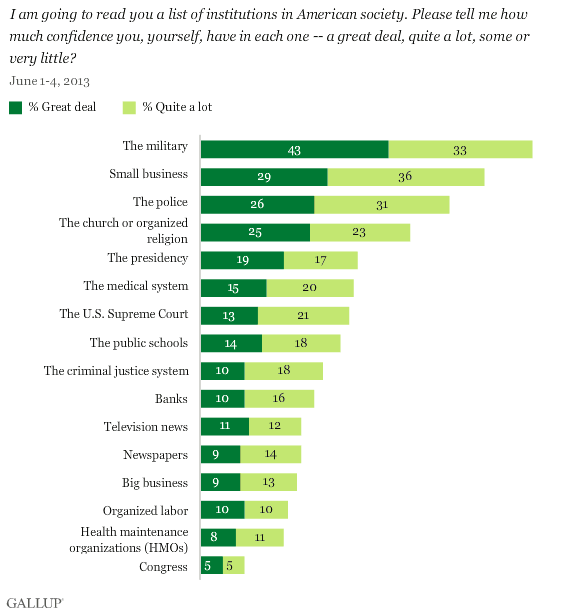
So when do businesses transition from small to big? At what point do enterprises grow from loved to scorned? I’m not asking for a scientific answer. I know there are a lot of helpful definitions about what qualifies as small and big business. But survey respondents aren’t given specific parameters. They’re just asked to instinctively react to these labels.
I’ve wondered how this plays internationally as well. When we share the story of a hardworking Rwandan entrepreneur like Jacqueline, who bootstrapped her way from destitution to sustenance, it’s easy to rally around her. Her story is deeply personal and tangible. Though Jacqueline’s current wages are still modest, I will rise early to shout her story from the rooftops.
On the flipside, when I learned my friend’s company recently opened a production warehouse in Vietnam, I shrugged. Though he paid generous wages and provided financial stability to dozens of poor Vietnamese breadwinners, my emotions stood unstirred.
I have some guesses to why this dynamic exists. Small businesses feel more human. Big businesses seem faceless. Startups feel approachable. Corporations seem impenetrable. And then there’s the “headline factor.” If a three-person plumbing company installs a faulty toilet, only a few will ever know about it. If a Fortune 100 company mistreats an employee or, like my beloved Target, has a credit card security breach, it’s front-page news. Everywhere.
In his book, The Coming Jobs War, Jim Clifton, CEO of Gallup, looked at Gallup’s volumes of global research and came to this conclusion: The most significant global issue in our time—more pressing than even environmental degradation or terrorism—is job creation. “If countries fail at creating jobs,” says Clifton, “their societies will fall apart. Countries, and more specifically cities, will experience suffering, instability, chaos, and eventually revolution.”
The Arab Spring has put this on full display, with many experts pinning the revolutions not primarily to religious or political conflicts, but to youth joblessness. To address the deep and stubborn issues of unemployment and poverty around the world, we’ll need enterprise, both big and small. We’ll need the mom-and-pops and the multinationals to put the world’s population to work. We’ll need Jacqueline, the community barbershop, and Target.
Originally published at Smorgasblurb
Previous Post
October 5, 2015
Now Available: Lester DeKoster’s ‘Work,’ Re-Issued with New Afterword
Next Post

October 7, 2015 How God and Man Make a Sandwich
Browse Our Archives
Select a Category Art Charity Church Common Grace Culture Curriculum Economics Education Family Justice Order Theology Uncategorized Vocation Wisdom Wonder Work
Select a Month January 2017 December 2016 November 2016 October 2016 September 2016 August 2016 July 2016 June 2016 May 2016 April 2016 March 2016 February 2016 January 2016 December 2015 November 2015 October 2015 September 2015 August 2015 July 2015 June 2015 May 2015 April 2015 March 2015 February 2015 January 2015 December 2014 November 2014 October 2014 September 2014 August 2014
Follow Us!
TAKE THE
Religious Wisdom Quiz
True or False: Mark's Gospel is the shortest of the four Gospels.
Select your answer to see how you score.
TRUE FALSE
Related posts from Oikonomia

Thomas Sowell on the Origins of Prosperity

Politics, Character, and Competition


Lessons on Christian Vocation from ‘Chewbacca Mom’
TRENDING AT PATHEOS Business, Finance and Religion

St. Francis by Bill Droel Pope Leo XIV declares 2026 as “Year...

Catholics are schooled in the faith by memorizing dogmatic points and lots...

The Good News of Our Human Limitations -...
After another day of trying to meet deadlines and working on projects,...

Quiet Holy Attentiveness (podcast) with Sarah Clarkson
We know that quiet is an essential aspect of the spiritual life,...

Every Vocation Everywhere All At Once
What is a vocation? How does it endure through the years? Can...

I promise this is not going to become a Taylor Swift Studies...
view all Business, Finance and Religion blogs
Ad-Free & Subscriber Log-In Subscription Support
- About Us
- 2026 Calendar
- Videos
- Podcasts
- Library of World Religions
- Faith In Media Tracker
- Advertise With Us
- Write for Us
- Privacy Policy
- Terms of Service
- Do Not Sell My Data
- Contact Us
- Radiant Digital
- Manage Newsletter Subscriptions
- Unsubscribe From Notifications
- Sitemap
Copyright 2008-2026, Patheos. All rights reserved.
Subscription Support Ad-Free & Subscriber Log-In
Follow Patheos