
BuddhistCatholicContemplativeEvangelicalGeneral ChristianHinduJewishLatter-day SaintMuslimNew VisionsProgressive Christian
Beliefs
- Buddhist
- Catholic
- Contemplative
- Evangelical
- General Christian
- Hindu
- Jewish
- Latter-day Saint
- More Voices
- Muslim
- New Visions
- Pagan
- Progressive Christian
Topics
- Religion News
- Food and Religion
- Sports and Religion
- Religious Art
- Religious Music and Entertainment
- Religious Events
- History and Religion
- Style and Religion
- Politics and Religion
- Women in Religion
- Recreation Outdoors and Religion
- Business Finance and Religion
- Careers Workplace and Religion
- Education and Religion
- Family Parenting and Religion
- Health Fitness and Religion
- Home and Religion
- Relationships and Religion
- Technology and Religion
- Travel and Religion
Columnists
- Buddhist Columnists
- Business Finance and Religion Columnists
- Careers Workplace and Religion Columnists
- Catholic Columnists
- Contemplative Columnists
- Education and Religion Columnists
- Evangelists Columnists
- Family Parenting and Religion Columnists
- General Christian Columnists
- Health Fitness and Religion Columnists
- Hindu Columnists
- History and Religion Columnists
- Home and Religion Columnists
- Jewish Columnists
- More Voices Columnists
- Latter Day Columnists
- Muslim Columnists
- New Visions Columnists
- Nonreligious Columnists
- Pagan Columnists
- Politics and Religion Columnists
- Progressive Columnists
- Recreation Outdoors and Religion Columnists
- Relationships and Religion Columnists
- Religion News Columnists
- Religious Art Columnists
- Religious Events Columnists
- Religious Music and Entertainment Columnists
- Sports and Religion Columnists
- Style and Religion Columnists
- Technology and Religion Columnists
- Travel and Religion Columnists
- Women in Religion Columnists
Resource Library
- 2026 Calendar
- Library of World Religions
- The 100 Most Holy Places on Earth
- Patheos Answers
- Podcasts
- Videos
- Faith Leaders Database
- Anglican Episcopalian
- Bahai
- Baptist
- Buddhism
- Christianity
- Confucianism
- Eastern Orthodoxy
- Hinduism
- Holiness and Pentecostal
- ISKCON
- Islam
- Judaism
- Lutheran
- Methodist
- The Church of Jesus Christ of Latter-day Saints
- New Age
- Paganism
- Presbytarian and Reformed
- Protestantism
- Religion Behind the Scenes
- Roman Catholic
- Scientology
- Shia Islam
- Sikhism
- Sufism
- Sunni Islam
- Taoism
- Zen
- See all religions
Research Tools
 Ad-Free & Subscriber Log-In Subscription Support
Ad-Free & Subscriber Log-In Subscription Support
Follow Patheos 

- Trending:
- Forgiveness
- |
- Marriage
- |
- Consciousness
- |
- Death Penalty
- |
- Election
- |
- Halloween
 Oikonomia
- Home
- Business, Finance and Religion
- Cultural Task #1: Crucify Our Incipient Darwinism
Cultural Task #1: Crucify Our Incipient Darwinism
Last updated on: October 13, 2015 at 12:36 am by Acton Institute
Cultural Task #1: Crucify Our Incipient Darwinism 2015-10-13T00:36:36-04:00 Acton Institute
Patheos Explore the world's faith through different perspectives on religion and spirituality! Patheos has the views of the prevalent religions and spiritualities of the world.
By Joseph Sunde
 One of the long-running mistakes of the church has been its various confinements of cultural engagement to particular spheres (e.g. churchplace ministry) or selective “uses” (e.g. evangelistic conversion).
But even if we manage to broaden the scope of our stewardship — recognizing that God has called us to pursue truth, goodness, and beauty across all spheres of creation — our imaginations will still require a strong injection of the transformative power of Jesus.
When we seek God first and neighbor second, we no longer proceed from the base assumptions of earthbound goods — the “love of man” what-have-you. Yes, our goals and actions will occasionally find overlap with those of the world, but eventually, the upside-down economics of the Gospel will set us apart. We will do certain things and make certain sacrifices that are foreign and incomprehensible to those around us.
This has implications for all areas, but much of it boils down to our basic views about the human person: his and her dignity and destiny as an image-bearer of an almighty God. Once our hearts are transformed according to his designs and our views about our neighbors are aligned to God’s story about his children, our cultural engagement will manifest in unpredictable and mysterious ways. This is, after all, what it means to be strangers in a strange land, as Episode 1 of For the Life of the World artfully explains.
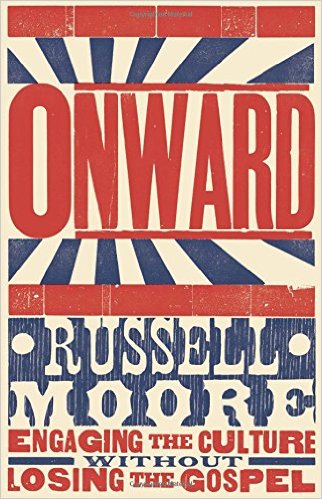
In his latest book, Onward: Engaging the Culture without Losing the Gospel, Russell Moore offers some valuable reflections along these lines, noting that we can’t possibly stand as witnesses of God’s love if our cultural comings and goings fail to respond through the lens of Christ’s kingdom. “The kingdom of God changes the culture of the church by showing us a longer view of who’s important and who’s in charge,” he writes.
What cultural engagement really requires, then, is a careful destruction of that basic lie the enemy continues to spread and embed across societies and civilizations: that the love of man and the worship of his goals is, indeed, enough.
As Moore explains, this “incipient Darwinism” can be seen all around us, and we as Christians must be quick to put it in its place:
The kingdom of God turns the Darwinist narrative of the survival of the fittest upside down (Acts 17:6-7). When the church honors and cares for the vulnerable among us, we are not showing charity. We are simply recognizing the way the world really works, at least in the long run. The child with Down Syndrome on the fifth row from the back in your church, he’s not a “ministry project.” He’s a future king of the universe. The immigrant woman who scrubs toilets every day on hands and knees, and can barely speak enough English to sing along with your praise choruses, she’s not a problem to be solved. She’s a future queen of the cosmos, a joint-heir with Christ.
The most important cultural witness the church has is not, first of all, to raise up Christian filmmakers and novelists and artists and business leaders and politicians, although we ought to work to disciple those in all sorts of callings, and encourage them. The most important cultural task we have is to crucify our incipient Darwinism, in which the leaders on the inside of the kingdom colony are the same as they would be on the outside, even if there were no God in the universe. The first step to cultural influence is not to contextualize the present, but to contextualize to the future, and the future is awfully strange, even to us.
I’ve written before on how Christian might absorb this reality as it relates to the world of creative service (e.g. 1, 2, 3, 4, 5, 6), and indeed, the workplace is a primary arena for demonstrating the transformative power of Christ’s love. Christian employees, entrepreneurs, executives, and business owners have a distinct opportunity to challenge distorted human constraints on a day-to-day basis, showing that what others may see as a “disability” in the here and now may very well be a certain foretaste of a rather glorious not yet.
But this fundamental orientation has implications for every other corner of culture, as well, from the family to the neighborhood to the theater to the school to the halls of government to the subsequent scepters of authority.
Rather than cowering from the strangeness of that future, we should delight in its beauty. And far from acting out of fear or toward blind accommodation, we can have confidence that such beauty and joy — strange though it may be — is more than sufficient to enchant the world around us.
Originally published at the Acton PowerBlog
Previous Post

October 7, 2015
How God and Man Make a Sandwich
Next Post

October 13, 2015 Immigrants, Refugees, and the Conversionary Tale of Jean Valjean
Browse Our Archives
Select a Category Art Charity Church Common Grace Culture Curriculum Economics Education Family Justice Order Theology Uncategorized Vocation Wisdom Wonder Work
Select a Month January 2017 December 2016 November 2016 October 2016 September 2016 August 2016 July 2016 June 2016 May 2016 April 2016 March 2016 February 2016 January 2016 December 2015 November 2015 October 2015 September 2015 August 2015 July 2015 June 2015 May 2015 April 2015 March 2015 February 2015 January 2015 December 2014 November 2014 October 2014 September 2014 August 2014
Follow Us!
TAKE THE
Religious Wisdom Quiz
Which parable teaches about praying persistently, like a widow before a judge?
Select your answer to see how you score.
The Talents The Sower The Persistent Widow The Mustard Seed
Related posts from Oikonomia

Lessons in Humility from the Christ Child

Lessons on Christian Vocation from ‘Chewbacca Mom’

Are Christianity and Communism Mutually Exclusive?

Do We Simply Want to End Poverty, or...
TRENDING AT PATHEOS Business, Finance and Religion

St. Francis by Bill Droel Pope Leo XIV declares 2026 as “Year...

Catholics are schooled in the faith by memorizing dogmatic points and lots...

The Good News of Our Human Limitations -...
After another day of trying to meet deadlines and working on projects,...

Quiet Holy Attentiveness (podcast) with Sarah Clarkson
We know that quiet is an essential aspect of the spiritual life,...

Every Vocation Everywhere All At Once
What is a vocation? How does it endure through the years? Can...

I promise this is not going to become a Taylor Swift Studies...
view all Business, Finance and Religion blogs
Ad-Free & Subscriber Log-In Subscription Support
- About Us
- 2026 Calendar
- Videos
- Podcasts
- Library of World Religions
- Faith In Media Tracker
- Advertise With Us
- Write for Us
- Privacy Policy
- Terms of Service
- Do Not Sell My Data
- Contact Us
- Radiant Digital
- Manage Newsletter Subscriptions
- Unsubscribe From Notifications
- Sitemap
Copyright 2008-2026, Patheos. All rights reserved.
Subscription Support Ad-Free & Subscriber Log-In
Follow Patheos