
BuddhistCatholicContemplativeEvangelicalGeneral ChristianHinduJewishLatter-day SaintMuslimNew VisionsProgressive Christian
Beliefs
- Buddhist
- Catholic
- Contemplative
- Evangelical
- General Christian
- Hindu
- Jewish
- Latter-day Saint
- More Voices
- Muslim
- New Visions
- Pagan
- Progressive Christian
Topics
- Religion News
- Food and Religion
- Sports and Religion
- Religious Art
- Religious Music and Entertainment
- Religious Events
- History and Religion
- Style and Religion
- Politics and Religion
- Women in Religion
- Recreation Outdoors and Religion
- Business Finance and Religion
- Careers Workplace and Religion
- Education and Religion
- Family Parenting and Religion
- Health Fitness and Religion
- Home and Religion
- Relationships and Religion
- Technology and Religion
- Travel and Religion
Columnists
- Buddhist Columnists
- Business Finance and Religion Columnists
- Careers Workplace and Religion Columnists
- Catholic Columnists
- Contemplative Columnists
- Education and Religion Columnists
- Evangelists Columnists
- Family Parenting and Religion Columnists
- General Christian Columnists
- Health Fitness and Religion Columnists
- Hindu Columnists
- History and Religion Columnists
- Home and Religion Columnists
- Jewish Columnists
- More Voices Columnists
- Latter Day Columnists
- Muslim Columnists
- New Visions Columnists
- Nonreligious Columnists
- Pagan Columnists
- Politics and Religion Columnists
- Progressive Columnists
- Recreation Outdoors and Religion Columnists
- Relationships and Religion Columnists
- Religion News Columnists
- Religious Art Columnists
- Religious Events Columnists
- Religious Music and Entertainment Columnists
- Sports and Religion Columnists
- Style and Religion Columnists
- Technology and Religion Columnists
- Travel and Religion Columnists
- Women in Religion Columnists
Resource Library
- 2026 Calendar
- Library of World Religions
- The 100 Most Holy Places on Earth
- Patheos Answers
- Podcasts
- Videos
- Faith Leaders Database
- Anglican Episcopalian
- Bahai
- Baptist
- Buddhism
- Christianity
- Confucianism
- Eastern Orthodoxy
- Hinduism
- Holiness and Pentecostal
- ISKCON
- Islam
- Judaism
- Lutheran
- Methodist
- The Church of Jesus Christ of Latter-day Saints
- New Age
- Paganism
- Presbytarian and Reformed
- Protestantism
- Religion Behind the Scenes
- Roman Catholic
- Scientology
- Shia Islam
- Sikhism
- Sufism
- Sunni Islam
- Taoism
- Zen
- See all religions
Research Tools
 Ad-Free & Subscriber Log-In Subscription Support
Ad-Free & Subscriber Log-In Subscription Support
Follow Patheos 

- Trending:
- Forgiveness
- |
- Marriage
- |
- Consciousness
- |
- Death Penalty
- |
- Election
- |
- Halloween
 Oikonomia
- Home
- Business, Finance and Religion
- Work Plants the Seed; Civilization Reaps the Harvest
Work Plants the Seed; Civilization Reaps the Harvest
Last updated on: September 10, 2015 at 12:08 pm by Acton Institute
Work Plants the Seed; Civilization Reaps the Harvest 2015-09-10T12:08:32-04:00 Acton Institute
Patheos Explore the world's faith through different perspectives on religion and spirituality! Patheos has the views of the prevalent religions and spiritualities of the world.
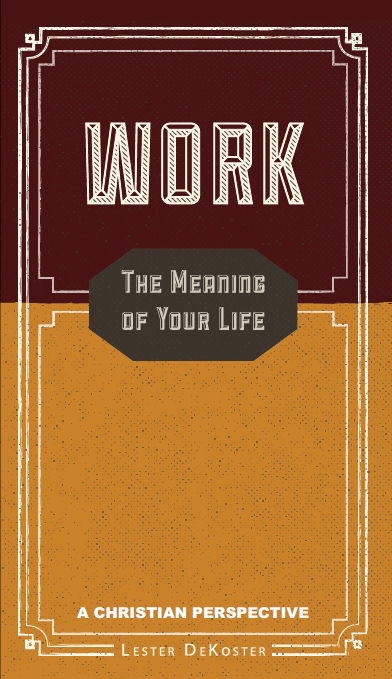
 The following is an adapted excerpt from Work: The Meaning of Your Life by Lester DeKoster, which was recently reissued with a new afterward by Greg Forster. It is reprinted here with permission from Christian’s Library Press.
We know, as soon as reminded, that work spins the wheels of the world.
No work? Then nothing else either. Culture and civilization don’t just happen. They are made to happen and to keep happening—by God the Holy Spirit, through our work.
Imagine that everyone quits working, right now! What happens? Civilized life quickly melts away. Food vanishes from the store shelves, gas pumps dry up, streets are no longer patrolled, and fires burn themselves out. Communication and transportation services end and utilities go dead. Those who survive at all are soon huddled around campfires, sleeping in tents, and clothed in rags.
The Power of Work
The difference between barbarism and culture is, simply, work. One of the mystifying facts of history is why certain people create progressive cultures while others lag behind. Whatever that explanation, the power lies in work.
Another interesting thing is that if all workers did quit, it would not make too much difference which workers quit first—front office, boardroom, assembly line, or custodial staff. Civilized living is so closely knit that when any pieces drop out the whole fabric begins to crumple. Let city sanitation workers go out this week, and by next week streets are smothered in garbage. Give homemaking mothers leave, and many of us suddenly go hungry and see our kids running wild. Civilization is so fragile that we either all hang together or, as Ben Franklin warned during the American Revolution, “we shall all hang separately.”
Incidentally, let’s not make the mistake, if ever we are tempted, of estimating the importance of our work, or of any kind of work, by the public esteem it enjoys. Up-front types make news, but only workers create civilized life. The mosaic of culture, like all mosaics, derives its beauty from the contribution of each tiny bit.
The Harvest
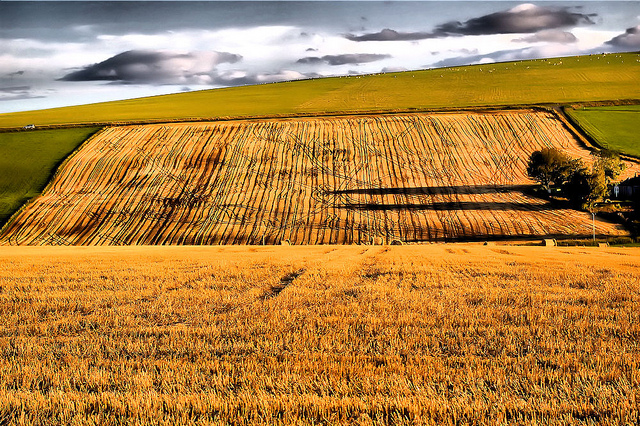
As seeds multiply themselves into harvest, so work flowers into civilization. The second harvest parallels the first: Civilization, like the fertile fields, yields far more in return on our efforts than our particular jobs put in.
Verify that a moment by taking a casual look around the room in which you are now sitting. Just how long would it have taken you to make, piece by piece, the things you can lay eyes on?
Let’s look together.
That chair you are lounging in? Could you have made it for yourself? Well, I suppose so, if we mean just the chair!
Perhaps you did in fact go out to buy the wood, the nails, the glue, the stuffing, the springs—and put it all together. But if by making the chair we mean assembling each part from scratch, that’s quite another matter. How do we get, say, the wood? Go and fell a tree? But only after first making the tools for that, and putting together some kind of vehicle to haul the wood, and constructing a mill to do the lumber, and roads to drive on from place to place? In short, a lifetime or two to make one chair! We are physically unable, it is obvious, to provide ourselves from scratch with the household goods we can now see from wherever you and I are sitting—to say nothing of building and furnishing the whole house.
Consider everything else that we can use every day and never really see. Who builds and maintains the roads and streets we take for granted? Who polices them so we can move about in comparative safety? Who erects the stores, landscapes the parks, builds the freeways? Who provides the services that keep things going in good weather and bad?
 Well, civilization blends work into doing all that. It’s what we mean by civilization, really—goods and services to hand when we need them. There are countless workers, just like ourselves—including ourselves—whose work creates the harvest that provides each of us with far more than we could ever provide for ourselves.
Going shopping? Someone’s work has already stocked the aisles with food, stuffed the racks with clothing, crowded counters with goods—for you! Going traveling? Someone’s work has already paved the highways, built the airports, designed and fueled the planes—for you! Going abroad? Someone’s work has already raised the cathedrals, painted the pictures, laid out the cities—for you! Staying home? Someone’s work enlivens TV channels, prints the daily paper, keeps social order—for you! In trouble? Someone’s work defies emergencies, defeat the storms, and has repairs ready—for you!
So everywhere and at all times, there are countless hands moving all the wheels of civilization—for you!
Work plants the seed; civilization reaps the harvest. Work is the form in which we make ourselves useful to others; civilization is the form in which others make themselves useful to us. We plant; God gives the increase to unify the human race.
Photo credit: Gordon Robertson

Next Post

September 11, 2015 ‘Crucified Love’ -- The Human Side of the Greek Crisis
Browse Our Archives
Select a Category Art Charity Church Common Grace Culture Curriculum Economics Education Family Justice Order Theology Uncategorized Vocation Wisdom Wonder Work
Select a Month January 2017 December 2016 November 2016 October 2016 September 2016 August 2016 July 2016 June 2016 May 2016 April 2016 March 2016 February 2016 January 2016 December 2015 November 2015 October 2015 September 2015 August 2015 July 2015 June 2015 May 2015 April 2015 March 2015 February 2015 January 2015 December 2014 November 2014 October 2014 September 2014 August 2014
Follow Us!
TAKE THE
Religious Wisdom Quiz
Who asked Jesus, "What is truth?"
Select your answer to see how you score.
Nicodemus Herod Caiaphas Pilate
Related posts from Oikonomia

Thomas Sowell on the Origins of Prosperity


Lessons on Christian Vocation from ‘Chewbacca Mom’

Are Christianity and Communism Mutually Exclusive?
TRENDING AT PATHEOS Business, Finance and Religion

St. Francis by Bill Droel Pope Leo XIV declares 2026 as “Year...

Catholics are schooled in the faith by memorizing dogmatic points and lots...

The Good News of Our Human Limitations -...
After another day of trying to meet deadlines and working on projects,...

Quiet Holy Attentiveness (podcast) with Sarah Clarkson
We know that quiet is an essential aspect of the spiritual life,...

Every Vocation Everywhere All At Once
What is a vocation? How does it endure through the years? Can...

I promise this is not going to become a Taylor Swift Studies...
view all Business, Finance and Religion blogs
Ad-Free & Subscriber Log-In Subscription Support
- About Us
- 2026 Calendar
- Videos
- Podcasts
- Library of World Religions
- Faith In Media Tracker
- Advertise With Us
- Write for Us
- Privacy Policy
- Terms of Service
- Do Not Sell My Data
- Contact Us
- Radiant Digital
- Manage Newsletter Subscriptions
- Unsubscribe From Notifications
- Sitemap
Copyright 2008-2026, Patheos. All rights reserved.
Subscription Support Ad-Free & Subscriber Log-In
Follow Patheos