
BuddhistCatholicContemplativeEvangelicalGeneral ChristianHinduJewishLatter-day SaintMuslimNew VisionsProgressive Christian
Beliefs
- Buddhist
- Catholic
- Contemplative
- Evangelical
- General Christian
- Hindu
- Jewish
- Latter-day Saint
- More Voices
- Muslim
- New Visions
- Pagan
- Progressive Christian
Topics
- Religion News
- Food and Religion
- Sports and Religion
- Religious Art
- Religious Music and Entertainment
- Religious Events
- History and Religion
- Style and Religion
- Politics and Religion
- Women in Religion
- Recreation Outdoors and Religion
- Business Finance and Religion
- Careers Workplace and Religion
- Education and Religion
- Family Parenting and Religion
- Health Fitness and Religion
- Home and Religion
- Relationships and Religion
- Technology and Religion
- Travel and Religion
Columnists
- Buddhist Columnists
- Business Finance and Religion Columnists
- Careers Workplace and Religion Columnists
- Catholic Columnists
- Contemplative Columnists
- Education and Religion Columnists
- Evangelists Columnists
- Family Parenting and Religion Columnists
- General Christian Columnists
- Health Fitness and Religion Columnists
- Hindu Columnists
- History and Religion Columnists
- Home and Religion Columnists
- Jewish Columnists
- More Voices Columnists
- Latter Day Columnists
- Muslim Columnists
- New Visions Columnists
- Nonreligious Columnists
- Pagan Columnists
- Politics and Religion Columnists
- Progressive Columnists
- Recreation Outdoors and Religion Columnists
- Relationships and Religion Columnists
- Religion News Columnists
- Religious Art Columnists
- Religious Events Columnists
- Religious Music and Entertainment Columnists
- Sports and Religion Columnists
- Style and Religion Columnists
- Technology and Religion Columnists
- Travel and Religion Columnists
- Women in Religion Columnists
Resource Library
- 2026 Calendar
- Library of World Religions
- The 100 Most Holy Places on Earth
- Patheos Answers
- Podcasts
- Videos
- Faith Leaders Database
- Anglican Episcopalian
- Bahai
- Baptist
- Buddhism
- Christianity
- Confucianism
- Eastern Orthodoxy
- Hinduism
- Holiness and Pentecostal
- ISKCON
- Islam
- Judaism
- Lutheran
- Methodist
- The Church of Jesus Christ of Latter-day Saints
- New Age
- Paganism
- Presbytarian and Reformed
- Protestantism
- Religion Behind the Scenes
- Roman Catholic
- Scientology
- Shia Islam
- Sikhism
- Sufism
- Sunni Islam
- Taoism
- Zen
- See all religions
Research Tools
 Ad-Free & Subscriber Log-In Subscription Support
Follow Patheos 

- Trending:
- Advent
- |
- Forgiveness
- |
- Thanksgiving
- |
- Election
- |
- Seasonal Holidays
- |
- Marriage
 Oikonomia
- Home
- Business, Finance and Religion
- 5 Things Craigslist Teaches Us About The Beauty of Trade
5 Things Craigslist Teaches Us About The Beauty of Trade
Last updated on: August 24, 2015 at 12:35 pm by Acton Institute
5 Things Craigslist Teaches Us About The Beauty of Trade 2015-08-24T12:35:16-04:00 Acton Institute
Patheos Explore the world's faith through different perspectives on religion and spirituality! Patheos has the views of the prevalent religions and spiritualities of the world.
By Joseph Sunde
I’ve been a Craigslist fan for years, using it for everything from snagging free goods to securing new jobs to buying baby strollers to selling baby strollers. Yet even as I’ve become somewhat of a Craigslist veteran — constantly swapping this for that and that for this — each experience brings with it a new set of surprises, particularly when it comes to the ways I view trade and exchange.
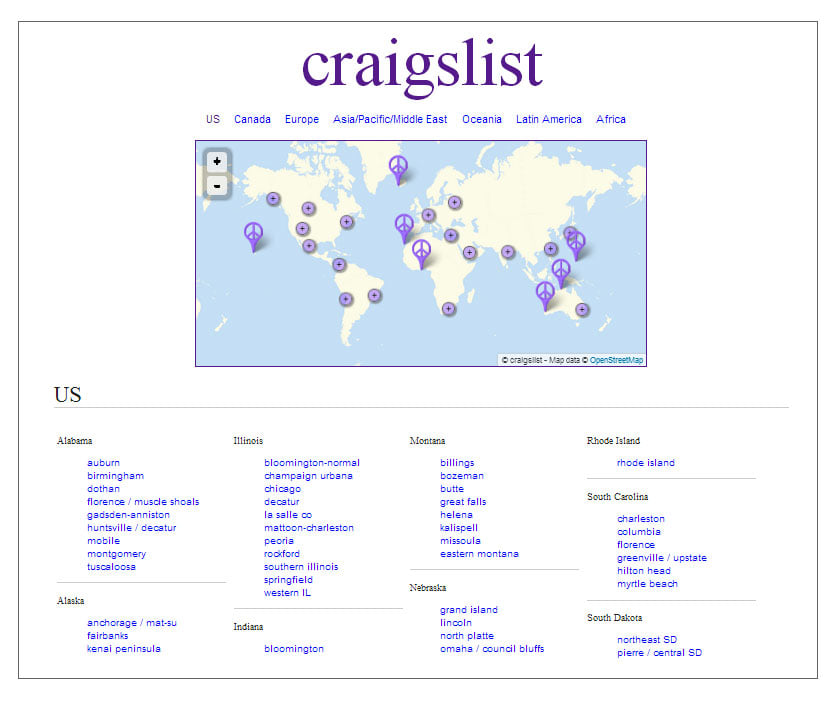 Alas, in today’s giant global economy, it can be all too easy to feel like robotic worker bees or petty consumer fleas in a big, blurry economic order. We shouldn’t need reminders that daily tools like pencils and smartphones don’t just appear out of thin air, but based on the persistent protectionist ethos that dominates our discussions on trade, it appears that we do.
In a way it’s understandable, what with all the conglomerates conglomerating. The bulk of Western society is no longer limited to bartering at the local market, nor are we bound to spend our days planting seeds and reaping harvests in a badda-bing badda-boom sort of way. Value creation, even at its largest margins, is increasingly difficult to spot and digest on a day-to-day basis.
And it is precisely here, I would argue, that bottom-up trading tools like Craigslist serve a bigger purpose than ridding our attics of stinky old mattresses. There’s something special about hum-drum personal exchange that reacquaints our economic imaginations with basic beauty of it all, cutting through and tearing down whatever pessimistic zero-sum mythologies we may be constructing.
From my own experiences, using Craigslist has reaffirmed the following key lessons and I’m confident that many more will follow.
1. Value Is Subjective
I’ve long thought the success of certain high-end brands is rather persuasive in proving this theory, but nothing quite tops seeing those same brands being given away for free on Craigslist.
For Billy, 1 orange is worth 10 apples. Yet months later, Billy puts that same orange out on the curb and lists it on Craigslist for free. For whatever reason, it’s no longer worth even trying to get some of those apples back. And behold, Sally eagerly awaits, ready to snag that orange from the curbside, because for her, it wasn’t worth 10 apples from the very beginning.
Value is a funny thing like that, and trade is a pretty handy tool for working things out in peaceful and productive ways.
2. Trade Empowers the Little Guy
Having recently moved into a new home, I’ve ramped up my Craigslist use significantly as of late. The needs persist, the wife insists, and the household budget cries for mercy. Thus, I’ve made somewhat of a sport out of finding various items well below the typical Cheapskate Index. To my delight, with enough patience and persistence, the little cash I’ve allotted to Furniture X or Yard Tool Y is often all someone cares to request (see lesson #1).
Having the opportunity to trade with diverse partners empowers me to find this rare match and, over time, inch my way above and beyond the perceived constraints of my situation. In many cases, this means I have to commit other types of capital, such as time and energy spent negotiating or painting and refinishing furniture, but these are commodities I have and others apparently do not. If I survey my budget against the “normal” market price, it looks impossible, but when I use trade in innovative and entrepreneurial ways, those constraints often transform rather spectacularly.
Indeed, after searching Craigslist’s free section on a daily basis for the past several weeks, I can say with confidence that folks with no budget whatsoever could likely furnish an entire home for free if they had patience and a basic willingness to part with certain aesthetics and functionality. Talk about a leg up for the poor.
3. Trust Matters
Economists routinely point to trust as a core component of economic growth. In their book From Poverty to Prosperity, Arnold Kling and Nick Schulz refer to it as one of several “intangible assets” — unseen forces that propel humans toward increased innovation and collaboration.
This is evident at the Best Buy returns counter, of course, but with Craigslist, anything can happen. Indeed, for many a consumer, Craigslist is known by a series of well-publicized run-ins ranging from seedy to deadly. But on the whole, the fact that so many people use Craigslist without getting scammed or killed tells us something about humanity and the culture in which we live.
It’s hard to put my finger on it, but there’s something striking about buying a used lawnmower and having relative confidence that the seller isn’t out to burden me with his useless junk. I’ve long believed trust to be essential for economic flourishing, but my success rate in Craigslisting has made me wonder how much it’s fed from the other end. Trust breeds trade, but trade also has the potential to teach plenty of trust.
4. Trade Makes Unlikely Friends
Free traders frequently argue that trade fosters peace — that if America and China are swapping toys and technology, they’ll be less likely to lob bombs at one another. This is probably true, but as a headline for the movement, it sure puts a damper on the romanticism of it all. Trade does after all connect actual people, and that means there’s much more at play than petty self-interest.
One of my favorite Craigslist experiences involved buying out-of-production toys from the Pixar film, Cars. It wasn’t special because I got a particularly good deal (I did), or even because my son loved his birthday gift (he did). It was special because after the transaction I spent a good 30 minutes chatting with the seller, a burly, heavily tattooed 40-something biker decked out in leather. After traveling to his isolated house in the sticks and following him into his basement (see #3), I beheld something quite remarkable: wall-to-wall glass cases, stuffed with more Cars memorabilia than I new existed. He was just as eager to talk as I was to listen.
Here, in the musty basement of a complete stranger, our differences no longer mattered. Whatever divides that may have existed — generational, cultural, religious, or otherwise — we had something in common. Our boys loved Lightning McQueen, and as dads, we shared a passion to join in the fun alongside them. Trade connected two people who would have been unlikely to connect otherwise, and we were both better for it, materially, socially, societally, and so on.
Every time I hear that tired-but-true boilerplate about “peace through trade” with China, I still shout “amen.” But I prefer to think of peace through trade with my biker buddy, Fred.
(At The Atlantic, Micah Mattix has written about this from a different angle, commenting on the way Craigslist and other such tools are changing the ways artists find their audiences and patrons.)
5. Exchange Is a Social Thing
Perhaps the one thing that ties all this together is the obvious but underappreciated notion that interaction and exchange is interaction and exchange. All of the bigger economic arguments about mutual material benefit and the way trade connects Person X with Product Y or Service Z are important and compelling, but they represent neither the arc nor the end of the story.
In connecting us with different people from different places, and in producing value and fostering trust throughout the process, trade brings with it a heavy social dynamic. There is more to value than a dollar amount. There is more to exchange than passing this object into those hands. And there is more that endures after the fact than a strike for or against the household budget. As Jordan Ballor has written, we were “made to trade” or “made to give and receive.” This is bound up in the “social nature of human beings, created in God’s image, in relation to him and to one another.”
Craigslist is but one of many modern arenas where this is abundantly clear, and each time I buy a cheap gallon of milk in the self-checkout aisle at Walmart — the result of so many personal and distant relationships, investments, and exchanges — I try my best not to forget it.
Originally published at the Acton PowerBlog
Previous Post

August 17, 2015
The Messy Vlog
Next Post

August 19, 2015 Giveaway: Win All 3 Books from Kuyper’s 'Common Grace, Vol. 1'
Browse Our Archives
Select a Category Art Charity Church Common Grace Culture Curriculum Economics Education Family Justice Order Theology Uncategorized Vocation Wisdom Wonder Work
Select a Month January 2017 December 2016 November 2016 October 2016 September 2016 August 2016 July 2016 June 2016 May 2016 April 2016 March 2016 February 2016 January 2016 December 2015 November 2015 October 2015 September 2015 August 2015 July 2015 June 2015 May 2015 April 2015 March 2015 February 2015 January 2015 December 2014 November 2014 October 2014 September 2014 August 2014
Follow Us!
TAKE THE
Religious Wisdom Quiz
Which Christian group traditionally avoids military service?
Select your answer to see how you score.
Quakers Methodists Pentecostals Evangelicals
Related posts from Oikonomia
Thomas Sowell on the Origins of Prosperity


Lessons on Christian Vocation from ‘Chewbacca Mom’

Are Christianity and Communism Mutually Exclusive?
TRENDING AT PATHEOS Business, Finance and Religion

St. Francis by Bill Droel Pope Leo XIV declares 2026 as “Year...

Catholics are schooled in the faith by memorizing dogmatic points and lots...

The Good News of Our Human Limitations -...
After another day of trying to meet deadlines and working on projects,...

Quiet Holy Attentiveness (podcast) with Sarah Clarkson
We know that quiet is an essential aspect of the spiritual life,...

Every Vocation Everywhere All At Once
What is a vocation? How does it endure through the years? Can...

I promise this is not going to become a Taylor Swift Studies...
view all Business, Finance and Religion blogs
Ad-Free & Subscriber Log-In Subscription Support
- About Us
- 2026 Calendar
- Videos
- Podcasts
- Library of World Religions
- Faith In Media Tracker
- Advertise With Us
- Write for Us
- Privacy Policy
- Terms of Service
- Do Not Sell My Data
- Contact Us
- Radiant Digital
- Manage Newsletter Subscriptions
- Unsubscribe From Notifications
- Sitemap
Copyright 2008-2026, Patheos, part of the Radiant Digital network of media brands. All rights reserved.
Subscription Support Ad-Free & Subscriber Log-In
Follow Patheos