
BuddhistCatholicContemplativeEvangelicalGeneral ChristianHinduJewishLatter-day SaintMuslimNew VisionsProgressive Christian
Beliefs
- Buddhist
- Catholic
- Contemplative
- Evangelical
- General Christian
- Hindu
- Jewish
- Latter-day Saint
- More Voices
- Muslim
- New Visions
- Pagan
- Progressive Christian
Topics
- Religion News
- Food and Religion
- Sports and Religion
- Religious Art
- Religious Music and Entertainment
- Religious Events
- History and Religion
- Style and Religion
- Politics and Religion
- Women in Religion
- Recreation Outdoors and Religion
- Business Finance and Religion
- Careers Workplace and Religion
- Education and Religion
- Family Parenting and Religion
- Health Fitness and Religion
- Home and Religion
- Relationships and Religion
- Technology and Religion
- Travel and Religion
Columnists
- Buddhist Columnists
- Business Finance and Religion Columnists
- Careers Workplace and Religion Columnists
- Catholic Columnists
- Contemplative Columnists
- Education and Religion Columnists
- Evangelists Columnists
- Family Parenting and Religion Columnists
- General Christian Columnists
- Health Fitness and Religion Columnists
- Hindu Columnists
- History and Religion Columnists
- Home and Religion Columnists
- Jewish Columnists
- More Voices Columnists
- Latter Day Columnists
- Muslim Columnists
- New Visions Columnists
- Nonreligious Columnists
- Pagan Columnists
- Politics and Religion Columnists
- Progressive Columnists
- Recreation Outdoors and Religion Columnists
- Relationships and Religion Columnists
- Religion News Columnists
- Religious Art Columnists
- Religious Events Columnists
- Religious Music and Entertainment Columnists
- Sports and Religion Columnists
- Style and Religion Columnists
- Technology and Religion Columnists
- Travel and Religion Columnists
- Women in Religion Columnists
Resource Library
- 2026 Calendar
- Library of World Religions
- The 100 Most Holy Places on Earth
- Patheos Answers
- Podcasts
- Videos
- Faith Leaders Database
- Anglican Episcopalian
- Bahai
- Baptist
- Buddhism
- Christianity
- Confucianism
- Eastern Orthodoxy
- Hinduism
- Holiness and Pentecostal
- ISKCON
- Islam
- Judaism
- Lutheran
- Methodist
- The Church of Jesus Christ of Latter-day Saints
- New Age
- Paganism
- Presbytarian and Reformed
- Protestantism
- Religion Behind the Scenes
- Roman Catholic
- Scientology
- Shia Islam
- Sikhism
- Sufism
- Sunni Islam
- Taoism
- Zen
- See all religions
Research Tools
 Ad-Free & Subscriber Log-In Subscription Support
Ad-Free & Subscriber Log-In Subscription Support
Follow Patheos 

- Trending:
- Forgiveness
- |
- Marriage
- |
- Consciousness
- |
- Death Penalty
- |
- Election
- |
- Halloween
 Oikonomia
- Home
- Business, Finance and Religion
- 3 Things I Wish Pope Francis Knew About A Free Economy
3 Things I Wish Pope Francis Knew About A Free Economy
Last updated on: August 24, 2015 at 12:35 pm by Acton Institute
3 Things I Wish Pope Francis Knew About A Free Economy 2015-08-24T12:35:54-04:00 Acton Institute
Patheos Explore the world's faith through different perspectives on religion and spirituality! Patheos has the views of the prevalent religions and spiritualities of the world.
By Joe Carter
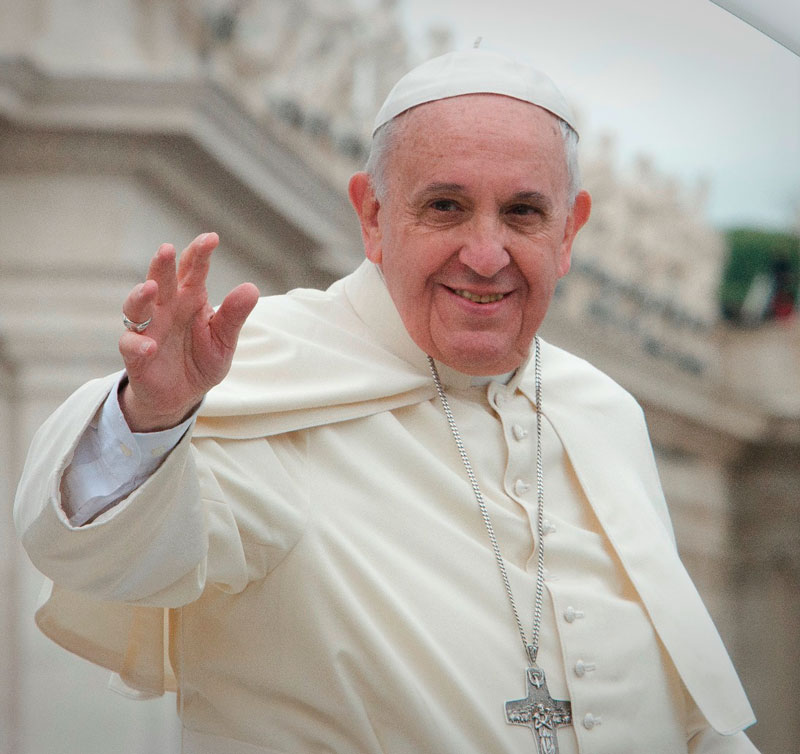 Pope Francis has said that he’s generally “allergic” to financial matters. Yet that hasn’t stopped him from criticizing capitalism and suggesting radical changes for a global economic order. During his recent trip to Latin America, the pontiff has been especially denunciatory, saying the unfettered pursuit of money is “the dung of the devil.”
Not surprisingly, many critics have complained that Francis is presenting a distorted, incomplete, and naive view of capitalism. To his credit, the pontiff has vowed to consider these reactions before his trip the U.S. this September. “I heard that there were some criticisms from the United States. I must begin studying these criticisms, no?” he said. “Then we shall dialogue about them.”
It’s encouraging to hear Pope Francis say he’s interested in dialogue on the topic. Naturally, since we share many of the same values and concerns, an ideal partner in such discussion would be the Acton Institute. As Acton co-founder Rev. Robert Sirico has said:
From the inception of the Acton Institute . . . we have always been concerned that economic education–a real understanding of how a market functions–will first and foremost help the most vulnerable, so we’ve done various things over the years to attempt to demonstrate or teach or model that for people.
If the pope is interested, we even have a branch in Rome—Istituto Acton—that he can visit. It’s a mere 20 minute walk from Vatican City or about 5 minutes by mini-popemobile. We’d also be willing to send him any resources he might find useful, such as our PovertyCure DVD series or Rev. Sirico’s book, Defending the Free Market: The Moral Case for a Free Economy.
In the meantime, though, I think Pope Francis could gain a lot of insight by simply pondering these three points:
1. A free economy is greater than capitalism.
The pope’s economic rhetoric is often described as “anti-capitalist.” That’s a fair description, but I suspect Pope Francis would also conflate capitalism with such features as free enterprise and free markets. The terms are sometimes used as if they were interchangeable (even by those of us here at Acton) but they are not all the same. Capitalism is merely an economic system in which the modes and means of production are mostly or entirely privately owned. That’s a rather broad categorization that includes such systems as corporatism, crony capitalism, social democracy, state capitalism, and welfare capitalism.
What many of us prefer is not an amorphous capitalism, but an economic system that is outgrowth of the natural order of liberty: a free economy. There’s no agreed upon term for the system of a free economy (which is why capitalism is often used as a substitute) but it would include free people engaging in free enterprise in free markets. A free economy is not a laissez-faire, each-to-his-own system of consumerism. It’s a system in which people are allowed to use their resources and abilities most effectively to serve others.
We as individuals almost always have more relevant information about our interests, talents, and preferences than does the government. While our choices are not free from error or untainted by sin, we are more likely to be better off making such decisions for ourselves than we are having them made for us by the state. This is, in essence, why we favor free economy solutions. Free economies are the best way to serve free people because they provide both the freedom to choose and the freedom to be chosen.
2. Free economies (even in limited and imperfect forms) have helped to reduce extreme poverty.
Extreme poverty is defined as living on less than $1.25 a day. In 1990, the UN’s Millennium Development Goals included a target of halving extreme poverty by 2015. That goal was achieved five years early. In 1990, more than one-third (36 percent) of the world’s population lived in abject poverty; by 2010 the number had been cut in half (18 percent). Today, it is 15 percent.
The reason for the decrease in poverty is almost wholly attributable to expanding access to a freer economy, particularly increases in free enterprise and free trade. Most of the reduction in poverty since 1990 has been because of the economic growth of India and China, which made modest efforts toward developing free economies.
In 1990, 51 percent of the population of India lived in extreme poverty. Today, it is only about 22 percent. Improvements in China have been even more stunning. In 1981, 65 percent of the Chinese population lived in abject poverty. By 2007, the number had been reduced to 4 percent.
Application of free economy principles has done more than almost anything else (including foreign aid and government redistribution of wealth) to help lift people out of poverty.
3. Promoting human flourishing is greater than ending poverty.
Almost every Christian and person of goodwill agrees that ending poverty is an important achievement for which we should be striving. Where we disagree is when ending poverty is considered the end goal rather than a necessary advance on our true economic objective: promoting human flourishing.
As Stephanie Summers of the Center for Public Justice explains,
The direct Biblical mandate for Christians is to care for the poor, coupled with a strong vision of every person created in and bearing God’s image. This looks like a society where all human beings are able to flourish and make their fullest contributions to the development of the world. This is bigger than the poor climbing the economic ladder into the middle class. This is bigger than better health outcomes. Human flourishing is bigger than growing contributions to the GDP.
Good public policy can contribute to human flourishing – but good public policy isn’t the end we’re called to seek on behalf of our neighbors. Good public policy is a means – one way – to pursue that end. A whole host of contributions towards human flourishing are also to be made by institutions other than government.
Ending human poverty, especially extreme poverty, is an urgent and necessary task. But if that becomes our end goal the result will be a world where people can have a life of subsistence but that falls well short of anything close to flourishing. A free economy helps us not only to move people out of poverty but also lifts them to a place where they can serve their families, their neighbor, and God through their economic efforts.
***
Of course there is much, much more I wish Pope Francis (and every world leader) knew about a free economy. Yet merely acknowledging these three points would go a long way toward a greater understanding of why so many Christians believe a free economy is the best system we can expect in our fallen world. I don’t expect the pope to completely agree with our perspective, but it would help us all if he had a better understanding of the economic system he’s constantly demonizing.
Originally published at the Acton PowerBlog
Photo credit:Jeffrey Bruno

Previous Post

August 19, 2015
Giveaway: Win All 3 Books from Kuyper’s 'Common Grace, Vol. 1'
Next Post

August 26, 2015 Is There a Case for Virtue and Economic Growth?
Browse Our Archives
Select a Category Art Charity Church Common Grace Culture Curriculum Economics Education Family Justice Order Theology Uncategorized Vocation Wisdom Wonder Work
Select a Month January 2017 December 2016 November 2016 October 2016 September 2016 August 2016 July 2016 June 2016 May 2016 April 2016 March 2016 February 2016 January 2016 December 2015 November 2015 October 2015 September 2015 August 2015 July 2015 June 2015 May 2015 April 2015 March 2015 February 2015 January 2015 December 2014 November 2014 October 2014 September 2014 August 2014
Follow Us!
TAKE THE
Religious Wisdom Quiz
Who was Jesus' legal father?
Select your answer to see how you score.
Jacob Matthat Heli Joseph
Related posts from Oikonomia

Thomas Sowell on the Origins of Prosperity


Lessons on Christian Vocation from ‘Chewbacca Mom’

Are Christianity and Communism Mutually Exclusive?
TRENDING AT PATHEOS Business, Finance and Religion

St. Francis by Bill Droel Pope Leo XIV declares 2026 as “Year...

Catholics are schooled in the faith by memorizing dogmatic points and lots...

The Good News of Our Human Limitations -...
After another day of trying to meet deadlines and working on projects,...

Quiet Holy Attentiveness (podcast) with Sarah Clarkson
We know that quiet is an essential aspect of the spiritual life,...

Every Vocation Everywhere All At Once
What is a vocation? How does it endure through the years? Can...

I promise this is not going to become a Taylor Swift Studies...
view all Business, Finance and Religion blogs
Ad-Free & Subscriber Log-In Subscription Support
- About Us
- 2026 Calendar
- Videos
- Podcasts
- Library of World Religions
- Faith In Media Tracker
- Advertise With Us
- Write for Us
- Privacy Policy
- Terms of Service
- Do Not Sell My Data
- Contact Us
- Radiant Digital
- Manage Newsletter Subscriptions
- Unsubscribe From Notifications
- Sitemap
Copyright 2008-2026, Patheos. All rights reserved.
Subscription Support Ad-Free & Subscriber Log-In
Follow Patheos