
BuddhistCatholicContemplativeEvangelicalGeneral ChristianHinduJewishLatter-day SaintMuslimNew VisionsProgressive Christian
Beliefs
- Buddhist
- Catholic
- Contemplative
- Evangelical
- General Christian
- Hindu
- Jewish
- Latter-day Saint
- More Voices
- Muslim
- New Visions
- Pagan
- Progressive Christian
Topics
- Religion News
- Food and Religion
- Sports and Religion
- Religious Art
- Religious Music and Entertainment
- Religious Events
- History and Religion
- Style and Religion
- Politics and Religion
- Women in Religion
- Recreation Outdoors and Religion
- Business Finance and Religion
- Careers Workplace and Religion
- Education and Religion
- Family Parenting and Religion
- Health Fitness and Religion
- Home and Religion
- Relationships and Religion
- Technology and Religion
- Travel and Religion
Columnists
- Buddhist Columnists
- Business Finance and Religion Columnists
- Careers Workplace and Religion Columnists
- Catholic Columnists
- Contemplative Columnists
- Education and Religion Columnists
- Evangelists Columnists
- Family Parenting and Religion Columnists
- General Christian Columnists
- Health Fitness and Religion Columnists
- Hindu Columnists
- History and Religion Columnists
- Home and Religion Columnists
- Jewish Columnists
- More Voices Columnists
- Latter Day Columnists
- Muslim Columnists
- New Visions Columnists
- Nonreligious Columnists
- Pagan Columnists
- Politics and Religion Columnists
- Progressive Columnists
- Recreation Outdoors and Religion Columnists
- Relationships and Religion Columnists
- Religion News Columnists
- Religious Art Columnists
- Religious Events Columnists
- Religious Music and Entertainment Columnists
- Sports and Religion Columnists
- Style and Religion Columnists
- Technology and Religion Columnists
- Travel and Religion Columnists
- Women in Religion Columnists
Resource Library
- 2026 Calendar
- Library of World Religions
- The 100 Most Holy Places on Earth
- Patheos Answers
- Podcasts
- Videos
- Faith Leaders Database
- Anglican Episcopalian
- Bahai
- Baptist
- Buddhism
- Christianity
- Confucianism
- Eastern Orthodoxy
- Hinduism
- Holiness and Pentecostal
- ISKCON
- Islam
- Judaism
- Lutheran
- Methodist
- The Church of Jesus Christ of Latter-day Saints
- New Age
- Paganism
- Presbytarian and Reformed
- Protestantism
- Religion Behind the Scenes
- Roman Catholic
- Scientology
- Shia Islam
- Sikhism
- Sufism
- Sunni Islam
- Taoism
- Zen
- See all religions
Research Tools
 Ad-Free & Subscriber Log-In Subscription Support
Ad-Free & Subscriber Log-In Subscription Support
Follow Patheos 

- Trending:
- Forgiveness
- |
- Marriage
- |
- Consciousness
- |
- Death Penalty
- |
- Election
- |
- Halloween
 Oikonomia
- Home
- Business, Finance and Religion
- Made in China: A Mark of Shame?
Made in China: A Mark of Shame?
Last updated on: July 21, 2015 at 12:06 pm by Acton Institute
Made in China: A Mark of Shame? 2015-07-21T12:06:06-04:00 Acton Institute
Patheos Explore the world's faith through different perspectives on religion and spirituality! Patheos has the views of the prevalent religions and spiritualities of the world.
By Chris Horst
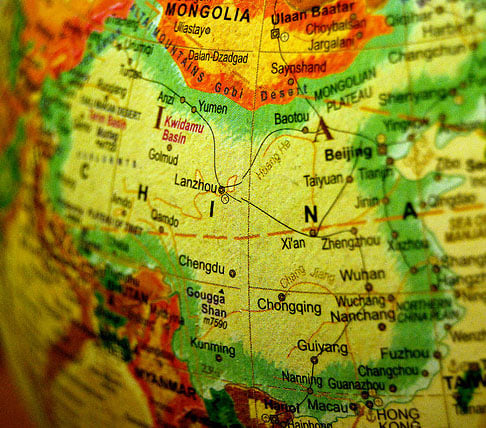 Last year, I attended a generosity conference in Hong Kong. At a break, I introduced myself to the folks at my table. One woman, Amy, was born-and-raised in Hong Kong. She serves as an executive at Flextronics, a Fortune 500 company based in the Silicon Valley.
During our conversation, I learned Flextronics is the top competitor of Foxconn, the world’s largest, and perhaps most notorious, electronics manufacturer. Foxconn has made headlines over the past few years, but not for good reasons. Most notably, reporters fried Foxconn and one of its largest customers, Apple, after an independent audit of a Foxconn factory revealed troubling labor violations. Their inhumane approach to enterprise has fueled the scorn many feel toward products imprinted with those three contentious words: Made. In. China.
For Amy and Flextronics, however, their story looks nothing like those headlines. For her, “made in China” was cause for celebration.
The Flextronics story begins in California. In 1971, journalists first began using the “Silicon Valley” label. Stanford University’s emphasis on technology catalyzed the region. William Hewlett and David Packard, two Stanford alums and early Silicon Valley pioneers, launched their company—Hewlett Packard—from a Palo Alto garage with just $500 in cash. Many more companies followed in their wake, including Texas Instruments, Apple, Intel and Oracle. Each was founded in the 1960s or 1970s.
One of the less prominent stories of Silicon Valley is that of Joe McKenzie. McKenzie founded Flextronics in 1969. He built the company to provide manufacturing support to fellow Silicon Valley entrepreneurs. Initially, he and his wife were that support, hand-soldering circuit boards themselves. The company grew from there. Today, they are quietly the second-largest electronics manufacturer in the world, behind only Foxconn. They employ over 200,000 workers across 30 countries.
As Amy and I talked at that conference, the conversation turned to her feelings about her employer. She had been employed by Flextronics for close to two decades, traveling between the Silicon Valley, Hong Kong, and their manufacturing facilities in China. Flextronics’ ascent to a global powerhouse has been marked by a commitment to doing things the right way. They have been lauded for their humble leaders, industry-leading wages and commitment to the flourishing of their employees. Amy shared in this affection, describing with great pride how her company brought meaningful work to many of her fellow Chinese.
Across Asia, poverty and wages are on opposite trajectories. Poverty is rapidly falling and wages are rapidly increasing. In 2012 alone, average factory wages in China escalated 14 percent. In manufacturing, specifically, worker wages have increased 71 percent since 2008. Over the last thirty years, the percentage of Chinese families living in extreme poverty dropped from 84% to under 10%. To put that in perspective, 680 million Chinese people—over twice the entire population of the United States—are no longer living on the edge of catastrophe. No longer dying from preventable causes like diarrhea and malnutrition.
But not all the changes in China are worth celebrating. The new China has become a society Dorcas Cheng-Tozun described as “obsessed with all things self: self-image, self-sufficiency, self-provision, self-protection, self-preservation.” The country’s newfound wealth is not without its baggage.
“Made in China” means a lot of different things. We can view it in two broad ways. Most commonly, we associate it with sweatshops, cheap products and the fast-and-loose cultures of companies like Foxconn. With it, we see the rise of the seemingly soulless and cutthroat culture that has pervaded Chinese companies and cities.
And at the same time, we can see “made in China” through the lens of companies like Flextronics, a company that treats their people well and manufactures remarkable products. We can see the positive changes for this region’s vulnerable people. Today there are many millions of families no longer struggling to eat. God loves the vulnerable in Shenzhen as much as he loves the vulnerable in San Jose and we can celebrate the decrease in premature death and suffering.
During the Christmas season, “Made in China” is often a mark of shame. And certainly, there is cause for us to expose and embarrass the companies that exploit their workers. But for Christians, we should follow our criticisms with our celebrations. We can rejoice that hundreds of thousands of Chinese families earn fair wages and dignifying work through Flextronics. That hundreds of grassroots Chinese entrepreneurs have gotten their start through biblically-based business training and a small loan through HOPE International.
Let’s move past our eye-rolling when we learn a product is made in China or India or South Korea. “Made in China” means it’s made by people created in God’s image. And we should cheer our distant neighbor’s—as much as our literal neighbor’s—escape from poverty. We are called to be people of justice and of hope. We should criticize when companies like Foxconn break laws and break spirits through inhumane work conditions. But we should also celebrate companies like Flextronics who restore dignity and create opportunity for many.
Originally published at Smorgasblurb
Photo credit: markgranitz
Previous Post

July 17, 2015
Competition and Infrastructure Stewardship
Next Post

July 22, 2015 Makoto Fujimura on Cultivating the Imagination
Browse Our Archives
Select a Category Art Charity Church Common Grace Culture Curriculum Economics Education Family Justice Order Theology Uncategorized Vocation Wisdom Wonder Work
Select a Month January 2017 December 2016 November 2016 October 2016 September 2016 August 2016 July 2016 June 2016 May 2016 April 2016 March 2016 February 2016 January 2016 December 2015 November 2015 October 2015 September 2015 August 2015 July 2015 June 2015 May 2015 April 2015 March 2015 February 2015 January 2015 December 2014 November 2014 October 2014 September 2014 August 2014
Follow Us!
TAKE THE
Religious Wisdom Quiz
How many years did the Israelites wander in the wilderness?
Select your answer to see how you score.
10 years 40 years 100 years 25 years
Related posts from Oikonomia

Thomas Sowell on the Origins of Prosperity

Politics, Character, and Competition


Lessons on Christian Vocation from ‘Chewbacca Mom’
TRENDING AT PATHEOS Business, Finance and Religion

St. Francis by Bill Droel Pope Leo XIV declares 2026 as “Year...

Catholics are schooled in the faith by memorizing dogmatic points and lots...

The Good News of Our Human Limitations -...
After another day of trying to meet deadlines and working on projects,...

Quiet Holy Attentiveness (podcast) with Sarah Clarkson
We know that quiet is an essential aspect of the spiritual life,...

Every Vocation Everywhere All At Once
What is a vocation? How does it endure through the years? Can...

I promise this is not going to become a Taylor Swift Studies...
view all Business, Finance and Religion blogs
Ad-Free & Subscriber Log-In Subscription Support
- About Us
- 2026 Calendar
- Videos
- Podcasts
- Library of World Religions
- Faith In Media Tracker
- Advertise With Us
- Write for Us
- Privacy Policy
- Terms of Service
- Do Not Sell My Data
- Contact Us
- Radiant Digital
- Manage Newsletter Subscriptions
- Unsubscribe From Notifications
- Sitemap
Copyright 2008-2026, Patheos. All rights reserved.
Subscription Support Ad-Free & Subscriber Log-In
Follow Patheos