
BuddhistCatholicContemplativeEvangelicalGeneral ChristianHinduJewishLatter-day SaintMuslimNew VisionsProgressive Christian
Beliefs
- Buddhist
- Catholic
- Contemplative
- Evangelical
- General Christian
- Hindu
- Jewish
- Latter-day Saint
- More Voices
- Muslim
- New Visions
- Pagan
- Progressive Christian
Topics
- Religion News
- Food and Religion
- Sports and Religion
- Religious Art
- Religious Music and Entertainment
- Religious Events
- History and Religion
- Style and Religion
- Politics and Religion
- Women in Religion
- Recreation Outdoors and Religion
- Business Finance and Religion
- Careers Workplace and Religion
- Education and Religion
- Family Parenting and Religion
- Health Fitness and Religion
- Home and Religion
- Relationships and Religion
- Technology and Religion
- Travel and Religion
Columnists
- Buddhist Columnists
- Business Finance and Religion Columnists
- Careers Workplace and Religion Columnists
- Catholic Columnists
- Contemplative Columnists
- Education and Religion Columnists
- Evangelists Columnists
- Family Parenting and Religion Columnists
- General Christian Columnists
- Health Fitness and Religion Columnists
- Hindu Columnists
- History and Religion Columnists
- Home and Religion Columnists
- Jewish Columnists
- More Voices Columnists
- Latter Day Columnists
- Muslim Columnists
- New Visions Columnists
- Nonreligious Columnists
- Pagan Columnists
- Politics and Religion Columnists
- Progressive Columnists
- Recreation Outdoors and Religion Columnists
- Relationships and Religion Columnists
- Religion News Columnists
- Religious Art Columnists
- Religious Events Columnists
- Religious Music and Entertainment Columnists
- Sports and Religion Columnists
- Style and Religion Columnists
- Technology and Religion Columnists
- Travel and Religion Columnists
- Women in Religion Columnists
Resource Library
- 2026 Calendar
- Library of World Religions
- The 100 Most Holy Places on Earth
- Patheos Answers
- Podcasts
- Videos
- Faith Leaders Database
- Anglican Episcopalian
- Bahai
- Baptist
- Buddhism
- Christianity
- Confucianism
- Eastern Orthodoxy
- Hinduism
- Holiness and Pentecostal
- ISKCON
- Islam
- Judaism
- Lutheran
- Methodist
- The Church of Jesus Christ of Latter-day Saints
- New Age
- Paganism
- Presbytarian and Reformed
- Protestantism
- Religion Behind the Scenes
- Roman Catholic
- Scientology
- Shia Islam
- Sikhism
- Sufism
- Sunni Islam
- Taoism
- Zen
- See all religions
Research Tools
 Ad-Free & Subscriber Log-In Subscription Support
Ad-Free & Subscriber Log-In Subscription Support
Follow Patheos 

- Trending:
- Forgiveness
- |
- Marriage
- |
- Consciousness
- |
- Death Penalty
- |
- Election
- |
- Halloween
 Oikonomia
- Home
- Business, Finance and Religion
- It’s Not About You: Vocation as a Means of Crucifixion
It’s Not About You: Vocation as a Means of Crucifixion
Last updated on: May 28, 2015 at 4:14 pm by Acton Institute
It’s Not About You: Vocation as a Means of Crucifixion 2015-05-28T16:14:03-04:00 Acton Institute
Patheos Explore the world's faith through different perspectives on religion and spirituality! Patheos has the views of the prevalent religions and spiritualities of the world.
By Joseph Sunde
 As I’ve noted in the past, Christians must always remain conscious of the temptations of self-chosen sacrifice and self-willed religion. Ours is a service not of our own design or choosing, and when we orient our lives accordingly, our stewardship is all the more powerful for it.
In a recent reflection on vocation, Benjamin Mann offers a nice complement to these warnings, digging a bit deeper into the question of discernment, which is central to all of this.
Writing specifically of our current attitudes about vocation, Mann observes an “unnecessary indecision and anxiety” in modern Western culture — one that is “shaped by the modern sensibility of intense self-consciousness, and by the consumer culture’s obsession with options and the ‘pursuit of happiness.’”
We are living in a world filled with choices and opportunities for “self-empowerment,” and yet with such tools comes a temptation to trust too highly in our personal plans and powers. If we give way to these temptations, our perception of calling is bound to suffer. “Consciously or not,” Mann writes, “we sometimes expect a vocation to solve all of our problems, answer all of our questions, and satisfy all of our desires. But these are not the purposes of a vocation.”
So what is the purpose of vocation?
Mann explains:
A vocation – any vocation – is a school of charity and a means of crucifixion. Your vocation is the means by which your self-serving ego will die in order to be resurrected as the servant and lover of God. This is all that we can expect; but this is everything – the meaning of life, all there really is.
My vocation is where I will learn to let go of my questions, carry the cross of my problems, and be mysteriously fulfilled even when I am not happy. We have some choice as to how we will undergo that process; we do not – so long as we abide in the grace of God – get to choose whether we will undergo it.
This, it seems to me, is the attitude we should bring to discernment. I am not choosing between makes and models in a store, looking for the perfect fit or the best value. One is faced, rather, with the question: How I should lose my life, in order to save it? (Luke 9:24) [emphasis added]
Our modernistic and hedonistic sensibilities will resist such a framework, convincing us (rather ironically) that all this amounts to arbitrary sentimentalism and emotionalism.
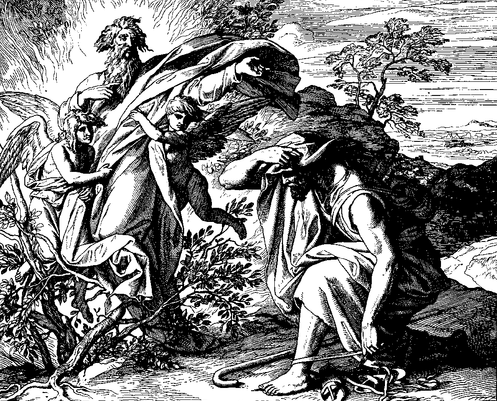
But one need not diminish or reject reason, tradition, and rightly ordered authority to submit oneself to ways that are higher than our ways. Far from it, following Christ closely and carefully will lead to amplified stewardship across our lives and across the various spheres of creation. When we put our lives in service of the King, the Holy Spirit guides us in real and tangible ways. Moses debated God’s plans at the burning bush, but surely he knew that the Lord had ordered his steps for such a purpose, from boy to prince to shepherd to prophet.
As Mann reminds us, this is not about replacing reason with fancy, but about “living in the fullness of reality”:
This does not mean fixating on a sentimental idea, or worshiping an enthroned mental abstraction. It means living in the fullness of Reality: recognizing and loving the Lord who is absolutely transcendent yet totally present, the Son of God who “plays in ten thousand places, / Lovely in limbs, and lovely in eyes not his / To the Father through the features of men’s faces” (G.M. Hopkins).
That one of these faces should be your own, and that the light of your eyes should be the light of Christ living within you: this is the goal of your vocation, whatever it may be.
But you will not reach that goal by ordinary human means: not by the calculation, strategy, and careful hedging of bets that seem – but only seem – to make the world go around.
The central question in discernment is: How shall I die with Christ, to rise with him? How will I lose my life to find it? What will bring me to the point where I can say, with St. Paul: “It is no longer I who live, but Christ who lives in me”? [emphasis added]
This is indeed the central question, and it is one that is far too often neglected, ignored, or outright discouraged, whether in our homes, schools, businesses, governments, or churches.
“Thy will be done” is recited from our lips rather casually. But in all things, as we pray and discern about calling and vocation, and as we begin to act upon the leading of the Spirit and by his power, it has to remain the cry of our hearts.
Originally published at the Acton PowerBlog
Illustration: Julius Schnorr von Carolsfeld

Previous Post

May 27, 2015
Risky Business at a Trucking Company
Next Post
June 2, 2015 Pentecost Reimagined: How the Spirit Reveals New Economies
Browse Our Archives
Select a Category Art Charity Church Common Grace Culture Curriculum Economics Education Family Justice Order Theology Uncategorized Vocation Wisdom Wonder Work
Select a Month January 2017 December 2016 November 2016 October 2016 September 2016 August 2016 July 2016 June 2016 May 2016 April 2016 March 2016 February 2016 January 2016 December 2015 November 2015 October 2015 September 2015 August 2015 July 2015 June 2015 May 2015 April 2015 March 2015 February 2015 January 2015 December 2014 November 2014 October 2014 September 2014 August 2014
Follow Us!
TAKE THE
Religious Wisdom Quiz
What is the main theme of the Ten Commandments?
Select your answer to see how you score.
How to live in Jewish society How to earn your way to Heaven How to live and treat others How to be successful
Related posts from Oikonomia

Lessons on Christian Vocation from ‘Chewbacca Mom’

What Christians Can Learn from Adam Smith’s ‘Paradox...


Help People, Not Banks: Reflections on the 2016...
TRENDING AT PATHEOS Business, Finance and Religion

St. Francis by Bill Droel Pope Leo XIV declares 2026 as “Year...

Catholics are schooled in the faith by memorizing dogmatic points and lots...

The Good News of Our Human Limitations -...
After another day of trying to meet deadlines and working on projects,...

Quiet Holy Attentiveness (podcast) with Sarah Clarkson
We know that quiet is an essential aspect of the spiritual life,...

Every Vocation Everywhere All At Once
What is a vocation? How does it endure through the years? Can...

I promise this is not going to become a Taylor Swift Studies...
view all Business, Finance and Religion blogs
Ad-Free & Subscriber Log-In Subscription Support
- About Us
- 2026 Calendar
- Videos
- Podcasts
- Library of World Religions
- Faith In Media Tracker
- Advertise With Us
- Write for Us
- Privacy Policy
- Terms of Service
- Do Not Sell My Data
- Contact Us
- Radiant Digital
- Manage Newsletter Subscriptions
- Unsubscribe From Notifications
- Sitemap
Copyright 2008-2026, Patheos. All rights reserved.
Subscription Support Ad-Free & Subscriber Log-In
Follow Patheos