
BuddhistCatholicContemplativeEvangelicalGeneral ChristianHinduJewishLatter-day SaintMuslimNew VisionsProgressive Christian
Beliefs
- Buddhist
- Catholic
- Contemplative
- Evangelical
- General Christian
- Hindu
- Jewish
- Latter-day Saint
- More Voices
- Muslim
- New Visions
- Pagan
- Progressive Christian
Topics
- Religion News
- Food and Religion
- Sports and Religion
- Religious Art
- Religious Music and Entertainment
- Religious Events
- History and Religion
- Style and Religion
- Politics and Religion
- Women in Religion
- Recreation Outdoors and Religion
- Business Finance and Religion
- Careers Workplace and Religion
- Education and Religion
- Family Parenting and Religion
- Health Fitness and Religion
- Home and Religion
- Relationships and Religion
- Technology and Religion
- Travel and Religion
Columnists
- Buddhist Columnists
- Business Finance and Religion Columnists
- Careers Workplace and Religion Columnists
- Catholic Columnists
- Contemplative Columnists
- Education and Religion Columnists
- Evangelists Columnists
- Family Parenting and Religion Columnists
- General Christian Columnists
- Health Fitness and Religion Columnists
- Hindu Columnists
- History and Religion Columnists
- Home and Religion Columnists
- Jewish Columnists
- More Voices Columnists
- Latter Day Columnists
- Muslim Columnists
- New Visions Columnists
- Nonreligious Columnists
- Pagan Columnists
- Politics and Religion Columnists
- Progressive Columnists
- Recreation Outdoors and Religion Columnists
- Relationships and Religion Columnists
- Religion News Columnists
- Religious Art Columnists
- Religious Events Columnists
- Religious Music and Entertainment Columnists
- Sports and Religion Columnists
- Style and Religion Columnists
- Technology and Religion Columnists
- Travel and Religion Columnists
- Women in Religion Columnists
Resource Library
- 2026 Calendar
- Library of World Religions
- The 100 Most Holy Places on Earth
- Patheos Answers
- Podcasts
- Videos
- Faith Leaders Database
- Anglican Episcopalian
- Bahai
- Baptist
- Buddhism
- Christianity
- Confucianism
- Eastern Orthodoxy
- Hinduism
- Holiness and Pentecostal
- ISKCON
- Islam
- Judaism
- Lutheran
- Methodist
- The Church of Jesus Christ of Latter-day Saints
- New Age
- Paganism
- Presbytarian and Reformed
- Protestantism
- Religion Behind the Scenes
- Roman Catholic
- Scientology
- Shia Islam
- Sikhism
- Sufism
- Sunni Islam
- Taoism
- Zen
- See all religions
Research Tools
 Ad-Free & Subscriber Log-In Subscription Support
Ad-Free & Subscriber Log-In Subscription Support
Follow Patheos 

- Trending:
- Forgiveness
- |
- Marriage
- |
- Consciousness
- |
- Death Penalty
- |
- Election
- |
- Halloween
 Oikonomia
- Home
- Business, Finance and Religion
- Pope Francis and the Idea of Christian Poverty
Pope Francis and the Idea of Christian Poverty
Last updated on: April 28, 2015 at 11:05 am by Acton Institute
Pope Francis and the Idea of Christian Poverty 2015-04-28T11:05:03-04:00 Acton Institute
Patheos Explore the world's faith through different perspectives on religion and spirituality! Patheos has the views of the prevalent religions and spiritualities of the world.
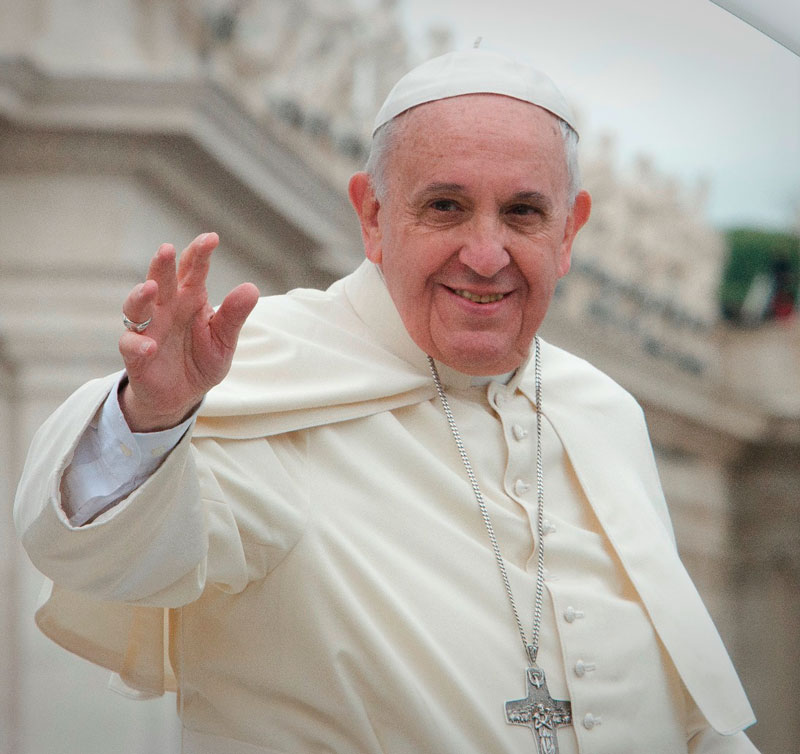 To provide a synthesis of Pope Francis’s thinking on the economy is both difficult and easy. It is difficult, because he has never offered extensive and systematic reflections on such questions; his pronouncements are found here and there, inseparable from a broader moral and spiritual message.
At the same time, he has said quite a few things about economic questions, and he is deeply interested in economic values and outcomes. Of course, he views them not as isolated technical questions, but as something that also touches upon a Christian pastor of souls. That is what makes my task relatively easy.
Francis’s thinking can only be understood within the context of his moral and spiritual principles. These, in turn, are inseparable from his simple and straightforward personality. I will leave it to others to study specific texts in detail; I will simply summarize the Pope’s message around the notion of Christian poverty. Perhaps we could almost say that Francis is a prophet of Christian poverty, and his papal name is no accident in this respect.
What I mean by this is two-fold, insofar as the Christian understanding of poverty necessarily entails two different dimensions. First, there is the attitude towards the poor. We might also call it the social and charitable dimension, which highlights the calling to exercise not only justice but also efficacious charity towards those in need. This has always been a fundamental dimension of Christian ethics, and we find it insisted upon in Evangelii Gaudium.
Concerning the principles cherished by liberal economists, the papal document does also acknowledge the value of private property and of the “noble vocation” of entrepreneurship, as long as they are seen in a broader framework and inspired by ethical values. Evangelii Gaudium repeatedly rejects the idea of an “absolute autonomy” of the marketplace not governed by laws and morals. It is critical not only of those who use the markets for selfish purposes, but also of those economists that tend to look at poverty as a secondary problem that should be resolved almost automatically as a side-product of economic growth.
In a much-cited passage, he laments: “How can it be that it is not a news item when an elderly homeless person dies of exposure, but it is news when the stock market loses two points?” What troubles the Pope is not the stock market itself, but the tendency to direct our attention to it in a way that turns it into a new idol, and to show practical indifference towards the plight of so many human persons.
There is, however, another dimension in Francis’s message, which I will argue is fundamental for understanding his thinking as a whole. When it is ignored, the social dimension cannot be fully understood. This second dimension is the more interior and spiritual dimension, namely poverty as a Christian virtue.
We find this ideal towards the very beginning of Evangelii Gaudium. In an important passage that laments the problem of consumerism, the Pope takes the question to a deeper level and argues that “the great danger” of our time “is the desolation and anguish born of a complacent yet covetous heart, the feverish pursuit of frivolous pleasures, and a blunted conscience.” This is not just a private issue, because it has profound consequences for our social and religious life: “Whenever our interior life becomes caught up in its own interests and concerns, there is no longer room for others, no place for the poor. God’s voice is no longer heard, the quiet joy of his love is no longer felt, and the desire to do good fades.”
This message is, I think, at the heart of Francis’s thinking and mindset concerning the economic sphere. We find it repeatedly in his personal preaching such as the morning Mass homilies, which in fact rarely focus on the social aspect of poverty. In his homilies he insists, for example, on detachment from temporal goods and on the battle against worldliness; on the relationship between spiritual poverty and praise of God; and on the search for the true treasure. We find the same idea in statements surrounding the theme of reform of the Roman Curia: the Pope is not so much interested in institutional reforms as he is in the fidelity of the servants of the Church to the spirit of the Gospel, which includes material detachment and poverty of spirit.
The two dimensions are intimately connected, of course. The social dimension of justice and charity towards the poor can only be effective when there is an interior commitment to treat temporal goods as gifts that ultimately come from God and belong to Him. According Francis, moreover, the relationship goes the other way around, too. There is true charity only when it is accompanied by acts that establish a personal connection with the person in need: “Tell me, when you give alms do you look into the eyes of the man or woman to whom you give alms? … And when you give alms, do you touch the hand of the one to whom you give alms, or do you toss the coin?”
The Pope has explicitly disassociated himself from what he calls pauperism. Moreover, regardless of the specific methods of helping the poor, to Francis, the key issue is not institutional philanthropy, but the divine call to come out of oneself. It is not so much a question of giving material goods to the poor, as of giving oneself.
This is what helps to restore the dignity of the poor: not things alone, but the personal touch and contact that recognize them as truly human persons.
Originally published at Acton Commentary
Photo credit: Jeffrey Bruno

Previous Post

April 23, 2015
Workers and Laborers or Kings and Priests?
Next Post

April 29, 2015 The Disease of Self-Chosen Sacrifice
Browse Our Archives
Select a Category Art Charity Church Common Grace Culture Curriculum Economics Education Family Justice Order Theology Uncategorized Vocation Wisdom Wonder Work
Select a Month January 2017 December 2016 November 2016 October 2016 September 2016 August 2016 July 2016 June 2016 May 2016 April 2016 March 2016 February 2016 January 2016 December 2015 November 2015 October 2015 September 2015 August 2015 July 2015 June 2015 May 2015 April 2015 March 2015 February 2015 January 2015 December 2014 November 2014 October 2014 September 2014 August 2014
Follow Us!
TAKE THE
Religious Wisdom Quiz
What language was most of the Old Testament written in?
Select your answer to see how you score.
Aramaic Latin Greek Hebrew
Related posts from Oikonomia

Thomas Sowell on the Origins of Prosperity


Lessons on Christian Vocation from ‘Chewbacca Mom’

Are Christianity and Communism Mutually Exclusive?
TRENDING AT PATHEOS Business, Finance and Religion

St. Francis by Bill Droel Pope Leo XIV declares 2026 as “Year...

Catholics are schooled in the faith by memorizing dogmatic points and lots...

The Good News of Our Human Limitations -...
After another day of trying to meet deadlines and working on projects,...

Quiet Holy Attentiveness (podcast) with Sarah Clarkson
We know that quiet is an essential aspect of the spiritual life,...

Every Vocation Everywhere All At Once
What is a vocation? How does it endure through the years? Can...

I promise this is not going to become a Taylor Swift Studies...
view all Business, Finance and Religion blogs
Ad-Free & Subscriber Log-In Subscription Support
- About Us
- 2026 Calendar
- Videos
- Podcasts
- Library of World Religions
- Faith In Media Tracker
- Advertise With Us
- Write for Us
- Privacy Policy
- Terms of Service
- Do Not Sell My Data
- Contact Us
- Radiant Digital
- Manage Newsletter Subscriptions
- Unsubscribe From Notifications
- Sitemap
Copyright 2008-2026, Patheos. All rights reserved.
Subscription Support Ad-Free & Subscriber Log-In
Follow Patheos