
BuddhistCatholicContemplativeEvangelicalGeneral ChristianHinduJewishLatter-day SaintMuslimNew VisionsProgressive Christian
Beliefs
- Buddhist
- Catholic
- Contemplative
- Evangelical
- General Christian
- Hindu
- Jewish
- Latter-day Saint
- More Voices
- Muslim
- New Visions
- Pagan
- Progressive Christian
Topics
- Religion News
- Food and Religion
- Sports and Religion
- Religious Art
- Religious Music and Entertainment
- Religious Events
- History and Religion
- Style and Religion
- Politics and Religion
- Women in Religion
- Recreation Outdoors and Religion
- Business Finance and Religion
- Careers Workplace and Religion
- Education and Religion
- Family Parenting and Religion
- Health Fitness and Religion
- Home and Religion
- Relationships and Religion
- Technology and Religion
- Travel and Religion
Columnists
- Buddhist Columnists
- Business Finance and Religion Columnists
- Careers Workplace and Religion Columnists
- Catholic Columnists
- Contemplative Columnists
- Education and Religion Columnists
- Evangelists Columnists
- Family Parenting and Religion Columnists
- General Christian Columnists
- Health Fitness and Religion Columnists
- Hindu Columnists
- History and Religion Columnists
- Home and Religion Columnists
- Jewish Columnists
- More Voices Columnists
- Latter Day Columnists
- Muslim Columnists
- New Visions Columnists
- Nonreligious Columnists
- Pagan Columnists
- Politics and Religion Columnists
- Progressive Columnists
- Recreation Outdoors and Religion Columnists
- Relationships and Religion Columnists
- Religion News Columnists
- Religious Art Columnists
- Religious Events Columnists
- Religious Music and Entertainment Columnists
- Sports and Religion Columnists
- Style and Religion Columnists
- Technology and Religion Columnists
- Travel and Religion Columnists
- Women in Religion Columnists
Resource Library
- 2026 Calendar
- Library of World Religions
- The 100 Most Holy Places on Earth
- Patheos Answers
- Podcasts
- Videos
- Faith Leaders Database
- Anglican Episcopalian
- Bahai
- Baptist
- Buddhism
- Christianity
- Confucianism
- Eastern Orthodoxy
- Hinduism
- Holiness and Pentecostal
- ISKCON
- Islam
- Judaism
- Lutheran
- Methodist
- The Church of Jesus Christ of Latter-day Saints
- New Age
- Paganism
- Presbytarian and Reformed
- Protestantism
- Religion Behind the Scenes
- Roman Catholic
- Scientology
- Shia Islam
- Sikhism
- Sufism
- Sunni Islam
- Taoism
- Zen
- See all religions
Research Tools
 Ad-Free & Subscriber Log-In Subscription Support
Ad-Free & Subscriber Log-In Subscription Support
Follow Patheos 

- Trending:
- Forgiveness
- |
- Marriage
- |
- Consciousness
- |
- Death Penalty
- |
- Election
- |
- Halloween
 Oikonomia
- Home
- Business, Finance and Religion
- François Michelin — The Anti-Gordon Gekko
François Michelin — The Anti-Gordon Gekko
Last updated on: April 30, 2015 at 2:10 pm by Acton Institute
François Michelin — The Anti-Gordon Gekko 2015-04-30T14:10:01-04:00 Acton Institute
Patheos Explore the world's faith through different perspectives on religion and spirituality! Patheos has the views of the prevalent religions and spiritualities of the world.
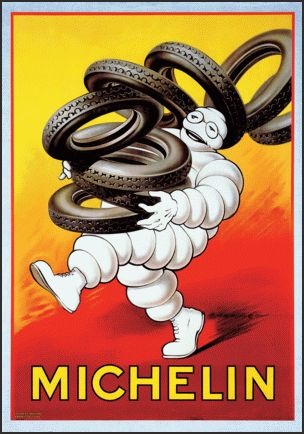 François Michelin (1926-2015), former leader of the the world’s second-largest tire maker, died early yesterday at the age of 88.
Michelin was actively involved in the French tire company, Group Michelin, until 2002, driving unprecedented growth for the company. His “passion for innovation” and “his uncompromising attention to quality” no doubt caused the tire company to thrive.
Automotive News reported a statement from current Group Michelin CEO Jean-Dominique Senard: “On behalf of the Group’s employees, I would like to pay special tribute to this exceptional man who was universally respected for his values, his convictions, and his vision.”
“He was one of the greatest French industrialists in the postwar years,” said French President François Hollande in a statement. “He understood the importance of innovation and of long-term industrial development. By developing the radial tire, he transformed a family and regional company into one of the biggest French groups and one of its best-known.”
Author of And Why Not? Morality and Business, Michelin was a devout Catholic whose faith played a huge role in his management and leadership. In 2002, he sat down with Acton’s Religion & Liberty to discuss many things, including his understanding of “work”:
This question was once put to a little girl. She answered, “To work is to build.” What does it mean to build? To give yourself a target that you want to reach. It is finding materials to build a house—or producing tires. You think that you are building a family or a company. But, in the final analysis, it is yourself that you are building. In my own personal case, I believe I am working all the time. To work for a business is to always keep its objectives in mind, to assimilate anything that can help you clarify them, and to find the means to achieve them. It is also to ask yourself why things are the way they are. When you have properly understood the reason that things are what they are, you know how to make use of them. Reasoning by analogy is a marvelous tool. Quite often, different phenomena have something in common that connects them—an underlying, primary cause that allows you to understand a lot of things. You may merely be watching someone sweep the street, and you can be struck suddenly by an idea that will allow you to improve the machines that you use to make tires.
You know, the Bible says that it is the mission of craftsmen to complete creation. Isn’t this marvelous?
In his book, Defending the Free Market: The Moral Case for a Free Economy, Acton President Rev. Robert Sirico described an encounter with Michelin in a passage titled, “Beyond Gordon Gekko.”
Another way to reflect on the morality of business enterprise is to look at those who are economically successful, and attempt to discern their motivation. The Michelin Company is an international corporation with successful brands in products such as tires, heavy machinery, and travel and dining guides. Francois Michelin, the wealthy patriarch of this dynasty, is in many people’s minds virtually synonymous with globalized industrial capitalism. So when people find out that I have known the man for many years, I am often asked what he is like. One encounter, I think, captures the Francois Michelin I know.
In the spring of 2000 I was travelling in Europe and Mr. Michelin asked if I would stop off at his home town of Clermont Ferrand in central France and visit the world headquarters of the Michelin Company. As I alighted from the plane I was on the lookout for a driver holding a placard with my name on it– thinking I would be chauffeured to the company’s offices. Instead, once I retrieved my bags, I was greeted by the modest Michelin in his usual simple grey suit. The seventy-seven-year-old tycoon (clearly recognized by people in the airport) reached to assist me with my suitcases. I initially declined, but after some insistence on his part, I handed him one of the lighter bags, and we walked to the parking lot, where he approached a non-descript automobile and opened the trunk. As I circled around to the passenger seat, I glanced down to see if the tires were Michelin. I did not see the signature brand markings. Once seated in the car I joked with Mr. Michelin, “I see that you are not driving on Michelin tires.”
“Mon Pére (as he usually addresses me), let me show you something.”
He pointed to a contraption that sat between the two of us in the front seat of the car. It looked something like a taxi cab meter. He began to press various buttons on the device and as he did so, the readout changed each time, jumping from the front right to the front left location, then to the back right and the back left locations. Each time different numbers would appear.
“You are correct to observe these are not Michelin tires — not yet. This is a test car, and this meter lets me know the relative stress and heat on each of the experimental tires.”
“You mean you are not yet sure these tires are secure?” I asked.
“I hope you will not worry. Our scientists have worked hard on these tires. But you would not expect me to offer tires for sale to my customers to drive their families on, if I were not willing to ride on them first.”
At the time, the headlines in the newspapers were filled with details of the controversy surrounding reports of Firestone tires on certain Ford vehicles failing. The controversy would eventually end the hundred-year-old relationship between the two companies. In light of this, I asked Michelin if his business was good.
He replied with a frown, “It is a terrible moment for those of us in the tire business, terrible.”
This was an unexpected answer, since I thought his business would have benefited from Firestone’s loss of prestige. But Mr. Michelin’s instinctual reply was to lament the crisis. He said that any time an industry fails in protecting its customers it injures trust in the whole industry–a negative outcome for everyone involved.
This snapshot of Francois Michelin does not, of course, disprove the existence of unprincipled Gordon Gekkos in the world of high finance and enterprise. But there is nothing in business or the market economy that mandates a selfish dog-eat-dog ethic.
Originally published at the Acton PowerBlog
Previous Post
April 29, 2015
The Disease of Self-Chosen Sacrifice
Next Post

May 5, 2015 Dig Deeper: The Writers and Thinkers Behind 'FLOW'
Browse Our Archives
Select a Category Art Charity Church Common Grace Culture Curriculum Economics Education Family Justice Order Theology Uncategorized Vocation Wisdom Wonder Work
Select a Month January 2017 December 2016 November 2016 October 2016 September 2016 August 2016 July 2016 June 2016 May 2016 April 2016 March 2016 February 2016 January 2016 December 2015 November 2015 October 2015 September 2015 August 2015 July 2015 June 2015 May 2015 April 2015 March 2015 February 2015 January 2015 December 2014 November 2014 October 2014 September 2014 August 2014
Follow Us!
TAKE THE
Religious Wisdom Quiz
Which Christian group follows the Five Points of Calvinism?
Select your answer to see how you score.
Methodists Baptists Pentecostals Reformed
Related posts from Oikonomia

Thomas Sowell on the Origins of Prosperity


Lessons on Christian Vocation from ‘Chewbacca Mom’

Are Christianity and Communism Mutually Exclusive?
TRENDING AT PATHEOS Business, Finance and Religion

St. Francis by Bill Droel Pope Leo XIV declares 2026 as “Year...

Catholics are schooled in the faith by memorizing dogmatic points and lots...

The Good News of Our Human Limitations -...
After another day of trying to meet deadlines and working on projects,...

Quiet Holy Attentiveness (podcast) with Sarah Clarkson
We know that quiet is an essential aspect of the spiritual life,...

Every Vocation Everywhere All At Once
What is a vocation? How does it endure through the years? Can...

I promise this is not going to become a Taylor Swift Studies...
view all Business, Finance and Religion blogs
Ad-Free & Subscriber Log-In Subscription Support
- About Us
- 2026 Calendar
- Videos
- Podcasts
- Library of World Religions
- Faith In Media Tracker
- Advertise With Us
- Write for Us
- Privacy Policy
- Terms of Service
- Do Not Sell My Data
- Contact Us
- Radiant Digital
- Manage Newsletter Subscriptions
- Unsubscribe From Notifications
- Sitemap
Copyright 2008-2026, Patheos. All rights reserved.
Subscription Support Ad-Free & Subscriber Log-In
Follow Patheos