
BuddhistCatholicContemplativeEvangelicalGeneral ChristianHinduJewishLatter-day SaintMuslimNew VisionsProgressive Christian
Beliefs
- Buddhist
- Catholic
- Contemplative
- Evangelical
- General Christian
- Hindu
- Jewish
- Latter-day Saint
- More Voices
- Muslim
- New Visions
- Pagan
- Progressive Christian
Topics
- Religion News
- Food and Religion
- Sports and Religion
- Religious Art
- Religious Music and Entertainment
- Religious Events
- History and Religion
- Style and Religion
- Politics and Religion
- Women in Religion
- Recreation Outdoors and Religion
- Business Finance and Religion
- Careers Workplace and Religion
- Education and Religion
- Family Parenting and Religion
- Health Fitness and Religion
- Home and Religion
- Relationships and Religion
- Technology and Religion
- Travel and Religion
Columnists
- Buddhist Columnists
- Business Finance and Religion Columnists
- Careers Workplace and Religion Columnists
- Catholic Columnists
- Contemplative Columnists
- Education and Religion Columnists
- Evangelists Columnists
- Family Parenting and Religion Columnists
- General Christian Columnists
- Health Fitness and Religion Columnists
- Hindu Columnists
- History and Religion Columnists
- Home and Religion Columnists
- Jewish Columnists
- More Voices Columnists
- Latter Day Columnists
- Muslim Columnists
- New Visions Columnists
- Nonreligious Columnists
- Pagan Columnists
- Politics and Religion Columnists
- Progressive Columnists
- Recreation Outdoors and Religion Columnists
- Relationships and Religion Columnists
- Religion News Columnists
- Religious Art Columnists
- Religious Events Columnists
- Religious Music and Entertainment Columnists
- Sports and Religion Columnists
- Style and Religion Columnists
- Technology and Religion Columnists
- Travel and Religion Columnists
- Women in Religion Columnists
Resource Library
- 2026 Calendar
- Library of World Religions
- The 100 Most Holy Places on Earth
- Patheos Answers
- Podcasts
- Videos
- Faith Leaders Database
- Anglican Episcopalian
- Bahai
- Baptist
- Buddhism
- Christianity
- Confucianism
- Eastern Orthodoxy
- Hinduism
- Holiness and Pentecostal
- ISKCON
- Islam
- Judaism
- Lutheran
- Methodist
- The Church of Jesus Christ of Latter-day Saints
- New Age
- Paganism
- Presbytarian and Reformed
- Protestantism
- Religion Behind the Scenes
- Roman Catholic
- Scientology
- Shia Islam
- Sikhism
- Sufism
- Sunni Islam
- Taoism
- Zen
- See all religions
Research Tools
 Ad-Free & Subscriber Log-In Subscription Support
Follow Patheos 

- Trending:
- Advent
- |
- Forgiveness
- |
- Thanksgiving
- |
- Election
- |
- Seasonal Holidays
- |
- Marriage
 Oikonomia
- Home
- Business, Finance and Religion
- Everyday Christianity: A Faith Free From The Accidental Pharisaism of Missional, Radical, Crazy, and Other Superlatives
Everyday Christianity: A Faith Free From The Accidental Pharisaism of Missional, Radical, Crazy, and Other Superlatives
Last updated on: March 10, 2015 at 11:30 pm by Acton Institute
Everyday Christianity: A Faith Free From The Accidental Pharisaism of Missional, Radical, Crazy, and Other Superlatives 2015-03-10T23:30:29-04:00 Acton Institute
Patheos Explore the world's faith through different perspectives on religion and spirituality! Patheos has the views of the prevalent religions and spiritualities of the world.
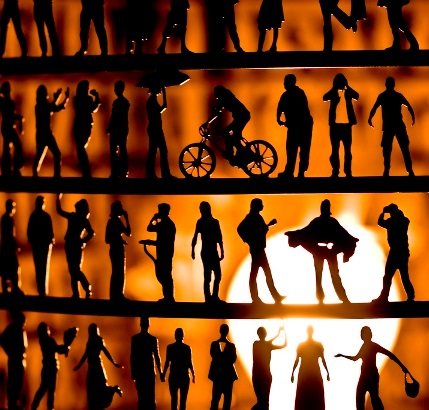 Every day matters. This is the very simple message of what it means to be made in the image and likeness of God and to live one’s life to the glory of God. You don’t need to be “missional.” You don’t even need to be “radical” (especially since radical commonly means “very different from the norm”).
In fact, the Bible does not encourage superlative adjectives to describe following Christ at all. Adjectival superlatives tend to create new forms of legalism whereby the work and person of Christ is no longer sufficient to be in right relationship with God. The norm is not enough. Although those promoting various adjectives have no intention of doing harm, hearers often embrace the adjective as the basis of genuine faith instead of the language of Scripture.
Young Christian adults are torn in a sea of modern adjectives that tend to become shame-filled and often debilitating burdens. Larry Osborne warns about five tribal communities that may be accidentally doing harm: (1) “Radical” Christians, (2) “Crazy” Christians, (3) “Missional” Christians, (4) “Gospel-Centered” Christians and (5) Revolutionary and Organic Christians. According to Osborne, each of these tribes has inadvertently created accidental pharisaism because if one does not live out one’s Christian life according to the norms and codes of their respective tribe one will be looked down upon. Moreover, for those within each tribe, it leaves them vulnerable to the arrogant narcissism that believes “our” tribe gets Christianity “right” while the others are substandard.
To be fair, the impulse that formed these tribes comes from a good place. They are all seeking to be faithful to what the Scriptures teach and are reacting to real problems that exist in the life of God’s people. The problem is that tribalism can cultivate a debilitating sense of shame and feelings of unworthiness that discourages God’s people from enjoying simple norms expressed in the dynamism of the ordinary.
As we look at the Bible and the Christian tradition there are at least seven good norms that give Christians freedom to embrace the Bible’s teaching of what it means to be bear God’s image and to walk away from the vulnerabilities of superlative Christianity.
(1) Christians are a people of love who live to glorify God. David Jones rightly summarizes that glorifying God is the controlling purpose of the Christian life (1 Cor. 10:31) that is motivated by loving God and loving neighbor (Matt 22:26-40) as Jesus teaches. The Christian life is consumed by love and, in love, his people glorify Him.
(2) Christians are a people of the Gospel. Theodore G. Stylianopoulos reminds us that the gospel is “the good news of God’s saving work in Christ and the Spirit by which the powers of sin and death are overcome and the life of the new creation is inaugurated, moving towards the eschatological glorification of the whole cosmos.” Because the entire creation has been drawn into the mutiny of the human race, (Rom 8:19-24) redemption must involve the entire creation, as Michael Williams rightly argues. As such, everything matters in God’s redemptive plan. For example, every person matters to God because they bear his image, and the Holy Spirit uses the evangelicalism of God’s people to unite men and women to Christ. The rest of creation and culture also matter to God because, in the mystery of God’s redemptive plan, we play a role in seeing that the cosmos brings glory to God (1 Cor 10:31, Col 3:23).
(3) Every community matters. One of the beautiful pictures that we get from reading the entire Biblical narrative is that God seeks out his people wherever they are, whether it be rural areas, small towns, big cities, urban, suburban, exurban neighborhoods, and everything in between. Every community, then, matters to God. Every race and class matter to God. God cares about whatever neighborhood has been affected by the Fall and he wants his people there as agents of grace.
(4) Every relationship matters. Herman Bavinck observes that we were created for community. God did not want Adam to be alone so he created Eve but God also did not want Adam and Eve to be alone so he commissioned them to “be fruitful and multiply” (Gen 1:26-28) and establish family and community. So all of our relationships matter in everyday Christianity. Our families matter. Our parents and children matter. Our friends and coworkers matter. Every person we come in contact with everyday matters because with every human encounter is an opportunity to glorify God by loving everyone properly as He intends since they bear his image.
(5) Every vocation matters. Gene Edward Veith reminds us that “vocation” is another word for “calling.” The doctrine of vocation means that God assigns us to a certain life—with its particular talents, tasks, responsibilities, and relationships—and then calls us to that assignment (1 Corinthians 7:17). Veith argues that “God himself works through human vocations in providential care as he governs the world. The purpose of every vocation, in all of the different spheres in which our multiple vocations occur—the family, the workplace, the culture, and the church—is to love and serve our neighbors.” This means that there are no little people in the Kingdom and no one has an insignificant career, job, or life. Being a bus driver is no less important than being a lawyer or a church planter in God’s economy. What matters is that God’s people are a love-driven people glorifying God wherever he places them.
(6) Virtues and values matter. David Jones reminds us that Christian love is embodied in certain virtues and values that glorify God. Therefore, our characters matter. We are to be a people of justice, mercy, and faithfulness (Matt 23:32). These are the weightier matters of the law and, taken together, comprise the essence of all that God is calling us to do. Justice requires that we treat every human being according to what it means to be made in the image of God. The full revelation of God’s mercy brings with it the full responsibility to glorify God by living lives that reflect his mercy (Matt 5:7). Because God’s people are loved by a faithful God and depend entirely on his faithfulness they are disposed to practice the same in their own relationships and responsibilities. We see faithfulness worked out in exercising the virtues of prudence (James 1:5), courage (1 Cor 16:13-14), self-discipline (2 Tim 1:7), and humility (1 Peter 5:5).
(7) God’s plan matters. The Bible’s grand narrative can be summed up as this: creation, fall, redemption, and consummation. In this story, the Creator God has a plan, focused on the work and person of Christ, to redeem a world corrupted by the fall that will be finally consummated when Christ returns. In the mystery of God’s mission the saints of God are a privileged part of this redemptive story. So, as Gerard Van Groningen writes, our creational and renewed worldview (Rom 12:2) and all of the kingdom activities of God’s people–from raising families to evangelism to worship to recreation–are mutually interrelated and correlated in God’s redemptive plan focused on the Son. The wonder of life is not in the spectacular, but in the ordinary and the everyday (Matt 6:25-34). Therefore, the social, political, moral, spiritual, and economic contexts that contribute to human flourishing matter both to God and his people.
In the end, Christians don’t need adjectives, trending tribes, or superlatives that make them vulnerable to narcissism and shame to know what it “truly” means to follow Christ. The Bible’s language is sufficient. Instead, God’s people are invited to live lives free (Gal 5) from any from of direct or accidental legalism everyday. The good life, then, the one that God has always used in his redemptive mission, is the one that brings glory to God by loving him and loving neighbor.
Originally published at the ActonPowerBlog
Photo credit: Stuart Richards
Previous Post

March 9, 2015
Why Gender Matters for Christian Stewardship
Next Post

March 11, 2015 Does Manual Labor Have a Place in the Faith and Work Discussion?
Browse Our Archives
Select a Category Art Charity Church Common Grace Culture Curriculum Economics Education Family Justice Order Theology Uncategorized Vocation Wisdom Wonder Work
Select a Month January 2017 December 2016 November 2016 October 2016 September 2016 August 2016 July 2016 June 2016 May 2016 April 2016 March 2016 February 2016 January 2016 December 2015 November 2015 October 2015 September 2015 August 2015 July 2015 June 2015 May 2015 April 2015 March 2015 February 2015 January 2015 December 2014 November 2014 October 2014 September 2014 August 2014
Follow Us!
TAKE THE
Religious Wisdom Quiz
What did Stephen see as he was being stoned?
Select your answer to see how you score.
A bright light from heaven The face of God Angels descending Heaven opened and Jesus standing at the right hand of God
Related posts from Oikonomia

Lessons on Christian Vocation from ‘Chewbacca Mom’


Help People, Not Banks: Reflections on the 2016...

How Economic Freedom Leads to Human Flourishing
TRENDING AT PATHEOS Business, Finance and Religion

St. Francis by Bill Droel Pope Leo XIV declares 2026 as “Year...

Catholics are schooled in the faith by memorizing dogmatic points and lots...

The Good News of Our Human Limitations -...
After another day of trying to meet deadlines and working on projects,...
Quiet Holy Attentiveness (podcast) with Sarah Clarkson
We know that quiet is an essential aspect of the spiritual life,...

Every Vocation Everywhere All At Once
What is a vocation? How does it endure through the years? Can...

I promise this is not going to become a Taylor Swift Studies...
view all Business, Finance and Religion blogs
Ad-Free & Subscriber Log-In Subscription Support
- About Us
- 2026 Calendar
- Videos
- Podcasts
- Library of World Religions
- Faith In Media Tracker
- Advertise With Us
- Write for Us
- Privacy Policy
- Terms of Service
- Do Not Sell My Data
- Contact Us
- Radiant Digital
- Manage Newsletter Subscriptions
- Unsubscribe From Notifications
- Sitemap
Copyright 2008-2026, Patheos, part of the Radiant Digital network of media brands. All rights reserved.
Subscription Support Ad-Free & Subscriber Log-In
Follow Patheos