
BuddhistCatholicContemplativeEvangelicalGeneral ChristianHinduJewishLatter-day SaintMuslimNew VisionsProgressive Christian
Beliefs
- Buddhist
- Catholic
- Contemplative
- Evangelical
- General Christian
- Hindu
- Jewish
- Latter-day Saint
- More Voices
- Muslim
- New Visions
- Pagan
- Progressive Christian
Topics
- Religion News
- Food and Religion
- Sports and Religion
- Religious Art
- Religious Music and Entertainment
- Religious Events
- History and Religion
- Style and Religion
- Politics and Religion
- Women in Religion
- Recreation Outdoors and Religion
- Business Finance and Religion
- Careers Workplace and Religion
- Education and Religion
- Family Parenting and Religion
- Health Fitness and Religion
- Home and Religion
- Relationships and Religion
- Technology and Religion
- Travel and Religion
Columnists
- Buddhist Columnists
- Business Finance and Religion Columnists
- Careers Workplace and Religion Columnists
- Catholic Columnists
- Contemplative Columnists
- Education and Religion Columnists
- Evangelists Columnists
- Family Parenting and Religion Columnists
- General Christian Columnists
- Health Fitness and Religion Columnists
- Hindu Columnists
- History and Religion Columnists
- Home and Religion Columnists
- Jewish Columnists
- More Voices Columnists
- Latter Day Columnists
- Muslim Columnists
- New Visions Columnists
- Nonreligious Columnists
- Pagan Columnists
- Politics and Religion Columnists
- Progressive Columnists
- Recreation Outdoors and Religion Columnists
- Relationships and Religion Columnists
- Religion News Columnists
- Religious Art Columnists
- Religious Events Columnists
- Religious Music and Entertainment Columnists
- Sports and Religion Columnists
- Style and Religion Columnists
- Technology and Religion Columnists
- Travel and Religion Columnists
- Women in Religion Columnists
Resource Library
- 2026 Calendar
- Library of World Religions
- The 100 Most Holy Places on Earth
- Patheos Answers
- Podcasts
- Videos
- Faith Leaders Database
- Anglican Episcopalian
- Bahai
- Baptist
- Buddhism
- Christianity
- Confucianism
- Eastern Orthodoxy
- Hinduism
- Holiness and Pentecostal
- ISKCON
- Islam
- Judaism
- Lutheran
- Methodist
- The Church of Jesus Christ of Latter-day Saints
- New Age
- Paganism
- Presbytarian and Reformed
- Protestantism
- Religion Behind the Scenes
- Roman Catholic
- Scientology
- Shia Islam
- Sikhism
- Sufism
- Sunni Islam
- Taoism
- Zen
- See all religions
Research Tools
 Ad-Free & Subscriber Log-In Subscription Support
Ad-Free & Subscriber Log-In Subscription Support
Follow Patheos 

- Trending:
- Forgiveness
- |
- Marriage
- |
- Consciousness
- |
- Death Penalty
- |
- Election
- |
- Halloween
 Oikonomia
- Home
- Business, Finance and Religion
- Why Do Black Lives Matter?
Why Do Black Lives Matter?
Last updated on: January 26, 2015 at 6:08 pm by Acton Institute
Why Do Black Lives Matter? 2015-01-26T18:08:17-04:00 Acton Institute
Patheos Explore the world's faith through different perspectives on religion and spirituality! Patheos has the views of the prevalent religions and spiritualities of the world.
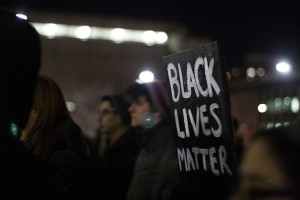 “Black lives matter.” “All lives matter.” These slogans may forever summarize the deep tensions in American life in 2014. Catalyzed by the deaths of Michael Brown, Eric Garner, and two New York Police officers who were murdered while sitting in a police car, Americans are in the midst of a crisis of human dignity. Are we still able to articulate why anyone’s life matters? We can loudly protest that “Black lives matter” but it will mean nothing in the long run if we cannot explain why black lives matter.
Having desiccated our shared anthropology to the point that people are defined by the pursuit of individualistic and depersonalized rights, Americans can no longer ontologically justify the claim that anyone is worthy of dignity, love, and respect. In the current crisis, we are left to reduce some of our neighbors to depersonalized nouns: “suspect,” “thug,” “criminal,” “felon,” or “cop.” This type of depersonalization is the gateway to dehumanization because it gives us permission to suspend the requirement to treat people with dignity, even if they have broken the law.
Black lives matter because black people are persons. One of the greatest tragedies in American history was the myth that America could flourish without blacks flourishing as persons. From the founding of this country, throughout slavery, Reconstruction, the Eugenics movement, and the Civil-Rights Movement, black Americans fought to establish themselves, first and foremost, as persons. At minimum we can define persons as centers of creativity, self-transcendence, communication, morality, self-direction, responsibility, choice, freedom, and spirituality, who come to know themselves in union and communion with the Triune God and other personal selves. Persons are simultaneously unrepeatable splendors with great capacity for good and also vulnerable to disordered loves that can lead to profound evil. Not only do they need moral formation; moral norms ought to shape how we structure the elements of justice in politics, jurisprudence, and the marketplace.
One of the greatest contributions that Christianity made to the world was to provide an ontological justification for human dignity and human rights. Black life matters because black people have been called to a vocation—to attain the end for which they were created in union and communion with others persons who have the same calling. Today, humans are reduced to depersonalized, abstract individuals possessing “rights” to be asserted and acquired for the purpose of self-actualization with little to no regard for the other. In a depersonalized, individualistic society people could not care less about the flourishing of their neighbors. What matters is the consumeristic flourishing of the self in a morally relativistic pursuit of desired passions. Too many Americans do not know how to distinguish between rights and passions.
In a culture that has done all it can to expunge moral virtue from the aspirations of human life, why are we surprised that we are shouting, “Black lives matter?” When human persons are not expected to be in communion with God and others, why are we surprised that the reverence due to the human person is lost? Black lives matter because persons are not autonomous, self-contained, individualistic creatures who do not need others for their flourishing. Black lives matter not simply because they are black but because blacks are persons—persons who are a necessary variable to the flourishing of others so that we all may attain the end for which we were created.
As we move into 2015, the fact remains that in order for there to be sustainable peace and justice following the events in Ferguson and New York City—that is, if we truly want to heal the wounds that divide us—we must first understand and what it means to be human. As Dr. Martin Luther King observed, “[E]very human life is a reflection of divinity, and … every act of injustice mars and defaces the image of God in man.” Advocating for black life without a moral basis is throwing sand into the wind.
(Originally published at Acton Commentary)
Previous Post

January 15, 2015
God Is With You in the Workplace (Whether You Know It or Not)
Next Post

January 20, 2015 The Useless Video
Browse Our Archives
Select a Category Art Charity Church Common Grace Culture Curriculum Economics Education Family Justice Order Theology Uncategorized Vocation Wisdom Wonder Work
Select a Month January 2017 December 2016 November 2016 October 2016 September 2016 August 2016 July 2016 June 2016 May 2016 April 2016 March 2016 February 2016 January 2016 December 2015 November 2015 October 2015 September 2015 August 2015 July 2015 June 2015 May 2015 April 2015 March 2015 February 2015 January 2015 December 2014 November 2014 October 2014 September 2014 August 2014
Follow Us!
TAKE THE
Religious Wisdom Quiz
How many musicians were used in Temple worship?
Select your answer to see how you score.
250 288 200 300
Related posts from Oikonomia

Politics, Character, and Competition

What Christians Can Learn from Adam Smith’s ‘Paradox...

The Most Surprising Fact About Poverty in America
This Mayor Helped the Homeless By Giving Them...
TRENDING AT PATHEOS Business, Finance and Religion

St. Francis by Bill Droel Pope Leo XIV declares 2026 as “Year...

Catholics are schooled in the faith by memorizing dogmatic points and lots...

The Good News of Our Human Limitations -...
After another day of trying to meet deadlines and working on projects,...

Quiet Holy Attentiveness (podcast) with Sarah Clarkson
We know that quiet is an essential aspect of the spiritual life,...

Every Vocation Everywhere All At Once
What is a vocation? How does it endure through the years? Can...

I promise this is not going to become a Taylor Swift Studies...
view all Business, Finance and Religion blogs
Ad-Free & Subscriber Log-In Subscription Support
- About Us
- 2026 Calendar
- Videos
- Podcasts
- Library of World Religions
- Faith In Media Tracker
- Advertise With Us
- Write for Us
- Privacy Policy
- Terms of Service
- Do Not Sell My Data
- Contact Us
- Radiant Digital
- Manage Newsletter Subscriptions
- Unsubscribe From Notifications
- Sitemap
Copyright 2008-2026, Patheos. All rights reserved.
Subscription Support Ad-Free & Subscriber Log-In
Follow Patheos