
BuddhistCatholicContemplativeEvangelicalGeneral ChristianHinduJewishLatter-day SaintMuslimNew VisionsProgressive Christian
Beliefs
- Buddhist
- Catholic
- Contemplative
- Evangelical
- General Christian
- Hindu
- Jewish
- Latter-day Saint
- More Voices
- Muslim
- New Visions
- Pagan
- Progressive Christian
Topics
- Religion News
- Food and Religion
- Sports and Religion
- Religious Art
- Religious Music and Entertainment
- Religious Events
- History and Religion
- Style and Religion
- Politics and Religion
- Women in Religion
- Recreation Outdoors and Religion
- Business Finance and Religion
- Careers Workplace and Religion
- Education and Religion
- Family Parenting and Religion
- Health Fitness and Religion
- Home and Religion
- Relationships and Religion
- Technology and Religion
- Travel and Religion
Columnists
- Buddhist Columnists
- Business Finance and Religion Columnists
- Careers Workplace and Religion Columnists
- Catholic Columnists
- Contemplative Columnists
- Education and Religion Columnists
- Evangelists Columnists
- Family Parenting and Religion Columnists
- General Christian Columnists
- Health Fitness and Religion Columnists
- Hindu Columnists
- History and Religion Columnists
- Home and Religion Columnists
- Jewish Columnists
- More Voices Columnists
- Latter Day Columnists
- Muslim Columnists
- New Visions Columnists
- Nonreligious Columnists
- Pagan Columnists
- Politics and Religion Columnists
- Progressive Columnists
- Recreation Outdoors and Religion Columnists
- Relationships and Religion Columnists
- Religion News Columnists
- Religious Art Columnists
- Religious Events Columnists
- Religious Music and Entertainment Columnists
- Sports and Religion Columnists
- Style and Religion Columnists
- Technology and Religion Columnists
- Travel and Religion Columnists
- Women in Religion Columnists
Resource Library
- 2026 Calendar
- Library of World Religions
- The 100 Most Holy Places on Earth
- Patheos Answers
- Podcasts
- Videos
- Faith Leaders Database
- Anglican Episcopalian
- Bahai
- Baptist
- Buddhism
- Christianity
- Confucianism
- Eastern Orthodoxy
- Hinduism
- Holiness and Pentecostal
- ISKCON
- Islam
- Judaism
- Lutheran
- Methodist
- The Church of Jesus Christ of Latter-day Saints
- New Age
- Paganism
- Presbytarian and Reformed
- Protestantism
- Religion Behind the Scenes
- Roman Catholic
- Scientology
- Shia Islam
- Sikhism
- Sufism
- Sunni Islam
- Taoism
- Zen
- See all religions
Research Tools
 Ad-Free & Subscriber Log-In Subscription Support
Ad-Free & Subscriber Log-In Subscription Support
Follow Patheos 

- Trending:
- Forgiveness
- |
- Marriage
- |
- Consciousness
- |
- Death Penalty
- |
- Election
- |
- Halloween
 Oikonomia
- Home
- Business, Finance and Religion
- When Freedom, Creativity, and Opportunity Meet
When Freedom, Creativity, and Opportunity Meet
Last updated on: January 6, 2015 at 2:02 am by Acton Institute
When Freedom, Creativity, and Opportunity Meet 2015-01-06T02:02:03-04:00 Acton Institute
Patheos Explore the world's faith through different perspectives on religion and spirituality! Patheos has the views of the prevalent religions and spiritualities of the world.
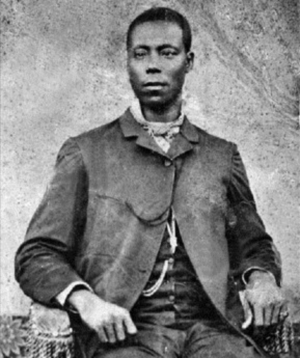
Thomas L. Jennings (1791–1856)
Thomas L. Jennings (1791–1856) was the first African-American to be granted a patent, for his discovery of a process called “dry-scouring” — what we now know as “dry cleaning.” Jennings’ life is a model of what happens when people of virtue have the freedom to use their skill to meet needs in the market place and contribute to the common good. What the United States and the rest of the world need are social, political, and economic contexts where people can flourish in the same way that Jennings did.
Jennings was born a free man soon after the state of New York banned the slave trade in 1788. In the ensuing years, New York slowly began to expand the sphere of freedom for blacks, creating more opportunities for their participation in all levels of society. As a young man, Jennings dug trenches on Long Island during the War of 1812. After bouncing around from job to job, he finally landed an apprenticeship with a clothier, which set the stage for him to become an expert tailor. In fact, Jennings was so remarkably skilled that people from all over the New York City area would come to him for alterations or custom-tailored items. The demand for his services was so great that, in his early 20s, he was able to open his own store on Church Street, which soon grew into one of the largest clothing stores in New York City during that era.
In the course of operating his business, Jennings became increasingly aware that many of his customers had few options for cleaning their clothes without damaging them. Conventional cleaning methods of the time would normally ruin the fabric, leaving owners with the unattractive options of wearing dirty clothes or disposing of the clothes after a few washes. After experimenting with different solutions and cleaning agents, Jennings found the right combination to effectively treat and clean clothes without destroying the fabric. Jennings called this new method “dry-scouring.”
In 1820, Jennings applied for a patent. His application created substantial controversy, because a 1793 U.S. patent law prohibited slaves from receiving patents for their own inventions and thus no patent had ever been awarded to a black person. Since Jennings was born as a free man, however, the patent courts had no legal reason to prevent Jennings from receiving his patent, making him the first black to acquire one (March 3, 1821, U.S. patent 3306x).
Jennings’ contributions to society, however, do not end there. He used his earnings not only to improve his business but also to promote good social causes. For example, he spent much of his profit to purchase his family from slavery and to support the abolitionist movement. In 1831, Jennings became assistant secretary to the First Annual Convention of the People of Color in Philadelphia, Pennsylvania and he spent many years fighting for the liberation of blacks. Jennings was neither coerced nor pressured by the rhetoric of “corporate social responsibility” nor “paying his fair share”; he simply did what was good for his customers and right for society because he was free to do so.
Do we not want new stories like this in the United States and around the world? Do we not want people to be free to use their creativity to meet marketplace needs in their communities and freely use their wealth creation to contribute to civil society as they see fit? Ironically, if Jennings were alive today he would have had a much more difficult time succeeding because of the obstacles to innovation and philanthropy erected by ever-increasing federal regulations and ever-expanding government bureaucracy. As such, many burgeoning entrepreneurs are currently barred from capitalizing on opportunities to address market needs and to solve real problems in society because politicians believe they know how to meet the needs of society better than the rest of us.
Jennings is a wonderful example of what happens when political and economic liberty meet in virtue. Now if we could only get our politicians and regulators to get out of the way of the yet-to- be-discovered innovators like Jennings, we could all enjoy the benefits.
(Originally published at Acton Commentary)
Previous Post

December 30, 2014
"All is Gift" Old Cell Phone Giveaway
Next Post

January 7, 2015 Necessity as the Mother of Innovation
Browse Our Archives
Select a Category Art Charity Church Common Grace Culture Curriculum Economics Education Family Justice Order Theology Uncategorized Vocation Wisdom Wonder Work
Select a Month January 2017 December 2016 November 2016 October 2016 September 2016 August 2016 July 2016 June 2016 May 2016 April 2016 March 2016 February 2016 January 2016 December 2015 November 2015 October 2015 September 2015 August 2015 July 2015 June 2015 May 2015 April 2015 March 2015 February 2015 January 2015 December 2014 November 2014 October 2014 September 2014 August 2014
Follow Us!
TAKE THE
Religious Wisdom Quiz
What is the Christian view of "servant leadership"?
Select your answer to see how you score.
Leaders demand first Greatest serves others Servants never lead Only the boss leads
Related posts from Oikonomia

Thomas Sowell on the Origins of Prosperity

Politics, Character, and Competition


Lessons on Christian Vocation from ‘Chewbacca Mom’
TRENDING AT PATHEOS Business, Finance and Religion

St. Francis by Bill Droel Pope Leo XIV declares 2026 as “Year...

Catholics are schooled in the faith by memorizing dogmatic points and lots...

The Good News of Our Human Limitations -...
After another day of trying to meet deadlines and working on projects,...

Quiet Holy Attentiveness (podcast) with Sarah Clarkson
We know that quiet is an essential aspect of the spiritual life,...

Every Vocation Everywhere All At Once
What is a vocation? How does it endure through the years? Can...

I promise this is not going to become a Taylor Swift Studies...
view all Business, Finance and Religion blogs
Ad-Free & Subscriber Log-In Subscription Support
- About Us
- 2026 Calendar
- Videos
- Podcasts
- Library of World Religions
- Faith In Media Tracker
- Advertise With Us
- Write for Us
- Privacy Policy
- Terms of Service
- Do Not Sell My Data
- Contact Us
- Radiant Digital
- Manage Newsletter Subscriptions
- Unsubscribe From Notifications
- Sitemap
Copyright 2008-2026, Patheos. All rights reserved.
Subscription Support Ad-Free & Subscriber Log-In
Follow Patheos