
BuddhistCatholicContemplativeEvangelicalGeneral ChristianHinduJewishLatter-day SaintMuslimNew VisionsProgressive Christian
Beliefs
- Buddhist
- Catholic
- Contemplative
- Evangelical
- General Christian
- Hindu
- Jewish
- Latter-day Saint
- More Voices
- Muslim
- New Visions
- Pagan
- Progressive Christian
Topics
- Religion News
- Food and Religion
- Sports and Religion
- Religious Art
- Religious Music and Entertainment
- Religious Events
- History and Religion
- Style and Religion
- Politics and Religion
- Women in Religion
- Recreation Outdoors and Religion
- Business Finance and Religion
- Careers Workplace and Religion
- Education and Religion
- Family Parenting and Religion
- Health Fitness and Religion
- Home and Religion
- Relationships and Religion
- Technology and Religion
- Travel and Religion
Columnists
- Buddhist Columnists
- Business Finance and Religion Columnists
- Careers Workplace and Religion Columnists
- Catholic Columnists
- Contemplative Columnists
- Education and Religion Columnists
- Evangelists Columnists
- Family Parenting and Religion Columnists
- General Christian Columnists
- Health Fitness and Religion Columnists
- Hindu Columnists
- History and Religion Columnists
- Home and Religion Columnists
- Jewish Columnists
- More Voices Columnists
- Latter Day Columnists
- Muslim Columnists
- New Visions Columnists
- Nonreligious Columnists
- Pagan Columnists
- Politics and Religion Columnists
- Progressive Columnists
- Recreation Outdoors and Religion Columnists
- Relationships and Religion Columnists
- Religion News Columnists
- Religious Art Columnists
- Religious Events Columnists
- Religious Music and Entertainment Columnists
- Sports and Religion Columnists
- Style and Religion Columnists
- Technology and Religion Columnists
- Travel and Religion Columnists
- Women in Religion Columnists
Resource Library
- 2026 Calendar
- Library of World Religions
- The 100 Most Holy Places on Earth
- Patheos Answers
- Podcasts
- Videos
- Faith Leaders Database
- Anglican Episcopalian
- Bahai
- Baptist
- Buddhism
- Christianity
- Confucianism
- Eastern Orthodoxy
- Hinduism
- Holiness and Pentecostal
- ISKCON
- Islam
- Judaism
- Lutheran
- Methodist
- The Church of Jesus Christ of Latter-day Saints
- New Age
- Paganism
- Presbytarian and Reformed
- Protestantism
- Religion Behind the Scenes
- Roman Catholic
- Scientology
- Shia Islam
- Sikhism
- Sufism
- Sunni Islam
- Taoism
- Zen
- See all religions
Research Tools
 Ad-Free & Subscriber Log-In Subscription Support
Ad-Free & Subscriber Log-In Subscription Support
Follow Patheos 

- Trending:
- Forgiveness
- |
- Marriage
- |
- Consciousness
- |
- Death Penalty
- |
- Election
- |
- Halloween
 Oikonomia
- Home
- Business, Finance and Religion
- How to Develop a Christian Mind in Business School (Part III)
How to Develop a Christian Mind in Business School (Part III)
Last updated on: January 13, 2015 at 1:33 am by Acton Institute
How to Develop a Christian Mind in Business School (Part III) 2015-01-13T01:33:32-04:00 Acton Institute
Patheos Explore the world's faith through different perspectives on religion and spirituality! Patheos has the views of the prevalent religions and spiritualities of the world.
By Joe Carter
Note: This is the third in a series on developing a Christian mind in business school. Read Part I and Part II
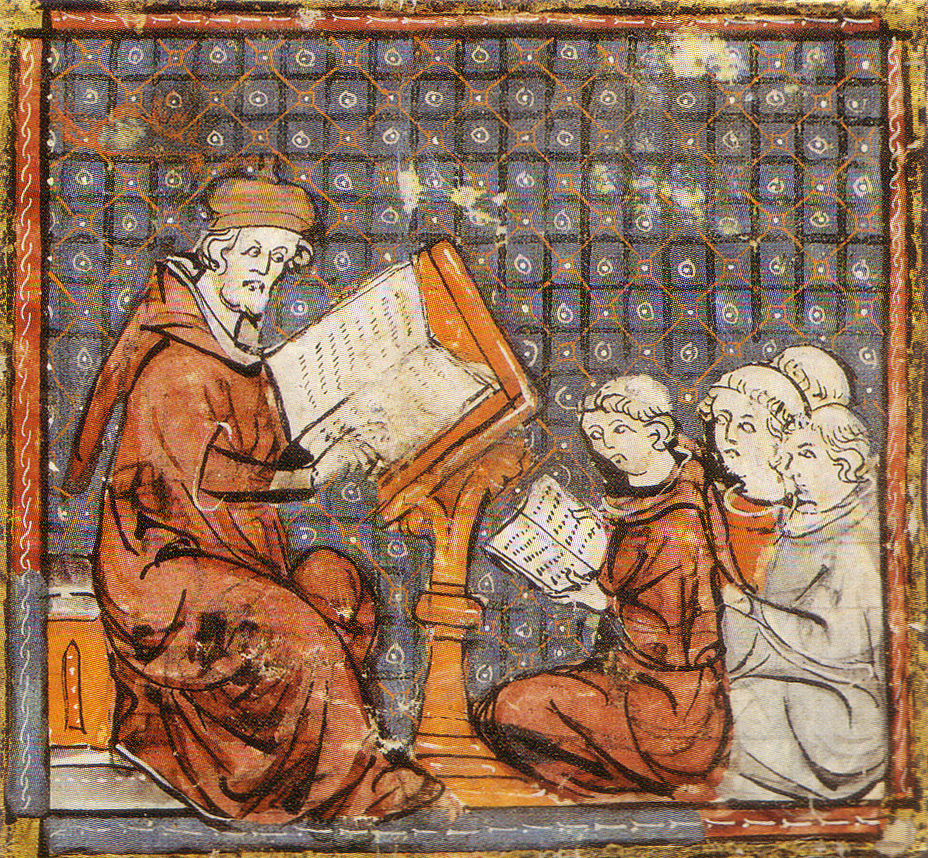 When people ask me what business school was like, I’m tempted to say, “A lot like a medieval university.” Unfortunately, that comparison makes people think b-school is dark, musty, and full of monks—which is not quite what I mean.
In medieval universities, the three subjects that were considered the first three stages of learning were the trivium: grammar, logic, and rhetoric. Our use of those terms, however, fails to convey the broader meaning they had in earlier centuries. In her excellent book on the trivium (Latin for “the three-fold way”), Sister Miriam Joseph explains:
Grammar is concerned with the thing as-it-is-symbolized,
Logic is concerned with the thing as-it-is-known, and
Rhetoric is concerned with the thing as-it-is-communicated.
These three language arts, adds Sister Joseph, can be defined as they relate to reality and to each other. Similarly, while the arts learned in business school are very different from the classical trivium, every course can similarly be classified in a “three-fold way”:
Thing as-it-is-symbolized: Quantification (Accounting, Quantitative Analysis, Finance) – Most of what is being administered in business administration can be quantified, that is reduced to numbers (money, inventory, personnel, etc.). Classes in this area teach the student to better understand the relationship between the symbols (numbers) in order to improve decision-making.
Thing as-it-is-known: Orientation (Organizational Behavior, Operations Management, Economics, Information Technology, Business Law, Global/International focus (management/finance/marketing/etc.) – If you don’t know the difference between a supply chain and an S-corporation, these are the classes that fill in the gaps. About a third of the MBA program is comprised of courses like these that are intended to orient the student to the business and economic environment. Although there is a lot of overlap and interdependence with the other two areas, these courses primarily serve as introductions to various “things as-they-are-known” in the realm of business.
Thing as-it-is-communicated: Rhetoric (Business Communication, Marketing, Business Ethics, Strategy) – These are often considered the “soft” classes, not because they are easier than finance or accounting (though they certainly are that) but because they tend to focus on the non-quantitative aspects of business. These are also the courses were you learn to persuade others—investors, customers, suppliers, managers—to agree with your analysis, adopt your opinion, or follow your recommendation. Just as rhetoric is the master art of the classical trivium, for it presupposes and makes use of the other two, rhetoric is the master art of the business trivium. These classes are the true heart of business school since almost everything you learn in the program is focused on you eventually using your knowledge to persuade others.
While I believe this classification of business arts—quantification, orientation, rhetoric—provides a useful framework of understanding business school, I think it is essential to the task of developing a Christian mind in business school.
When we speak of a particular type of “mind,” as in the “scientific mind,” “secular mind,” “Christian mind,” etc., we are referring to a set of notions, beliefs, attitudes, and mental orientations collectively accepted by a particular group. Therefore, when I speak in this series about developing a Christian mind in b-school, I’m referring primarily to learning how to think Christianly about things as they are symbolized, things as they are known, and things as they are communicated. That is, how to think Christianly about the three business arts taught in business school: quantification, orientation, and rhetoric.
There is common misperception that being a Christian businessperson means merely being a person in business who behaves morally (i.e., like a Christian should). Oftentimes this is reduced to being nice, honest, friendly, etc. (because supposedly Jesus wants us to always be nice, honest, and friendly!). Christians should certainly behave in an ethically responsible manner, but that in itself does not distinguish us from non-believers, who can share our ethical norms. Indeed, there are many non-Christians in business who could put us believers to shame when it comes to exemplifying moral behavior. Behaving morally is important but it is not at all the same as thinking Christianly about business.
So what does it mean to thinking Christianly about business? In our next post we’ll take a closer look at that question and what it means to develop a Christian view on the business arts.
Previous Post

January 8, 2015
The Forms of Stewardship
Next Post

January 14, 2015 Wonder Rush – Truth, Goodness, and Beauty
Browse Our Archives
Select a Category Art Charity Church Common Grace Culture Curriculum Economics Education Family Justice Order Theology Uncategorized Vocation Wisdom Wonder Work
Select a Month January 2017 December 2016 November 2016 October 2016 September 2016 August 2016 July 2016 June 2016 May 2016 April 2016 March 2016 February 2016 January 2016 December 2015 November 2015 October 2015 September 2015 August 2015 July 2015 June 2015 May 2015 April 2015 March 2015 February 2015 January 2015 December 2014 November 2014 October 2014 September 2014 August 2014
Follow Us!
TAKE THE
Religious Wisdom Quiz
What did the angel tell Mary she would name her son?
Select your answer to see how you score.
Immanuel John Jesus Peter
Related posts from Oikonomia

Thomas Sowell on the Origins of Prosperity


Lessons on Christian Vocation from ‘Chewbacca Mom’

Are Christianity and Communism Mutually Exclusive?
TRENDING AT PATHEOS Business, Finance and Religion

St. Francis by Bill Droel Pope Leo XIV declares 2026 as “Year...

Catholics are schooled in the faith by memorizing dogmatic points and lots...

The Good News of Our Human Limitations -...
After another day of trying to meet deadlines and working on projects,...

Quiet Holy Attentiveness (podcast) with Sarah Clarkson
We know that quiet is an essential aspect of the spiritual life,...

Every Vocation Everywhere All At Once
What is a vocation? How does it endure through the years? Can...

I promise this is not going to become a Taylor Swift Studies...
view all Business, Finance and Religion blogs
Ad-Free & Subscriber Log-In Subscription Support
- About Us
- 2026 Calendar
- Videos
- Podcasts
- Library of World Religions
- Faith In Media Tracker
- Advertise With Us
- Write for Us
- Privacy Policy
- Terms of Service
- Do Not Sell My Data
- Contact Us
- Radiant Digital
- Manage Newsletter Subscriptions
- Unsubscribe From Notifications
- Sitemap
Copyright 2008-2026, Patheos. All rights reserved.
Subscription Support Ad-Free & Subscriber Log-In
Follow Patheos