
BuddhistCatholicContemplativeEvangelicalGeneral ChristianHinduJewishLatter-day SaintMuslimNew VisionsProgressive Christian
Beliefs
- Buddhist
- Catholic
- Contemplative
- Evangelical
- General Christian
- Hindu
- Jewish
- Latter-day Saint
- More Voices
- Muslim
- New Visions
- Pagan
- Progressive Christian
Topics
- Religion News
- Food and Religion
- Sports and Religion
- Religious Art
- Religious Music and Entertainment
- Religious Events
- History and Religion
- Style and Religion
- Politics and Religion
- Women in Religion
- Recreation Outdoors and Religion
- Business Finance and Religion
- Careers Workplace and Religion
- Education and Religion
- Family Parenting and Religion
- Health Fitness and Religion
- Home and Religion
- Relationships and Religion
- Technology and Religion
- Travel and Religion
Columnists
- Buddhist Columnists
- Business Finance and Religion Columnists
- Careers Workplace and Religion Columnists
- Catholic Columnists
- Contemplative Columnists
- Education and Religion Columnists
- Evangelists Columnists
- Family Parenting and Religion Columnists
- General Christian Columnists
- Health Fitness and Religion Columnists
- Hindu Columnists
- History and Religion Columnists
- Home and Religion Columnists
- Jewish Columnists
- More Voices Columnists
- Latter Day Columnists
- Muslim Columnists
- New Visions Columnists
- Nonreligious Columnists
- Pagan Columnists
- Politics and Religion Columnists
- Progressive Columnists
- Recreation Outdoors and Religion Columnists
- Relationships and Religion Columnists
- Religion News Columnists
- Religious Art Columnists
- Religious Events Columnists
- Religious Music and Entertainment Columnists
- Sports and Religion Columnists
- Style and Religion Columnists
- Technology and Religion Columnists
- Travel and Religion Columnists
- Women in Religion Columnists
Resource Library
- 2026 Calendar
- Library of World Religions
- The 100 Most Holy Places on Earth
- Patheos Answers
- Podcasts
- Videos
- Faith Leaders Database
- Anglican Episcopalian
- Bahai
- Baptist
- Buddhism
- Christianity
- Confucianism
- Eastern Orthodoxy
- Hinduism
- Holiness and Pentecostal
- ISKCON
- Islam
- Judaism
- Lutheran
- Methodist
- The Church of Jesus Christ of Latter-day Saints
- New Age
- Paganism
- Presbytarian and Reformed
- Protestantism
- Religion Behind the Scenes
- Roman Catholic
- Scientology
- Shia Islam
- Sikhism
- Sufism
- Sunni Islam
- Taoism
- Zen
- See all religions
Research Tools
 Ad-Free & Subscriber Log-In Subscription Support
Ad-Free & Subscriber Log-In Subscription Support
Follow Patheos 

- Trending:
- Forgiveness
- |
- Marriage
- |
- Consciousness
- |
- Death Penalty
- |
- Election
- |
- Halloween
 Oikonomia
- Home
- Business, Finance and Religion
- Wounding Work: Creative Service as Cross Bearing
Wounding Work: Creative Service as Cross Bearing
Last updated on: December 12, 2014 at 1:30 am by Acton Institute
Wounding Work: Creative Service as Cross Bearing 2014-12-12T01:30:30-04:00 Acton Institute
Patheos Explore the world's faith through different perspectives on religion and spirituality! Patheos has the views of the prevalent religions and spiritualities of the world.
By Joseph Sunde
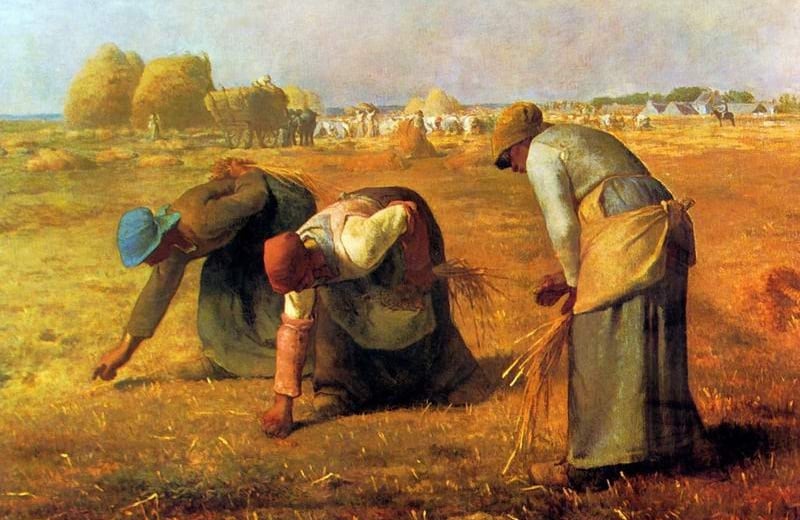
In recent years, we’ve seen a renewed focus on the deeper value, meaning, and significance of our daily work, particularly across the realm of evangelicalism. Yet as easy as it may be for some to alter old attitudes and begin appreciating the gift of creative service, it can be extremely difficult for others — and often for good reason.
Indeed, until the last few centuries, the bulk of humanity was confined to activities that, while often fruitful, meaningful, and God-glorifying in their basic aim and end, did not leverage individual “giftings” in ways we would deem “fulfilling” or “dignifying” today.
Our economic situation has surely improved in the years since, with vocational opportunities and overall prosperity continuing to expand and improve in profound and unexpected ways. But many still find themselves in positions or careers that are difficult to endure, from the anxieties of a Wall Street executive to those of an underpaid farm hand.
Each of us is going to encounter our own unique challenges, driven by and toward our own particular calling. Although we ought to try our best to improve the alignment of such service in a fallen world, the persistent need for hard and rough work is bound to remain as long as it remains a fallen world.
Thus, in our elevating of the meaning, dignity, and transcendent purpose of all work, those laboring in situations of unavoidable pain, difficulty, and frustration deserve careful attention, encouragement, and support.
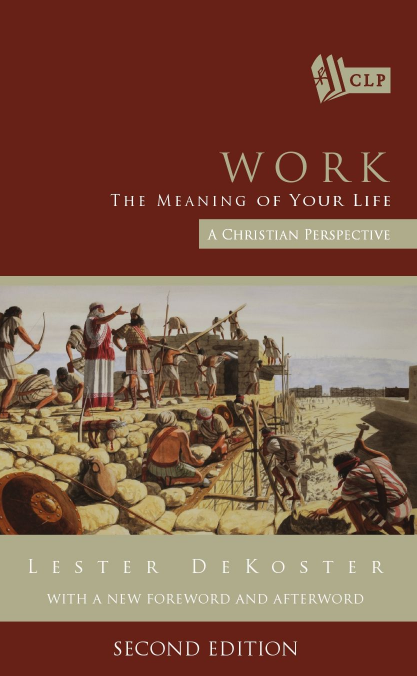 In Work: The Meaning of Your Life, Lester DeKoster offers such encouragement, which can serve as a reminder to us all, recognizing that although all work has meaning, for many it is a “daily wounding experience.” As Studs Terkel once wrote: “To survive the day is triumph enough for the walking wounded among us.”
“Work can wound,” DeKoster continues, and when it does, it may or may not be for just a short season. We are each called to a particular form and extent of service, and while we seem to understand the increased demands placed upon missionaries and martyrs, we should recognize that those in the workplace — whether in field, factory, or office tower — are often called to similar lengths of toil and sacrifice.
As DeKoster explains, when Jesus says to “take up your cross” and “lose your life to find it,” the work of our hands is not exempt:
As the Lord God surveys his world, what a host of rugged heroes and heroines of labor he must behold! Those who rise with the sun, lifelong, to jobs that demand endless self-sacrifice, and get in return but little reward in pay and still less in recognition. Those who see no sunshine all the day long, in the caverns of the earth or the noisome dungeons of heavy industry. And those—no less heroic—who find their substantial salary and bonuses but small recompense for the burdens, and the envy, their “success” involves. Those who must day by day drive weary bodies and spent minds to one more effort. Those who wrestle with bureaucracy to keep businesses solvent long after patience and pleasure are dead. Some who exercise initiative without appreciation, but persevere well beyond the need for personal monetary reward. Mothers whose lives are poured into their families; fathers whose bodies are sacrificed that their wives and children might live. God sees migrant families struggling hopelessly from dawn to dusk; peasants who grub like slaves without hope; service employees called any time for emergencies, surrendering their family holidays or busy through the dark of night.
“Lose your life …,” is Jesus asking us? He is talking about the martyrdoms of labor too.
Job heroism has no class distinctions, only differing forms. There are frontiers all over our workaday world requiring courage and perseverance as intrepid as ever conquered any geographical frontiers. Frontiers met and bested every day, in the kitchen, in the catacombs of industry, in the glare of the front office, in the high level visibility of the rich and the powerful.
Work can be cross bearing, self-denying, and life-sacrificing; because work is following the Lord in ways of service, be that in ways hidden to all but God alone or at an envied occupation demanding sacrifices only the doer can know.
Amidst our newfound prosperity, privilege, comfort, and leisure, let us remember that the fundamental call of the Gospel is service to others, and thus to God. “Christianity is not a detour around life’s problems,” DeKoster writes,” it leads us along the narrow way of shouldering our cross and becoming ‘sheep’ in the process.”
That applies to missions, ministry, family, and education, and it surely applies to the world of work.
(Originally published at the Acton PowerBlog)
Previous Post

December 10, 2014
How to Develop a Christian Mind in Business School (Part 1)
Next Post

December 17, 2014 Gratification and Civilization
Browse Our Archives
Select a Category Art Charity Church Common Grace Culture Curriculum Economics Education Family Justice Order Theology Uncategorized Vocation Wisdom Wonder Work
Select a Month January 2017 December 2016 November 2016 October 2016 September 2016 August 2016 July 2016 June 2016 May 2016 April 2016 March 2016 February 2016 January 2016 December 2015 November 2015 October 2015 September 2015 August 2015 July 2015 June 2015 May 2015 April 2015 March 2015 February 2015 January 2015 December 2014 November 2014 October 2014 September 2014 August 2014
Follow Us!
TAKE THE
Religious Wisdom Quiz
To whom is the letter of 2 John addressed?
Select your answer to see how you score.
The chosen lady and her children The seven churches The church at Ephesus Gaius
Related posts from Oikonomia


Lessons on Christian Vocation from ‘Chewbacca Mom’

What Christians Can Learn from Adam Smith’s ‘Paradox...

TRENDING AT PATHEOS Business, Finance and Religion

St. Francis by Bill Droel Pope Leo XIV declares 2026 as “Year...

Catholics are schooled in the faith by memorizing dogmatic points and lots...

The Good News of Our Human Limitations -...
After another day of trying to meet deadlines and working on projects,...

Quiet Holy Attentiveness (podcast) with Sarah Clarkson
We know that quiet is an essential aspect of the spiritual life,...

Every Vocation Everywhere All At Once
What is a vocation? How does it endure through the years? Can...

I promise this is not going to become a Taylor Swift Studies...
view all Business, Finance and Religion blogs
Ad-Free & Subscriber Log-In Subscription Support
- About Us
- 2026 Calendar
- Videos
- Podcasts
- Library of World Religions
- Faith In Media Tracker
- Advertise With Us
- Write for Us
- Privacy Policy
- Terms of Service
- Do Not Sell My Data
- Contact Us
- Radiant Digital
- Manage Newsletter Subscriptions
- Unsubscribe From Notifications
- Sitemap
Copyright 2008-2026, Patheos. All rights reserved.
Subscription Support Ad-Free & Subscriber Log-In
Follow Patheos