
BuddhistCatholicContemplativeEvangelicalGeneral ChristianHinduJewishLatter-day SaintMuslimNew VisionsProgressive Christian
Beliefs
- Buddhist
- Catholic
- Contemplative
- Evangelical
- General Christian
- Hindu
- Jewish
- Latter-day Saint
- More Voices
- Muslim
- New Visions
- Pagan
- Progressive Christian
Topics
- Religion News
- Food and Religion
- Sports and Religion
- Religious Art
- Religious Music and Entertainment
- Religious Events
- History and Religion
- Style and Religion
- Politics and Religion
- Women in Religion
- Recreation Outdoors and Religion
- Business Finance and Religion
- Careers Workplace and Religion
- Education and Religion
- Family Parenting and Religion
- Health Fitness and Religion
- Home and Religion
- Relationships and Religion
- Technology and Religion
- Travel and Religion
Columnists
- Buddhist Columnists
- Business Finance and Religion Columnists
- Careers Workplace and Religion Columnists
- Catholic Columnists
- Contemplative Columnists
- Education and Religion Columnists
- Evangelists Columnists
- Family Parenting and Religion Columnists
- General Christian Columnists
- Health Fitness and Religion Columnists
- Hindu Columnists
- History and Religion Columnists
- Home and Religion Columnists
- Jewish Columnists
- More Voices Columnists
- Latter Day Columnists
- Muslim Columnists
- New Visions Columnists
- Nonreligious Columnists
- Pagan Columnists
- Politics and Religion Columnists
- Progressive Columnists
- Recreation Outdoors and Religion Columnists
- Relationships and Religion Columnists
- Religion News Columnists
- Religious Art Columnists
- Religious Events Columnists
- Religious Music and Entertainment Columnists
- Sports and Religion Columnists
- Style and Religion Columnists
- Technology and Religion Columnists
- Travel and Religion Columnists
- Women in Religion Columnists
Resource Library
- 2026 Calendar
- Library of World Religions
- The 100 Most Holy Places on Earth
- Patheos Answers
- Podcasts
- Videos
- Faith Leaders Database
- Anglican Episcopalian
- Bahai
- Baptist
- Buddhism
- Christianity
- Confucianism
- Eastern Orthodoxy
- Hinduism
- Holiness and Pentecostal
- ISKCON
- Islam
- Judaism
- Lutheran
- Methodist
- The Church of Jesus Christ of Latter-day Saints
- New Age
- Paganism
- Presbytarian and Reformed
- Protestantism
- Religion Behind the Scenes
- Roman Catholic
- Scientology
- Shia Islam
- Sikhism
- Sufism
- Sunni Islam
- Taoism
- Zen
- See all religions
Research Tools
 Ad-Free & Subscriber Log-In Subscription Support
Ad-Free & Subscriber Log-In Subscription Support
Follow Patheos 

- Trending:
- Forgiveness
- |
- Marriage
- |
- Consciousness
- |
- Death Penalty
- |
- Election
- |
- Halloween
 Oikonomia
- Home
- Business, Finance and Religion
- What Are the Conditions for Human Flourishing?
What Are the Conditions for Human Flourishing?
Last updated on: December 29, 2014 at 1:06 pm by Acton Institute
What Are the Conditions for Human Flourishing? 2014-12-29T13:06:38-04:00 Acton Institute
Patheos Explore the world's faith through different perspectives on religion and spirituality! Patheos has the views of the prevalent religions and spiritualities of the world.
By Joseph Sunde
“A Christian society is not going to arrive until most of us really want it: and we are not going to want it until we become fully Christian… I cannot learn to love my neighbour as myself till I learn to love God: and I cannot learn to love God except by learning to obey Him.” –C.S. Lewis
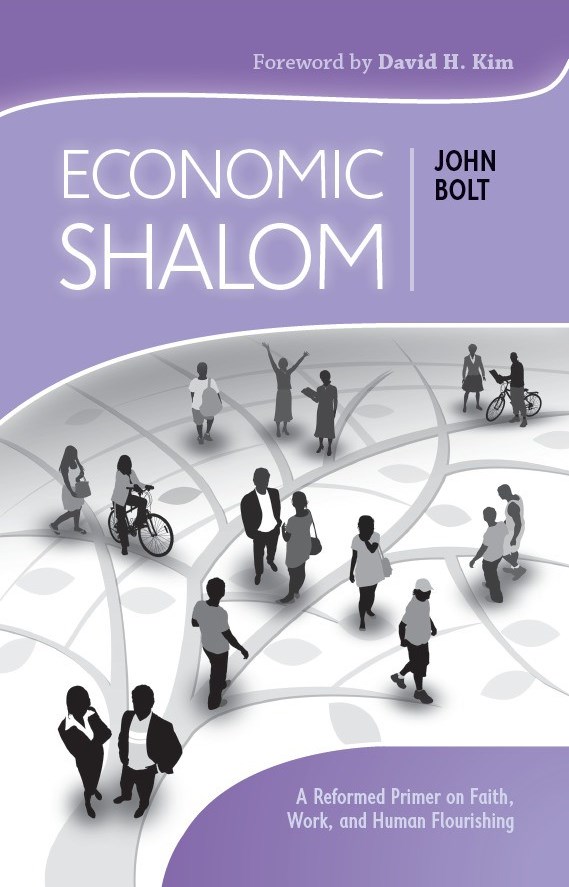
 In Economic Shalom, John Bolt’s Reformed primer on faith, work, and economics, he includes a chapter on how we might understand flourishing in the social order through “a biblical understanding of the human person, created in God’s image and living in God’s world.”
Bolt reviews a variety of different areas and approaches, providing a firm critique of top-down social planners who, in their attempts to impose utopia, far too often impede, distort, or destroy the positive manifestations of organic and spontaneous order that already exist, whether in churches, schools, businesses, communities, or the family. That’s not to say such planners don’t have some role to play or vocation to fulfill, but it must be constrained accordingly and focused toward that which is productive and possible.
As political theorist Kenneth Minogue explains: “We could never produce a crystal by directly placing [i.e., mechanically] the individual molecules from which it is built up. But we can create the conditions under which such a crystal will form itself. . . . Similarly, we can create the conditions under which a biological organism will grow and develop” (507–8).
As Christians, Bolt argues, we have something particular to contribute in each of these areas, from the love in our hearts to the work of our hands to the worship in our churches. Thus, the good of society is furthered when we create the conditions wherein these activities and relationships can emerge and excel.
What, then, are the conditions we should aim to create and cultivate in hopes of such an outcome? What are the conditions for human flourishing wherein we might align our activities in obedience to God and within a Christian context of the good, the true, and the beautiful?
 First, at the individual level:
At the individual and “part” level, we can make it rather simple by saying that flourishing comes from heeding God’s laws. The so-called “second table of the law”—commandments five through ten—are a good place to start. Societies where people don’t as a rule rebel against authority; where they eschew violence; don’t cheat on spouses, neighbors, or the IRS; speak truthfully and use honest weights and measures; as well as give an honest day’s work and are content—such a society will be blessed and will flourish. And, we should add, so will societies that honor marriage between free men and women and support the families they produce.
Next, as it pertains to the social order:
Here, in keeping with our understanding of human dignity based on the image of God, we must affirm social and political orders where coercion is minimized and responsible moral agents are given full liberty to act and to form free associations with other human beings. Liberty is the condition sine qua non for flourishing and humane societies. Societies that shortchange liberty may achieve certain immediate goals that are attractive, but they will not flourish or last.
Let us be clear here. The description of the conditions for a flourishing society assumes something that cannot be taken for granted: This is a society under God. Here the wisdom of Dutch neo-Calvinism and its emphasis on sphere sovereignty is of great help to us. As Abraham Kuyper envisioned a flourishing society, he understood that the various “spheres”—“the family, the business, science, art and so forth”—“do not owe their existence to the state, and . . . do not derive the law of their life from the superiority of the state,” but exist because of God’s creative and providential power and, in the final analysis, are responsible to him alone (Lectures on Calvinism, 90–91). God’s law, therefore, must shape the conduct of life within the various “spheres,” and their liberty and independence under God are essential to human flourishing in society. To state it differently, worship of the true God, the God and Father of our Lord Jesus Christ, the Creator of heaven and earth, is the true key to human flourishing. And in a free society such as the United States of America this worship too may never be coerced; it is the task of the church to proclaim and invite people to experience such human flourishing by becoming part of the new society of Christ’s own body on earth.
For more, grab a copy of Economic Shalom.
For other tradition-specific primers on this topic, review the entire series from Christian’s Library Press.
Previous Post

December 23, 2014
How to Develop a Christian Mind in Business School (Part II)
Next Post

December 30, 2014 "All is Gift" Old Cell Phone Giveaway
Browse Our Archives
Select a Category Art Charity Church Common Grace Culture Curriculum Economics Education Family Justice Order Theology Uncategorized Vocation Wisdom Wonder Work
Select a Month January 2017 December 2016 November 2016 October 2016 September 2016 August 2016 July 2016 June 2016 May 2016 April 2016 March 2016 February 2016 January 2016 December 2015 November 2015 October 2015 September 2015 August 2015 July 2015 June 2015 May 2015 April 2015 March 2015 February 2015 January 2015 December 2014 November 2014 October 2014 September 2014 August 2014
Follow Us!
TAKE THE
Religious Wisdom Quiz
How many years did the Israelites wander in the wilderness?
Select your answer to see how you score.
10 years 40 years 100 years 25 years
Related posts from Oikonomia

Thomas Sowell on the Origins of Prosperity

Politics, Character, and Competition


Lessons on Christian Vocation from ‘Chewbacca Mom’
TRENDING AT PATHEOS Business, Finance and Religion

St. Francis by Bill Droel Pope Leo XIV declares 2026 as “Year...

Catholics are schooled in the faith by memorizing dogmatic points and lots...

The Good News of Our Human Limitations -...
After another day of trying to meet deadlines and working on projects,...

Quiet Holy Attentiveness (podcast) with Sarah Clarkson
We know that quiet is an essential aspect of the spiritual life,...

Every Vocation Everywhere All At Once
What is a vocation? How does it endure through the years? Can...

I promise this is not going to become a Taylor Swift Studies...
view all Business, Finance and Religion blogs
Ad-Free & Subscriber Log-In Subscription Support
- About Us
- 2026 Calendar
- Videos
- Podcasts
- Library of World Religions
- Faith In Media Tracker
- Advertise With Us
- Write for Us
- Privacy Policy
- Terms of Service
- Do Not Sell My Data
- Contact Us
- Radiant Digital
- Manage Newsletter Subscriptions
- Unsubscribe From Notifications
- Sitemap
Copyright 2008-2026, Patheos. All rights reserved.
Subscription Support Ad-Free & Subscriber Log-In
Follow Patheos