
BuddhistCatholicContemplativeEvangelicalGeneral ChristianHinduJewishLatter-day SaintMuslimNew VisionsProgressive Christian
Beliefs
- Buddhist
- Catholic
- Contemplative
- Evangelical
- General Christian
- Hindu
- Jewish
- Latter-day Saint
- More Voices
- Muslim
- New Visions
- Pagan
- Progressive Christian
Topics
- Religion News
- Food and Religion
- Sports and Religion
- Religious Art
- Religious Music and Entertainment
- Religious Events
- History and Religion
- Style and Religion
- Politics and Religion
- Women in Religion
- Recreation Outdoors and Religion
- Business Finance and Religion
- Careers Workplace and Religion
- Education and Religion
- Family Parenting and Religion
- Health Fitness and Religion
- Home and Religion
- Relationships and Religion
- Technology and Religion
- Travel and Religion
Columnists
- Buddhist Columnists
- Business Finance and Religion Columnists
- Careers Workplace and Religion Columnists
- Catholic Columnists
- Contemplative Columnists
- Education and Religion Columnists
- Evangelists Columnists
- Family Parenting and Religion Columnists
- General Christian Columnists
- Health Fitness and Religion Columnists
- Hindu Columnists
- History and Religion Columnists
- Home and Religion Columnists
- Jewish Columnists
- More Voices Columnists
- Latter Day Columnists
- Muslim Columnists
- New Visions Columnists
- Nonreligious Columnists
- Pagan Columnists
- Politics and Religion Columnists
- Progressive Columnists
- Recreation Outdoors and Religion Columnists
- Relationships and Religion Columnists
- Religion News Columnists
- Religious Art Columnists
- Religious Events Columnists
- Religious Music and Entertainment Columnists
- Sports and Religion Columnists
- Style and Religion Columnists
- Technology and Religion Columnists
- Travel and Religion Columnists
- Women in Religion Columnists
Resource Library
- 2026 Calendar
- Library of World Religions
- The 100 Most Holy Places on Earth
- Patheos Answers
- Podcasts
- Videos
- Faith Leaders Database
- Anglican Episcopalian
- Bahai
- Baptist
- Buddhism
- Christianity
- Confucianism
- Eastern Orthodoxy
- Hinduism
- Holiness and Pentecostal
- ISKCON
- Islam
- Judaism
- Lutheran
- Methodist
- The Church of Jesus Christ of Latter-day Saints
- New Age
- Paganism
- Presbytarian and Reformed
- Protestantism
- Religion Behind the Scenes
- Roman Catholic
- Scientology
- Shia Islam
- Sikhism
- Sufism
- Sunni Islam
- Taoism
- Zen
- See all religions
Research Tools
 Ad-Free & Subscriber Log-In Subscription Support
Ad-Free & Subscriber Log-In Subscription Support
Follow Patheos 

- Trending:
- Forgiveness
- |
- Marriage
- |
- Consciousness
- |
- Death Penalty
- |
- Election
- |
- Halloween
 Oikonomia
- Home
- Business, Finance and Religion
- The Great Exchange of the Magi
The Great Exchange of the Magi
Last updated on: December 5, 2014 at 12:34 pm by Acton Institute
The Great Exchange of the Magi 2014-12-05T12:34:11-04:00 Acton Institute
Patheos Explore the world's faith through different perspectives on religion and spirituality! Patheos has the views of the prevalent religions and spiritualities of the world.
By Dylan Pahman
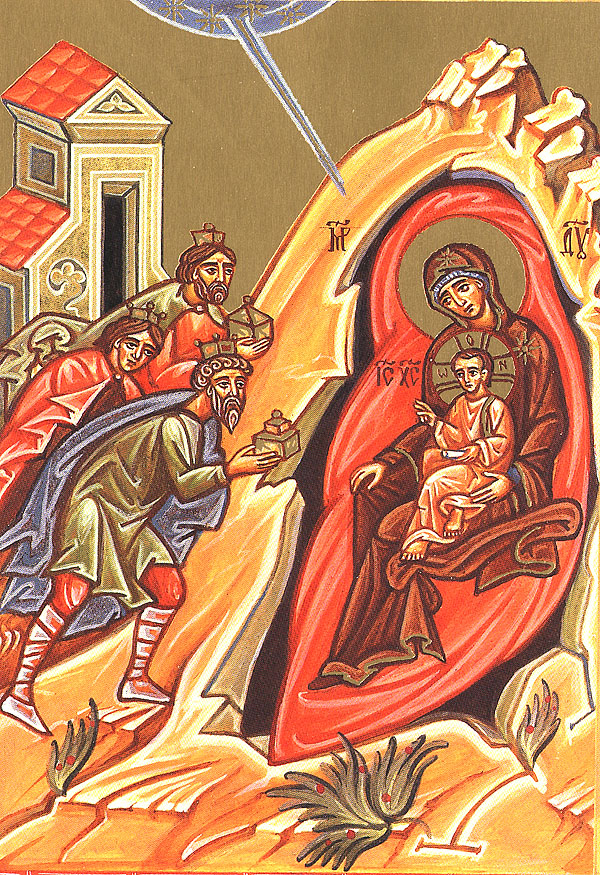 On the Nativity of Jesus Christ, Christians celebrate the birth of the Son of God incarnate to a poor, socially-disgraced couple, in the coldness of a cave, the place of the Christmas manger according to ancient tradition. St. Gregory the Theologian, preaching in the fourth century, describes the mystery this way, “He who gives riches becomes poor, for he assumes the poverty of my flesh, that I may assume the richness of his Godhead.” In the familiar story of Christmas, poverty — both spiritual and material — sits at the center, and in the story of the Magi from the East, we see the centrality of the spiritual discipline of almsgiving both in the Christian life and for the life of the world.
When Jesus was presented at the temple, Joseph and Mary “offer a sacrifice according to what is said in the law of the Lord, ‘A pair of turtledoves or two young pigeons’” (Luke 2:24). This, however, was a concession in the law for the poor, who could not afford to offer a lamb (see Leviticus 12). Thus, poverty characterized the life of the human family God chose to make his own. The God who promises through the incarnation to “bring justice to the poor” (Psalm 72:4), and who came “to preach the gospel to the poor” (Isaiah 61:1), begins his mission among us by himself becoming poor.
When the “wise men from the East” divined from the stars that a king had been born in Israel, they traveled great lengths “to worship him” (Matthew 2:1-2). Following a bright light in the heavens, they came to the house in which the holy family dwelt.
When they saw the star, they rejoiced with exceedingly great joy. And when they had come into the house, they saw the young Child with Mary his Mother, and fell down and worshiped him. And when they had opened their treasures, they presented gifts to him: gold, frankincense, and myrrh. (Matthew 2:10-11)
Whether we call them kings, magi, or wise men, the fact is clear that by material standards they were wealthy. Yet, they valued heavenly reward far above their own treasures, and coming to God incarnate as a little child, they gave alms to him who owns the universe.
The magi set forth an example of the heart that all of us need to have when it comes to stewardship of our material blessings. They knew their own poverty of spirit, and gladly gave the riches of this life for the blessing of eternity: worship. Their almsgiving, then, had a particular attitude attached to it. They did not see the holy family as mere victims of an unjust world, but as persons worthy of their investment, the Child whom they worshiped most of all.
The Russian philosopher Vladimir Soloviev wrote,
Specifically human actions or behavior in conformity with the grace of God … must evidently express the normal relation of a person to God, to people, and to one’s own material nature, corresponding to the three general bases of morality: piety, pity, and shame. The first concentrated, active expression of religious sentiment, or piety, its work, is principally prayer; pity has just such work in alms; and the work of shame — is abstinence, or fasting. The beginning and the development of a new life of grace in a human being are conditioned by these three works.
As Soloviev notes, almsgiving is one of three basic Christian spiritual disciplines. These receive a clear emphasis in Jesus’s Sermon on the Mount (see Matthew 6), underlining them as normative practices of the Christian life. And it is specifically almsgiving that has the most obvious social orientation.
While there is no indication of the magi fasting, we see, at least, that their almsgiving was motivated by a deep piety, however imperfect their understanding may have been. The star that they followed was God’s gracious call to them to “the development of a new life of grace,” and they responded precisely as Soloviev claims we all ought to do.
As we all, like the wise men, approach the Christ Child this Christmas, let us not be found empty handed. We gather around the tree in our homes to give gifts to friends and family this time of year; we ought also to remember the materially poor among us. “For you know the grace of our Lord Jesus Christ,” writes St. Paul, “that though he was rich, yet for your sakes He became poor, that you through his poverty might become rich” (2 Corinthians 8:9). The material wealth we enjoy is a gift of God but a gift that God expects us to invest in the poor, just as Jesus Christ invested the riches of his divinity in us.
In our giving to meet the material needs of others, in whatever charitable work we do for the common good — from giving to organizations like Toys for Tots to lending one’s time and resources to help the downtrodden get back on their feet — Christ meets our spiritual needs, giving alms of grace to the poor in spirit for the kingdom of God.
One hymn of the Christian East highlights this mysterious exchange:
Your Nativity, O Christ our God,
Has shone to the world the Light of wisdom!
For by it, those who worshipped the stars,
Were taught by a Star to adore You,
The Sun of Righteousness,
And to know You, the Orient from on High.
O Lord, glory to You!
In responding to God’s gracious call by worshipping the King of Kings and offering alms to the needy, the kings of the East received a newfound faith, which according to St. Peter is “much more precious than gold” (1 Peter 1:7) and, for that matter, frankincense and myrrh.
The descent of God to us in Christ at Christmas, in the most humble setting, ought to remind us of our own spiritual poverty and the gracious giving that ought to characterize not only this season but the whole of our lives as well.
(Originally published at Acton Commentary)
Previous Post

December 4, 2014
Beauty – an Excerpt from von Balthasar
Next Post

December 9, 2014 How a Shoe Builds Civilization
Browse Our Archives
Select a Category Art Charity Church Common Grace Culture Curriculum Economics Education Family Justice Order Theology Uncategorized Vocation Wisdom Wonder Work
Select a Month January 2017 December 2016 November 2016 October 2016 September 2016 August 2016 July 2016 June 2016 May 2016 April 2016 March 2016 February 2016 January 2016 December 2015 November 2015 October 2015 September 2015 August 2015 July 2015 June 2015 May 2015 April 2015 March 2015 February 2015 January 2015 December 2014 November 2014 October 2014 September 2014 August 2014
Follow Us!
TAKE THE
Religious Wisdom Quiz
Which Christian group follows the Five Points of Calvinism?
Select your answer to see how you score.
Methodists Baptists Pentecostals Reformed
Related posts from Oikonomia

Thomas Sowell on the Origins of Prosperity

Lessons in Humility from the Christ Child


Lessons on Christian Vocation from ‘Chewbacca Mom’
TRENDING AT PATHEOS Business, Finance and Religion

St. Francis by Bill Droel Pope Leo XIV declares 2026 as “Year...

Catholics are schooled in the faith by memorizing dogmatic points and lots...

The Good News of Our Human Limitations -...
After another day of trying to meet deadlines and working on projects,...

Quiet Holy Attentiveness (podcast) with Sarah Clarkson
We know that quiet is an essential aspect of the spiritual life,...

Every Vocation Everywhere All At Once
What is a vocation? How does it endure through the years? Can...

I promise this is not going to become a Taylor Swift Studies...
view all Business, Finance and Religion blogs
Ad-Free & Subscriber Log-In Subscription Support
- About Us
- 2026 Calendar
- Videos
- Podcasts
- Library of World Religions
- Faith In Media Tracker
- Advertise With Us
- Write for Us
- Privacy Policy
- Terms of Service
- Do Not Sell My Data
- Contact Us
- Radiant Digital
- Manage Newsletter Subscriptions
- Unsubscribe From Notifications
- Sitemap
Copyright 2008-2026, Patheos. All rights reserved.
Subscription Support Ad-Free & Subscriber Log-In
Follow Patheos