
BuddhistCatholicContemplativeEvangelicalGeneral ChristianHinduJewishLatter-day SaintMuslimNew VisionsProgressive Christian
Beliefs
- Buddhist
- Catholic
- Contemplative
- Evangelical
- General Christian
- Hindu
- Jewish
- Latter-day Saint
- More Voices
- Muslim
- New Visions
- Pagan
- Progressive Christian
Topics
- Religion News
- Food and Religion
- Sports and Religion
- Religious Art
- Religious Music and Entertainment
- Religious Events
- History and Religion
- Style and Religion
- Politics and Religion
- Women in Religion
- Recreation Outdoors and Religion
- Business Finance and Religion
- Careers Workplace and Religion
- Education and Religion
- Family Parenting and Religion
- Health Fitness and Religion
- Home and Religion
- Relationships and Religion
- Technology and Religion
- Travel and Religion
Columnists
- Buddhist Columnists
- Business Finance and Religion Columnists
- Careers Workplace and Religion Columnists
- Catholic Columnists
- Contemplative Columnists
- Education and Religion Columnists
- Evangelists Columnists
- Family Parenting and Religion Columnists
- General Christian Columnists
- Health Fitness and Religion Columnists
- Hindu Columnists
- History and Religion Columnists
- Home and Religion Columnists
- Jewish Columnists
- More Voices Columnists
- Latter Day Columnists
- Muslim Columnists
- New Visions Columnists
- Nonreligious Columnists
- Pagan Columnists
- Politics and Religion Columnists
- Progressive Columnists
- Recreation Outdoors and Religion Columnists
- Relationships and Religion Columnists
- Religion News Columnists
- Religious Art Columnists
- Religious Events Columnists
- Religious Music and Entertainment Columnists
- Sports and Religion Columnists
- Style and Religion Columnists
- Technology and Religion Columnists
- Travel and Religion Columnists
- Women in Religion Columnists
Resource Library
- 2026 Calendar
- Library of World Religions
- The 100 Most Holy Places on Earth
- Patheos Answers
- Podcasts
- Videos
- Faith Leaders Database
- Anglican Episcopalian
- Bahai
- Baptist
- Buddhism
- Christianity
- Confucianism
- Eastern Orthodoxy
- Hinduism
- Holiness and Pentecostal
- ISKCON
- Islam
- Judaism
- Lutheran
- Methodist
- The Church of Jesus Christ of Latter-day Saints
- New Age
- Paganism
- Presbytarian and Reformed
- Protestantism
- Religion Behind the Scenes
- Roman Catholic
- Scientology
- Shia Islam
- Sikhism
- Sufism
- Sunni Islam
- Taoism
- Zen
- See all religions
Research Tools
 Ad-Free & Subscriber Log-In Subscription Support
Ad-Free & Subscriber Log-In Subscription Support
Follow Patheos 

- Trending:
- Forgiveness
- |
- Marriage
- |
- Consciousness
- |
- Death Penalty
- |
- Election
- |
- Halloween
 Oikonomia
- Home
- Business, Finance and Religion
- How to Develop a Christian Mind in Business School (Part II)
How to Develop a Christian Mind in Business School (Part II)
Last updated on: December 23, 2014 at 2:21 am by Acton Institute
How to Develop a Christian Mind in Business School (Part II) 2014-12-23T02:21:31-04:00 Acton Institute
Patheos Explore the world's faith through different perspectives on religion and spirituality! Patheos has the views of the prevalent religions and spiritualities of the world.
By Joe Carter
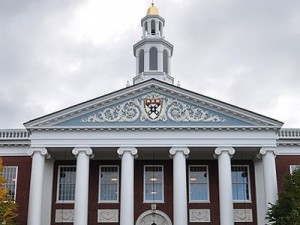 Note: This is the second in a series on developing a Christian mind in business school. You can find the introduction here.
Before we move on to how to think Christianly in business school, we should first discuss how to think Christianly about the decision to go (or not go) to b-school.
For many Christians—particularly my fellow evangelicals—the concept of thinking Christianly about decision-making is reduced to a simply-stated yet deeply confused question: “Does God have a specific plan for my life?”
The answers is yes—and no. Yes, God has a specific plan for our lives. But no, God doesn’t expect us to discern his secret, hidden-from-us will before we make a decision about the direction of our life. As pastor and theologian Kevin DeYoung explains,
God does have a specific plan for our lives, but it is not one that He expects us to figure out before we make a decision. I’m not saying God won’t help you make decisions (it’s called wisdom). I’m not saying God doesn’t care about your future. I’m not saying that God isn’t directing your path and in control amidst the chaos of your life. I believe in providence with all my heart. What I am saying is that we should stop thinking of God’s will like a corn maze, or a tightrope, or a bulls-eye, or a choose-your-own-adventure novel.
DeYoung adds that the better way is the biblical way: “Seek first the kingdom of God and then trust that He will take care of your needs, even before we know what they are and where we’re going.”
In making the decision about business school we should pray for guidance and seek counsel from wise Christians. But God leaves the decision to our judgment.
Reasons Why Business School Might Be the Right Choice
There are dozens of reasons why people should go to b-school. But here are three that I believe top the list:
• You need a degree for career advancement – According to the signaling model of education, employers reward educational success because of what it shows (“signals”) about the student. In competitive market environments—such as the corporate business world—where your resume provides the primary, if not the only, signal to an employer about your knowledge and skills, an MBA serves as a powerful signal. Whether you actually know anything about finance or marketing, the fact that you successfully completed business school signals that you should have at least a working knowledge of those subjects. As economist Bryan Caplan explains, “In the signaling story, what matters is how much education you havecompared to competing workers.” The more signals about your knowledge and skills that you can provide for employers the better it can help your career.
• You need the particular skill-set that business school can provide – In my next post I’ll explain exactly what the skill-set is that an MBA really provides and why it matters for Christians. Knowing what business school really teaches can help you know whether the skills will truly be useful for your vocational purposes.
• You believe b-school is part of your educational or vocational calling – “What practical use are you going to get out of having an MBA,” my wife asked me, before, during, and after I completed business school. My answer was always the same, “I have no idea. But the Lord knows.” I felt a particular calling to get my MBA even though I didn’t know what use it would be in my career. A strong conviction—even if only vaguely understood—can sometimes be the best reason.
Reasons Why Business School Might Be the Wrong Choice
While there are dozens of good reasons to go to b-school, there are hundreds of reasons why should shouldn’t. Here are a few:
• You want to learn about a particular subject but don’t really need the degree – If you want to learn about accounting or finance or organizational behavior than sign up for a class on accounting or finance or organizational behavior at your local community college. (Most b-school programs don’t require prerequisite knowledge of a subject, so the classes are often the same as what you’d find at the undergraduate level.) An MBA is a generalist degree, which means you’ll usually only take one or two classes on a particular subject. If you only want to learn accounting then it’s probably advisable to get an undergraduate or graduate certificate in accounting rather than an MBA.
• You want to be an entrepreneur — Over the years I’ve started and owned two small businesses (a small, regional newspaper; a consulting firm) and worked for an Internet startup. While some of the knowledge I acquired in b-school would have been helpful on those projects, it wouldn’t have been sufficient. Being an entrepreneur is a lot like being a writer. If you want to be a writer, then write. If you want to be an entrepreneur, then start a business. In both fields there is no substitute for hands-on experience.
• You don’t know what else to do with your life and b-school seems like the best option— If you’re thinking that getting a MA in literature is too impractical and three years of law school is too much of a commitment, you might be considering b-school as a shorter, more practical option. Save yourself the misery (and the student loan debt) and skip grad school altogether.
• You have to go into long-term debt to pay for school — You’re not likely to find anyone who will pay you a living wage to learn about analytic philosophy or eighteenth-century French literature. But with reasonable effort you can likely find someone to pay you to learn about business. Rather than going into debt to study the subject, work full-time and save money to pay for b-school. By the time you have the money saved up you may realize you don’t need the degree after all.
Ultimately, the question of whether you should go to b-school is a matter of stewardship. Completing an MBA will require a substantial amount of your gifts and resources, including time, energy, and money. But the program can potentially add a lifetime of value by honing your gifts and improving the quality and quantity of the resources you have available to further the work of God’s Kingdom.
In summary: Pray, seek sound counsel, use the discernment the Lord gives you, and then choose wisely.
Tomorrow we’ll consider what business school really teaches and why it matters for developing a Christian mind.
—
See Also: Part I
Addendum:
An additional word for working adults thinking about b-school: If you’re wondering how you can work full-time, go to school (part/full-time), spend time with your family, and have time for yourself let me assure you: You can’t.
Something has to give, and that first something should be your leisure activities. You’ll have less time for yourself, but that is the trade-off you should be willing to make since you gain the most from the education. Think of school and study as your new hobbies because you likely won’t have time for much else.
The second area to sacrifice is your GPA. If you have to decide between spending more time with your family or more time tweaking a class presentation, choose your spouse and kids. In a few years, it won’t matter to anyone—including you—that you graduated with a 3.4 rather than 3.9. But it will matter to your family that you weren’t there for them.
Unfortunately, between class and studying you already won’t be there for them—at least not as much as you or they will want. You need to make that clear to your family before you begin the program that it will require a sacrifice on their part. If they can’t agree to that then you should seriously consider putting off school.
The one area where you shouldn’t sacrifice is your work. Normally I’d argue that family should come before work, but in this case I believe it’s reversed. Don’t cheat your employer. You can’t learn to be a model of integrity as a Christian business leader while spending your employer’s time working on school projects. Be a model for yourself so that you can later be a model for others.
(Originally published at the Acton PowerBlog)
Previous Post

December 22, 2014
‘The Gift of the Magi’ and the Power of Exchange
Next Post

December 29, 2014 What Are the Conditions for Human Flourishing?
Browse Our Archives
Select a Category Art Charity Church Common Grace Culture Curriculum Economics Education Family Justice Order Theology Uncategorized Vocation Wisdom Wonder Work
Select a Month January 2017 December 2016 November 2016 October 2016 September 2016 August 2016 July 2016 June 2016 May 2016 April 2016 March 2016 February 2016 January 2016 December 2015 November 2015 October 2015 September 2015 August 2015 July 2015 June 2015 May 2015 April 2015 March 2015 February 2015 January 2015 December 2014 November 2014 October 2014 September 2014 August 2014
Follow Us!
TAKE THE
Religious Wisdom Quiz
Who was Moses' wife?
Select your answer to see how you score.
Rachel Miriam Leah Zipporah
Related posts from Oikonomia

Politics, Character, and Competition

Lessons in Humility from the Christ Child

Lessons on Christian Vocation from ‘Chewbacca Mom’

How Economic Freedom Leads to Human Flourishing
TRENDING AT PATHEOS Business, Finance and Religion

St. Francis by Bill Droel Pope Leo XIV declares 2026 as “Year...

Catholics are schooled in the faith by memorizing dogmatic points and lots...

The Good News of Our Human Limitations -...
After another day of trying to meet deadlines and working on projects,...

Quiet Holy Attentiveness (podcast) with Sarah Clarkson
We know that quiet is an essential aspect of the spiritual life,...

Every Vocation Everywhere All At Once
What is a vocation? How does it endure through the years? Can...

I promise this is not going to become a Taylor Swift Studies...
view all Business, Finance and Religion blogs
Ad-Free & Subscriber Log-In Subscription Support
- About Us
- 2026 Calendar
- Videos
- Podcasts
- Library of World Religions
- Faith In Media Tracker
- Advertise With Us
- Write for Us
- Privacy Policy
- Terms of Service
- Do Not Sell My Data
- Contact Us
- Radiant Digital
- Manage Newsletter Subscriptions
- Unsubscribe From Notifications
- Sitemap
Copyright 2008-2026, Patheos. All rights reserved.
Subscription Support Ad-Free & Subscriber Log-In
Follow Patheos