
BuddhistCatholicContemplativeEvangelicalGeneral ChristianHinduJewishLatter-day SaintMuslimNew VisionsProgressive Christian
Beliefs
- Buddhist
- Catholic
- Contemplative
- Evangelical
- General Christian
- Hindu
- Jewish
- Latter-day Saint
- More Voices
- Muslim
- New Visions
- Pagan
- Progressive Christian
Topics
- Religion News
- Food and Religion
- Sports and Religion
- Religious Art
- Religious Music and Entertainment
- Religious Events
- History and Religion
- Style and Religion
- Politics and Religion
- Women in Religion
- Recreation Outdoors and Religion
- Business Finance and Religion
- Careers Workplace and Religion
- Education and Religion
- Family Parenting and Religion
- Health Fitness and Religion
- Home and Religion
- Relationships and Religion
- Technology and Religion
- Travel and Religion
Columnists
- Buddhist Columnists
- Business Finance and Religion Columnists
- Careers Workplace and Religion Columnists
- Catholic Columnists
- Contemplative Columnists
- Education and Religion Columnists
- Evangelists Columnists
- Family Parenting and Religion Columnists
- General Christian Columnists
- Health Fitness and Religion Columnists
- Hindu Columnists
- History and Religion Columnists
- Home and Religion Columnists
- Jewish Columnists
- More Voices Columnists
- Latter Day Columnists
- Muslim Columnists
- New Visions Columnists
- Nonreligious Columnists
- Pagan Columnists
- Politics and Religion Columnists
- Progressive Columnists
- Recreation Outdoors and Religion Columnists
- Relationships and Religion Columnists
- Religion News Columnists
- Religious Art Columnists
- Religious Events Columnists
- Religious Music and Entertainment Columnists
- Sports and Religion Columnists
- Style and Religion Columnists
- Technology and Religion Columnists
- Travel and Religion Columnists
- Women in Religion Columnists
Resource Library
- 2026 Calendar
- Library of World Religions
- The 100 Most Holy Places on Earth
- Patheos Answers
- Podcasts
- Videos
- Faith Leaders Database
- Anglican Episcopalian
- Bahai
- Baptist
- Buddhism
- Christianity
- Confucianism
- Eastern Orthodoxy
- Hinduism
- Holiness and Pentecostal
- ISKCON
- Islam
- Judaism
- Lutheran
- Methodist
- The Church of Jesus Christ of Latter-day Saints
- New Age
- Paganism
- Presbytarian and Reformed
- Protestantism
- Religion Behind the Scenes
- Roman Catholic
- Scientology
- Shia Islam
- Sikhism
- Sufism
- Sunni Islam
- Taoism
- Zen
- See all religions
Research Tools
 Ad-Free & Subscriber Log-In Subscription Support
Ad-Free & Subscriber Log-In Subscription Support
Follow Patheos 

- Trending:
- Forgiveness
- |
- Marriage
- |
- Consciousness
- |
- Death Penalty
- |
- Election
- |
- Halloween
 Oikonomia
- Home
- Business, Finance and Religion
- Welfare, Work, and Human Dignity
Welfare, Work, and Human Dignity
Last updated on: October 21, 2014 at 2:32 pm by Acton Institute
Welfare, Work, and Human Dignity 2014-10-21T14:32:33-04:00 Acton Institute
Patheos Explore the world's faith through different perspectives on religion and spirituality! Patheos has the views of the prevalent religions and spiritualities of the world.
By Dylan Pahman
A website called Over Fifty and Out of Work offers Baby-Boomers who have lost their jobs an opportunity to share their stories. Many talk of age discrimination in hiring practices as they look for new work, but all speak of the trial of wanting to work but being unable to find it. The stories reveal that work is a significant factor in one’s self-worth and, I would add, a duty of human dignity.
Kay Kusy-Eliassen shares her story there as well. She had been in the wine business her whole career, and her last job was working for a small wine importer. When the business started to struggle, her boss had to let her go. As of the recording of her video (sometime 2012 or sooner), she had been out of work for 10 months. “We’ve cut back on pretty much anything that’s extra,” she says, noting that she and her husband are still getting by on his income alone. “We’re doing fine, but I love to work, to keep active and busy.”
Though actively looking for work, she has yet to find it. “The frustrating part is when you don’t hear back anything [from an interview],” she says. Despite a network of connections in the industry, no response had been the most common response. Kay expresses her frustration, “I do feel a bit like I’m not giving back to society. I want to work. I don’t like getting unemployment benefits.”
While not all those without a job want to find one and are actively looking, no doubt many today can sympathize with Kay. But what is it about work that we derive so much value from it?
One might object that locating our self-worth in our work, even if only in part, is misguided. Our American, capitalist culture is overworked and work-obsessed, or so the story goes. We work so much and overvalue it to the point that people who are not currently able to work feel ashamed.
Certainly, one can place too much value in a job. There is a grain of truth to that caution. But abuse does not negate use; overvaluing work does not justify undervaluing it. And the latter fails to acknowledge the dignity of work and those who could be workers.
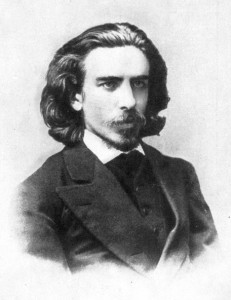
Vladimir Solovyov
It is a dignity, I would add, that is grounded in duty. The nineteenth-century Russian Orthodox philosopher Vladimir Solovyov argues that such a duty is part of the natural and God-given order to the world. He writes,
We know that the first impulse to labour is given by material necessity. But for a man who recognizes above himself the absolutely perfect principle of reality, or the will of God, all necessity is an expression of that will. From this point of view labour is a commandment of God.
Thus, Solovyov reasons that since people need to work in order to survive, work is a duty, “acommandment of God.”
He continues to explore the character and purpose for which we work, writing,
This commandment requires us to work hard (‘in the sweat of thy face’) to cultivate the ground,i.e. to perfect material nature. For whose sake? In the first place for our own and that of our neighbours. This answer, clear at the most elementary stages of moral development, no doubt remains in force as humanity progresses, the only change being that the denotation of the term ‘neighbour’ becomes more and more wide.
We must work with effort in order to serve not only ourselves, our families, and our neighbors, which in our globalized age includes nearly all humanity, but also “to perfect material nature.” Solovyov here offers the kernel of an environmental ethic that, rather than viewing human beings as the problem, views our labor as the means by which the natural world fulfills its ultimate purpose, serving the needs of other human beings in obedience to the will of God.
I am sympathetic to Solovyov’s case here, but further nuance is required to avoid insensitivity when equating necessity with “the will of God.” What he means, surely, is that which an ordinary person requires in order to survive, not any situation, good or evil, that a person may be born into or come to live in apart from his/her choice.
When we turn from philosophy to theology, however, the picture becomes more pronounced. Solovyov already alluded to the Garden of Eden, in which humanity is commanded “to till the ground” (Genesis 2:5). God does not make a pristine world and then tell humanity, like a clumsy child, not to touch anything lest they break it. Rather, he has made us to cultivate the earth for his glory, our good, and the good of the world as well. Work is, indeed, a commandment.
But what about all those out of work? Kay actually goes on to say that her experience with unemployment has helped her to cultivate solidarity with others who struggle to find a place to labor as well. That is, though not officially employed, she has been able to take her misfortune as an ascetic opportunity, cultivating the earth of her soul for the sake of virtue, a labor to which we all are called and which no stroke of bad luck can impede.
Acknowledging this, Christians not only have a duty to work for virtue in their souls and the production of material goods in the world but better to encourage and enable others to fulfill this divine commandment as well. Part of this means never looking at another person as useless. God created us to work, and if our primary goal is virtue, there is something everyone can do to work for that, no matter even if they have a criminal record or mental, emotional, or physical disability. Perhaps not everyone’s work can take the form of gainful employment, but work remains a duty to all and an important matter of human dignity, a cause to which we owe “the sweat of [our] face” (Genesis 3:19) as well.
[Originally published at Acton Commentary]

Next Post

October 22, 2014 A Prayer for the Aid of God in Vocation
Browse Our Archives
Select a Category Art Charity Church Common Grace Culture Curriculum Economics Education Family Justice Order Theology Uncategorized Vocation Wisdom Wonder Work
Select a Month January 2017 December 2016 November 2016 October 2016 September 2016 August 2016 July 2016 June 2016 May 2016 April 2016 March 2016 February 2016 January 2016 December 2015 November 2015 October 2015 September 2015 August 2015 July 2015 June 2015 May 2015 April 2015 March 2015 February 2015 January 2015 December 2014 November 2014 October 2014 September 2014 August 2014
Follow Us!
TAKE THE
Religious Wisdom Quiz
What year did the Great Schism occur, splitting the Eastern and Western churches?
Select your answer to see how you score.
325 AD 500 AD 1517 AD 1054 AD
Related posts from Oikonomia

Lessons on Christian Vocation from ‘Chewbacca Mom’


Help People, Not Banks: Reflections on the 2016...

How Economic Freedom Leads to Human Flourishing
TRENDING AT PATHEOS Business, Finance and Religion

St. Francis by Bill Droel Pope Leo XIV declares 2026 as “Year...

Catholics are schooled in the faith by memorizing dogmatic points and lots...

The Good News of Our Human Limitations -...
After another day of trying to meet deadlines and working on projects,...

Quiet Holy Attentiveness (podcast) with Sarah Clarkson
We know that quiet is an essential aspect of the spiritual life,...

Every Vocation Everywhere All At Once
What is a vocation? How does it endure through the years? Can...

I promise this is not going to become a Taylor Swift Studies...
view all Business, Finance and Religion blogs
Ad-Free & Subscriber Log-In Subscription Support
- About Us
- 2026 Calendar
- Videos
- Podcasts
- Library of World Religions
- Faith In Media Tracker
- Advertise With Us
- Write for Us
- Privacy Policy
- Terms of Service
- Do Not Sell My Data
- Contact Us
- Radiant Digital
- Manage Newsletter Subscriptions
- Unsubscribe From Notifications
- Sitemap
Copyright 2008-2026, Patheos. All rights reserved.
Subscription Support Ad-Free & Subscriber Log-In
Follow Patheos