
BuddhistCatholicContemplativeEvangelicalGeneral ChristianHinduJewishLatter-day SaintMuslimNew VisionsProgressive Christian
Beliefs
- Buddhist
- Catholic
- Contemplative
- Evangelical
- General Christian
- Hindu
- Jewish
- Latter-day Saint
- More Voices
- Muslim
- New Visions
- Pagan
- Progressive Christian
Topics
- Religion News
- Food and Religion
- Sports and Religion
- Religious Art
- Religious Music and Entertainment
- Religious Events
- History and Religion
- Style and Religion
- Politics and Religion
- Women in Religion
- Recreation Outdoors and Religion
- Business Finance and Religion
- Careers Workplace and Religion
- Education and Religion
- Family Parenting and Religion
- Health Fitness and Religion
- Home and Religion
- Relationships and Religion
- Technology and Religion
- Travel and Religion
Columnists
- Buddhist Columnists
- Business Finance and Religion Columnists
- Careers Workplace and Religion Columnists
- Catholic Columnists
- Contemplative Columnists
- Education and Religion Columnists
- Evangelists Columnists
- Family Parenting and Religion Columnists
- General Christian Columnists
- Health Fitness and Religion Columnists
- Hindu Columnists
- History and Religion Columnists
- Home and Religion Columnists
- Jewish Columnists
- More Voices Columnists
- Latter Day Columnists
- Muslim Columnists
- New Visions Columnists
- Nonreligious Columnists
- Pagan Columnists
- Politics and Religion Columnists
- Progressive Columnists
- Recreation Outdoors and Religion Columnists
- Relationships and Religion Columnists
- Religion News Columnists
- Religious Art Columnists
- Religious Events Columnists
- Religious Music and Entertainment Columnists
- Sports and Religion Columnists
- Style and Religion Columnists
- Technology and Religion Columnists
- Travel and Religion Columnists
- Women in Religion Columnists
Resource Library
- 2026 Calendar
- Library of World Religions
- The 100 Most Holy Places on Earth
- Patheos Answers
- Podcasts
- Videos
- Faith Leaders Database
- Anglican Episcopalian
- Bahai
- Baptist
- Buddhism
- Christianity
- Confucianism
- Eastern Orthodoxy
- Hinduism
- Holiness and Pentecostal
- ISKCON
- Islam
- Judaism
- Lutheran
- Methodist
- The Church of Jesus Christ of Latter-day Saints
- New Age
- Paganism
- Presbytarian and Reformed
- Protestantism
- Religion Behind the Scenes
- Roman Catholic
- Scientology
- Shia Islam
- Sikhism
- Sufism
- Sunni Islam
- Taoism
- Zen
- See all religions
Research Tools
 Ad-Free & Subscriber Log-In Subscription Support
Ad-Free & Subscriber Log-In Subscription Support
Follow Patheos 

- Trending:
- Forgiveness
- |
- Marriage
- |
- Consciousness
- |
- Death Penalty
- |
- Election
- |
- Halloween
 Oikonomia
- Home
- Business, Finance and Religion
- The Image of God and You
The Image of God and You
Last updated on: October 7, 2014 at 12:01 am by Acton Institute
The Image of God and You 2014-10-07T00:01:42-04:00 Acton Institute
Patheos Explore the world's faith through different perspectives on religion and spirituality! Patheos has the views of the prevalent religions and spiritualities of the world.
Conversations about human dignity often, and rightly, refer to the biblical concept of the image of God. In the creation account in Genesis 1:27 we read that “God created mankind in his own image, in the image of God he created them; male and female he created them.” The third person pronouns are fitting here because the text is providing a narrative depiction of a past event. Those human beings back then were created by God.

When we hear discussions and applications about the image of God in contemporary discourse, it’s often in a similarly external or abstract way. These usages are directed toward the need to recognize the image of God in the other, the person who may be marginalized or oppressed. In the context of helping those in poverty, for instance, John Perkins powerfully reminds us, “You don’t give people dignity. You affirm it.” Those who are materially poor, no less than those who are materially affluent, are imagebearers and possessors of the inalienable dignity that attends to that status. This shared reality is precisely why C.S. Lewis observes, “You have never talked to a mere mortal…. It is immortals whom we joke with, work with, marry, snub, and exploit—immortal horrors or everlasting splendours.”
As great a challenge and responsibility as it can be to recognize and affirm the image of God in other people, however, it is likewise often difficult to see God’s image in ourselves. But, in fact, each one of us is an imagebearer of God. No less than our forebears are we “sons of Adam and daughters of Eve” born today in the image of the heavenly father, to borrow another phrase from C.S. Lewis. In this way Genesis 1:27 is not just about those human beings back there at the beginning. It is also a text that speaks directly to us today, and to all people throughout the history of the world. You, too, whether male or female, rich or poor, black or white, are created in God’s image.
The implications of this for our lives can hardly be overstated. We must not only recognize, affirm, and honor the dignity of others. We must also live in a way that is worthy of our honored status as God’s imagebearers. For Christians this means understanding our place as God’s adopted children (Ro. 8:14-17). In the Ancient Near East, the symbol of bearing an image included this kind of responsibility, that of a child to a parent, an heir to a monarch, or a steward to a ruler.
As an imagebearer of God, therefore, each one of us has an exalted status as God’s representative in this world, and a corresponding calling to exercise proper authority in our own areas of influence. We have a stewardship responsibility that flows directly from this created human nature. The “load, or weight, or burden,” as Lewis refers to it, presses upon us not only in the context of “our neighbour’s glory,” but also in our own rights and responsibilities as God’s imagebearers.
Human beings are the crown of God’s creation (Ps. 8:5), and as such each one of us bears the weight of that royal diadem. A wondrous aspect of this glorious reality is that God’s image is reflected and refracted in the various and diverse callings of human beings, a reality seminally present in the creation of human beings in God’s image as male and female. Thus the Reformed theologian Herman Bavinck argues, “Not merely one of them, but both, and not the one separate from the other, but man and woman together, in mutual relation, each created in his or her own manner and each in a special dimension created in God’s image and together displaying God’s likeness.”
Each one of us has a unique and unrepeatable place in God’s created order. Each one of us lives, moves, and has our being within the context of a unique set of relationships, talents, dispositions, and opportunities. Each one of us, no matter the differences and diversities that exist, has some service we can render to further God’s glory. As Rudy Carrasco observes, “Every single person on the face of the planet is created in God’s image. Everybody has the same heavenly Father. Everybody has capacity, talent, and ability. Everybody has responsibility. Everybody has stewardship responsibility…. You have a responsibility to be a steward of the resources under your control because you have a heavenly Father who has put great things inside of you and that’s waiting to be called out and developed and extracted.” All this is true, says Carrasco, no matter your economic station or social standing, no matter “what dirt hovel you’re living in, in Brazil or Mexico City or Manila.”
The creation of human beings in the image of God is a grand calling, a royal mandate, and an august responsibility. Let us affirm the dignity of all human beings, others as well as ourselves, and thus fulfill the great commandment to “love your neighbor as yourself” (Mark 12:31).
[Originally published at Acton Commentary]
Previous Post

October 1, 2014
‘Abraham Kuyper Goes Pop’ in FLOW
Next Post
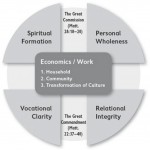
October 7, 2014 The 'Transformational Quartet' of Christian Stewardship
Browse Our Archives
Select a Category Art Charity Church Common Grace Culture Curriculum Economics Education Family Justice Order Theology Uncategorized Vocation Wisdom Wonder Work
Select a Month January 2017 December 2016 November 2016 October 2016 September 2016 August 2016 July 2016 June 2016 May 2016 April 2016 March 2016 February 2016 January 2016 December 2015 November 2015 October 2015 September 2015 August 2015 July 2015 June 2015 May 2015 April 2015 March 2015 February 2015 January 2015 December 2014 November 2014 October 2014 September 2014 August 2014
Follow Us!
TAKE THE
Religious Wisdom Quiz
How beautiful on the mountains are the feet of those who bring good news and proclaim what?
Select your answer to see how you score.
Deliverance Victory Peace Salvation
Related posts from Oikonomia

Lessons on Christian Vocation from ‘Chewbacca Mom’

Are Christianity and Communism Mutually Exclusive?

What Christians Can Learn from Adam Smith’s ‘Paradox...
How Economic Freedom Leads to Human Flourishing
TRENDING AT PATHEOS Business, Finance and Religion

St. Francis by Bill Droel Pope Leo XIV declares 2026 as “Year...

Catholics are schooled in the faith by memorizing dogmatic points and lots...

The Good News of Our Human Limitations -...
After another day of trying to meet deadlines and working on projects,...

Quiet Holy Attentiveness (podcast) with Sarah Clarkson
We know that quiet is an essential aspect of the spiritual life,...

Every Vocation Everywhere All At Once
What is a vocation? How does it endure through the years? Can...

I promise this is not going to become a Taylor Swift Studies...
view all Business, Finance and Religion blogs
Ad-Free & Subscriber Log-In Subscription Support
- About Us
- 2026 Calendar
- Videos
- Podcasts
- Library of World Religions
- Faith In Media Tracker
- Advertise With Us
- Write for Us
- Privacy Policy
- Terms of Service
- Do Not Sell My Data
- Contact Us
- Radiant Digital
- Manage Newsletter Subscriptions
- Unsubscribe From Notifications
- Sitemap
Copyright 2008-2026, Patheos. All rights reserved.
Subscription Support Ad-Free & Subscriber Log-In
Follow Patheos