
BuddhistCatholicContemplativeEvangelicalGeneral ChristianHinduJewishLatter-day SaintMuslimNew VisionsProgressive Christian
Beliefs
- Buddhist
- Catholic
- Contemplative
- Evangelical
- General Christian
- Hindu
- Jewish
- Latter-day Saint
- More Voices
- Muslim
- New Visions
- Pagan
- Progressive Christian
Topics
- Religion News
- Food and Religion
- Sports and Religion
- Religious Art
- Religious Music and Entertainment
- Religious Events
- History and Religion
- Style and Religion
- Politics and Religion
- Women in Religion
- Recreation Outdoors and Religion
- Business Finance and Religion
- Careers Workplace and Religion
- Education and Religion
- Family Parenting and Religion
- Health Fitness and Religion
- Home and Religion
- Relationships and Religion
- Technology and Religion
- Travel and Religion
Columnists
- Buddhist Columnists
- Business Finance and Religion Columnists
- Careers Workplace and Religion Columnists
- Catholic Columnists
- Contemplative Columnists
- Education and Religion Columnists
- Evangelists Columnists
- Family Parenting and Religion Columnists
- General Christian Columnists
- Health Fitness and Religion Columnists
- Hindu Columnists
- History and Religion Columnists
- Home and Religion Columnists
- Jewish Columnists
- More Voices Columnists
- Latter Day Columnists
- Muslim Columnists
- New Visions Columnists
- Nonreligious Columnists
- Pagan Columnists
- Politics and Religion Columnists
- Progressive Columnists
- Recreation Outdoors and Religion Columnists
- Relationships and Religion Columnists
- Religion News Columnists
- Religious Art Columnists
- Religious Events Columnists
- Religious Music and Entertainment Columnists
- Sports and Religion Columnists
- Style and Religion Columnists
- Technology and Religion Columnists
- Travel and Religion Columnists
- Women in Religion Columnists
Resource Library
- 2026 Calendar
- Library of World Religions
- The 100 Most Holy Places on Earth
- Patheos Answers
- Podcasts
- Videos
- Faith Leaders Database
- Anglican Episcopalian
- Bahai
- Baptist
- Buddhism
- Christianity
- Confucianism
- Eastern Orthodoxy
- Hinduism
- Holiness and Pentecostal
- ISKCON
- Islam
- Judaism
- Lutheran
- Methodist
- The Church of Jesus Christ of Latter-day Saints
- New Age
- Paganism
- Presbytarian and Reformed
- Protestantism
- Religion Behind the Scenes
- Roman Catholic
- Scientology
- Shia Islam
- Sikhism
- Sufism
- Sunni Islam
- Taoism
- Zen
- See all religions
Research Tools
 Ad-Free & Subscriber Log-In Subscription Support
Ad-Free & Subscriber Log-In Subscription Support
Follow Patheos 

- Trending:
- Forgiveness
- |
- Marriage
- |
- Consciousness
- |
- Death Penalty
- |
- Election
- |
- Halloween
 Oikonomia
- Home
- Business, Finance and Religion
- Common Grace, Vocation, and Young Adults
Common Grace, Vocation, and Young Adults
Last updated on: October 14, 2014 at 11:50 am by Acton Institute
Common Grace, Vocation, and Young Adults 2014-10-14T11:50:37-04:00 Acton Institute
Patheos Explore the world's faith through different perspectives on religion and spirituality! Patheos has the views of the prevalent religions and spiritualities of the world.
By Elise Hilton
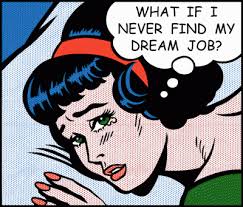 In preparation for the Symposium on Common Grace in Business (co-sponsored by the Acton Institute and Calvin College), I spent time with Shirley Roels, one of the moderators for the event. Roels, a former business faculty member at Calvin College, is now senior advisor to NetVUE (Network for Vocation in Undergraduate Education.)
Roels now works primarily with young adults, and we spent time talking about vocation, spiritual life, business and how young adults think about these concepts.
The first part of the interview (found here) focused primarily on the upcoming symposium. In the following, Roels speaks about common grace and vocation as it relates to young adults.
Many young people today struggle with things like student debt and being employed after graduation. How does that impact both their view of vocation and their spiritual life?
Some students become very paralyzed by this fear that if I don’t pick the right thing in college, I’m going to graduate, I’m not going to get a decent job. I’m not going to be able to pay my student loans. I think we need to get them to think more broadly about the frame. One of the big messages that needs to be communicated is that undergraduate student indebtedness is not that terribly high. Proportionately in the United States most student indebtedness is for graduate and professional schools. Undergraduates will have some debt, but it is payable debt over time. They shouldn’t let that paralyze them in terms of choices.
The other thing is to think about vocation beyond just, it’s an immediate paid job. Vocation is, What is my calling? Where do my gifts and my passions come together with what the world needs? That’s what Fredrick Buechner talked about, “Where’s your gladness meet the world’s deep needs?” Now, sometimes we can’t find a perfect intersection of those kinds of things, but there are lots of things that can serve in lots of different ways that utilize people’s interests and gifts.
Students who pursue a well-rounded undergraduate education and think about these questions of vocation and calling while they’re undergraduates, there two things that we know from the social science research. First, we know is that they are much more resilient. If they enter the labor force in a down economy, they are able to work with it. They find their path. They are resilient. And in the process, they find really meaningful ways to utilize their time well. If they’re working in a very basic job that they didn’t expect they’d have after college, they find roots in community service that are meaningful. They find context in neighborhoods and communities to contribute and do it very well. The vocational resilience is there when they’re thinking about calling more broadly instead of just get a paid job and getting paralyzed around that.
The second thing we know is that students who get a very broad range of undergraduate education actually, by employers’ standards, are now saying that they are the most engaged employees when they actually get positions.
Some people say, “I go to church on Sunday mornings, and it’s awesome. And I have a job that I really like, but the two are completely disconnected.” What would you say to them?
God didn’t create a disconnected world. He created a connected world. When you look at what it says in the book of Colossians about Christ coming and being in all things, when you look at the early creeds of the church and saying that Christ is present in the creation of all things, with God the Father, and the Holy Spirit is operative, it’s not a world that you can pull apart that way. We go to worship because it gives us an opportunity to communally and collectively recognize and learn about God and praise God. But then the end of the service is the sending of us into the world. The sending of us into the world is meant to send us for all the other days not so that we leave our Christian faith and values in church, but that we take them with us into the places that we work and serve.
There are many people who can’t overtly express their faith at work. What do you say to a young person who says, “My faith is so important to me, but I can’t even put up a cross in my cubicle.” What can they do about integrating faith and work when it seems like the world is saying, “Nope. This is the box, and that’s on one side of the box, and this is on the other.”
I think the way we bear witness then is how we do our work. It’s how well we do it and how cordially we do it. My father was a carpenter; he never had the opportunity to go to college. So you say, “Well, you’re a carpenter for a construction company. How does your faith make a difference?” But I know that when he worried about whether or not the footings were square and the angle was right, I know he worried about that because he thought that excellence in his work and his duty to perform his work well was driven by his faith.
I still remember very clearly, at the funeral home after he died, we had people who came in I’d never met before. They told us stories about the quality of his work, but they also told us stories about how during the lunch hour, when they were sitting around, eating their sandwiches, and he could see somebody was struggling. He would say, “Are you ok?” Or, “Is there something…?” He’d inquire of people. They talked about how much difference it made in terms of those relationships at work. I don’t think that calling is always necessarily big and fancy. It’s not even necessarily dramatic. Sometimes it’s in how we do our work, doing it well, and how we take care of the people in the environments in which we serve. That’s where I think a lot of quiet faithfulness and response to God’s call really happens.
—
The Symposium on Common Grace in Business is October 31 at Calvin College. Information and registration can be found here.
[Originally published at the Acton PowerBlog]
Previous Post

October 14, 2014
Exile Supply Pack: Expand Your FLOW Experience

Browse Our Archives
Select a Category Art Charity Church Common Grace Culture Curriculum Economics Education Family Justice Order Theology Uncategorized Vocation Wisdom Wonder Work
Select a Month January 2017 December 2016 November 2016 October 2016 September 2016 August 2016 July 2016 June 2016 May 2016 April 2016 March 2016 February 2016 January 2016 December 2015 November 2015 October 2015 September 2015 August 2015 July 2015 June 2015 May 2015 April 2015 March 2015 February 2015 January 2015 December 2014 November 2014 October 2014 September 2014 August 2014
Follow Us!
TAKE THE
Religious Wisdom Quiz
What is the Christian view of "servant leadership"?
Select your answer to see how you score.
Leaders demand first Greatest serves others Servants never lead Only the boss leads
Related posts from Oikonomia

Lessons on Christian Vocation from ‘Chewbacca Mom’

How Economic Freedom Leads to Human Flourishing

Lessons on Work as Service from a Hotel...
‘None of This Is Mine’: Alton Brown on...
TRENDING AT PATHEOS Business, Finance and Religion

St. Francis by Bill Droel Pope Leo XIV declares 2026 as “Year...

Catholics are schooled in the faith by memorizing dogmatic points and lots...

The Good News of Our Human Limitations -...
After another day of trying to meet deadlines and working on projects,...

Quiet Holy Attentiveness (podcast) with Sarah Clarkson
We know that quiet is an essential aspect of the spiritual life,...

Every Vocation Everywhere All At Once
What is a vocation? How does it endure through the years? Can...

I promise this is not going to become a Taylor Swift Studies...
view all Business, Finance and Religion blogs
Ad-Free & Subscriber Log-In Subscription Support
- About Us
- 2026 Calendar
- Videos
- Podcasts
- Library of World Religions
- Faith In Media Tracker
- Advertise With Us
- Write for Us
- Privacy Policy
- Terms of Service
- Do Not Sell My Data
- Contact Us
- Radiant Digital
- Manage Newsletter Subscriptions
- Unsubscribe From Notifications
- Sitemap
Copyright 2008-2026, Patheos. All rights reserved.
Subscription Support Ad-Free & Subscriber Log-In
Follow Patheos