
BuddhistCatholicContemplativeEvangelicalGeneral ChristianHinduJewishLatter-day SaintMuslimNew VisionsProgressive Christian
Beliefs
- Buddhist
- Catholic
- Contemplative
- Evangelical
- General Christian
- Hindu
- Jewish
- Latter-day Saint
- More Voices
- Muslim
- New Visions
- Pagan
- Progressive Christian
Topics
- Religion News
- Food and Religion
- Sports and Religion
- Religious Art
- Religious Music and Entertainment
- Religious Events
- History and Religion
- Style and Religion
- Politics and Religion
- Women in Religion
- Recreation Outdoors and Religion
- Business Finance and Religion
- Careers Workplace and Religion
- Education and Religion
- Family Parenting and Religion
- Health Fitness and Religion
- Home and Religion
- Relationships and Religion
- Technology and Religion
- Travel and Religion
Columnists
- Buddhist Columnists
- Business Finance and Religion Columnists
- Careers Workplace and Religion Columnists
- Catholic Columnists
- Contemplative Columnists
- Education and Religion Columnists
- Evangelists Columnists
- Family Parenting and Religion Columnists
- General Christian Columnists
- Health Fitness and Religion Columnists
- Hindu Columnists
- History and Religion Columnists
- Home and Religion Columnists
- Jewish Columnists
- More Voices Columnists
- Latter Day Columnists
- Muslim Columnists
- New Visions Columnists
- Nonreligious Columnists
- Pagan Columnists
- Politics and Religion Columnists
- Progressive Columnists
- Recreation Outdoors and Religion Columnists
- Relationships and Religion Columnists
- Religion News Columnists
- Religious Art Columnists
- Religious Events Columnists
- Religious Music and Entertainment Columnists
- Sports and Religion Columnists
- Style and Religion Columnists
- Technology and Religion Columnists
- Travel and Religion Columnists
- Women in Religion Columnists
Resource Library
- 2026 Calendar
- Library of World Religions
- The 100 Most Holy Places on Earth
- Patheos Answers
- Podcasts
- Videos
- Faith Leaders Database
- Anglican Episcopalian
- Bahai
- Baptist
- Buddhism
- Christianity
- Confucianism
- Eastern Orthodoxy
- Hinduism
- Holiness and Pentecostal
- ISKCON
- Islam
- Judaism
- Lutheran
- Methodist
- The Church of Jesus Christ of Latter-day Saints
- New Age
- Paganism
- Presbytarian and Reformed
- Protestantism
- Religion Behind the Scenes
- Roman Catholic
- Scientology
- Shia Islam
- Sikhism
- Sufism
- Sunni Islam
- Taoism
- Zen
- See all religions
Research Tools
 Ad-Free & Subscriber Log-In Subscription Support
Ad-Free & Subscriber Log-In Subscription Support
Follow Patheos 

- Trending:
- Forgiveness
- |
- Marriage
- |
- Consciousness
- |
- Death Penalty
- |
- Election
- |
- Halloween

- Home
- Pagan
- Religious Music & Entertainment
- Raising a Glass for Darby O’Gill
Raising a Glass for Darby O’Gill
Last updated on: March 20, 2024 at 11:57 am by Jason Winslade
Raising a Glass for Darby O’Gill 2024-03-20T11:57:40-05:00 Jason Winslade
Patheos Explore the world's faith through different perspectives on religion and spirituality! Patheos has the views of the prevalent religions and spiritualities of the world.
In 1999, when I had spent a good month in both the Republic of Ireland and Northern Ireland, I was bestowed an Irish name that corresponded to my journeys and personal story. The name was given to me by a lovely friend who put me up for a week in Belfast during Beltane season, after meeting her at a trad session in a pub in Galway. The name she gave me was Oisin. Oisin was the son of Fionn MacCool, who was famously led away to the faerie land and returned an old man, only to do battle with St. Patrick. So on this St. Patrick’s Day season, I have returned from my own personal faerie land, back to this blog, which has been dormant for almost three years.
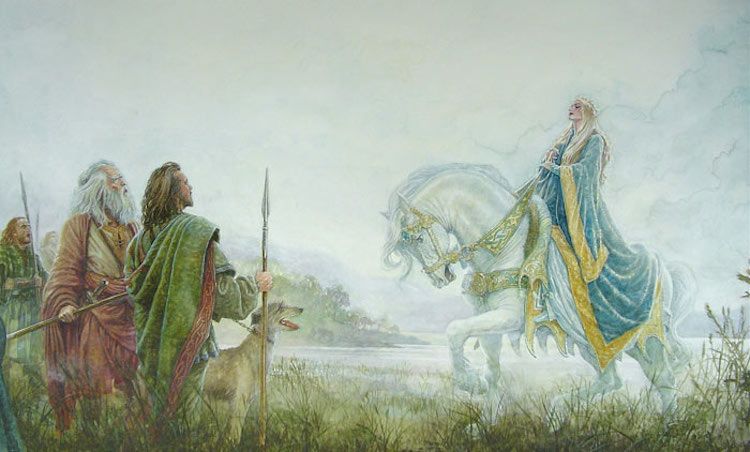
The tale of Tír Na nÓg – the land of eternal youth by Patrick Lynch.
An American in Ireland
I’ve always had that vague American sense of my Irish ancestry (my paternal grandmother’s family emigrated from Ireland to Canada before WWII, where she married my English grandfather), with very little to go on other than a name or two. With Irish records being what they are, I had no real hope of tracing anything. Nevertheless, I wanted to experience the land that had been the stuff of fantasy for me since I was a kid. I got the opportunity as a grad student to get to the UK and I took as much time as I could spare (about 3 and a half months) and traveled as much as I could in the UK and Ireland.
Since I was looking at storytelling and tourism, I ultimately critiqued my own method of traveling, and that Pagan fantasy approach to Ireland that often ignores the actual people living there in favor of stereotypes and mythic characters. Indeed, it was the people – the friends I made, the musicians I encountered – who were able to give me that real sense of the landscape, the stories, the songs, the history, rather than the stone circles and mound forts and all the Pagan tourist destinations, as remarkable as they were.
Revisiting the Little People
That tension between the mythic and the mundane is on full display in the Disney classic, Darby O’Gill and the Little People (1959). I remember when I was a kid in the 70s, the film was re-released in the theaters, and I’m almost positive I saw it then, as I do have some vague memories of it. And I’m pretty sure that film was one of the first influences on my intense interest in Irishness throughout my life. I rewatched it recently for my YouTube show with Lilith Dorsey, Pop Occulture, where we had a lovely conversation with our friend Dr. Jenny Butler of University College Cork and Irish Folklore and Irish Paganism scholar. You can check out the full video here.

Dr. Jenny Butler, 2019.
The film remains an utter delight, with depictions of a range of elements in Irish folklore and literature. In addition to the fae folk, the film also features the púca, the bean sídhe (banshee) and the death coach. Yet, the story is centered around the Irish small town of the turn of the century, and the very everyday notions of landowning, marriage, the life of the church, and sharing a pint with friends at the pub. In addition to classic Irish actors, such as Alberte Sharpe (Darby O’Gill) and Jimmy O’Dea (King Brian), we also have British actress Janet Munro as Darby’s daughter and a young Sean Connery as the “hero,” three years before he premiered as James Bond.
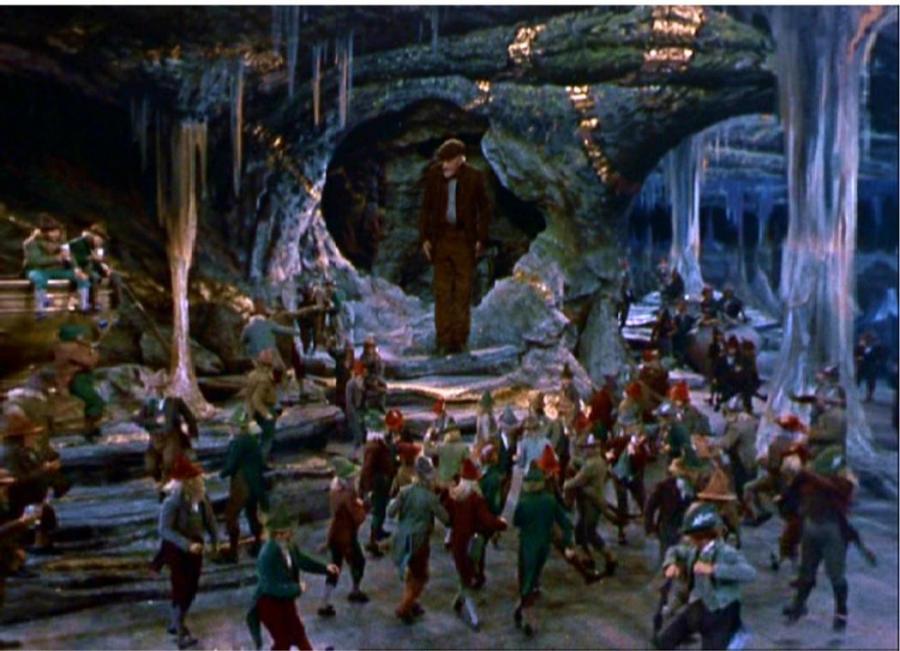
Darby O’Gill and the Little People, Walt Disney Pictures, 1959.
The main action of the film focuses on old Darby O’Gill’s playful rivalry with the king of the fae folk, Brian Connors, how the king tricks him out of his wishes, how he’s lured into the fae realm under the mountain of Knocknasheega, entertains the little people there with a fiddle and a tune, and escapes. Later, he once again traps the king after they share a strong drink of poitín, and holds on to the king while he decides what his wishes will be.
Herminie Templeton Kavanagh: Proto-Feminist?
Walt Disney and his screenwriter, Lawrence Edward Watkin, based the movie on a series of short stories written by Herminie Templeton Kavanagh in 1902. Kavanagh, whose family hailed from Longford, had emigrated to the US where she married a Cook county judge and wrote her stories from my home city of Chicago. She called the tales Dr. Darby O’Gill and the Good People. It’s worth noting here that even though Disney refers to leprechauns in the opening credits, they’re not usually called by that name in the film. Rather, they’re referred to as the wee folk, the Good People, the Gentry, or even the Unblessed Ones (a term used by King Brian himself, but never by the townspeople). This, of course, falls in the tradition of only referring to the fae folk positively, as to not incur bad luck.
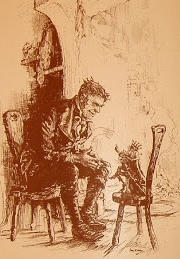
Frontispiece for Darby O’Gill and the Good People, John O’Neill, 1915.
It’s also worth mentioning that in Kavanagh’s original tales, female characters were much more prominent. Darby had a wife and a sister-in-law (neither of which are characters in the film) and the banshee is a bit more fleshed out as an actual character. In fact, Kavanagh is considered by many to be a proto-feminist writer, focusing on women’s lives in the male dominated society of the turn of the century.
Disney’s Journey
Disney chose to go a different route, and in a marketing scheme to appeal to Irish-American audiences with “shamrocks in their eyes,” he made several trips to Ireland and fictionalized it as “discovering his roots” and actually meeting Brian Conners and persuading him to bring his wee folk to California to film the movie. This odd but interesting bit of fakelore is a fun bit of meta Disney history. The tv special depicting the meeting is included in the DVD special features and is the story behind the opening credit in which Disney thanks King Brian and all the leprechauns of Knocknasheega. It also accounts for actor Jimmy O’Dea not being credited in the film, in order to preserve the illusion, and thus, not giving the actor the exposure he had hoped for from a Hollywood film.
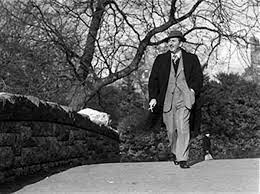
Jason Walt Disney walking in St. Stephen’s Green, Dublin, 1959.
While Disney fictionalized his search for his ancestry in the tv special, his connection to Ireland did have some genuine aspects to it and his family has maintained connections to the Emerald Isle to this day. According to contemporary news reports, in preparation for the film, Disney studied Irish folklore for three months in the Dublin Library, and even had traditional Irish storytellers (seanchaithe*)* as consultants. As we discussed in our Pop Occulture episode, Disney purchased quite a bit of archival material he found, such that the National Leprechaun Museum in Dublin displays quite a few Disney-owned artifacts.
Folklore or Fakelore?
In our wide-ranging discussion with Dr. Jenny Butler, she revealed that Kavanagh based Knocknasheega on the mountain Slievenamon (roughly translates to “the Mountain of the Women”) in County Tipperary. The mountain itself is associated with Fionn MacCool and how he challenged his female suitors to race to the top to win his hand, but gives the shortcut to his favorite, Grainne. Dr. Butler also asserted that much of the folklore in the film, including the presentation of the fae folk and the conventions surrounding them, as well as the treatment of the banshee and the puca, were accurate to Irish traditions.
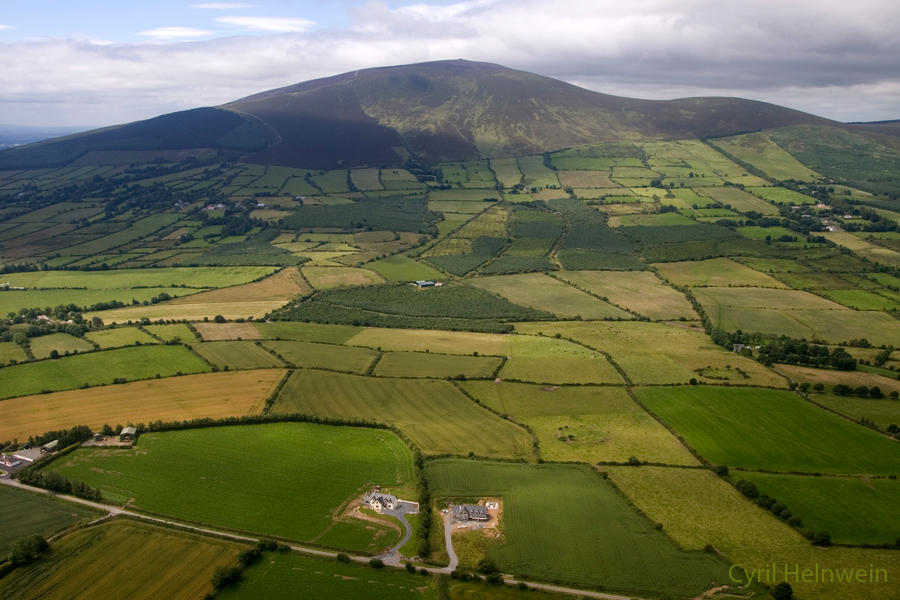
Slievenamon in County Tipperary, Cyril Helnwein.
She also noted that the film is still considered a classic in Ireland itself, that she grew up as a fan, and that it remains a strong part of Irish culture itself. So if you want to enjoy a classic that seems to be universally loved over here and across the pond this St. Patrick’s Day season, catch Darby O’Gill and the Little People on Disney+ this weekend!
And if you’d like to hear more of our conversation with Dr. Butler beyond the Pop Occulture episode, check out our patreon site for more!
Sláinte!
Previous Post

March 19, 2021
WandaVision: Grief, Nostalgia and the Narcissism of Superheroes
Next Post
March 22, 2024 Raising a Little Hell with Twin Temple
Recent Comments
"I agree! Wicked live was incredible! Alexandra knocked it out of the park."
Raising a Little Hell with Twin ..."
"I love Twin Temple! I found them on YouTube a year or so ago. Their ..."
Raising a Little Hell with Twin ..."
"I very much enjoyed this article. Thanks!"
Raising a Glass for Darby O’Gill
Browse Our Archives
Select a Category Uncategorized
Select a Month February 2025 November 2024 May 2024 April 2024 March 2024 March 2021 February 2021 January 2021 December 2020
Follow Us!
TAKE THE
Religious Wisdom Quiz
True or False: In Revelation, the tree of life produces twelve different kinds of fruit, yielding its fruit every month.
Select your answer to see how you score.
FALSE TRUE
Related posts from Occultural Context

UPDATE: Remembering Dawn: Why Michelle Trachtenberg Mattered
Down the Witches' Road with Agatha All Along.
Taking Another Drink From The Fountain
TRENDING AT PATHEOS Pagan

I was recently chatting with someone on Instagram. She asked me what...

While there are many people who share their results, the end of...

On July 23, I saw Christopher Nolan's The Odyssey which is Homer’s...

As I write this two big events have just finished up. One...

Restoring the Watershed of Divine Love
Perhaps cooperation is not something we manufacture through legislation, ideology, or moral...

Many UUs don’t pray because of bad experiences in a previous religion,...
view all Pagan blogs
What Are Your Thoughts?leave a comment
Ad-Free & Subscriber Log-In Subscription Support
- About Us
- 2026 Calendar
- Videos
- Podcasts
- Library of World Religions
- Faith In Media Tracker
- Advertise With Us
- Write for Us
- Privacy Policy
- Terms of Service
- Do Not Sell My Data
- Contact Us
- Radiant Digital
- Manage Newsletter Subscriptions
- Unsubscribe From Notifications
- Sitemap
Copyright 2008-2026, Patheos. All rights reserved.
Subscription Support Ad-Free & Subscriber Log-In
Follow Patheos