
BuddhistCatholicContemplativeEvangelicalGeneral ChristianHinduJewishLatter-day SaintMuslimNew VisionsProgressive Christian
Beliefs
- Buddhist
- Catholic
- Contemplative
- Evangelical
- General Christian
- Hindu
- Jewish
- Latter-day Saint
- More Voices
- Muslim
- New Visions
- Pagan
- Progressive Christian
Topics
- Religion News
- Food and Religion
- Sports and Religion
- Religious Art
- Religious Music and Entertainment
- Religious Events
- History and Religion
- Style and Religion
- Politics and Religion
- Women in Religion
- Recreation Outdoors and Religion
- Business Finance and Religion
- Careers Workplace and Religion
- Education and Religion
- Family Parenting and Religion
- Health Fitness and Religion
- Home and Religion
- Relationships and Religion
- Technology and Religion
- Travel and Religion
Columnists
- Buddhist Columnists
- Business Finance and Religion Columnists
- Careers Workplace and Religion Columnists
- Catholic Columnists
- Contemplative Columnists
- Education and Religion Columnists
- Evangelists Columnists
- Family Parenting and Religion Columnists
- General Christian Columnists
- Health Fitness and Religion Columnists
- Hindu Columnists
- History and Religion Columnists
- Home and Religion Columnists
- Jewish Columnists
- More Voices Columnists
- Latter Day Columnists
- Muslim Columnists
- New Visions Columnists
- Nonreligious Columnists
- Pagan Columnists
- Politics and Religion Columnists
- Progressive Columnists
- Recreation Outdoors and Religion Columnists
- Relationships and Religion Columnists
- Religion News Columnists
- Religious Art Columnists
- Religious Events Columnists
- Religious Music and Entertainment Columnists
- Sports and Religion Columnists
- Style and Religion Columnists
- Technology and Religion Columnists
- Travel and Religion Columnists
- Women in Religion Columnists
Resource Library
- 2026 Calendar
- Library of World Religions
- The 100 Most Holy Places on Earth
- Patheos Answers
- Podcasts
- Videos
- Faith Leaders Database
- Anglican Episcopalian
- Bahai
- Baptist
- Buddhism
- Christianity
- Confucianism
- Eastern Orthodoxy
- Hinduism
- Holiness and Pentecostal
- ISKCON
- Islam
- Judaism
- Lutheran
- Methodist
- The Church of Jesus Christ of Latter-day Saints
- New Age
- Paganism
- Presbytarian and Reformed
- Protestantism
- Religion Behind the Scenes
- Roman Catholic
- Scientology
- Shia Islam
- Sikhism
- Sufism
- Sunni Islam
- Taoism
- Zen
- See all religions
Research Tools
 Ad-Free & Subscriber Log-In Subscription Support
Ad-Free & Subscriber Log-In Subscription Support
Follow Patheos 

- Trending:
- Forgiveness
- |
- Marriage
- |
- Consciousness
- |
- Death Penalty
- |
- Election
- |
- Halloween
 Oathbound
- Home
- Pagan
- Serious Play: Shifting Our Perspective on Ritual
Serious Play: Shifting Our Perspective on Ritual
Last updated on: February 4, 2021 at 9:18 pm by Thorn Mooney
Serious Play: Shifting Our Perspective on Ritual 2021-02-04T21:18:49-04:00 Thorn Mooney
Patheos Explore the world's faith through different perspectives on religion and spirituality! Patheos has the views of the prevalent religions and spiritualities of the world.
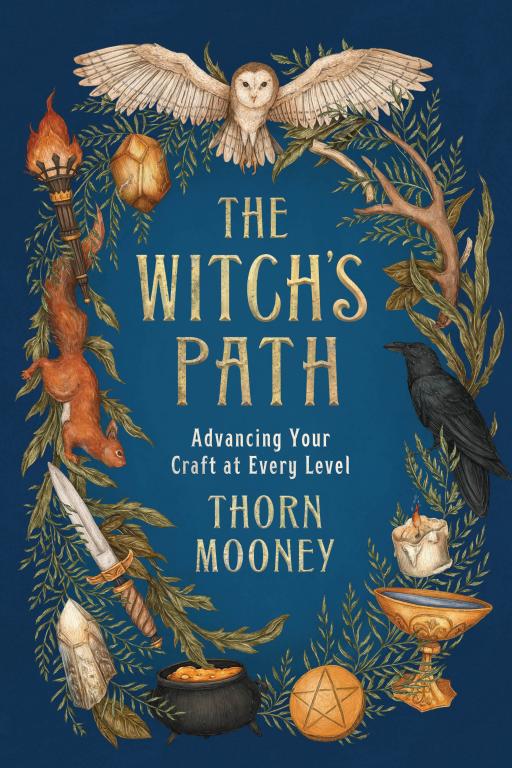
My second book, The Witch’s Path, is now available for preorder. I’m very proud of it, and pleased to here be able to share a short excerpt from it.
The Witch’s Path is my love letter/pep talk to other witches as a whole. Whatever kind of witchcraft you’re into (or thinking about getting into), this is for all those people out there going, “Ugh, there’s too much to read and I’m lost,” or “I’ve been at this for years and I’m bored—what’s next?” or, “I love this but I’m afraid to actually practice,” or “I can’t believe how terrible this community can be sometimes—why do I still hang out with these people?” (or, conversely, “This community is amazing and I want to find my place in it.”)
It’s both a beginner book and an advanced book at the same time, if you can believe it. How do I manage that? Well, because I spent a few years working in classrooms full of students at completely different levels, being responsible for all of them equally, at the same time. The core concepts are the core concepts (identity, magic, ritual, community, study, devotion, ethics, and more). What makes us a beginner, an intermediate, or an advanced practitioner is our relationship with those core concepts–how we think about them, what we do with them, where we choose to take them. That’s the meat of the book. Regardless of what kind of witchcraft you practice. There’s no prerequisite to identify in any particular way, to believe in gods, or any of that. There’s room for many perspectives, even where they conflict.
I wrote it for me, when I was feeling burned out. I think there’s stuff here that hasn’t been said before within witchcraft spaces (I pull a lot from my teaching and religious studies background), and I hope that it collectively shifts some of the discourse in our community about how we learn and what practice can look like.
This following short section is from my chapter about ritual. Enjoy!
Serious Play
One of the reasons why Witchcraft is so tantalizing, I think, is because it speaks to something from childhood, be it our actual childhoods or the idyllic ones we wish we’d had (and all children deserve). Kids’ books are full of magical tropes that influence us long after we become adults. When I read my first books on Witchcraft, magic, and polytheism, I couldn’t help flashing back to my own favorites: Zilpha Keatley Snyder’s The Egypt Game, Frances Hodgson Burnett’s A Little Princess and The Secret Garden, and Roald Dahl’s Matilda. All feature children living secret magical lives, apart from the drudgery of adulthood.
Being a Witch is a little like having a double life and access to a magical otherworld—a Terabithia or a Narnia—that only a lucky few even know exists. Doing ritual is like consciously plugging into this childish sense of wonder. But that feeling of childishness is also inhibiting for a lot of Witches, especially in the beginning. Does ritual seem difficult because you feel stupid? Does your spellcasting suffer because you doubt yourself? These are common concerns, especially for people who come to the Craft when they’re older. As exciting as it might sound on paper, it’s hard not to feel goofy standing alone in your bedroom casting a circle, waving a magic stick around, and reciting lots of florid poetry because you heard it can change your life and you want it to be true. I’ve got one of those professional cubicle jobs and a closet full of sensible shoes—believe me, I know how ridiculous my religion sounds to other people. I should get some kind of commission every time someone finds out I’m a Witch and says, “But you’re smart!” or “But you look normal!” People said the same kinds of things to me in graduate school (because surely only intellectually stunted people think that they’re Witches, right?).
Even if you’re not lucky enough to have people calling you silly to your face, you might have a voice inside of your head picking up that slack. I know I did. We get good at discouraging ourselves and discounting our experiences, chiding ourselves for being foolish or gullible. What if someone walked in and saw? What it someone heard you through the walls? Getting over that self-consciousness can feel like a giant hurdle. There are solutions, though, and they entail taking advantage of that voice in your head calling you childish.
There’s been plenty written in the fields of psychology and education about the role that play fills in the development of children. Aside from encouraging creativity, autonomy, and dexterity, it actually helps with brain development itself. Play is no less important as we age. When I worked as a teacher, my seventeen and eighteen-year-olds also required periods of play in the classroom to retain new knowledge, to regulate their moods, and to build relationships and cognitive connections. Play, it turns out, is serious business. Adults are often discouraged from engaging in play, unless it’s channeled into sanctioned sports and games. Dressing up and playing pretend becomes acceptable in theater, at Renaissance festivals, in cosplay, and in live action role-playing (but even these things often draw derision from onlookers who think participants are questionable). But whether it’s Halloween costumes or football, video games or tabletop games, we all need to play in order to be healthy and happy.
Ritual—as serious as it is—is also a form of play. It might involve costumes, special tools, the use of special names, unique rules, and skills that are equally at home on stage or film. Reciting memorized lines, altering the character of your voice, adopting a new persona, imagining new songs and poems, and plenty more besides, are all strategies we use equally in pretend and in magic and ritual. The skills of Witchcraft are the skills of healthy, well-adjusted children, encouraged to play as they grow up. I believe this is one of the reasons why Witchcraft feels like “coming home” for so many of us. It’s either a return to a lost childhood, or else it’s the opportunity to experience the joy our childhood should have been.
If you begin to think of your magical practice as play and you accept that play is healthy and necessary at all stages of life, then much of the anxiety surrounding respectability melts away. It becomes enough just to enjoy whatever you’re doing, be it dancing in your living room to celebrate May Day or wearing dramatic makeup to lead your coven in a full moon rite. Yes, invoking gods and summoning spirits is absolutely serious work, but it’s also fun. It’s cathartic and stimulating and empowering—exactly what play is for children. Sneaking into the woods at night, keeping secrets, waving a blade in the air, and lighting candles in the dark is fun, no matter how many exclusive initiations you’ve had or how old you get. Ask any ten-year-old. Allowing your Craft to be fun—to consciously be a form of play—will build your confidence, which in turn will make it more effective.
Like it so far? Please consider preordering!
Or on Patreon, where I post additional blogs and have shared more from The Witch’s Path.
Previous Post
January 24, 2021
Free Ways to Learn Witchcraft
Next Post

February 21, 2021 Don't Be an Expert Witch: Expertise, Advancement, and Small Ponds
Browse Our Archives
Select a Category Books Coven Life Exciting Life Things Pagan Community Personal Stuff Practical Stuff Tarot Uncategorized Wicca
Select a Month September 2021 July 2021 June 2021 March 2021 February 2021 January 2021 December 2020 November 2020 October 2020 August 2020 July 2020 May 2020 February 2020 January 2020 November 2019 September 2019 June 2019 May 2019 January 2019 July 2018 June 2018 May 2018 March 2018 February 2018 August 2017 July 2017 March 2017 January 2017 December 2016 November 2016 October 2016 August 2016 July 2016 June 2016 May 2016 April 2016 March 2016 February 2016 January 2016 December 2015 November 2015 October 2015 September 2015 August 2015 July 2015 June 2015 May 2015 April 2015
Follow Us!
TAKE THE
Religious Wisdom Quiz
I am twelve men sent to explore the Promised Land, but only two gave a good report. Who are we?
Select your answer to see how you score.
Leaders of Israel The twelve spies Explorers Messengers
Related posts from Oathbound
Learning and Unlearning Witchcraft: Can Bad Info Ruin...

Secular vs. Religious: Making Distinctions as a Witch
TRENDING AT PATHEOS Pagan

I was recently chatting with someone on Instagram. She asked me what...

While there are many people who share their results, the end of...

On July 23, I saw Christopher Nolan's The Odyssey which is Homer’s...

As I write this two big events have just finished up. One...

Restoring the Watershed of Divine Love
Perhaps cooperation is not something we manufacture through legislation, ideology, or moral...

Many UUs don’t pray because of bad experiences in a previous religion,...
view all Pagan blogs
Ad-Free & Subscriber Log-In Subscription Support
- About Us
- 2026 Calendar
- Videos
- Podcasts
- Library of World Religions
- Faith In Media Tracker
- Advertise With Us
- Write for Us
- Privacy Policy
- Terms of Service
- Do Not Sell My Data
- Contact Us
- Radiant Digital
- Manage Newsletter Subscriptions
- Unsubscribe From Notifications
- Sitemap
Copyright 2008-2026, Patheos. All rights reserved.
Subscription Support Ad-Free & Subscriber Log-In
Follow Patheos