
BuddhistCatholicContemplativeEvangelicalGeneral ChristianHinduJewishLatter-day SaintMuslimNew VisionsProgressive Christian
Beliefs
- Buddhist
- Catholic
- Contemplative
- Evangelical
- General Christian
- Hindu
- Jewish
- Latter-day Saint
- More Voices
- Muslim
- New Visions
- Pagan
- Progressive Christian
Topics
- Religion News
- Food and Religion
- Sports and Religion
- Religious Art
- Religious Music and Entertainment
- Religious Events
- History and Religion
- Style and Religion
- Politics and Religion
- Women in Religion
- Recreation Outdoors and Religion
- Business Finance and Religion
- Careers Workplace and Religion
- Education and Religion
- Family Parenting and Religion
- Health Fitness and Religion
- Home and Religion
- Relationships and Religion
- Technology and Religion
- Travel and Religion
Columnists
- Buddhist Columnists
- Business Finance and Religion Columnists
- Careers Workplace and Religion Columnists
- Catholic Columnists
- Contemplative Columnists
- Education and Religion Columnists
- Evangelists Columnists
- Family Parenting and Religion Columnists
- General Christian Columnists
- Health Fitness and Religion Columnists
- Hindu Columnists
- History and Religion Columnists
- Home and Religion Columnists
- Jewish Columnists
- More Voices Columnists
- Latter Day Columnists
- Muslim Columnists
- New Visions Columnists
- Nonreligious Columnists
- Pagan Columnists
- Politics and Religion Columnists
- Progressive Columnists
- Recreation Outdoors and Religion Columnists
- Relationships and Religion Columnists
- Religion News Columnists
- Religious Art Columnists
- Religious Events Columnists
- Religious Music and Entertainment Columnists
- Sports and Religion Columnists
- Style and Religion Columnists
- Technology and Religion Columnists
- Travel and Religion Columnists
- Women in Religion Columnists
Resource Library
- 2026 Calendar
- Library of World Religions
- The 100 Most Holy Places on Earth
- Patheos Answers
- Podcasts
- Videos
- Faith Leaders Database
- Anglican Episcopalian
- Bahai
- Baptist
- Buddhism
- Christianity
- Confucianism
- Eastern Orthodoxy
- Hinduism
- Holiness and Pentecostal
- ISKCON
- Islam
- Judaism
- Lutheran
- Methodist
- The Church of Jesus Christ of Latter-day Saints
- New Age
- Paganism
- Presbytarian and Reformed
- Protestantism
- Religion Behind the Scenes
- Roman Catholic
- Scientology
- Shia Islam
- Sikhism
- Sufism
- Sunni Islam
- Taoism
- Zen
- See all religions
Research Tools
 Ad-Free & Subscriber Log-In Subscription Support
Follow Patheos 

- Trending:
- Advent
- |
- Forgiveness
- |
- Thanksgiving
- |
- Election
- |
- Seasonal Holidays
- |
- Marriage
 Oathbound
- Home
- Pagan
- How to Be a Better Beginner
How to Be a Better Beginner
Last updated on: September 14, 2019 at 12:48 pm by Thorn Mooney
How to Be a Better Beginner 2019-09-14T12:48:28-04:00 Thorn Mooney
Patheos Explore the world's faith through different perspectives on religion and spirituality! Patheos has the views of the prevalent religions and spiritualities of the world.
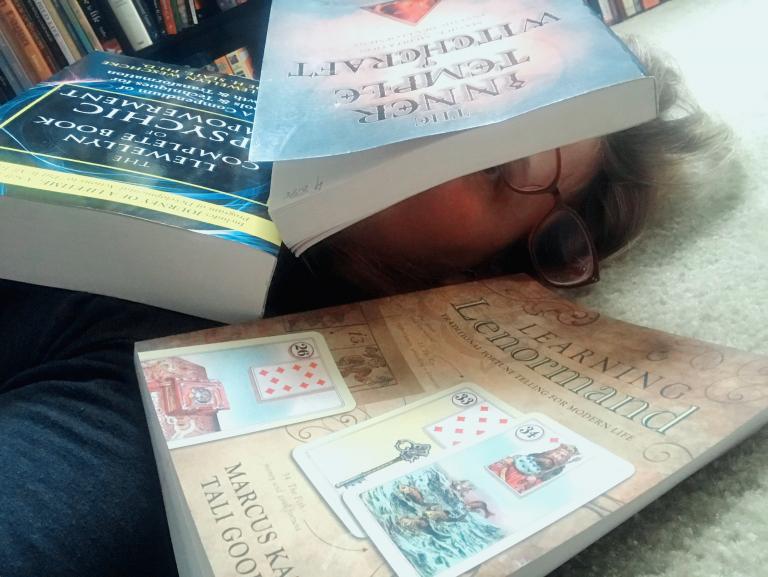 There are tons of articles floating around about how to choose good beginner books, how to find reputable teachers, how to join friendly covens, and how to find fun and educational public events, but in all this conversation we’re missing something that’s just as important as the ability to choose good resources: how to be a good beginner!
We’re living in a moment—and I’m turning into my father as I say this—where a lot of people want things done for them. It’s not really our fault (I’m including myself in this, because let’s be real, my father was talking to me, too). Culturally, we’ve become accustomed to being able to just Google answers, to download an app for whatever our problem is, and to receive twenty-four hour customer service, whatever sort of customer we are. My high schoolers learned in elementary school how the EOC and EOG state exams are curved in North Carolina (spoiler: you can fail and still pass) and the result for many of them is that they fill in their name bubbles and then go to sleep at their desks. As frustrated as I get, I don’t really blame them. We adults have conditioned this response, after all. (More spoilers: they’ll still get into college as long as they can pay, because the standards aren’t much different at many universities.)
I see similar patterns in many of the spaces occupied by beginners in Pagan and witch communities. People don’t want to read multiple books, they want to read one perfect one. Lots of people don’t even want to do that: why read a book when you can just DM an author and ask them to explain what witchcraft is? Even using Google is too much to ask. When the going gets tough, the tough abandon ship and then complain that there aren’t any good resources available.
Beyond books, this applies to my own experiences with inquiries to my coven. These days, my group’s exclusivity has less to do with our tradition and more to do with the reality that people are just less willing to travel more than fifteen miles, to compromise their personal schedules, or to do the work they’ve asked for (reading, contemplating, working ritual, attending coven meetings, etc.). I want to be clear: there’s a very important conversation here about inclusivity and ableism that’s ongoing in many magical communities (including my own coven), but I’m not talking about people who need consideration. I’m talking about people who are just entitled and lazy, or at least unaccustomed to putting forth the individual effort required for anything beyond mediocrity (who then complain as though the fault for their mediocrity lies elsewhere). Every school and workplace has at least a few of these, and so does every Pagan and witch community, it turns out.
How do you not become one of these people? Well, the good news is that if you’re worried about it, you almost surely aren’t. But just in case:
1.Read everything, regardless of what the Internet says. Go to a library, use interlibrary loan (some libraries will even mail things directly to your home!), and get your hands on as much text as possible. Then actually read and think about the material critically. No book is perfect. No author knows everything, no matter how solid their bio sounds or how many social media followers they have (or how many other books they’ve published!). We all suck somewhere. Note where, then fill in those holes with other texts. Do some comparison! Does this text largely agree with other texts on the same subject? If they’re saying something bananas, look for confirmation elsewhere! And remember that just because something is repeated often, that doesn’t mean it’s accurate. If you read with a critical eye, you cannot be “ruined” by a bad book. This idea is everywhere on the Internet, and it’s moronic. If you can get your head around the idea that sometimes non-fiction books contain erroneous material, and that it’s okay to read a book and disagree with its contents, you will be fine.
2. Ask better questions. My ninth grade geometry teacher was a grizzled ex-Navy SEAL, and he told us on the first day–to my terror and in no uncertain terms–that there were, in fact, stupid questions, despite what our kindergarten teachers and mommies had told us. I’m barely paraphrasing. I try to be more generous than Mr. O’Keefe, but at least this much is true: some questions are better than others. A while ago, I wrote a blog that mentioned the failing utility of the question, “Is this book any good,” but there are others I’ll address here.
Broad questions and questions that reveal you haven’t done any legwork on your own are the main culprits. The one that plagues my inbox personally is, “What’s a traditional Wiccan?” Here’s why that question is frustrating: first, I literally wrote a book about what that means. I run a website about it. I write a blog about it and make videos about it. Most of these things are available for free. A ten second Google search will turn up, not only an answer to that question, but my answer to that question. I’m not going to spell it out again on Instagram, and most others won’t either (about whatever their pet thing is). That question is too broad, and it ends up getting deleted. If you can answer it with a Google search, do that first.
“But Thorn, you know Google isn’t always reliable! How can you tell people to rely on Google?” Thanks for pointing that out—yes, you’re correct. And I’m not. We’ll use the unreliability of Google to craft better questions. Like so: “I read x on Google about traditional Wicca. Is x true?” This is a much better question. It’s more specific, and it demonstrates you’ve put forth an effort. It requires less time to answer, and is therefore more likely to receive a response. This isn’t just me being weird and picky, this is true for most people who find themselves in the position of answering questions (see, Steve O’Keefe). Here’s another good one: “What does traditional Wicca mean to you?” A very similar question, but with the nuance that you understand you’re talking to one person and that mileage will vary. You can improve practically any question with some variation on, “But what do you think?”
If you learn to ask more specific, thoughtful questions, you will get better answers. If you find that your questions consistently get unsatisfying answers, try asking different questions.
3. Get uncomfortable. I’m not saying throw out your personal boundaries or disregard your safety, but any time you’re doing something new you’re going to be dealing with a learning curve. You’ll hit a wall at some point and progress will get slow. It’ll happen; I promise. And it can suck if you’re not expecting it. Sometimes the wall is running out of low-hanging fruit and suddenly having to seek out more advanced material, or new people who can guide you. Sometimes the wall is conflicts with other parts of your life (religion has a way of forcing you to examine yourself and your previously held ideas), which you can either ignore or work through. Ignoring inconsistencies, conflicts, or other uncomfortable places will result in the wall not moving, and in no progress happening either way. You’ll sit right where you are. When you choose to work through something, you may still decide that the thing is wrong, irresolvable, or worth walking away over, but at least you’ll come by those conclusion honestly and on your own terms. When things become difficult, keep going. That’s usually means you’re making progress.
4. Be okay with being a beginner. In fact, rejoice in it. You know what I find exhausting? Social media accounts and blogs run by beginners that purport to be resources for others, when really they’re just plagiarized from books or other websites. Everyone wants to set themselves up as an expert as quickly as possible, but, frankly, beginners have the sweetest gig and I envy them a lot of the time. Aside from things being exciting and new, there are resources everywhere, lots of people who want to help you, and every damn day can feel like a discovery of something magical. There’s nothing sillier than watching beginners fight online over who’s right, what’s authoritative, what terms really mean, or who’s an insider and who’s an outsider. You just got here! No one expects you to have answers to everything (and a lot of those things don’t have answers). Enjoy the learning process, and take advantage of this time where people expect you to not know. Don’t try to bullshit people, have some modesty, be kind, and do more listening than talking. And if you do want to be a resource, you know what I’d personally love to see? A blog called WTF is All This: A Beginner Discovering Witchcraft. It would be full of doubts, failed experiments, the joy of finally realizing success, questions, and fresh perspectives, and zero reposting. I would read the shit out of that blog, and so would lots of other people. Send me the link when you set it up.
5. Take action. Reading and hoarding information is all well and good, but you have to do something with it. It’s true that witchcraft and magic are serious arts, and it’s also true that you can do foolish things and get hurt along the way. Buuuuuut…you probably won’t at this stage. Let’s be real: someone who just read their first book and has never worked ritual magic is disproportionately unlikely to successfully invoke something genuinely harmful or to successfully pull off a working that is truly destructive. More than likely, nothing at all will happen, except for whatever internal emotional experience results. Witchcraft isn’t skydiving. A beginner and an expert skydiver both jump out of a plane, and they both have to equally deal with the fact that they’re falling. In magic, however, things don’t work just because you say the words and do the motions. You’re not just jumping and falling. There’s effort, intention, connection, and skill behind it. Those things develop in time, with work. For most people, success rates increase with time and practice. So start! I’ve found that the longer people wait, the more freaked out they get and the less likely they are to actually try anything. So pick a thing and try it. You’re going to screw it up somewhere—we all do—so put the book down and give it a shot!
6. Don’t hang your hat on any one teacher, and don’t pick a hill to die on. I have my favorite writers and teachers, as well as religious narratives, traditions, and perspectives that are dear to me. However, I try not to model my practice after any one of those exclusively. Witchcraft isn’t a cult of personality (though as a community, we do try), and it’s also not static. Don’t pin yourself to any one person or perspective, especially in an era when so many of our heroes and ideas seem to be made of straw. Community leaders are ousted, change their minds, convert, retract their positions, and are human just like everyone else. At the very least, they’re going to die eventually. If your practice is all about someone else, where will you be when that person isn’t there anymore? The same is true for ideas. Witches who began practicing in the sixties and seventies (and earlier) had to watch while their understanding of history was ruthlessly dismantled by scholars in the nineties and later. Witches who began their practice before social media had to readjust with the development of the Internet, and all of the changes that brought. In the last decade, some of our most cherished teachers have revealed themselves to be bigots, sex-offenders, and plenty else besides. Life gets messy and history keeps moving, without much care for your feelings. Explore, be open, and don’t cling too hard to any one person or perspective. You have to keep enough distance so that when it’s time to let something go, you can.
7. Do the work you say you want. If you say you want to be psychic, and every book and teacher out there says similar, core things about how to develop your psychic abilities, and you don’t do them because they’re time consuming or difficult, you don’t then get to complain about not progressing as a psychic. I went to college for music, where I was instantly surrounded by musicians who could wipe the floor with me. Why? It’s not a mystery: they practiced more. In order to compete, I had to change my game plan, but there was no shortcut. I didn’t take a life-altering class, hear some inspiring late-night words from a trusted mentor, or learn some magical technique that gave me perfect pitch. I literally just practiced more, and learned to do so more effectively. It took time and work, and sometimes it was awful. But it worked! I got better (though there was still plenty of floor wiping, rest assured). Magic, spiritual development, witchcraft, tarot reading, group leadership, and pretty much anything else worthwhile you can name requires actual work. That means time, commitment, effort, reflection, and repeated failure (after which you get up and try again). If you want to do the thing, and especially if you ask for help to do the thing, then you have to actually do that work that you said you wanted to do. Buying a book is not the same thing as reading a book, and it’s definitely not the same thing as doing the exercises in the book. So how badly do you want it? Prove it. (PS, if you want to be psychic, here you go.)
Obviously this list isn’t comprehensive, and any one of these could have been its own article, but I hope this at least serves as a guidepost for folks our there who are hitting some walls, not getting the support they need, or are otherwise just not where they want to be. Being a student actually entails a definitive skillset. It’s why we teach high school children how to study instead of just giving them an exam and telling them to have at it while hoping for the best (well, at least it’s why we should). You can be good at learning, at getting people to answer your questions and help you, and at evaluating what you learn more efficiently.
Previous Post

September 7, 2019
Moving, Materialism, and Finding My Feet Again
Next Post

November 20, 2019 The Witches’ Voice: A Love Letter
Browse Our Archives
Select a Category Books Coven Life Exciting Life Things Pagan Community Personal Stuff Practical Stuff Tarot Uncategorized Wicca
Select a Month September 2021 July 2021 June 2021 March 2021 February 2021 January 2021 December 2020 November 2020 October 2020 August 2020 July 2020 May 2020 February 2020 January 2020 November 2019 September 2019 June 2019 May 2019 January 2019 July 2018 June 2018 May 2018 March 2018 February 2018 August 2017 July 2017 March 2017 January 2017 December 2016 November 2016 October 2016 August 2016 July 2016 June 2016 May 2016 April 2016 March 2016 February 2016 January 2016 December 2015 November 2015 October 2015 September 2015 August 2015 July 2015 June 2015 May 2015 April 2015
Follow Us!
TAKE THE
Religious Wisdom Quiz
Which festival was celebrated with great joy after completing the wall?
Select your answer to see how you score.
Feast of Tabernacles Passover Feast of Dedication Pentecost
Related posts from Oathbound


Secular vs. Religious: Making Distinctions as a Witch
Don't Be an Expert Witch: Expertise, Advancement, and...
TRENDING AT PATHEOS Pagan

10 years of the Power Sigil & Moving...
Last week while reorganizing my studio space, I found the sketchbook that...

Here comes a rant (and TLDR: if you're a US citizen eligible...

Why are younger seekers drawn to Paganism and...
One of the things I've noticed the most is that I'm far...

When we talk about Greek religion, we often begin with the dodekatheion—the...

I was recently chatting with someone on Instagram. She asked me what...

On July 23, I saw Christopher Nolan's The Odyssey which is Homer’s...
view all Pagan blogs
Ad-Free & Subscriber Log-In Subscription Support
- About Us
- 2026 Calendar
- Videos
- Podcasts
- Library of World Religions
- Faith In Media Tracker
- Advertise With Us
- Write for Us
- Privacy Policy
- Terms of Service
- Do Not Sell My Data
- Contact Us
- Radiant Digital
- Manage Newsletter Subscriptions
- Unsubscribe From Notifications
- Sitemap
Copyright 2008-2026, Patheos. All rights reserved.
Subscription Support Ad-Free & Subscriber Log-In
Follow Patheos