
BuddhistCatholicContemplativeEvangelicalGeneral ChristianHinduJewishLatter-day SaintMuslimNew VisionsProgressive Christian
Beliefs
- Buddhist
- Catholic
- Contemplative
- Evangelical
- General Christian
- Hindu
- Jewish
- Latter-day Saint
- More Voices
- Muslim
- New Visions
- Pagan
- Progressive Christian
Topics
- Religion News
- Food and Religion
- Sports and Religion
- Religious Art
- Religious Music and Entertainment
- Religious Events
- History and Religion
- Style and Religion
- Politics and Religion
- Women in Religion
- Recreation Outdoors and Religion
- Business Finance and Religion
- Careers Workplace and Religion
- Education and Religion
- Family Parenting and Religion
- Health Fitness and Religion
- Home and Religion
- Relationships and Religion
- Technology and Religion
- Travel and Religion
Columnists
- Buddhist Columnists
- Business Finance and Religion Columnists
- Careers Workplace and Religion Columnists
- Catholic Columnists
- Contemplative Columnists
- Education and Religion Columnists
- Evangelists Columnists
- Family Parenting and Religion Columnists
- General Christian Columnists
- Health Fitness and Religion Columnists
- Hindu Columnists
- History and Religion Columnists
- Home and Religion Columnists
- Jewish Columnists
- More Voices Columnists
- Latter Day Columnists
- Muslim Columnists
- New Visions Columnists
- Nonreligious Columnists
- Pagan Columnists
- Politics and Religion Columnists
- Progressive Columnists
- Recreation Outdoors and Religion Columnists
- Relationships and Religion Columnists
- Religion News Columnists
- Religious Art Columnists
- Religious Events Columnists
- Religious Music and Entertainment Columnists
- Sports and Religion Columnists
- Style and Religion Columnists
- Technology and Religion Columnists
- Travel and Religion Columnists
- Women in Religion Columnists
Resource Library
- 2026 Calendar
- Library of World Religions
- The 100 Most Holy Places on Earth
- Patheos Answers
- Podcasts
- Videos
- Faith Leaders Database
- Anglican Episcopalian
- Bahai
- Baptist
- Buddhism
- Christianity
- Confucianism
- Eastern Orthodoxy
- Hinduism
- Holiness and Pentecostal
- ISKCON
- Islam
- Judaism
- Lutheran
- Methodist
- The Church of Jesus Christ of Latter-day Saints
- New Age
- Paganism
- Presbytarian and Reformed
- Protestantism
- Religion Behind the Scenes
- Roman Catholic
- Scientology
- Shia Islam
- Sikhism
- Sufism
- Sunni Islam
- Taoism
- Zen
- See all religions
Research Tools
 Ad-Free & Subscriber Log-In Subscription Support
Ad-Free & Subscriber Log-In Subscription Support
Follow Patheos 

- Trending:
- Forgiveness
- |
- Marriage
- |
- Consciousness
- |
- Death Penalty
- |
- Election
- |
- Halloween
 Oathbound
- Home
- Pagan
- Conversion and Trauma
Conversion and Trauma
Last updated on: May 27, 2019 at 1:31 pm by Thorn Mooney
Conversion and Trauma 2019-05-27T13:31:47-04:00 Thorn Mooney
Patheos Explore the world's faith through different perspectives on religion and spirituality! Patheos has the views of the prevalent religions and spiritualities of the world.
 I turned in my first short story to my writing workshop last week. I’m new to fiction, and I had a blast writing thirteen pages (haha) about a Wiccan shopkeeper who’s lost his belief in magic.
Mostly, I wrote it to amuse myself and my friends. I knew going in that the biggest challenge would be writing a story that felt authentic without excluding my non-witch audience. How to work in community jokes and contemplations on stuff that really matters to my personal experience while not alienating a roomful of people (one of whom is responsible for my grade) who might have zero experience with any kind of Pagan anything?
The feedback was surprisingly useful, and I was pleased that they seemed to think I’d pulled off something worthwhile (or, at least, not just produced a steaming pile of garbage). As a room, however, one snag sat at the center of the critique:
“I need to know this narrator’s religious background,” said my professor.
I should add, here, that the rules of our workshop prevent the author from speaking. We’re required to listen, take notes, and be thoughtful. I was not permitted to engage and instead practiced my (still bad) poker face.
“A loss of faith narrative could be interesting, but it matters where he’s coming from. Was he raised as a witch? And, if not, what trauma led to his conversion?”
Whoa. Trauma?
The class joined in. One student didn’t buy the idea that a Southern character could openly practice witchcraft without his parents objecting (“Hello, this is North Carolina.”). Another wanted to know if a shop like this really existed in Charlotte (Yes! And several others besides). One student guessed that the narrator must be a former Catholic, as the story’s ritual scene, “with all its emphasis on sounds and smells,” reminded her of her own church.
By the end, several were speculating.
“This is just me,” my professor knew he was on a sensitive subject, but he’s not the type to shy away. “I don’t trust converts. I don’t buy that you can be raised with one foundation—a worldview—and then just decide to change it. Lutheran to Methodist, okay. But Baptist to Buddhist? No.”
This was easily the most engaging discussion I’ve (sort of) been a part of in ages, and I think there’s merit here. Paganism is largely made up of converts, and I think most of us would say that our personal paths took years, and multiple experiences. Many of us also know how hard it can be to shake our milk religions. It can take a lifetime. I think my teacher is right: it doesn’t just happen in a weekend, and looking at someone’s background can tell you an awful lot about how they may have gotten to their current worldview (not my favorite word, but we’ll go with it). We’ve also seen plenty of instances of people experimenting in and exploring our traditions to piss off parents, to get quick fixes for life’s many problems, or because we’re genuinely desperate for something more than what was given to us by our circumstances. Plenty of people make a home in our communities and then move out later (I can’t help but think of Theo Bishop, who caused some waves a few years ago by recommitting to Christianity after spending time as a public Pagan). That strikes me as pretty normal. Worldviews, as my professor said, are hard to shake. I think there’s something to the idea that religious conversion might warrant further prodding (though I’m not willing to use the stark terms my professor used).
Trauma is often at the root of conversion, he added. I think there’s plenty to this, too. Religion can be profound and creative and enlightening and whatever else, but it also traumatizes. Some in our community bear deep wounds that will never fully heal.
Me, I was lucky. Raised in as secular a household as I think is possible in the United States (not atheist, mind you, which is at least a position regarding belief, but rather a household in which the subject did not even exist), I have no trauma to speak of in that regard. I was a curious young teenager, in love with magic. My traumas happened years after my explorations of witchcraft began, and by then it was already there to support me through them. Was my experience one of conversion?
Originally, I imagined my story’s narrator to have a background like my own. It didn’t occur to me to give him something else, or that his lack of religious background would be so unbelievable.
I’m still pondering all of this, and even called up a close Christian friend to get his thoughts on the whole thing.
What do you think? How did your conversion come about? What trauma is behind your narrative?
[Sidenote: I just bought a copy of Elaaine S’s The Witch’s Journey: Cutting the Cords of Christian Dogma, which immediately strikes me as a work that would be useful to witches with these sorts of questions, particularly those that struggle to move away from Christianity.]
[Other Sidenote: I apparently write fiction now? I’m pretty pumped about it and am going to keep working.]
Previous Post

May 25, 2019
Review: Wicca by Harmony Nice
Next Post

June 5, 2019 Working with Personal Cycles
Browse Our Archives
Select a Category Books Coven Life Exciting Life Things Pagan Community Personal Stuff Practical Stuff Tarot Uncategorized Wicca
Select a Month September 2021 July 2021 June 2021 March 2021 February 2021 January 2021 December 2020 November 2020 October 2020 August 2020 July 2020 May 2020 February 2020 January 2020 November 2019 September 2019 June 2019 May 2019 January 2019 July 2018 June 2018 May 2018 March 2018 February 2018 August 2017 July 2017 March 2017 January 2017 December 2016 November 2016 October 2016 August 2016 July 2016 June 2016 May 2016 April 2016 March 2016 February 2016 January 2016 December 2015 November 2015 October 2015 September 2015 August 2015 July 2015 June 2015 May 2015 April 2015
Follow Us!
TAKE THE
Religious Wisdom Quiz
What was the name of the field bought with Judas' betrayal money?
Select your answer to see how you score.
Aceldama Field of Blood Potter's Field Golgotha
Related posts from Oathbound
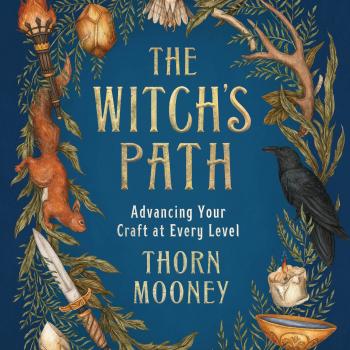
Learning and Unlearning Witchcraft: Can Bad Info Ruin...


Secular vs. Religious: Making Distinctions as a Witch

Don't Be an Expert Witch: Expertise, Advancement, and...
TRENDING AT PATHEOS Pagan

I was recently chatting with someone on Instagram. She asked me what...

While there are many people who share their results, the end of...

On July 23, I saw Christopher Nolan's The Odyssey which is Homer’s...

As I write this two big events have just finished up. One...

Restoring the Watershed of Divine Love
Perhaps cooperation is not something we manufacture through legislation, ideology, or moral...

Many UUs don’t pray because of bad experiences in a previous religion,...
view all Pagan blogs
Ad-Free & Subscriber Log-In Subscription Support
- About Us
- 2026 Calendar
- Videos
- Podcasts
- Library of World Religions
- Faith In Media Tracker
- Advertise With Us
- Write for Us
- Privacy Policy
- Terms of Service
- Do Not Sell My Data
- Contact Us
- Radiant Digital
- Manage Newsletter Subscriptions
- Unsubscribe From Notifications
- Sitemap
Copyright 2008-2026, Patheos. All rights reserved.
Subscription Support Ad-Free & Subscriber Log-In
Follow Patheos