
BuddhistCatholicContemplativeEvangelicalGeneral ChristianHinduJewishLatter-day SaintMuslimNew VisionsProgressive Christian
Beliefs
- Buddhist
- Catholic
- Contemplative
- Evangelical
- General Christian
- Hindu
- Jewish
- Latter-day Saint
- More Voices
- Muslim
- New Visions
- Pagan
- Progressive Christian
Topics
- Religion News
- Food and Religion
- Sports and Religion
- Religious Art
- Religious Music and Entertainment
- Religious Events
- History and Religion
- Style and Religion
- Politics and Religion
- Women in Religion
- Recreation Outdoors and Religion
- Business Finance and Religion
- Careers Workplace and Religion
- Education and Religion
- Family Parenting and Religion
- Health Fitness and Religion
- Home and Religion
- Relationships and Religion
- Technology and Religion
- Travel and Religion
Columnists
- Buddhist Columnists
- Business Finance and Religion Columnists
- Careers Workplace and Religion Columnists
- Catholic Columnists
- Contemplative Columnists
- Education and Religion Columnists
- Evangelists Columnists
- Family Parenting and Religion Columnists
- General Christian Columnists
- Health Fitness and Religion Columnists
- Hindu Columnists
- History and Religion Columnists
- Home and Religion Columnists
- Jewish Columnists
- More Voices Columnists
- Latter Day Columnists
- Muslim Columnists
- New Visions Columnists
- Nonreligious Columnists
- Pagan Columnists
- Politics and Religion Columnists
- Progressive Columnists
- Recreation Outdoors and Religion Columnists
- Relationships and Religion Columnists
- Religion News Columnists
- Religious Art Columnists
- Religious Events Columnists
- Religious Music and Entertainment Columnists
- Sports and Religion Columnists
- Style and Religion Columnists
- Technology and Religion Columnists
- Travel and Religion Columnists
- Women in Religion Columnists
Resource Library
- 2026 Calendar
- Library of World Religions
- The 100 Most Holy Places on Earth
- Patheos Answers
- Podcasts
- Videos
- Faith Leaders Database
- Anglican Episcopalian
- Bahai
- Baptist
- Buddhism
- Christianity
- Confucianism
- Eastern Orthodoxy
- Hinduism
- Holiness and Pentecostal
- ISKCON
- Islam
- Judaism
- Lutheran
- Methodist
- The Church of Jesus Christ of Latter-day Saints
- New Age
- Paganism
- Presbytarian and Reformed
- Protestantism
- Religion Behind the Scenes
- Roman Catholic
- Scientology
- Shia Islam
- Sikhism
- Sufism
- Sunni Islam
- Taoism
- Zen
- See all religions
Research Tools
 Ad-Free & Subscriber Log-In Subscription Support
Ad-Free & Subscriber Log-In Subscription Support
Follow Patheos 

- Trending:
- Forgiveness
- |
- Marriage
- |
- Consciousness
- |
- Death Penalty
- |
- Election
- |
- Halloween
 Oathbound
- Home
- Pagan
- Making the Sabbats Real
Making the Sabbats Real
Last updated on: August 2, 2016 at 6:35 pm by Thorn Mooney
Making the Sabbats Real 2016-08-02T18:35:53-04:00 Thorn Mooney
Patheos Explore the world's faith through different perspectives on religion and spirituality! Patheos has the views of the prevalent religions and spiritualities of the world.
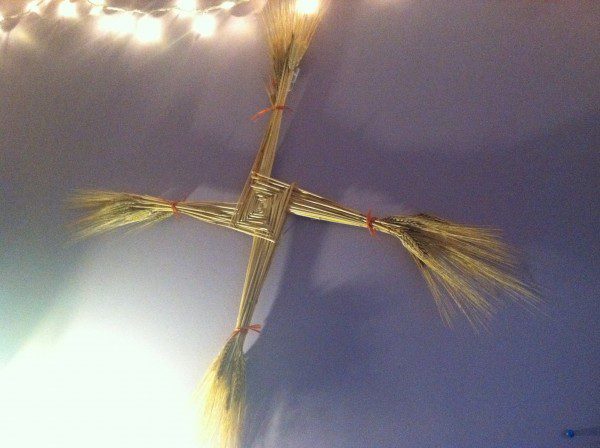 When I was first studying Wicca formally with a Blue Star teacher, she told me to pay attention to the cycles in my life and try to find patterns in relation to the Wheel of the Year. It sounds like a simple, obvious thing now, but at the time it really made a difference in how I carried myself in the world. I was already a journaler, but I started recording things like weather patterns, paying attention to the number of daylight hours, and observing my own private, unscripted reactions to the turning seasons. After a few years, I could see that my energy always spiked near Midsummer. My depression set in at the autumn equinox, and worsened as Yule approached. By the Feast of Torches, I felt mostly human again and it felt safe to start thinking about the future. May Eve could be amazing or awful, depending on how fastidious I was in my self-care. Summer was the time for digging deep and executing big plans.
Patterns. Cycles.
For me, celebrating the sabbats isn’t always about an elaborate ritual or a big gathering. Any covenleader can tell you that there are seasons and holidays that, by their nature, make wrangling an entire group nearly impossible. The winter solstice is often a bust thanks to extended family celebrating Christmas and Chanukah. Halloween is tough for those of us with small children and trick-or-treat schedules. Summer means vacations and travel and visiting in-laws. Sometimes, for whatever reason, you just can’t have eight, perfect celebrations evenly spaced around the year. A big part of the work is bringing an element of reality into the ideal. Over time, the Wheel has to become real to us, not an abstraction from an imagined past. Not “the best we can do” given that we’re not really living the agrarian lifestyle that we romanticize (probably).
So it’s critical to pay attention to how the movement of the year impacts us in other ways. There are other ways to honor our gods and acknowledge the passing of the seasons. I’ve come to believe that it’s more valuable to build personal associations with the spokes on the Wheel, rather than to fall into the trap of believing that your August Eve can’t be complete unless you learn to bake bread, or that Halloween doesn’t count unless the whole coven comes over for a dumb supper and all-night conversations with the gods of the dead.
I think of my first teacher frequently, and this one tiny piece of advice has continued to be central. I try to remind my own initiates to follow suit: note the changes, listen to what’s going on for you, build your own connections, stop pretending that you’re a farmer or a hunter if you’re not a farmer or a hunter.
My summer hasn’t been blog heavy. It hasn’t been circle heavy. I’ve noticed that my own work on Patheos waxes and wanes along with my private practice of witchcraft. Sometimes, I’m gung-ho and it’s the only thing I care about (lots of blogs). Other times, I really need to shift, process, and focus on other parts of my life (Internet silence). I spent my August Eve shopping for new clothes for work (as a teacher, I have to be both “professional” and able to break into a full run after children, which makes things tricky sometimes), weeding my yard, and hanging out with my mom. It wasn’t particularly “witchy” by book standards. But it was important. It was steady and familial and fundamentally about rootedness and preparation for the coming season. We shared bread and yardwork and laid plans, and it didn’t matter whether or not everyone knew anything about the history of Lughnasadh or the old Catholic Lammas.
I often say to my own initiates that Wicca is useless if it isn’t impacting the rest of your life in worthwhile ways. Part of the fun of having a coven has been watching so many different people integrate Craft into their lives, finding ways to make the rites make sense to them, building something meaningful, and constructing a living tradition that breathes along with the people who practice it. All of the mundanity of our lives can’t be boxed up safely, separate from what happens in circle. The trick, I think, is realizing that there may be no difference at all. The celebration of the sabbats should say just as much about your homelife, your worklife, and your cowan relationships as it does about a traditional rite, or an ancient Pagan craft, or the worship of a god. It’s important to make time—the rites are important—but I think we sometimes forget to put ourselves in those rites.
So I’m okay with my summer lull. It’s all part of a bigger pattern, documented over the course of paying attention to myself. Besides, it’s not really a lull outside of the Internet; I’m taking teacher exams, writing a book, training with a sword, and running a household. And those things have just as much bearing on my Wiccan practice as anything I do in circle.
Previous Post

July 22, 2016
Experience: It's Not a Contest
Next Post
August 3, 2016 Is Tarot Necessarily Spiritual?
Browse Our Archives
Select a Category Books Coven Life Exciting Life Things Pagan Community Personal Stuff Practical Stuff Tarot Uncategorized Wicca
Select a Month September 2021 July 2021 June 2021 March 2021 February 2021 January 2021 December 2020 November 2020 October 2020 August 2020 July 2020 May 2020 February 2020 January 2020 November 2019 September 2019 June 2019 May 2019 January 2019 July 2018 June 2018 May 2018 March 2018 February 2018 August 2017 July 2017 March 2017 January 2017 December 2016 November 2016 October 2016 August 2016 July 2016 June 2016 May 2016 April 2016 March 2016 February 2016 January 2016 December 2015 November 2015 October 2015 September 2015 August 2015 July 2015 June 2015 May 2015 April 2015
Follow Us!
TAKE THE
Religious Wisdom Quiz
What principle about debt is found in Proverbs?
Select your answer to see how you score.
The borrower is slave to the lender Debt is always good Never lend Ignore money
Related posts from Oathbound

Secular vs. Religious: Making Distinctions as a Witch
Don't Be an Expert Witch: Expertise, Advancement, and...
TRENDING AT PATHEOS Pagan

I was recently chatting with someone on Instagram. She asked me what...

While there are many people who share their results, the end of...

On July 23, I saw Christopher Nolan's The Odyssey which is Homer’s...

As I write this two big events have just finished up. One...

Restoring the Watershed of Divine Love
Perhaps cooperation is not something we manufacture through legislation, ideology, or moral...

Many UUs don’t pray because of bad experiences in a previous religion,...
view all Pagan blogs
Ad-Free & Subscriber Log-In Subscription Support
- About Us
- 2026 Calendar
- Videos
- Podcasts
- Library of World Religions
- Faith In Media Tracker
- Advertise With Us
- Write for Us
- Privacy Policy
- Terms of Service
- Do Not Sell My Data
- Contact Us
- Radiant Digital
- Manage Newsletter Subscriptions
- Unsubscribe From Notifications
- Sitemap
Copyright 2008-2026, Patheos. All rights reserved.
Subscription Support Ad-Free & Subscriber Log-In
Follow Patheos