
BuddhistCatholicContemplativeEvangelicalGeneral ChristianHinduJewishLatter-day SaintMuslimNew VisionsProgressive Christian
Beliefs
- Buddhist
- Catholic
- Contemplative
- Evangelical
- General Christian
- Hindu
- Jewish
- Latter-day Saint
- More Voices
- Muslim
- New Visions
- Pagan
- Progressive Christian
Topics
- Religion News
- Food and Religion
- Sports and Religion
- Religious Art
- Religious Music and Entertainment
- Religious Events
- History and Religion
- Style and Religion
- Politics and Religion
- Women in Religion
- Recreation Outdoors and Religion
- Business Finance and Religion
- Careers Workplace and Religion
- Education and Religion
- Family Parenting and Religion
- Health Fitness and Religion
- Home and Religion
- Relationships and Religion
- Technology and Religion
- Travel and Religion
Columnists
- Buddhist Columnists
- Business Finance and Religion Columnists
- Careers Workplace and Religion Columnists
- Catholic Columnists
- Contemplative Columnists
- Education and Religion Columnists
- Evangelists Columnists
- Family Parenting and Religion Columnists
- General Christian Columnists
- Health Fitness and Religion Columnists
- Hindu Columnists
- History and Religion Columnists
- Home and Religion Columnists
- Jewish Columnists
- More Voices Columnists
- Latter Day Columnists
- Muslim Columnists
- New Visions Columnists
- Nonreligious Columnists
- Pagan Columnists
- Politics and Religion Columnists
- Progressive Columnists
- Recreation Outdoors and Religion Columnists
- Relationships and Religion Columnists
- Religion News Columnists
- Religious Art Columnists
- Religious Events Columnists
- Religious Music and Entertainment Columnists
- Sports and Religion Columnists
- Style and Religion Columnists
- Technology and Religion Columnists
- Travel and Religion Columnists
- Women in Religion Columnists
Resource Library
- 2026 Calendar
- Library of World Religions
- The 100 Most Holy Places on Earth
- Patheos Answers
- Podcasts
- Videos
- Faith Leaders Database
- Anglican Episcopalian
- Bahai
- Baptist
- Buddhism
- Christianity
- Confucianism
- Eastern Orthodoxy
- Hinduism
- Holiness and Pentecostal
- ISKCON
- Islam
- Judaism
- Lutheran
- Methodist
- The Church of Jesus Christ of Latter-day Saints
- New Age
- Paganism
- Presbytarian and Reformed
- Protestantism
- Religion Behind the Scenes
- Roman Catholic
- Scientology
- Shia Islam
- Sikhism
- Sufism
- Sunni Islam
- Taoism
- Zen
- See all religions
Research Tools
 Ad-Free & Subscriber Log-In Subscription Support
Ad-Free & Subscriber Log-In Subscription Support
Follow Patheos 

- Trending:
- Forgiveness
- |
- Marriage
- |
- Consciousness
- |
- Death Penalty
- |
- Election
- |
- Halloween
 Oathbound
- Home
- Pagan
- Practice Over Time: Guitars, Raven Grimassi, and You
Practice Over Time: Guitars, Raven Grimassi, and You
Last updated on: February 22, 2016 at 6:50 pm by Thorn Mooney
Practice Over Time: Guitars, Raven Grimassi, and You 2016-02-22T18:50:41-04:00 Thorn Mooney
Patheos Explore the world's faith through different perspectives on religion and spirituality! Patheos has the views of the prevalent religions and spiritualities of the world.
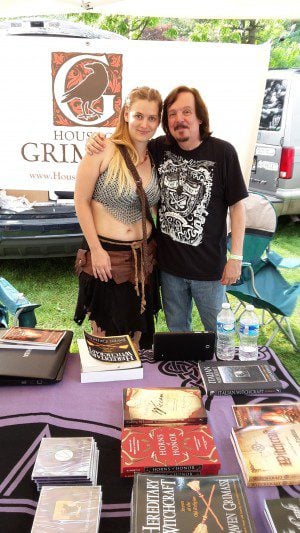
House Grimassi had a second Thorn encounter at Free Spirit Gathering, and a third just last week at PantheaCon. THEY ARE EVERYWHERE.
When I was growing up, one of my favorite bands was The Donnas. Since I first discovered music, I loved guitar-driven, heavy rock (the nineties was still a great time for this genre, and remains my favorite music decade). The Donnas delivered, and they were particularly important for me as a young woman playing in rock bands (it seems to be okay when girls want to sing or play acoustic guitar, but we collectively take issue when they want to plug in and start taking solos, even today).
One of the things that I love most about The Donnas, though, is that they made music continuously for so long—first recording when they were teenagers—that you can really clearly mark the development of their musicianship, from talented novices to skilled pros. As both an insecure teenaged girl and an aspiring guitarist, I loved listening to Allison Robertson improve from record to record, because it made me feel like I could, too. I always struggled with improvisation and soloing, and it was fantastic to see another girl—not much older than myself—working through the same steps, experimenting with the same techniques, and (clearly) being inspired by the same music. I loved that it wasn’t always perfect and polished because I could see myself in the music. The Donnas continued to be a big influence when I put together my first band, and subsequently as I continued playing music.
Like recording artists, we can often see similar developments in published writers over time. The more we write, the faster we improve. The more time passes, the better we become (if we’re practicing and minding our mistakes, that is). You also can’t help but produce different kinds of work as you age, because your writing necessarily reflects your experience, your relationship with the world, and whatever you’ve learned over the course of practice.
We Pagans love our authors. They’re the closest thing we have to celebrities, and if we’re not part of established traditions (or maybe even if we are) they often serve as de facto leaders, too. Few witch and Pagan authors have been around so long that we can trace their development the way I did Allison Robertson’s guitar skills, but Raven Grimassi is one of them. And it’s fascinating.
Grimassi’s work can be a little polarizing. People seem to either really like him, or really not like him, and the reasons for both are myriad (maybe this is true for most Pagan authors). I myself wrote some very extensive criticism and analysis of his work when I was in grad school, as I was working on a larger project concerning witchcraft and constructions of authenticity (i.e. what do people mean when they talk about some witchcraft being “real” or “traditional” as opposed to “invented”). Grimassi had just come out with Old World Witchcraft: Ancient Ways for Modern Days, and I was really taken aback by its content, especially given that the last time I’d read anything of his was back in the late nineties, with Wiccan Mysteries: Ancient Origins & Teachings. These were very different books.
These kinds of differences can make us suspicious. Here’s an author who seems to be writing from a Wiccan perspective one decade, from the platform of Stregheria the next, and now again with a new spin on traditional witchcraft, just in time for the latest witch marketing bandwagon. I’ve heard him called a “fair-weather witch” as well as the “litmus test” for what’s trending in wider witchcraft communities. If you weren’t reading carefully, I can see where a chronological list of his titles might make some people think those things. When I first had to examine Grimassi’s work critically, before I really started reading, I wondered about the same thing.
But what I ultimately saw (after more than a year spent reading pretty much everything, including the materials through Nemi Enterprises that were circulating—apparently largely in photocopied form—in the eighties) reminded me more of my teenaged guitar-obsession, and watching Allison Robertson grow into an even bigger badass than she already was (seemingly from birth). Here’s a witch who, unlike most of us, has this huge chunk of his own development out where everyone can see and evaluate it. If nothing had changed for Grimassi and his witchcraft between 1981 and 2016, that’s how we’d know he was doing something wrong.
Grimassi himself is pretty upfront about his own development throughout his books—his witch identity, the language he uses, and his personal practice. And regardless of the labels he uses to identify himself and his Craft, common threads run throughout, especially the open emphasis on a spiritual heritage, rooted in the past while being decidedly modern. That’s something I can respect, even if I want to be a stickler about the specifics of history.
As it happened, I had the unexpected pleasure of meeting Raven and Stephanie Grimassi when I was in the middle of that grad project. I couldn’t really tell you what I was expecting from such a long-standing writer with such a varied career (pomp? self-importance?), but what I got were two incredibly down-to-earth, approachable, open people who were keen to meet other witches, swap stories, and make friends. They seemed just as excited to hear from us as we were to hear from them. It’s this attitude that engenders my respect, even though Raven and I practice different kinds of witchcraft. I don’t agree with every word in every book, but I do know that he and I could sit down and talk about those disagreements openly and probably have a good time while we were at it. I respect his trajectory, just as I hope that one day other people will respect mine (thanks to the Internet, my own development will be largely available to the public down the road, too).
I think we have a tendency as media consumers—music lovers, TV watchers, book readers—to expect the things we love to stay the same. We often have a hard time when our favorite singer switches genres, or when our favorite author starts tackling very different subjects. It can feel like betrayal. As witches and Pagans, we sometimes behave as though we have similar expectations about spiritual development, whether our own or that of others (especially teachers we admire). Someone couldn’t possibly begin practicing a different kind of tradition (maybe even something other than a Pagan tradition) without it being disingenuous, right? We think of these people as turncoats, or maybe just as shallow. If they’re an author, we assume it must be about marketing (we can be a suspicious lot, particularly if we think money is involved). Likewise, we may feel disingenuous ourselves, if we start to feel pulled down another path. I’ve known people who’ve resisted whole-heartedly pursuing their own changing religious inclinations because they think they should have “gotten it right” by now, or even because they’re afraid of what their Pagan friends might think of them.
But I think change is something we should expect. I’m not sure that a thinking, creative person can practice an unchanged spiritual system for decades on end. We should improve over time (whatever that means for us), and sometimes that means ending up in a place that looks really different from where we started. You can’t practice witchcraft for forty years and expect to still be in the same place you were when you were twenty, anymore than you can practice guitar all through high school without finally getting the hang of pentatonic soloing (thank god).
Previous Post

February 17, 2016
PantheaCon Adventuring
Next Post
February 27, 2016 Satan at the Movies (and everywhere else)
Browse Our Archives
Select a Category Books Coven Life Exciting Life Things Pagan Community Personal Stuff Practical Stuff Tarot Uncategorized Wicca
Select a Month September 2021 July 2021 June 2021 March 2021 February 2021 January 2021 December 2020 November 2020 October 2020 August 2020 July 2020 May 2020 February 2020 January 2020 November 2019 September 2019 June 2019 May 2019 January 2019 July 2018 June 2018 May 2018 March 2018 February 2018 August 2017 July 2017 March 2017 January 2017 December 2016 November 2016 October 2016 August 2016 July 2016 June 2016 May 2016 April 2016 March 2016 February 2016 January 2016 December 2015 November 2015 October 2015 September 2015 August 2015 July 2015 June 2015 May 2015 April 2015
Follow Us!
TAKE THE
Religious Wisdom Quiz
How long did Israel wander in the wilderness after leaving Egypt?
Select your answer to see how you score.
Forty years Five years Ten years Seventy years
Related posts from Oathbound

Secular vs. Religious: Making Distinctions as a Witch
Serious Play: Shifting Our Perspective on Ritual

My Biggest Mistakes as a Witch
My Initial Reactions to The Craft: Legacy
TRENDING AT PATHEOS Pagan

I was recently chatting with someone on Instagram. She asked me what...

While there are many people who share their results, the end of...

On July 23, I saw Christopher Nolan's The Odyssey which is Homer’s...

As I write this two big events have just finished up. One...

Restoring the Watershed of Divine Love
Perhaps cooperation is not something we manufacture through legislation, ideology, or moral...

Many UUs don’t pray because of bad experiences in a previous religion,...
view all Pagan blogs
Ad-Free & Subscriber Log-In Subscription Support
- About Us
- 2026 Calendar
- Videos
- Podcasts
- Library of World Religions
- Faith In Media Tracker
- Advertise With Us
- Write for Us
- Privacy Policy
- Terms of Service
- Do Not Sell My Data
- Contact Us
- Radiant Digital
- Manage Newsletter Subscriptions
- Unsubscribe From Notifications
- Sitemap
Copyright 2008-2026, Patheos. All rights reserved.
Subscription Support Ad-Free & Subscriber Log-In
Follow Patheos