
BuddhistCatholicContemplativeEvangelicalGeneral ChristianHinduJewishLatter-day SaintMuslimNew VisionsProgressive Christian
Beliefs
- Buddhist
- Catholic
- Contemplative
- Evangelical
- General Christian
- Hindu
- Jewish
- Latter-day Saint
- More Voices
- Muslim
- New Visions
- Pagan
- Progressive Christian
Topics
- Religion News
- Food and Religion
- Sports and Religion
- Religious Art
- Religious Music and Entertainment
- Religious Events
- History and Religion
- Style and Religion
- Politics and Religion
- Women in Religion
- Recreation Outdoors and Religion
- Business Finance and Religion
- Careers Workplace and Religion
- Education and Religion
- Family Parenting and Religion
- Health Fitness and Religion
- Home and Religion
- Relationships and Religion
- Technology and Religion
- Travel and Religion
Columnists
- Buddhist Columnists
- Business Finance and Religion Columnists
- Careers Workplace and Religion Columnists
- Catholic Columnists
- Contemplative Columnists
- Education and Religion Columnists
- Evangelists Columnists
- Family Parenting and Religion Columnists
- General Christian Columnists
- Health Fitness and Religion Columnists
- Hindu Columnists
- History and Religion Columnists
- Home and Religion Columnists
- Jewish Columnists
- More Voices Columnists
- Latter Day Columnists
- Muslim Columnists
- New Visions Columnists
- Nonreligious Columnists
- Pagan Columnists
- Politics and Religion Columnists
- Progressive Columnists
- Recreation Outdoors and Religion Columnists
- Relationships and Religion Columnists
- Religion News Columnists
- Religious Art Columnists
- Religious Events Columnists
- Religious Music and Entertainment Columnists
- Sports and Religion Columnists
- Style and Religion Columnists
- Technology and Religion Columnists
- Travel and Religion Columnists
- Women in Religion Columnists
Resource Library
- 2026 Calendar
- Library of World Religions
- The 100 Most Holy Places on Earth
- Patheos Answers
- Podcasts
- Videos
- Faith Leaders Database
- Anglican Episcopalian
- Bahai
- Baptist
- Buddhism
- Christianity
- Confucianism
- Eastern Orthodoxy
- Hinduism
- Holiness and Pentecostal
- ISKCON
- Islam
- Judaism
- Lutheran
- Methodist
- The Church of Jesus Christ of Latter-day Saints
- New Age
- Paganism
- Presbytarian and Reformed
- Protestantism
- Religion Behind the Scenes
- Roman Catholic
- Scientology
- Shia Islam
- Sikhism
- Sufism
- Sunni Islam
- Taoism
- Zen
- See all religions
Research Tools
 Ad-Free & Subscriber Log-In Subscription Support
Ad-Free & Subscriber Log-In Subscription Support
Follow Patheos 

- Trending:
- Forgiveness
- |
- Marriage
- |
- Consciousness
- |
- Death Penalty
- |
- Election
- |
- Halloween
 Not That Kind of Christian
- Home
- Progressive Christian
- Relationships and Religion
- Faith Fallacies: “Everything Happens For a Reason”
Faith Fallacies: “Everything Happens For a Reason”
Last updated on: January 29, 2024 at 9:56 pm by Matt Schur
Faith Fallacies: “Everything Happens For a Reason” 2024-01-29T21:56:56-05:00 Matt Schur
Patheos Explore the world's faith through different perspectives on religion and spirituality! Patheos has the views of the prevalent religions and spiritualities of the world.

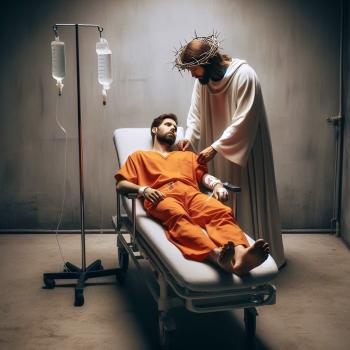
Image Credit: created with AI 1/22/24
This is the first in what I plan on being a semi-regular feature at Not That Kind of Christian, titled Faith Fallacies. As the name suggests, each feature column will examine a different saying, belief, or idea which:
- you’ll hear from a large number of Christians, and
- is flat-out wrong.
Today, we begin with one of my favorites: everything happens for a reason.
Getting a Technicality Out of the Way
Okay, so technically it’s true. Earthquakes happen because tectonic plates move. Cancer happens because cells begin dividing uncontrollably. Car accidents happen because two vehicles cannot occupy the same space at the same time.
And fires happen because there is fuel, oxygen, and heat.
A Personal Story
About ten years ago my family suffered a major house fire. We were displaced for fifteen months while we fought with the insurance company—they finally approved our claim, but by then it was January. As you might guess, January isn’t usually the optimal time for construction projects in the Upper Midwest where my family and I reside, and that particular January was no different. Eventually, when the rebuilding did get underway, it came to a grinding halt when the state experienced widespread flooding and our restoration company was (understandably) constantly being called out for flooding-related emergencies.
We were blessed with an amazing support system which surrounded us during that whole scary, uncertain, and displaced period. Eventually, everything worked out, the house was rebuilt, and we moved back in.
But one thing I kept hearing over and over and that made me just want to scream was “Everything happens for a reason.”
Don’t get me wrong—I understood that each person who said that was coming from a place of care, and I tried to honor that intention of theirs as best I could. But sometimes, to be honest, it wasn’t easy.
Comfort in Certainty
I think the reason why “everything happens for a reason” is such a popular sentiment is because human beings tend to be frightened by ambiguity. Not all people and not all the time, but that certainly does seem to be a tendency of ours. It’s why we’re drawn to black and white, yes or no, true or false, binary answers.
And it’s why “Everything happens for a reason” tends to serve the one saying it as much or more than the one hearing it.
The world has always been an ambiguous place, full of various shades of grey. And it’s only gotten worse over the last fifteen years or so with the advent of social media, making it easier to both take in information and spew it into the ether. With the democratization of information, however, has come the need for a healthy distrust of that information. Who’s sending it? What’s their angle, their bias? Can this be independently verified? Are we being told the entire story?
Ever Feel Like Pilate?
We can sometimes feel like Pontus Pilate in John 18 when he’s questioning Jesus. Jesus, as was his habit, wasn’t giving him any straight answers, so when Jesus tells him “Everyone who belongs to the truth listens to my voice,” Pilate replies, “What is truth?”
What is truth?
The writer doesn’t tell us the tone Pilate uses, but I can imagine two possible scenarios:
- he said it with frustration. “You keep speaking about the truth, but you’re couching it all in riddles. I’m listening to your voice and trying to discover the truth about what’s going on and you keep speaking about truth like it’s this simple and definite thing, but that hasn’t been the case with you. What IS truth???”
- He said it with resignation. “I’ve been trying to help you by getting to the truth of the matter, but your priests are saying one thing, Herod is saying another, and you’re just talking in riddles. I give up. What is truth?”
It seems that when it comes not just to interpreting information but to life in general, many of us may understand what Pilate was feeling. In many ways, life is easier when we can look at it with certainty. But that’s not the way life works, is it?
So we look to God for certainty.
Looking For Certainty
The explanation when we look for God to have the “put it in a box and tie it up with a bow” answer sounds like a long, run-on sentence that someone would utter breathlessly: “God is in control and is making things happen which will make other things happen and some of them are good and some may seem bad but they’re really not as long as you have faith and patience because eventually you’ll see the reason why it happened in the first place.”
Phew.
The problem is that that kind of certainty turns God into a divine puppet master, and we become little marionettes on this globe-shaped stage. Everything we do ends up being the result of a divine string being pulled.
No. Just, no.
God the Puppet Master?
If everything happens for a reason, if everything is a part of God’s plan, then not only is God a puppet master, God also is a capricious being no better than a kid with a magnifying glass redirecting sunbeams to fry helpless little ants on the ground. Because it’s the kid’s plan.
- The Haiti earthquake that killed over a hundred thousand people happened…for a reason?
- Kids are born with HIV and live nasty, brutish, and short lives in parts of the world where they can’t do anything about it…for a reason?
- Wars and other violence displace millions of refugees…for a reason?
- Kids walk into schools and shoot as many people as they can before taking their own lives…for a reason?
- A fire completely burned down part of a family’s house and damaged the rest so much that they lost most of their belongings and the house needed to be rebuilt…for a reason?
Again, no. “Everything happens for a reason” implies preplanning and forethought, as well as arranging everything to make whatever it is happen. It means bringing suffering or death to others so that I can learn a life lesson. It means making me suffer or die so that someone else can learn. It turns God into that kid with the magnifying glass.
If that’s the way God works, then I want no part of that God.
Making Meaning
On the contrary, I believe that God allows us to sometimes make meaning of events after they happen. It looks like this:
- Something bad happens as the result of natural consequences or human decisions or whatever.
- We suffer, we get angry, we grieve, we feel whatever it is we feel, and God is beside us to share in it, to hold us, cry with us, comfort us.
- Later, we can sometimes look back and see positive things that came out of the situation.
That’s not “Everything happens for a reason.” The lesson we learned or the positive thing that came out of an awful situation isn’t the reason why it happened. That doesn’t always give the same immediate sense of certainty or comfort, but in the long run, it’s healthier, because:
- It allows us a space for lament.
- It’s a better description of the way the world works, and the way that the God we see revealed in Jesus works.
And that’s why “everything happens for a reason” and “we can sometimes make meaning of what has happened” isn’t just the same thing said in a different way.
“Everything happens for a reason” fundamentally becomes a test of faith. If you have enough faith, you’ll just be able to hand it over to God and have peace. The flip side of that, though, is that if we aren’t okay with it, if we aren’t getting that sense of peace, it means our faith is lacking. Otherwise, we’d be fine because there’s an underlying reason and it’s part of a plan.
We Need Space to Lament
As anyone with any semblance of emotional intelligence can tell you, if that’s how we handle all the “bad stuff” we encounter, we’re not really handing anything over. We’re pushing it down. We’re trying to hide it from ourselves—and everybody else.
Do that long enough and with enough unresolved emotion…sooner or later it’s gonna come out sideways, and it’s probably not going to be pretty.
God created human beings with a need to lament. We need to be able to speak truth to a situation, to say “This sucks” or to be angry with God, to be profoundly sad or even despondent. Our comfort is not that there was a reason for it.
Our comfort is that no matter what happens, we are never alone. God will never leave our side. God laments alongside us, holds us closer when we cry and punch God’s chest in despair, and finally allows us to bury our face in God’s shoulder. Romans 8:35-39 is a beautiful reminder of this. Nothing in heaven or on earth can ever separate us from the love of God in Christ Jesus. We are never alone. We are always loved.
No One Is Alone
Stephen Sondheim’s musical Into the Woods is a marvelous exploration of black-and-white thinking versus living with life’s ambiguities. It begins with a melding of different fairy tales, and in the first act, it all goes the way you’d expect a fairy tale to go. However, things get pretty messy in the second act. Eventually, when the characters realize that life is more complicated than fairy tales make it out to be, they sing a song called No One Is Alone. I commend the entire song to you (as well as the entire musical!), but I’ll end with these lines:
Mother isn’t here now
Who knows what she’d say?
Who can say what’s true?
Nothing’s quite so clear now
Feel you’ve lost your way?
You are not alone
Believe me
No one is alone
No One Is Alone lyrics © Rilting Music Inc.
General Christian
Relationships and Religion
Home and Religion
Everything Happens For a Reason

About Matt Schur
After graduating with a B.A. in English from Truman State and an M.A. in Systematic Theology from Luther Seminary, Matt Schur spent years wandering in a vocational wilderness before finally discovering his calling— assisting and advocating for the marginalized and vulnerable. He currently lives out that call as a case manager and housing specialist for people experiencing homelessness. He also serves an ELCA campus ministry part-time as its music director and pianist, and has published two books of progressive Christian poetry: “Cross Sections” (2021) and “Imperfectly Perfect” (2023). His writing has been featured in “Valiant Scribe Literary Journal,” “Unlikely Stories,” and “Cathexis Northwest Press.” You can read more about the author here.
Previous Post

January 21, 2024
Why Do Christians Continue to Support Donald Trump?
Next Post

January 26, 2024 Butt Dial or Booty Call? Biblical Context Matters
Browse Our Archives
Select a Category biblical interpretation Capital Punishment Christmas Current Events Death Penalty Epiphany Evangelical Football Fundamentalist He Gets Us John light Movies Patriarchy Politics and Religion Progressive Christianity Seasonal Holidays Solstice Super Bowl taylor swift Toxic masculinity Translation Uncategorized Unhelpful phrases
Select a Month February 2024 January 2024 December 2023
TAKE THE
Religious Wisdom Quiz
What religious movement emphasizes unity among all Christians globally?
Select your answer to see how you score.
Monasticism Adventism Ecumenism Pietism
Related posts from Not That Kind of Christian

Faith Fallacies: God Won’t Give You More Than...

Who Would Jesus Execute? Christians and the Death...

Butt Dial or Booty Call? Biblical Context Matters
TRENDING AT PATHEOS Progressive Christian

What Being a Modern-Day Apostle Means to Me
In my last column, I discussed the ins and outs of modern-day...

Did Ancient China Once Worship the God of...
Across human history, a common thread weaves through the origins of the...

Love Your Neighbor – Including Earth-Kin: Lev. 19,...
God’s command to love your neighbor means acting in an ethical and...

Lead a Church Study of “Jesus and Lao...
Guest writer Jack Thomas (The Irreverent Reverend) reflects on leading his church...

Pastoral Wisdom for Responding to Sermon Pushback
Getting sermon pushback on your social justice sermon? Learn practical, Proverbs-based strategies...

Principles for Understanding the Apostolic Ministry Today
Whenever people discover that my formal ministry title is "apostle," as in...
view all Progressive Christian blogs
Ad-Free & Subscriber Log-In Subscription Support
- About Us
- 2026 Calendar
- Videos
- Podcasts
- Library of World Religions
- Faith In Media Tracker
- Advertise With Us
- Write for Us
- Privacy Policy
- Terms of Service
- Do Not Sell My Data
- Contact Us
- Radiant Digital
- Manage Newsletter Subscriptions
- Unsubscribe From Notifications
- Sitemap
Copyright 2008-2026, Patheos. All rights reserved.
Subscription Support Ad-Free & Subscriber Log-In
Follow Patheos