
BuddhistCatholicContemplativeEvangelicalGeneral ChristianHinduJewishLatter-day SaintMuslimNew VisionsProgressive Christian
Beliefs
- Buddhist
- Catholic
- Contemplative
- Evangelical
- General Christian
- Hindu
- Jewish
- Latter-day Saint
- More Voices
- Muslim
- New Visions
- Pagan
- Progressive Christian
Topics
- Religion News
- Food and Religion
- Sports and Religion
- Religious Art
- Religious Music and Entertainment
- Religious Events
- History and Religion
- Style and Religion
- Politics and Religion
- Women in Religion
- Recreation Outdoors and Religion
- Business Finance and Religion
- Careers Workplace and Religion
- Education and Religion
- Family Parenting and Religion
- Health Fitness and Religion
- Home and Religion
- Relationships and Religion
- Technology and Religion
- Travel and Religion
Columnists
- Buddhist Columnists
- Business Finance and Religion Columnists
- Careers Workplace and Religion Columnists
- Catholic Columnists
- Contemplative Columnists
- Education and Religion Columnists
- Evangelists Columnists
- Family Parenting and Religion Columnists
- General Christian Columnists
- Health Fitness and Religion Columnists
- Hindu Columnists
- History and Religion Columnists
- Home and Religion Columnists
- Jewish Columnists
- More Voices Columnists
- Latter Day Columnists
- Muslim Columnists
- New Visions Columnists
- Nonreligious Columnists
- Pagan Columnists
- Politics and Religion Columnists
- Progressive Columnists
- Recreation Outdoors and Religion Columnists
- Relationships and Religion Columnists
- Religion News Columnists
- Religious Art Columnists
- Religious Events Columnists
- Religious Music and Entertainment Columnists
- Sports and Religion Columnists
- Style and Religion Columnists
- Technology and Religion Columnists
- Travel and Religion Columnists
- Women in Religion Columnists
Resource Library
- 2026 Calendar
- Library of World Religions
- The 100 Most Holy Places on Earth
- Patheos Answers
- Podcasts
- Videos
- Faith Leaders Database
- Anglican Episcopalian
- Bahai
- Baptist
- Buddhism
- Christianity
- Confucianism
- Eastern Orthodoxy
- Hinduism
- Holiness and Pentecostal
- ISKCON
- Islam
- Judaism
- Lutheran
- Methodist
- The Church of Jesus Christ of Latter-day Saints
- New Age
- Paganism
- Presbytarian and Reformed
- Protestantism
- Religion Behind the Scenes
- Roman Catholic
- Scientology
- Shia Islam
- Sikhism
- Sufism
- Sunni Islam
- Taoism
- Zen
- See all religions
Research Tools
 Ad-Free & Subscriber Log-In Subscription Support
Ad-Free & Subscriber Log-In Subscription Support
Follow Patheos 

- Trending:
- Forgiveness
- |
- Marriage
- |
- Consciousness
- |
- Death Penalty
- |
- Election
- |
- Halloween
 Gentle Buddhism
- Home
- Buddhist
- The Secret to Unlocking All Dharma Books
The Secret to Unlocking All Dharma Books
Last updated on: February 7, 2023 at 8:00 am by Satya Robyn
The Secret to Unlocking All Dharma Books 2023-01-24T08:21:56+00:00 Satya Robyn
Patheos Explore the world's faith through different perspectives on religion and spirituality! Patheos has the views of the prevalent religions and spiritualities of the world.
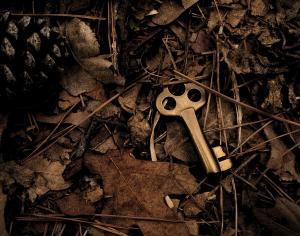
Photo by Michael Dziedzic on Unsplash
One of the things I really love is when an improbably random trail of breadcrumbs leads me to some treasure. This happened yesterday, when my partner sent me an essay they thought I might enjoy. Usually I don’t have time in the middle of the day to read essays, but a client had cancelled and so I looked at it straight away. I was intrigued enough to look up the author, Nobuo Haneda – putting his name into a search engine alongside ‘Youtube’ to see what he might look like.
I found a half-hour Dharma talk he gave more than ten years ago, with eleven likes. I hardly ever listen to Dharma talks online, preferring to receive my wisdom in written form, but there was nothing pressing on my to-do list and so I settled down to listen.
I was excited by what Haneda said (after his joke about fried chicken). He said that there are two ways of reading Buddhist texts – the first is a ‘general and objective’ way of reading, and the second way is a ‘subjective and experiential’ way of reading. “I believe that the second way of reading is an authentic way of reading text.” He went on to give several examples of Buddhist teachers who had radically reinterpreted classic texts, often in a way that the scholars dismissed, but they were using the texts instead as ways of finding out about themselves. The texts were being used as mirrors.
Our book groups
Here at the temple we have been running book groups for the past year, inspired by our study with the Bright Dawn Center of Oneness in America. When six students take notes on the same chapter in a Dharma book, we receive six completely different reflections – this person was irritated by the author’s tone, this person was reminded of a childhood holiday, and this person selected a single sentence that transformed the way they saw an ongoing problem.
Some of our students are not confident in the world of academia. They have bad memories of studying, with past trauma of getting it ‘wrong’ and being shamed by teachers or other students. How refreshing to realise that there is no ‘wrong’, but only more to be curious about. What is it about the author’s tone that has got under your skin? Who do they remind you of? Could it be possible that you have similar qualities in yourself? Tell me about your childhood holiday – what message does it have for you in your life today? What do other students in the group have to learn from that single sentence?
What is Buddhism?
During his talk, Haneda proclaims with confidence that, once we begin to progress along the path, “Buddhism is nothing but self-examination”. He repeats the phrase to drive the message home. I love this, not just because it provides a beautiful link between my sacred work as a psychotherapist and my sacred work in the temple, but because it feels true to me. I’ve carried the words of Dogen around with me for a decade now, and here they are again:
“To study the Way is to study the Self. To study the Self is to forget the self. To forget the self is to be enlightened by the myriad things.”
At the end of his talk, Haneda tells us that we shouldn’t just view Buddhist texts as mirrors to help us to study our Selves. Once we are looking through the right eyes, we can see all people and objects around us as mirrors. We are shown the mistakes we make, we forgive ourselves, and we find more compassion for others. We are shown our limited nature, we become more humble, and we turn to something bigger than us. We are shown our impermanence, and we begin to take refuge in something more reliable.
As I turn to my right, my golden Buddha statue is a mirror. As I turn to the window, the valley of trees and fields is a mirror. All of it is shining. All of it is showing me aspects of myself. All of it is leading me to enlightenment.
Go gently _/|\_
*
What books have been mirrors for you recently? What did you learn about yourself? What else in your life can you see as a mirror?
You can listen to Nobuo Haneda here: https://youtu.be/rQYiNRNVp2s
Previous Post

January 31, 2023
The Buddhist Police Inside My Head
Next Post
February 15, 2023 How to Handle our Internal Cookie Monster
Recent Comments
"Thank you Ani Kunzang. Yes, all makes sense!"
Meeting Suffering With Gentleness
"When the harsh voices echo within my mind and/or rather when I become aware of ..."
Meeting Suffering With Gentleness
"Thanks Frank. Yes, absolutely!"
Should We Help Ourselves Or Others ..."
"you are told on a airplane to put the oxygen on yourself first, its does ..."
Should We Help Ourselves Or Others ..."
Browse Our Archives
Select a Category Activism Aiko the Dog Beauty Being kind to ourselves Bombu nature Buddhist knowledge Buddhist women Climate Emergency Climate Grief Community Daily Practice Death Dharma Dharma Glimpse Dharma Study Dilemmas Gentle Buddhism Gentleness Helping others Indulgence Internal Family Systems Introvert Journalling Knowing our limits Magic Managing stress Meditation Money Parts Questions Ralph the Dog Relationships Relax Rest Self-criticism Self-reflection Social Media Spiritual practice Uncategorized Word of the Year Writing
Select a Month March 2023 February 2023 January 2023 December 2022 November 2022 December 2017 November 2017 October 2017 September 2017
TAKE THE
Religious Wisdom Quiz
Which prophet's call included a vision of an almond branch and boiling pot?
Select your answer to see how you score.
Ezekiel Daniel Isaiah Jeremiah
Related posts from Gentle Buddhism

The Buddhist Police Inside My Head
Did The Buddha Want Us To Go Gently?

Meeting Suffering With Gentleness

How to Handle our Internal Cookie Monster
TRENDING AT PATHEOS Buddhist

On Taking Refuge in the Dharma
(Here I continue the feature of sharing talks and essays by teachers...

(Continuing my intention to share talks and essays by other members of Empty...
The Subtle Art of Bowing: A Dharma Discourse
(This presentation was first offered by my dear friend Dharma Holder Tom...

Internal Family Systems Can Heal you Mentally &...
How IFS Helped Me Stop Fighting Myself Internal Family Systems (IFS) is...

The Bible No One Spoke About: A Family’s...
A mysterious family Bible, unspoken faith, and a journey from curiosity to...

How Uncertainty Can Transform Your Life in 2025
Embracing Uncertainty: A New Year’s Resolution for the Brave As 2025 approaches,...
view all Buddhist blogs
Ad-Free & Subscriber Log-In Subscription Support
- About Us
- 2026 Calendar
- Videos
- Podcasts
- Library of World Religions
- Faith In Media Tracker
- Advertise With Us
- Write for Us
- Privacy Policy
- Terms of Service
- Do Not Sell My Data
- Contact Us
- Radiant Digital
- Manage Newsletter Subscriptions
- Unsubscribe From Notifications
- Sitemap
Copyright 2008-2026, Patheos. All rights reserved.
Subscription Support Ad-Free & Subscriber Log-In
Follow Patheos