
BuddhistCatholicContemplativeEvangelicalGeneral ChristianHinduJewishLatter-day SaintMuslimNew VisionsProgressive Christian
Beliefs
- Buddhist
- Catholic
- Contemplative
- Evangelical
- General Christian
- Hindu
- Jewish
- Latter-day Saint
- More Voices
- Muslim
- New Visions
- Pagan
- Progressive Christian
Topics
- Religion News
- Food and Religion
- Sports and Religion
- Religious Art
- Religious Music and Entertainment
- Religious Events
- History and Religion
- Style and Religion
- Politics and Religion
- Women in Religion
- Recreation Outdoors and Religion
- Business Finance and Religion
- Careers Workplace and Religion
- Education and Religion
- Family Parenting and Religion
- Health Fitness and Religion
- Home and Religion
- Relationships and Religion
- Technology and Religion
- Travel and Religion
Columnists
- Buddhist Columnists
- Business Finance and Religion Columnists
- Careers Workplace and Religion Columnists
- Catholic Columnists
- Contemplative Columnists
- Education and Religion Columnists
- Evangelists Columnists
- Family Parenting and Religion Columnists
- General Christian Columnists
- Health Fitness and Religion Columnists
- Hindu Columnists
- History and Religion Columnists
- Home and Religion Columnists
- Jewish Columnists
- More Voices Columnists
- Latter Day Columnists
- Muslim Columnists
- New Visions Columnists
- Nonreligious Columnists
- Pagan Columnists
- Politics and Religion Columnists
- Progressive Columnists
- Recreation Outdoors and Religion Columnists
- Relationships and Religion Columnists
- Religion News Columnists
- Religious Art Columnists
- Religious Events Columnists
- Religious Music and Entertainment Columnists
- Sports and Religion Columnists
- Style and Religion Columnists
- Technology and Religion Columnists
- Travel and Religion Columnists
- Women in Religion Columnists
Resource Library
- 2026 Calendar
- Library of World Religions
- The 100 Most Holy Places on Earth
- Patheos Answers
- Podcasts
- Videos
- Faith Leaders Database
- Anglican Episcopalian
- Bahai
- Baptist
- Buddhism
- Christianity
- Confucianism
- Eastern Orthodoxy
- Hinduism
- Holiness and Pentecostal
- ISKCON
- Islam
- Judaism
- Lutheran
- Methodist
- The Church of Jesus Christ of Latter-day Saints
- New Age
- Paganism
- Presbytarian and Reformed
- Protestantism
- Religion Behind the Scenes
- Roman Catholic
- Scientology
- Shia Islam
- Sikhism
- Sufism
- Sunni Islam
- Taoism
- Zen
- See all religions
Research Tools
 Ad-Free & Subscriber Log-In Subscription Support
Ad-Free & Subscriber Log-In Subscription Support
Follow Patheos 

- Trending:
- Forgiveness
- |
- Marriage
- |
- Consciousness
- |
- Death Penalty
- |
- Election
- |
- Halloween
 The Northampton Seminar
- Home
- Evangelical
- Religion News
- How to read the Good Friday readings
How to read the Good Friday readings
Last updated on: August 17, 2022 at 11:24 am by Gerald McDermott
How to read the Good Friday readings 2022-08-17T11:24:29-04:00 Gerald McDermott
Patheos Explore the world's faith through different perspectives on religion and spirituality! Patheos has the views of the prevalent religions and spiritualities of the world.
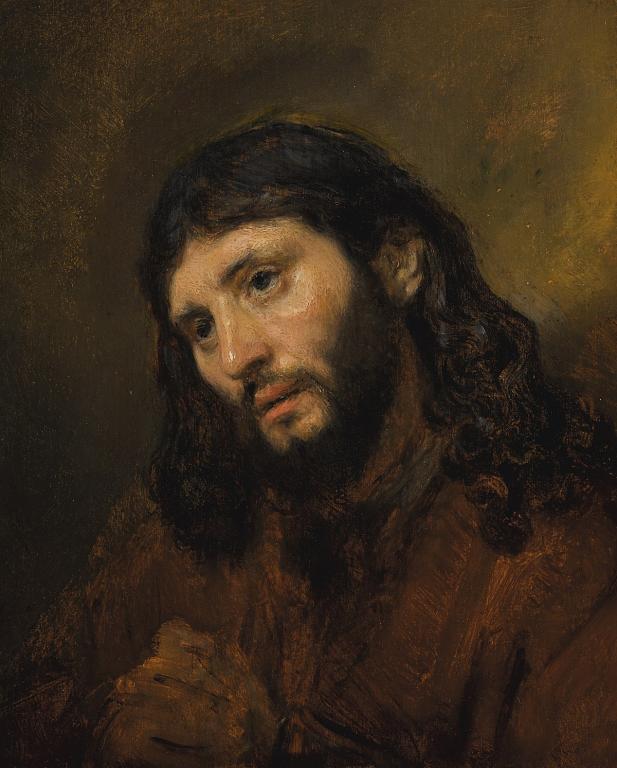 Throughout the Middle Ages and into the modern period, and even today in some areas of the world, Jews have dreaded Holy Week. They remember the many occasions when Christians have poured out of churches after Good Friday services and attacked Jewish people and their homes and synagogues.
Why have Christians done these horrible things? Of course, there has always been residual anti-semitism. But Good Friday readings became triggers that convinced Christians on that holy day that Jews were—and are!—Christ-killers. Typically those readings have been from the gospel of John and included such lines as
[Pilate] said to the Jews, “Behold your king!” They cried out, “Away with him, away with him, crucify him! (John 19.14b-15a)
For more than a millennium Christians have heard lines like these on Good Friday and concluded that Scripture was telling them that all the Jews in Jesus’ day called for his crucifixion.
Especially when they remembered other lines from John, they concluded that even Jews today are condemned by the Bible. Lines such as these from John:
Jesus said to [the Jews] . . . . You are of your father the devil, and your will is to do your father’s desires. (John 8.42a, 44)
It turns out that all of these false conclusions were based on bad translations. In almost every case the word Ioudaioi should have been translated “Judean leaders controlling the temple establishment.” These were Sadducees who hated Jesus because they were jealous of his popularity.
Confusion has ruled the translation of Ioudaioi because the word can also mean “Jews,” and literary context determines the proper meaning. More and more scholars are realizing that the literary context of John’s gospel shows that in most cases John (a Jew!) meant Ioudaioi to refer to those Sadducean leaders in Jerusalem, not Jews in the rest of Jerusalem and certainly not all Jews.
John’s gospel actually traces two groups of Ioudaioi, those in Judea who hated him and those in Judea who loved him. Consider John 10.19 and 11.45: “There was again a division among the Ioudaioi because of these words. Many of them said, ‘He has a demon, and is mad; why do you listen to him?’ Others said, ‘These are not the words of a demon-possessed person. Would such a person be able to open the eyes of the blind?’” . . . . Many of the Ioudaioi therefore, who had come with Mary and saw what Jesus did, believed in him.”
There is more reason to think that John was not anti-Israel or anti-Jewish. He uses the word “Israel” positively in chapter 1 when he says John the Baptist revealed the messiah to Israel, and that Nathanael was an Israelite in whom there was no deceit (Jn 1:31, 47). And in 4:22 he shows enormous respect for the Jewish people and their religion: “Salvation is from the Jews.” At other points in his gospel, his use of Ioudaioi is neutral: he says “many of the Ioudaioi went to Martha and Mary to mourn with them concerning their brother” Lazarus (11:19), and that Jesus told the high priest that he taught openly at the Temple, “where many Ioudaioi gather” (18:20). Therefore Jesus’ condemnation of some Ioudaioi (for example, “You are of your father the devil” [Jn 8:44]) was just that—a selective attack on certain leaders in Jerusalem, the ones who increasingly opposed him and finally put him to death.
So the correct translation of the two passages above are as follows.
[Pilate] said to the Judean leaders, “Behold your king!” They cried out, “Away with him, away with him, crucify him! (John 19.14b-15a)
Jesus said to [the Judean leaders] . . . . You are of your father the devil, and your will is to do your father’s desires. (John 8.42a, 44)
Most ACNA churches use the ESV translation, which unfortunately perpetuates this bad translation history. Since the ACNA lectionary reading for Good Friday is John 18 & 19.1-37, I will reproduce the ESV readings below but with requisite changes. I have also added the last paragraph of John 19 because it is a Holy Saturday reading. If you are a rector, may I ask you to give these translations below to your readers? [Please note where words are split on the right margin.]
18 When Jesus had spoken these words, *n*he went out with his disciples across *o*the brook Kidron, where there was a garden, which he and his disciples entered. 2 Now Judas, who betrayed him, also knew *p*the place, for *q*Jesus often met there with his disciples. 3 *r*So Judas, having procured a band of soldiers and some officers from the chief priests and the Pharisees, went there with lanterns and torches and weapons. 4 Then Jesus, sknowing all that would happen to him, came forward and said to them, t“Whom do you seek?” 5 They answered him, “Jesus of Nazareth.” Jesus said to them, “I am he.”1 Judas, who betrayed him, was standing with them. 6 uWhen Jesus2 said to them, “I am he,” they drew back and fell to the ground. 7 So he asked them again, t“Whom do you seek?” And they said, “Jesus of Nazareth.” 8 Jesus answered, “I told you that I am he. So, if you seek me, let these men go.” 9 *v*This was to fulfill the word that he had spoken: “Of those whom you gave me I have lost not one.” 10 Then Simon Peter, whaving a sword, drew it and struck the high priest’s servant3 and cut off his right ear. (The servant’s name was Malchus.) 11 So Jesus said to Peter, “Put your sword into its sheath; *x*shall I not drink the cup that the Father has given me?”
Jesus Faces Annas and Caiaphas
12 So the band of soldiers and their captain and the officers of the Judean leaders4 arrested Jesus and bound him. 13 First they *y*led him to *z*Annas, for he was the father-in-law of *a*Caiaphas, who was high priest that year. 14 It was Caiaphas who had advised the Judean leaders *b*that it would be expedient that one man should die for the people.
Peter Denies Jesus
15 *c*Simon Peter followed Jesus, and so did another disciple. Since that disciple was known to the high priest, he entered with Jesus into the courtyard of the high priest, 16 *d*but Peter stood outside at the door. So the other disciple, who was known to the high priest, went out and spoke to the servant girl who kept watch at the door, and brought Peter in. 17 eThe servant girl at the door said to Peter, “You also are not one of this man’s disciples, are you?” He said, “I am not.” 18 Now the servants5 and officers had made a charcoal fire, because it was cold, and they were standing and warming themselves. *f*Peter also was with them, standing and warming himself.
The High Priest Questions Jesus
19 *g*The high priest then questioned Jesus about his disciples and his teaching. 20 Jesus answered him, “I have spoken *h*openly *i*to the world. I have always taught in synagogues and in the temple, where all Judeans come together. *j*I have said nothing in secret. 21 Why do you ask me? Ask those who have heard me what I said to them; they know what I said.” 22 When he had said these things, one of the officers standing by struck Jesus with his hand, saying, k“Is that how you answer the high priest?” 23 Jesus answered him, “If what I said is wrong, bear witness about the wrong; but if what I said is right, why do you strike me?” 24 *l*Annas then sent him bound to *l*Caiaphas the high priest.
Peter Denies Jesus Again
25 *m*Now Simon Peter was standing and warming himself. So they said to him, “You also are not one of his disciples, are you?” He denied it and said, “I am not.” 26 One of the servants of the high priest, a relative of *n*the man whose ear Peter had cut off, asked, “Did I not see you *o*in the garden with him?” 27 Peter again denied it, and *p*at once a rooster crowed.
Jesus Before Pilate
28 *q*Then they led Jesus *r*from the house of Caiaphas to sthe governor’s headquarters.6 It was early morning. They themselves did not enter the governor’s headquarters, *t*so that they would not be defiled, *u*but could eat the Passover. 29 *v*So Pilate went outside to them and said, “What accusation do you bring against this man?” 30 They answered him, “If this man were not doing evil, we would not have delivered him over to you.” 31 Pilate said to them, w“Take him yourselves and judge him by your own law.” The Judean leaders said to him, “It is not lawful for us to put anyone to death.” 32 *x*This was to fulfill the word that Jesus had spoken *y*to show by what kind of death he was going to die.
My Kingdom Is Not of This World
33 *z*So Pilate entered his headquarters again and called Jesus and said to him, a“Are you the King of the Jewish people?” 34 Jesus answered, “Do you say this of your own accord, or did others say it to you about me?” 35 Pilate answered, “Am I Jewish? Your own nation and the chief priests have delivered you over to me. What have you done?” 36 Jesus answered, b“My kingdom *c*is not of this world. If my kingdom were of this world, *d*my servants would have been fighting, that *e*I might not be delivered over to Judean leaders. But my kingdom is not from the world.” 37 Then Pilate said to him, “So you are a king?” Jesus answered, f“You say that I am a king. *g*For this purpose I was born and for this purpose *hI have come into the world—i*to bear witness to the truth. *j*Everyone who is *k*of the truth *l*listens to my voice.” 38 Pilate said to him, “What is truth?”
After he had said this, *m*he went back outside to the Jews and told them, n“I find no guilt in him. 39 oBut you have a custom that I should release one man for you at the Passover. So do you want me to release to you the King of the Jewish people?” 40 They cried out again, p“Not this man, but Barabbas!” Now Barabbas was a robber.7
Jesus Delivered to Be Crucified
19 Then Pilate took Jesus and *q*flogged him. 2 *r*And the soldiers twisted together a crown of thorns and put it on his head and arrayed him in a purple robe. 3 They came up to him, saying, “Hail, King of the Jewish people!” and struck him with their hands. 4 Pilate went out again and said to them, “See, I am bringing him out to you that you may know that *s*I find no guilt in him.” 5 So Jesus came out, wearing *t*the crown of thorns and the purple robe. Pilate said to them, u“Behold the man!” 6 When the chief priests and the officers saw him, they cried out, “Crucify him, crucify him!” Pilate said to them, v“Take him yourselves and crucify him, for wI find no guilt in him.” 7 The Jews1 answered him, “We have a law, and *x*according to that law he ought to die because *y*he has made himself the Son of God.” 8 When Pilate heard this statement, *z*he was even more afraid. 9 *a*He entered his headquarters again and said to Jesus, b“Where are you from?” But *c*Jesus gave him no answer. 10 So Pilate said to him, “You will not speak to me? Do you not know that I have authority to release you and authority to crucify you?” 11 Jesus answered him, d“You would have no authority over me at all unless it had been given you from above. Therefore *e*he who delivered me over to you *f*has the greater sin.”
12 From then on *g*Pilate sought to release him, but the Judean leaders cried out, “If you release this man, you are not Caesar’s friend. *h*Everyone who makes himself a king opposes Caesar.” 13 So when Pilate heard these words, he brought Jesus out and sat down on ithe judgment seat at a place called The Stone Pavement, and in Aramaic2 Gabbatha. 14 Now it was jthe day of Preparation of the Passover. It was about the sixth hour.3 He said to the
Judeans gathered there, k“Behold your King!” 15 They cried out, l“Away with him, away with him, crucify him!” Pilate said to them, “Shall I crucify your King?” The chief priests answered, “We have no king but Caesar.” 16 *m*So he *n*delivered him over to them to be crucified.
The Crucifixion
So they took Jesus, 17 and *o*he went out, *p*bearing his own cross, to the place called The Place of a Skull, which in Aramaic is called Golgotha. 18 *q*There they crucified him, and with him two others, one on either side, and Jesus between them. 19 Pilate *r*also wrote an inscription and put it on the cross. It read, “Jesus of Nazareth, the King of the Jewish people.” 20 Many of the Jews read this inscription, for *s*the place where Jesus was crucified was near the city, and it was written in Aramaic, in Latin, and in Greek. 21 So the chief priests of the Jewish people said to Pilate, “Do not write, ‘The King of the Jews,’ but rather, ‘This man said, I am King of the Jews.’” 22 Pilate answered, t“What I have written I have written.”
23 uWhen the soldiers had crucified Jesus, they took his garments and divided them into four parts, one part for each soldier; also his tunic.4 But the tunic was seamless, woven in one piece from top to bottom, 24 so they said to one another, “Let us not tear it, but cast lots for it to see whose it shall be.” *v*This was to fulfill the Scripture which says,
w“They divided my garments among them,
and for my clothing they cast lots.”
So the soldiers did these things, 25 *x*but standing by the cross of Jesus were his mother and his mother’s sister, Mary the wife of Clopas, and Mary Magdalene. 26 When Jesus saw his mother and *y*the disciple whom he loved standing nearby, he said to his mother, z“Woman, behold, your son!” 27 Then he said to the disciple, “Behold, your mother!” And from that hour the disciple took her to *a*his own home.
The Death of Jesus
28 After this, Jesus, knowing that all was now *bfinished, said (v*to fulfill the Scripture), c“I thirst.” 29 A jar full of sour wine stood there, *d*so they put a sponge full of the sour wine on a hyssop
branch and held it to his mouth. 30 When Jesus had received the sour wine, he said, e“It is finished,” and he bowed his head and *f*gave up his spirit.
Jesus’ Side Is Pierced
31 Since it was *g*the day of Preparation, and *h*so that the bodies would not remain on the cross on the Sabbath (for that Sabbath was *i*a high day), the Jewish people asked Pilate that their legs might be broken and that they might be taken away. 32 So the soldiers came and broke the legs of the first, and of the other *j*who had been crucified with him. 33 But when they came to Jesus and saw that he was already dead, they did not break his legs. 34 But one of the soldiers pierced his side with a spear, and at once there came out *k*blood and water. 35 *lHe who saw it has borne witness—mhis testimony is true, and he knows that he is telling the truth—n*that you also may believe. 36 *o*For these things took place that the Scripture might be fulfilled: p“Not one of his bones *q*will be broken.” 37 And again another Scripture says, r“They will look on him whom they have pierced.”
Jesus Is Buried
38 *s*After these things Joseph of Arimathea, who was a disciple of Jesus, but secretly *t*for fear of the Judean leaders, asked Pilate that he might take away the body of Jesus, and Pilate gave him permission. So he came and took away his body. 39 uNicodemus also, who earlier had come to Jesus5 by night, came *v*bringing a mixture of wmyrrh and aloes, about seventy-five pounds6 in weight. 40 So they took the body of Jesus and *x*bound it in *y*linen cloths with the spices, as is the burial custom of the Jewish people. 41 Now in the place where he was crucified there was a *z*garden, and *a*in the garden a new tomb *b*in which no one had yet been laid. 42 So because of the Jewish *c*day of Preparation, *d*since the tomb was close at hand, they laid Jesus there.
Catholic
Eastern Orthodox
General Christian
Jewish
Previous Post

November 12, 2021
Anglicanism and the Brothers K
Next Post
April 14, 2022 Christians, race, and CRT: a response to David French
Browse Our Archives
Select a Category Uncategorized
Select a Month March 2023 November 2022 October 2022 August 2022 July 2022 June 2022 May 2022 April 2022 November 2021 October 2021 August 2021 July 2021 June 2021 May 2021 April 2021 March 2021 February 2021 January 2021 December 2020 November 2020 October 2020 September 2020 July 2020 June 2020 April 2020 March 2020 February 2020 January 2020 August 2019 July 2019 May 2019 April 2019 February 2019 January 2019 December 2018 November 2018 October 2018 August 2018 July 2018 June 2018 May 2018 April 2018 March 2018 February 2018 January 2018 December 2017 November 2017 October 2017 September 2017 August 2017 July 2017 June 2017 May 2017 April 2017 March 2017 February 2017 January 2017 December 2016 November 2016 October 2016 September 2016 August 2016 July 2016 June 2016 May 2016 April 2016 March 2016 February 2016 January 2016 December 2015 November 2015 October 2015 September 2015 August 2015 July 2015 June 2015 May 2015 April 2015 March 2015 February 2015 January 2015 December 2014 November 2014 October 2014 September 2014 August 2014 July 2014 June 2014 May 2014 April 2014 March 2014 February 2014 January 2014 December 2013 November 2013 October 2013 September 2013 August 2013 July 2013 June 2013 May 2013 April 2013 March 2013 February 2013 January 2013 December 2012 November 2012 October 2012 September 2012 August 2012 July 2012 June 2012 May 2012 April 2012 March 2012 February 2012 January 2012 December 2011 November 2011 October 2011 September 2011 August 2011 July 2011 June 2011 May 2011 April 2011 March 2011 February 2011 January 2011 December 2010 November 2010 October 2010
Follow Us!
TAKE THE
Religious Wisdom Quiz
What does "Gideon" mean in Hebrew?
Select your answer to see how you score.
Hewer Warrior God is my Strength Redeemer
Related posts from The Northampton Seminar


Interview on what difference Jesus' Jewishness makes and...

News from Israel--the election and Messianic Jews

The third rail in conservative churches
TRENDING AT PATHEOS Evangelical

The REST of Your Life: A Creative Wrestles...
This week I had a conversation with a good friend from church....

How the author of the world's best hymn...
I've been working with John Newton for a while now. This makes...

Long before this Lectio Divina, Psalm 130 - the song - started...

What About the Trees? Another Living Parable
After I finished writing the last article about falling leaves as a...

Why Classical Education Is a Conversation, Not a...
Come and Read: Joy in Classical Education When I was a little...

Cornell University has received a great deal of negative publicity and intense...
view all Evangelical blogs
Ad-Free & Subscriber Log-In Subscription Support
- About Us
- 2026 Calendar
- Videos
- Podcasts
- Library of World Religions
- Faith In Media Tracker
- Advertise With Us
- Write for Us
- Privacy Policy
- Terms of Service
- Do Not Sell My Data
- Contact Us
- Radiant Digital
- Manage Newsletter Subscriptions
- Unsubscribe From Notifications
- Sitemap
Copyright 2008-2026, Patheos. All rights reserved.
Subscription Support Ad-Free & Subscriber Log-In
Follow Patheos