
BuddhistCatholicContemplativeEvangelicalGeneral ChristianHinduJewishLatter-day SaintMuslimNew VisionsProgressive Christian
Beliefs
- Buddhist
- Catholic
- Contemplative
- Evangelical
- General Christian
- Hindu
- Jewish
- Latter-day Saint
- More Voices
- Muslim
- New Visions
- Pagan
- Progressive Christian
Topics
- Religion News
- Food and Religion
- Sports and Religion
- Religious Art
- Religious Music and Entertainment
- Religious Events
- History and Religion
- Style and Religion
- Politics and Religion
- Women in Religion
- Recreation Outdoors and Religion
- Business Finance and Religion
- Careers Workplace and Religion
- Education and Religion
- Family Parenting and Religion
- Health Fitness and Religion
- Home and Religion
- Relationships and Religion
- Technology and Religion
- Travel and Religion
Columnists
- Buddhist Columnists
- Business Finance and Religion Columnists
- Careers Workplace and Religion Columnists
- Catholic Columnists
- Contemplative Columnists
- Education and Religion Columnists
- Evangelists Columnists
- Family Parenting and Religion Columnists
- General Christian Columnists
- Health Fitness and Religion Columnists
- Hindu Columnists
- History and Religion Columnists
- Home and Religion Columnists
- Jewish Columnists
- More Voices Columnists
- Latter Day Columnists
- Muslim Columnists
- New Visions Columnists
- Nonreligious Columnists
- Pagan Columnists
- Politics and Religion Columnists
- Progressive Columnists
- Recreation Outdoors and Religion Columnists
- Relationships and Religion Columnists
- Religion News Columnists
- Religious Art Columnists
- Religious Events Columnists
- Religious Music and Entertainment Columnists
- Sports and Religion Columnists
- Style and Religion Columnists
- Technology and Religion Columnists
- Travel and Religion Columnists
- Women in Religion Columnists
Resource Library
- 2026 Calendar
- Library of World Religions
- The 100 Most Holy Places on Earth
- Patheos Answers
- Podcasts
- Videos
- Faith Leaders Database
- Anglican Episcopalian
- Bahai
- Baptist
- Buddhism
- Christianity
- Confucianism
- Eastern Orthodoxy
- Hinduism
- Holiness and Pentecostal
- ISKCON
- Islam
- Judaism
- Lutheran
- Methodist
- The Church of Jesus Christ of Latter-day Saints
- New Age
- Paganism
- Presbytarian and Reformed
- Protestantism
- Religion Behind the Scenes
- Roman Catholic
- Scientology
- Shia Islam
- Sikhism
- Sufism
- Sunni Islam
- Taoism
- Zen
- See all religions
Research Tools
 Ad-Free & Subscriber Log-In Subscription Support
Ad-Free & Subscriber Log-In Subscription Support
Follow Patheos 

- Trending:
- Forgiveness
- |
- Marriage
- |
- Consciousness
- |
- Death Penalty
- |
- Election
- |
- Halloween
 The Northampton Seminar
- Home
- Evangelical
- Religion News
- Theopolis reviews Race and Covenant
Theopolis reviews Race and Covenant
Last updated on: April 15, 2021 at 2:33 pm by Gerald McDermott
Theopolis reviews Race and Covenant 2021-04-15T14:33:17-04:00 Gerald McDermott
Patheos Explore the world's faith through different perspectives on religion and spirituality! Patheos has the views of the prevalent religions and spiritualities of the world.
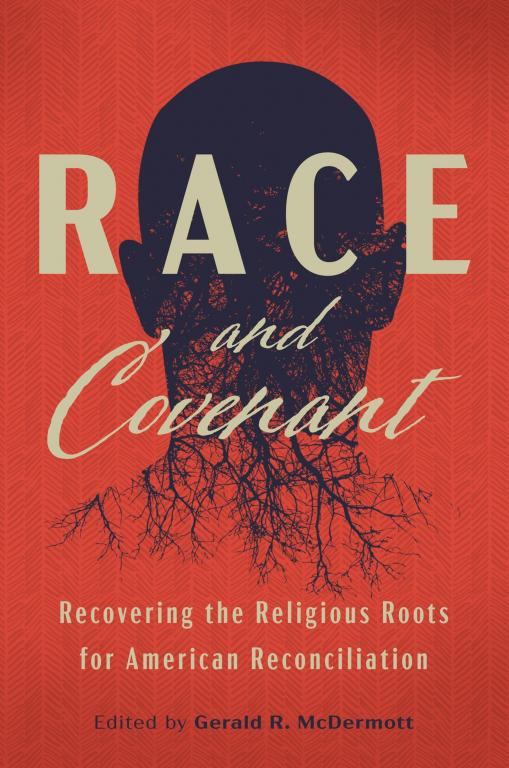 A group of notable thinkers gathered to discuss biblical resources for addressing racial conflict in America in February 2019 at Samford University in Birmingham. Race and Covenant, the product of these scholars’ efforts, offers an analysis of America’s race dilemma and how to overcome it based on the idea of national covenant. The essays are even more relevant after the events of summer 2020, amidst the ensuing public discussion on race, justice, and social reform. Each essay stands alone, but the work expresses a sustained argument for the idea of national covenant as a framework for healing and redemption from the racial wounds and sins of our past.
Gerald McDermott argues in his introduction that, “our racial dilemma cannot be understood properly without spiritual and religious analysis” (p. xxx). Further, the biblical idea of covenant and the “national covenant tradition” offers badly needed resources for healing and reconciliation (p. xvi). The contributors offer a Scripture-soaked collection of efforts to recover these resources. Biblical quotations and exegesis undergird analysis from a variety of disciplinary perspectives: theological, historical, sociological, economic, and practical. Themes of covenant, exile, and renewal bind the parts into a whole.
The idea of national covenant rests on two premises McDermott lays out:
(a) God deals with whole nations as nations, and (b) he enters into more intimate relationships with societies that claim him as Lord. In other words, God not only deals with individuals during their lives and at the final judgment but also deals providentially with every corporate people and enters into special relationship with certain whole societies. (p. xvii)
God’s covenant with Israel is the paradigmatic example of a national covenant, but God also forms special relationships with other peoples (p. xvii, Amos 9:7). Over the long term, God blesses nations that commit to keeping the moral law, the essence of which is expressed in the Ten Commandments. He punishes nations that flout it. All this relates not to eternal judgment, but to blessings and curses in this life.
The idea of an American national covenant along these lines refers not to a particular ceremony or event, a particular point at which Americans established such a covenant, but to an ethos expressed in documents like the Declaration of Independence, in which the signers proclaimed that “all men are created equal,” endowed by the creator with unalienable rights. Christian doctrine is conspicuously absent from the Declaration and the U.S. Constitution, but political sermons and court cases from the founding era and the first century of U.S. history, along with prayer day proclamations and addresses by George Washington, for example, provide evidence of belief among elites and lay people that America is, in some sense Christian or at least under God, accountable to divine judgment. Prominent members of the founding generation including Thomas Jefferson and Benjamin Rush connected the idea of national accountability to God with the institution of slavery, suggesting the practice would incur divine judgment.
American political and religious leaders who significantly advanced racial justice in our history also appealed to ideas connected with national covenant. Frederick Douglass, Abraham Lincoln, and Martin Luther King Jr. all expressed some form of the idea of national covenant. They believed slavery violated America’s founding principles and the moral law. The Bible does not outright condemn slavery, a fact not lost on slave owners in the American South. Still, laws in the Hebrew Bible, such as the practice of jubilee, mitigated the arbitrary power of slave owners possessed, and Genesis introduced the idea of imago dei, a basis for universal human dignity. Teachings in the New Testament emphasized human equality before God (Gal. 3:28). As Carol Swain notes, church fathers like John Chrysostom and Augustine of Hippo thought of slavery as “unchristian” and a result of sin (p. 183).
Douglass and Lincoln interpreted the Civil War, in which upwards of 600,000 people died, as divine judgment for the sin of slavery. King appealed to Americans’ consciences, calling Americans to come together in renewal of the national covenant and pursuit of the Beloved Community in which all men and women are truly equal. McDermott describes Douglass as one of the great expositors of the national covenant idea as applied in the American context, a prophet of divine judgment:
Racism is sin, and one of our national sins— perhaps our greatest—has been slavery. … Frederick Douglass was right. America has been sent into a kind of exile because of this massive iniquity against God’s covenant with this nation. Our continuing racial conflicts show that this exile continues. What must we do to come out of exile? (p. xxx)
Exile is one form of punishment God inflicts on covenant nations like Israel. A sign of divine disfavor, exile is also a sign of God’s longsuffering patience. Exile is an opportunity to turn back to God and renew covenant. The present racial strife is a sign of continued exile for breaking covenant. The question is how to return from exile and renew the covenant.
Taken together, the essays in the work suggest two answers. First, the problem of historic racial injustice and current racial tensions requires effort for reconciliation and healing, primarily on the part of citizens, not government. Religious groups, particularly Christians and Jews, should especially understand themselves as stewards of an American national covenant based on a commitment to equal human dignity. Second, renewing the covenant requires discarding approaches to racial justice that draw on “identity politics,” roughly defined as an emphasis on grievance-based group affiliation as primary to identity. Explanations of racial disparities that foreground “white supremacy” and suggest as a remedy dismantling it have become commonplace in Christian discourse, especially since last summer. McDermott rejects the “pessimism” pervading discourse on race and two ideas on which it is based: “the presumption that the only racial problem in America is white racism” and the assumption that “more government money and legislation are the best solutions to the problem” (p. xxix). Rather, he argues, we need deeper and richer resources for healing and reconciliation.
Loury’s chapter exemplifies both elements of argument. He analogizes our national situation vis-à-vis persistent racial disparities and the degraded state of many poor black communities to the devastated city walls of Jerusalem in the book of Nehemiah:
National covenant is a powerful religious concept that involves all persons in a society. America has experienced a kind of exile in its covenant because we have divided into “us” and “them.” We have not taken ownership of the covenant for ourselves. We have permitted false conceptions of race to get us off the hook in terms of mutual obligation. By seeing ourselves as belonging to distinct races, we have deceived ourselves into ignoring the social obligations of the covenant. (p. 122)
God called Nehemiah to rebuild the city walls, and we in America are called to rebuild the walls of our common life. The problem of how to deal with the legacy of slavery and racial subordination, he argues, is more about how we understand ourselves in relation to one another than about recompense for past injustice: “We Americans are all one people, bound together under a national covenant and for this reason responsible to one another in a deep and ongoing way.” Loury echoes McDermott’s point about the inadequacy of government solutions: “Our national salvation lies mainly in our redefining identities, not in redistributing resources” (p. 122).
Stewards of National Covenant
Several essays highlight the role of religious communities in stewarding the national covenant. Such communities are best positioned to appreciate covenant with the God of the Bible, the racial inclusivity of which Berman beautifully illustrates in his interpretation of the book of Ruth as the Book of Boaz, who courageously welcomes a racial outsider. Mark Tooley and James Patterson show how ideas associated with divine judgment and providence formed American religious sensibilities well into the twentieth century, informing liberal Protestants’ Social Gospel-based reform efforts. Martin Luther King Jr. was among the last of the liberal Protestants to invoke the idea of divine judgment. Patterson’s discussion of King’s theology and political strategy reminds us that the church, black churches in particular, were central to King’s moral and strategic vision of non-violent action for racial justice. Osvaldo Padilla’s contribution suggests Hispanic churches, themselves multiethnic, offer an embodied example for broader emulation.
Other authors highlight the role of religious communities in relation to social policy concerns of poverty and family breakdown. Jacqueline Rivers argues that churches have an important role to play, in tandem with public policy, in restoring the covenant of marriage in black communities, buckling under pressures stemming from the legacy of slavery and mass incarceration, and in restoring marriage more generally. Alveda King and Evan Musgraves link pursuit of racial justice with opposition to abortion, pointing out the striking racial disparity in abortions. Once again, religious communities have a central role to play in calling for covenant renewal and building a “culture where every child of every stage is loved” (p. 173).
Against Identity Politics
In promoting national covenant as a resource for healing and reconciliation, Race and Covenant challenges approaches to the racial dilemma broadly captured by the term “identity politics.” Such alternatives focus on obtaining justice in the form of recompense for descendants of oppressed and marginalized groups. Several contributors suggest emphasizing distinct racial identities, as opposed to shared national and human identity, prevents inter-racial reconciliation and leads instead to a spiral of identity-based separatism and conflict.
R. Mitchell Rotkin’s essay on covenantal renewal and reconciliation—distinct from forgiveness—between descendants of oppressed groups and their oppressors, launches the first salvo against identity politics. Rotkin argues that holding past injustices against present generations and emphasizing racial distinction as the source of identity precludes the possibility of reconciliation. Joshua Mitchell continues the critique of identity politics, the core of which he describes as an improper division between transgressors and innocents, improper because it denies shared culpability and susceptibility to sin. Victimhood forms the basis of identity for the descendants of formerly oppressed groups, focusing politics on a contest to claim victimhood instead of constructive effort to build and better our common life. Swain rejects all forms of racial supremacy and racial divisiveness, including anti-white racism, instead promoting national identity and unity.
Derryck Green’s entry argues that black churches’ acceptance of the Black Power movement’s racial justice narrative, mediated through the black liberation theology of James Cone, obstructs racial reconciliation. Such narratives, Green argues, supplanted King’s vision of the Beloved Community, more in keeping with the biblical message and American national covenant. Green registers profound disagreement with scholars and writers including Jemar Tisby and Jim Wallis. Their emphasis on confronting whites with the history of racism, Green argues, cannot bring reconciliation but only perpetuate a sense of victimhood among black Christians and encourage endless, pointless, self-righteous apologizing from white Christians. Green urges black Christians to simply forgive: “Jesus was very clear that the obligation of his followers is to upend the normal cycle of reciprocating anger, antipathy, and hostility. As his disciples, black folks in the churches must initiate reconciliation, and that begins with forgiveness” (p. 219).
Taking National Covenant Seriously
Even friendly reviewers of Race and Covenant like Carl R. Trueman express unease with the language of national covenant, due to its “connotations of national hubris and of elect nations.” In ascribing to the nation and nations an important role in God’s providential purposes, the national covenant idea has some overlap with a complex of beliefs some sociologists and political analysts are calling “Christian nationalism.” Yet, while taking nations seriously as a part of God’s providential purposes, national covenant theology as presented here does not indulge in triumphalism about America, nor does it place the nation above God or the faith community in the life of the believer. National covenant does not whitewash history but interprets the history of racism, slavery, and Jim Crow as serious violations of the covenant incurring divine punishment and proverbial exile. McDermott makes a strong case for national covenant as a biblical idea, mainstream among Jews and Christians for most of their history and abandoned among American theologians only after the debacle of the Vietnam War.
The danger Trueman raises of religious believers over-identifying with the nation and assigning it too great a role in God’s providential purposes is a real one. Nevertheless, if we can avoid this danger, the national covenant idea is a possible corrective both to uncritical Christian nationalism and to excessive pessimism about American political ideals and institutions. Taken as an affirmation of the reality of corporate sin and divine judgment, along with the benefits of covenantal thinking and language for relating to one another in society, the national covenant tradition offers valuable resources for reconciliation and renewal in American society.
Renewing Covenant
Let me raise an objection to the argument in Race and Covenant that identity and grievance-based approaches to racial justice obstruct healing and reconciliation, divisively perpetuating racial separatism. There is a case to be made, neither aimed at perpetuating victimhood nor extortive of white guilt, that white Americans and Christians have exhibited insufficient acknowledgment of past complicity in systemic racism. Anthony Bradley’s argument for state level “transitional justice” initiatives to heal the wounds of Jim Crow articulates this case. In his account, the failure to fully and openly recognize the extent of the violence and economic injustice state governments and citizens perpetrated against blacks in the post-Reconstruction period has prevented healing through repentance and forgiveness. Bradley makes a point consistent with Green’s analysis of radical black theology in his book Liberating Black Theology: “the major flaw of black liberation theology is that it views people perpetually as victims” (p. 14). Like the contributors to Race and Covenant, he seeks healing, peace, and reconciliation. He, too, suggests legislation and government programs have been insufficient for real healing, but that healing may require further acknowledgment on the part of white Christians regarding the extent of past injustice and the ways it affects our lives in the present. Such acknowledgment may be necessary to restore churches’ moral authority and fitness for covenant stewardship.
If, as Green writes, black Christians ought to practice forgiveness and take initiative on reconciliation, shouldn’t white Christians be willing to make sacrifices? We should not be too quick to dismiss the idea of churches offering restitution or reparations. Perhaps such initiatives could be aimed at repairing relations at the local level, especially where particular wrongs and harms can be identified. The logic of national covenant itself, instead of leading white Christians to insist on our individual innocence of systemic racism, could suggest recognizing our association with its history and legacy through our intergenerational association with the nation as a continuous, corporate reality. The same is true of our churches’ and religious institutions’ past support for and practice of institutional discrimination, as Tisby details in The Color of Compromise. Our association with past injustice, even if we are not individually culpable, properly induces a kind of associational remorse and shame. Bradley gives the example of corporate repentance in Nehemiah 9 to argue this is a biblical principle. Rather than perpetuating victimhood, such recognitions might pave the way for forgiveness and healing. Vince Bacote and contributors to a collection of essays at Christianity Today describe what he calls a “politics of reckoning” with the past, as opposed to a politics of guilt, as a necessary step toward reconciliation.
On a related note, there are practical questions about how to restore covenant. The approach is somewhat open-ended rather than offering a precise endpoint. Several contributors suggest patient, genuine conversation and contact with neighbors will be central to healing our divides over race. While the language of national covenant suggests a focus on the nation as a whole, renewing covenant practically means pursuing deeper connections with the neighbors around us. An irony is that such engagement will mean listening and talking with co-religionists and neighbors who focus on historic white complicity with systemic racism and black victimhood, which several of the contributors criticize. Renewing and stewarding national covenant entails openness to learning from and engaging those with whom we disagree. As the rift among church leaders associated with the Southern Baptist Convention shows, such engagement is challenging.
To a degree only hinted at here, Race and Covenant offers biblically informed analysis of the racial dilemma in the U.S. by a diverse set of capable and provocative thinkers. This collection will repay readers with insight, further questions, and a new or revitalized covenantal framework for constructively pursuing healing in an America still suffering from the legacy and wounds of racial injustice.
Ben Peterson is a doctoral candidate in the Texas A&M University Department of Political Science and a member of the Civitas Group hosted at the Theophilus Institute.
Previous Post

March 29, 2021
an anti-Jewish Jesus in Holy Week?
Next Post
April 23, 2021 from Touchstone magazine: Race, religion & reconciliation
Browse Our Archives
Select a Category Uncategorized
Select a Month March 2023 November 2022 October 2022 August 2022 July 2022 June 2022 May 2022 April 2022 November 2021 October 2021 August 2021 July 2021 June 2021 May 2021 April 2021 March 2021 February 2021 January 2021 December 2020 November 2020 October 2020 September 2020 July 2020 June 2020 April 2020 March 2020 February 2020 January 2020 August 2019 July 2019 May 2019 April 2019 February 2019 January 2019 December 2018 November 2018 October 2018 August 2018 July 2018 June 2018 May 2018 April 2018 March 2018 February 2018 January 2018 December 2017 November 2017 October 2017 September 2017 August 2017 July 2017 June 2017 May 2017 April 2017 March 2017 February 2017 January 2017 December 2016 November 2016 October 2016 September 2016 August 2016 July 2016 June 2016 May 2016 April 2016 March 2016 February 2016 January 2016 December 2015 November 2015 October 2015 September 2015 August 2015 July 2015 June 2015 May 2015 April 2015 March 2015 February 2015 January 2015 December 2014 November 2014 October 2014 September 2014 August 2014 July 2014 June 2014 May 2014 April 2014 March 2014 February 2014 January 2014 December 2013 November 2013 October 2013 September 2013 August 2013 July 2013 June 2013 May 2013 April 2013 March 2013 February 2013 January 2013 December 2012 November 2012 October 2012 September 2012 August 2012 July 2012 June 2012 May 2012 April 2012 March 2012 February 2012 January 2012 December 2011 November 2011 October 2011 September 2011 August 2011 July 2011 June 2011 May 2011 April 2011 March 2011 February 2011 January 2011 December 2010 November 2010 October 2010
Follow Us!
TAKE THE
Religious Wisdom Quiz
I gathered materials for the temple but was told my son would build it instead. Who am I?
Select your answer to see how you score.
Nathan Solomon David Zadok
Related posts from The Northampton Seminar


Interview on what difference Jesus' Jewishness makes and...

News from Israel--the election and Messianic Jews

The third rail in conservative churches
TRENDING AT PATHEOS Evangelical

The REST of Your Life: A Creative Wrestles...
This week I had a conversation with a good friend from church....

How the author of the world's best hymn...
I've been working with John Newton for a while now. This makes...

Long before this Lectio Divina, Psalm 130 - the song - started...

What About the Trees? Another Living Parable
After I finished writing the last article about falling leaves as a...

Why Classical Education Is a Conversation, Not a...
Come and Read: Joy in Classical Education When I was a little...

Cornell University has received a great deal of negative publicity and intense...
view all Evangelical blogs
Ad-Free & Subscriber Log-In Subscription Support
- About Us
- 2026 Calendar
- Videos
- Podcasts
- Library of World Religions
- Faith In Media Tracker
- Advertise With Us
- Write for Us
- Privacy Policy
- Terms of Service
- Do Not Sell My Data
- Contact Us
- Radiant Digital
- Manage Newsletter Subscriptions
- Unsubscribe From Notifications
- Sitemap
Copyright 2008-2026, Patheos. All rights reserved.
Subscription Support Ad-Free & Subscriber Log-In
Follow Patheos