
BuddhistCatholicContemplativeEvangelicalGeneral ChristianHinduJewishLatter-day SaintMuslimNew VisionsProgressive Christian
Beliefs
- Buddhist
- Catholic
- Contemplative
- Evangelical
- General Christian
- Hindu
- Jewish
- Latter-day Saint
- More Voices
- Muslim
- New Visions
- Pagan
- Progressive Christian
Topics
- Religion News
- Food and Religion
- Sports and Religion
- Religious Art
- Religious Music and Entertainment
- Religious Events
- History and Religion
- Style and Religion
- Politics and Religion
- Women in Religion
- Recreation Outdoors and Religion
- Business Finance and Religion
- Careers Workplace and Religion
- Education and Religion
- Family Parenting and Religion
- Health Fitness and Religion
- Home and Religion
- Relationships and Religion
- Technology and Religion
- Travel and Religion
Columnists
- Buddhist Columnists
- Business Finance and Religion Columnists
- Careers Workplace and Religion Columnists
- Catholic Columnists
- Contemplative Columnists
- Education and Religion Columnists
- Evangelists Columnists
- Family Parenting and Religion Columnists
- General Christian Columnists
- Health Fitness and Religion Columnists
- Hindu Columnists
- History and Religion Columnists
- Home and Religion Columnists
- Jewish Columnists
- More Voices Columnists
- Latter Day Columnists
- Muslim Columnists
- New Visions Columnists
- Nonreligious Columnists
- Pagan Columnists
- Politics and Religion Columnists
- Progressive Columnists
- Recreation Outdoors and Religion Columnists
- Relationships and Religion Columnists
- Religion News Columnists
- Religious Art Columnists
- Religious Events Columnists
- Religious Music and Entertainment Columnists
- Sports and Religion Columnists
- Style and Religion Columnists
- Technology and Religion Columnists
- Travel and Religion Columnists
- Women in Religion Columnists
Resource Library
- 2026 Calendar
- Library of World Religions
- The 100 Most Holy Places on Earth
- Patheos Answers
- Podcasts
- Videos
- Faith Leaders Database
- Anglican Episcopalian
- Bahai
- Baptist
- Buddhism
- Christianity
- Confucianism
- Eastern Orthodoxy
- Hinduism
- Holiness and Pentecostal
- ISKCON
- Islam
- Judaism
- Lutheran
- Methodist
- The Church of Jesus Christ of Latter-day Saints
- New Age
- Paganism
- Presbytarian and Reformed
- Protestantism
- Religion Behind the Scenes
- Roman Catholic
- Scientology
- Shia Islam
- Sikhism
- Sufism
- Sunni Islam
- Taoism
- Zen
- See all religions
Research Tools
 Ad-Free & Subscriber Log-In Subscription Support
Ad-Free & Subscriber Log-In Subscription Support
Follow Patheos 

- Trending:
- Forgiveness
- |
- Marriage
- |
- Consciousness
- |
- Death Penalty
- |
- Election
- |
- Halloween
 The Northampton Seminar
- Home
- Evangelical
- Religion News
- Learning Messiah
Learning Messiah
Last updated on: April 27, 2020 at 6:51 am by Gerald McDermott
Learning Messiah 2020-04-27T06:51:12-04:00 Gerald McDermott
Patheos Explore the world's faith through different perspectives on religion and spirituality! Patheos has the views of the prevalent religions and spiritualities of the world.
 In C.S. Lewis’ Narnia Chronicles, Aslan the lion—who stands for Jesus—talks about “the deeper magic” behind his death and resurrection that powers his victory over witch-darkness and brings the final redemption of Narnia.
It could be said that the Christian church has sought from its beginning the “deeper magic” that connects creation and Israel to the messiah and his redemptive work. In other words, it has tried to figure out why 77% of the Protestant Bible is made up of the story of creation and Israel.
Perhaps we too have wondered. Why does God burden us with so much else before we get to Jesus in the New Testament? What is the connection—the deeper magic—between the two Testaments?
Or, to ask it another way, Is the DNA—the genetic structure—of each Testament fundamentally different?
Most Christians have assumed that Yes is the answer to this question. This has been the dominant assumption for most of the last sixteen hundred years. It is the presumption at the heart of what is called “replacement theology,” the conviction that the gentile church has replaced Jewish Israel in God’s affections. Theologians call it “supersessionism” because it believes that the Church has superseded Israel, and that God no longer has any concern for Israel except for those Jews who have recognized their messiah in Jesus.
Let’s ask another question to help understand this. Does Israel—together with its election and promises—leave God’s stage through a side door, when Jesus appears on stage? Does a changing of roles take place, within a different story? Does the Messiah function within it as a “black hole” in which the eternal election and calling of Israel disappear?
The Holocaust made many scholars and ordinary Christians realize that our de-Jew-ized reading and preaching of Scripture contributed to this catastrophe. So perhaps we need to ask a further question: How does the narrative of the Bible look when the whole of Scripture plays a decisive role, and the faithfulness of God toward Israel stays in the center?
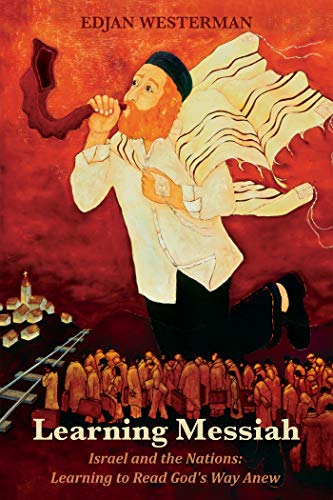
Edjan Westerman’s Learning Messiah: Israel and the Nations: Learning to Read God’s Way Anew is a careful answer to these questions. Westerman, a Dutch Reformed pastor who has been wrestling with these questions since he was a teenager in Holland, calls us in this book to learn to read God’s way anew and then to walk in that way. It compares the “genetic structure” of the traditional canonical narrative to the “genetic structure” of the Scriptures as they were meant to be read.
Westerman writes in the preface that he is building on the foundation laid by R. Kendall Soulen in his 1996 monograph, The God of Israel and Christian Theology. In that volume Soulen narrates the story of Scripture in which the faithfulness of God is central. The story no longer traces the path of replacement theology, where the Jewish people no longer matter to God unless they accept Jesus.
Westerman’s own narration of the biblical story makes central the calling that Israel received at Sinai. as mentioned in Exodus 19:5-6:
“ ‘Now if you obey me fully and keep my covenant, then out of all nations you will be my treasured possession. Although the whole earth is mine, you will be for me a kingdom of priests and a holy nation.’ ” (Exod. 19:5-6 NIV)
Westerman’s story is not one of dual covenants. The coming of the messiah in Yeshua (Jesus) is still God’s way to join Israel and the nations, and to call out a people within the nations. But the usual omission of Israel after 30 AD is replaced by a more biblical story in which God still reaches the world through Israel and her perfect Israelite. After all, Jesus said “salvation is from the Jews” (John 4:22).
Westerman raises systematic theological questions. He challenges the Christian community to learn to read in a new manner the ways of the God of Israel, and to reconsider our long-held beliefs about how God has walked and still walks. It suggests one continuing story in which God through Israel and her Messiah has always been reaching the nations.
The book is not just for scholars. Westerman works hard to make things accessible to non-theologically trained readers.
Learning Messiah was originally published in Dutch. Its English translation appeared in 2018.
Previous Post

April 11, 2020
Richard Hooker and the Coronavirus
Next Post
June 12, 2020 interview on Edwards, beauty, my life and career
Browse Our Archives
Select a Category Uncategorized
Select a Month March 2023 November 2022 October 2022 August 2022 July 2022 June 2022 May 2022 April 2022 November 2021 October 2021 August 2021 July 2021 June 2021 May 2021 April 2021 March 2021 February 2021 January 2021 December 2020 November 2020 October 2020 September 2020 July 2020 June 2020 April 2020 March 2020 February 2020 January 2020 August 2019 July 2019 May 2019 April 2019 February 2019 January 2019 December 2018 November 2018 October 2018 August 2018 July 2018 June 2018 May 2018 April 2018 March 2018 February 2018 January 2018 December 2017 November 2017 October 2017 September 2017 August 2017 July 2017 June 2017 May 2017 April 2017 March 2017 February 2017 January 2017 December 2016 November 2016 October 2016 September 2016 August 2016 July 2016 June 2016 May 2016 April 2016 March 2016 February 2016 January 2016 December 2015 November 2015 October 2015 September 2015 August 2015 July 2015 June 2015 May 2015 April 2015 March 2015 February 2015 January 2015 December 2014 November 2014 October 2014 September 2014 August 2014 July 2014 June 2014 May 2014 April 2014 March 2014 February 2014 January 2014 December 2013 November 2013 October 2013 September 2013 August 2013 July 2013 June 2013 May 2013 April 2013 March 2013 February 2013 January 2013 December 2012 November 2012 October 2012 September 2012 August 2012 July 2012 June 2012 May 2012 April 2012 March 2012 February 2012 January 2012 December 2011 November 2011 October 2011 September 2011 August 2011 July 2011 June 2011 May 2011 April 2011 March 2011 February 2011 January 2011 December 2010 November 2010 October 2010
Follow Us!
TAKE THE
Religious Wisdom Quiz
Who was thrown into a fiery furnace for refusing to worship an idol?
Select your answer to see how you score.
Joseph Daniel Gideon Shadrach, Meshach, and Abednego
Related posts from The Northampton Seminar


Interview on what difference Jesus' Jewishness makes and...

News from Israel--the election and Messianic Jews

The third rail in conservative churches
TRENDING AT PATHEOS Evangelical

The REST of Your Life: A Creative Wrestles...
This week I had a conversation with a good friend from church....

How the author of the world's best hymn...
I've been working with John Newton for a while now. This makes...

Long before this Lectio Divina, Psalm 130 - the song - started...

What About the Trees? Another Living Parable
After I finished writing the last article about falling leaves as a...

Why Classical Education Is a Conversation, Not a...
Come and Read: Joy in Classical Education When I was a little...

Cornell University has received a great deal of negative publicity and intense...
view all Evangelical blogs
Ad-Free & Subscriber Log-In Subscription Support
- About Us
- 2026 Calendar
- Videos
- Podcasts
- Library of World Religions
- Faith In Media Tracker
- Advertise With Us
- Write for Us
- Privacy Policy
- Terms of Service
- Do Not Sell My Data
- Contact Us
- Radiant Digital
- Manage Newsletter Subscriptions
- Unsubscribe From Notifications
- Sitemap
Copyright 2008-2026, Patheos. All rights reserved.
Subscription Support Ad-Free & Subscriber Log-In
Follow Patheos