
BuddhistCatholicContemplativeEvangelicalGeneral ChristianHinduJewishLatter-day SaintMuslimNew VisionsProgressive Christian
Beliefs
- Buddhist
- Catholic
- Contemplative
- Evangelical
- General Christian
- Hindu
- Jewish
- Latter-day Saint
- More Voices
- Muslim
- New Visions
- Pagan
- Progressive Christian
Topics
- Religion News
- Food and Religion
- Sports and Religion
- Religious Art
- Religious Music and Entertainment
- Religious Events
- History and Religion
- Style and Religion
- Politics and Religion
- Women in Religion
- Recreation Outdoors and Religion
- Business Finance and Religion
- Careers Workplace and Religion
- Education and Religion
- Family Parenting and Religion
- Health Fitness and Religion
- Home and Religion
- Relationships and Religion
- Technology and Religion
- Travel and Religion
Columnists
- Buddhist Columnists
- Business Finance and Religion Columnists
- Careers Workplace and Religion Columnists
- Catholic Columnists
- Contemplative Columnists
- Education and Religion Columnists
- Evangelists Columnists
- Family Parenting and Religion Columnists
- General Christian Columnists
- Health Fitness and Religion Columnists
- Hindu Columnists
- History and Religion Columnists
- Home and Religion Columnists
- Jewish Columnists
- More Voices Columnists
- Latter Day Columnists
- Muslim Columnists
- New Visions Columnists
- Nonreligious Columnists
- Pagan Columnists
- Politics and Religion Columnists
- Progressive Columnists
- Recreation Outdoors and Religion Columnists
- Relationships and Religion Columnists
- Religion News Columnists
- Religious Art Columnists
- Religious Events Columnists
- Religious Music and Entertainment Columnists
- Sports and Religion Columnists
- Style and Religion Columnists
- Technology and Religion Columnists
- Travel and Religion Columnists
- Women in Religion Columnists
Resource Library
- 2026 Calendar
- Library of World Religions
- The 100 Most Holy Places on Earth
- Patheos Answers
- Podcasts
- Videos
- Faith Leaders Database
- Anglican Episcopalian
- Bahai
- Baptist
- Buddhism
- Christianity
- Confucianism
- Eastern Orthodoxy
- Hinduism
- Holiness and Pentecostal
- ISKCON
- Islam
- Judaism
- Lutheran
- Methodist
- The Church of Jesus Christ of Latter-day Saints
- New Age
- Paganism
- Presbytarian and Reformed
- Protestantism
- Religion Behind the Scenes
- Roman Catholic
- Scientology
- Shia Islam
- Sikhism
- Sufism
- Sunni Islam
- Taoism
- Zen
- See all religions
Research Tools
 Ad-Free & Subscriber Log-In Subscription Support
Ad-Free & Subscriber Log-In Subscription Support
Follow Patheos 

- Trending:
- Forgiveness
- |
- Marriage
- |
- Consciousness
- |
- Death Penalty
- |
- Election
- |
- Halloween
 The Northampton Seminar
- Home
- Evangelical
- Religion News
- Seven things I learned about God from Nigerian Christians
Seven things I learned about God from Nigerian Christians
Last updated on: July 9, 2018 at 4:15 pm by Gerald McDermott
Seven things I learned about God from Nigerian Christians 2018-07-09T16:15:48-04:00 Gerald McDermott
Patheos Explore the world's faith through different perspectives on religion and spirituality! Patheos has the views of the prevalent religions and spiritualities of the world.
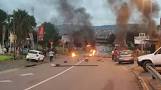 Nigeria is the epicenter of the new Christianity of the Global South. More Anglicans gather for worship in Nigeria on an average Sunday morning than in all the Episcopal and Anglican churches in North American and Great Britain combined.
At the same time that Christian revival keeps bubbling in Nigeria, Christians in Nigeria are being slaughtered by Muslims on jihad. Since January 2018 eight thousand Christians—most of them children, women and the elderly (according to the Egyptian scholar Raymond Ibrahim)—have been hacked by machetes or gunned down by AK-47s to the cry of “Allahu Akbar!”
I just returned from an intense nine days teaching in Jos, Nigeria, at the center of this religious cleansing. Dedicated young Christian leaders and seminarians told me they cannot sleep because the attacks always come in the middle of the night. Many know believers who have been killed. Archbishop Benjamin Kwashi’s home was attacked last week, his cows stolen, and his beloved neighbor who tried to protect him was gunned down. Most think the Archbishop’s attackers were sending a message, “You are on our list.”
The Nigerian Christians I met showed me new things about the Trinitarian God. To be sure, none of them were new intellectually. But all of them were fleshed out in new ways.
- Food is relative. Here in the United States we are more obsessed with food than in any time of our history. But in the middle belt of Nigeria most Christians live on one or one-and-a-half meals per day. In mid-morning there might be a breakfast of tea and white bread. The dinner meal is rice and beans with a vegetable or fruit. Meat is expensive and therefore rare. When I asked Joseph, a 20-something Anglican, how he can work all day without food until his only real meal at night, he lit up with a big smile: “We get used to it.” In other words, for a Christian there are more important things.
- Respect for other human beings. Daniel, a 25-year-old Catholic who worked at my hotel, was like every other Nigerian Christian I met. He bowed his head slightly when he met me in the morning, and said “Good morning, sir!” (He was no less cheerful when I woke him up at 4 AM!) The men and women whom I met greeted Nigerians and foreigners with this same respect. Women do a slight curtsy as they bow and greet others with a smile. Not all Nigerians articulate their reason for showing this profound respect for others, but the active Christians know it is deference to the image of God in their neighbors.
- Unity in the body of Christ. A singer in his mid-50s was introduced to me as “the father of Nigerian worship.” He told me that before the persecutions started in 2001, Nigerian churches felt more distrust between denominations. “Now,” he said, “there is only one church, the Nigerian Church of Jesus Christ. Sure, we are Baptists and Pentecostals and Catholics and Anglicans. But we all suffer persecution, and that has brought us together.”
- *Courage.
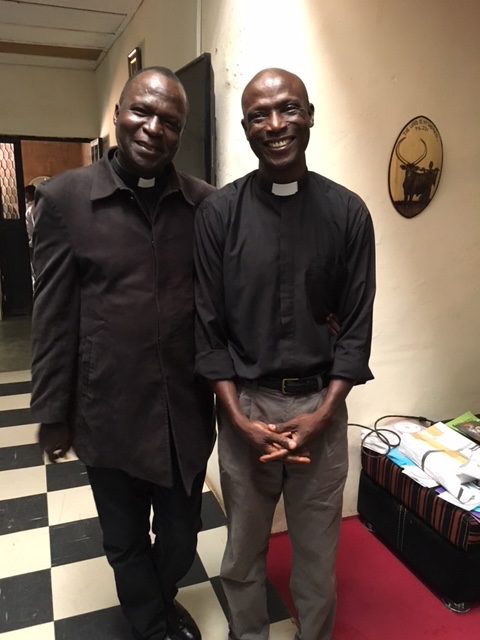 *Rev. Mark Mukan (left) is an Anglican priest who is planting a church in a village infested with Boko Haram, the jihadist group that kills Christians. He goes into the village undercover and knows that if discovered, he will be tortured and killed. Rev. Hassan John is another Anglican priest who pastors a church but also reaches out to Muslims, helping their children get to school and university. Boko Haram has put a bounty on his head. He too often risks his life. Both Mark and Hassan are undeterred, and laugh about the risks. As Mark puts it, “I owe everything to Jesus. How can I not share Him?”
 - Passion for the gospel. Last week I had the privilege of joining a Monday morning Eucharist that Archbishop Kwashi led for the priests in his diocese. The Archbishop told the priests, “We refuse to let persecution stop our mission. If we die preaching the gospel, we die. But there is joy in sharing the Word of life. And we must continue.”
- Divine gentleness. Daniel Lars is a young priest whose wife is pregnant with their first child. He helps run the seminary outside Jos. He told me his Muslim neighbors recently moved out of their houses, and it is feared that their leaders are protecting them from an imminent attack on Christians in this neighborhood. But Daniel is gentle when he talks about Muslims, and wants them to find salvation in the love of Jesus Christ. It struck me that only divine power can give Daniel that gentleness toward his enemies.
- The gospel’s impact on society. There are subtle signs in the strangest places that the gospel has affected behavior and not just thinking. When an Anglican priest drove me through an army checkpoint, a young soldier spied the priest’s collar, smiled, and handed him two eggs. The priest blessed the soldier for what might have been a genuine sacrifice.
 As we passed trucks along the road, I noticed that most had slogans painted across their cabs. One read, “Do Good.” Another was “Go Well.” Still another: “Look, Listen and Learn.” Cynics might say these represent cheap moralism. But there is little doubt they come from the conviction that there is a God who cares how we behave.
Finally, last week I was told of young men raised in Christian villages who got fed up with Muslim attacks on their Christian neighbors and started attacking Muslims. They killed one man, torched two cars, and bloodied several others. But then they were filled with remorse and turned themselves in to police, who no doubt imprisoned them and perhaps tortured them. I had no way to confirm this report. But it suggested at least one thing: that Nigerian Christians believe it is wrong to attack Muslims at large when jihadist Muslims are attacking Christians.
This is another rare but profound way that the gospel changes society.
Previous Post

July 3, 2018
Jos Muslims talk about the violence
Next Post
July 11, 2018 Mission in the midst of persecution: a book review
Browse Our Archives
Select a Category Uncategorized
Select a Month March 2023 November 2022 October 2022 August 2022 July 2022 June 2022 May 2022 April 2022 November 2021 October 2021 August 2021 July 2021 June 2021 May 2021 April 2021 March 2021 February 2021 January 2021 December 2020 November 2020 October 2020 September 2020 July 2020 June 2020 April 2020 March 2020 February 2020 January 2020 August 2019 July 2019 May 2019 April 2019 February 2019 January 2019 December 2018 November 2018 October 2018 August 2018 July 2018 June 2018 May 2018 April 2018 March 2018 February 2018 January 2018 December 2017 November 2017 October 2017 September 2017 August 2017 July 2017 June 2017 May 2017 April 2017 March 2017 February 2017 January 2017 December 2016 November 2016 October 2016 September 2016 August 2016 July 2016 June 2016 May 2016 April 2016 March 2016 February 2016 January 2016 December 2015 November 2015 October 2015 September 2015 August 2015 July 2015 June 2015 May 2015 April 2015 March 2015 February 2015 January 2015 December 2014 November 2014 October 2014 September 2014 August 2014 July 2014 June 2014 May 2014 April 2014 March 2014 February 2014 January 2014 December 2013 November 2013 October 2013 September 2013 August 2013 July 2013 June 2013 May 2013 April 2013 March 2013 February 2013 January 2013 December 2012 November 2012 October 2012 September 2012 August 2012 July 2012 June 2012 May 2012 April 2012 March 2012 February 2012 January 2012 December 2011 November 2011 October 2011 September 2011 August 2011 July 2011 June 2011 May 2011 April 2011 March 2011 February 2011 January 2011 December 2010 November 2010 October 2010
Follow Us!
TAKE THE
Religious Wisdom Quiz
Who said, "Do not be afraid, for those who are with us are more than those who are with them"?
Select your answer to see how you score.
Gideon Joshua Elisha Elijah
Related posts from The Northampton Seminar


Interview on what difference Jesus' Jewishness makes and...

News from Israel--the election and Messianic Jews

The third rail in conservative churches
TRENDING AT PATHEOS Evangelical

The REST of Your Life: A Creative Wrestles...
This week I had a conversation with a good friend from church....

How the author of the world's best hymn...
I've been working with John Newton for a while now. This makes...

Long before this Lectio Divina, Psalm 130 - the song - started...

What About the Trees? Another Living Parable
After I finished writing the last article about falling leaves as a...

Why Classical Education Is a Conversation, Not a...
Come and Read: Joy in Classical Education When I was a little...

Cornell University has received a great deal of negative publicity and intense...
view all Evangelical blogs
Ad-Free & Subscriber Log-In Subscription Support
- About Us
- 2026 Calendar
- Videos
- Podcasts
- Library of World Religions
- Faith In Media Tracker
- Advertise With Us
- Write for Us
- Privacy Policy
- Terms of Service
- Do Not Sell My Data
- Contact Us
- Radiant Digital
- Manage Newsletter Subscriptions
- Unsubscribe From Notifications
- Sitemap
Copyright 2008-2026, Patheos. All rights reserved.
Subscription Support Ad-Free & Subscriber Log-In
Follow Patheos