
BuddhistCatholicContemplativeEvangelicalGeneral ChristianHinduJewishLatter-day SaintMuslimNew VisionsProgressive Christian
Beliefs
- Buddhist
- Catholic
- Contemplative
- Evangelical
- General Christian
- Hindu
- Jewish
- Latter-day Saint
- More Voices
- Muslim
- New Visions
- Pagan
- Progressive Christian
Topics
- Religion News
- Food and Religion
- Sports and Religion
- Religious Art
- Religious Music and Entertainment
- Religious Events
- History and Religion
- Style and Religion
- Politics and Religion
- Women in Religion
- Recreation Outdoors and Religion
- Business Finance and Religion
- Careers Workplace and Religion
- Education and Religion
- Family Parenting and Religion
- Health Fitness and Religion
- Home and Religion
- Relationships and Religion
- Technology and Religion
- Travel and Religion
Columnists
- Buddhist Columnists
- Business Finance and Religion Columnists
- Careers Workplace and Religion Columnists
- Catholic Columnists
- Contemplative Columnists
- Education and Religion Columnists
- Evangelists Columnists
- Family Parenting and Religion Columnists
- General Christian Columnists
- Health Fitness and Religion Columnists
- Hindu Columnists
- History and Religion Columnists
- Home and Religion Columnists
- Jewish Columnists
- More Voices Columnists
- Latter Day Columnists
- Muslim Columnists
- New Visions Columnists
- Nonreligious Columnists
- Pagan Columnists
- Politics and Religion Columnists
- Progressive Columnists
- Recreation Outdoors and Religion Columnists
- Relationships and Religion Columnists
- Religion News Columnists
- Religious Art Columnists
- Religious Events Columnists
- Religious Music and Entertainment Columnists
- Sports and Religion Columnists
- Style and Religion Columnists
- Technology and Religion Columnists
- Travel and Religion Columnists
- Women in Religion Columnists
Resource Library
- 2026 Calendar
- Library of World Religions
- The 100 Most Holy Places on Earth
- Patheos Answers
- Podcasts
- Videos
- Faith Leaders Database
- Anglican Episcopalian
- Bahai
- Baptist
- Buddhism
- Christianity
- Confucianism
- Eastern Orthodoxy
- Hinduism
- Holiness and Pentecostal
- ISKCON
- Islam
- Judaism
- Lutheran
- Methodist
- The Church of Jesus Christ of Latter-day Saints
- New Age
- Paganism
- Presbytarian and Reformed
- Protestantism
- Religion Behind the Scenes
- Roman Catholic
- Scientology
- Shia Islam
- Sikhism
- Sufism
- Sunni Islam
- Taoism
- Zen
- See all religions
Research Tools
 Ad-Free & Subscriber Log-In Subscription Support
Ad-Free & Subscriber Log-In Subscription Support
Follow Patheos 

- Trending:
- Forgiveness
- |
- Marriage
- |
- Consciousness
- |
- Death Penalty
- |
- Election
- |
- Halloween
 The Northampton Seminar
- Home
- Evangelical
- Religion News
- Kierkegaard on real love
Kierkegaard on real love
Last updated on: January 27, 2018 at 9:22 am by Gerald McDermott
Kierkegaard on real love 2018-01-27T09:22:21-04:00 Gerald McDermott
Patheos Explore the world's faith through different perspectives on religion and spirituality! Patheos has the views of the prevalent religions and spiritualities of the world.
 “Love” is one of the most misused words in the English language. The wrong use of it is responsible for the breakdown of many relationships and marriages. Husband or wife thinks love is a feeling, and when the morning comes (inevitably) when the feeling is gone, he or she concludes it is time to call the divorce lawyer. If the feeling is gone, then love is gone, and how can there be marriage without love?
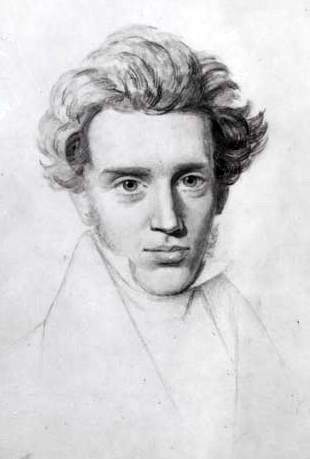
Soren Kierkegaard (1813-55) can help us sort out this confusion.He can help us realize that the way our culture uses the word “love” is radically different from the way the Bible uses the word. And if we realize that, then we can restore our broken relationships with our spouse and others, and with God.
Kierkegaard has been known as a radical critic of state-sponsored Christianity and as a principal exponent of the emerging philosophical movement called existentialism, which emphasized the historical existence of the individual. This was in response to the philosophy of Hegel that seemed to ignore the individual in its depiction of world-historical forces such as the state.
These two themes come together in his book Works of Love (1847), but a third is present—reflection on the life of the Christian. Works of Love reflects on two types of love, which are translated by Howard and Edna Hong as “love” and “erotic love.” The first is commanded by God, so it is under the control of the will. The second is a spontaneous feeling that one cannot summon up at will. This is the most common way “love” is understood in our culture.
Kierkegaard argues that we should concentrate on the first–love that can be controlled by the will–and not worry too much about the second–erotic or romantic love. At the very least, we should understand the difference between the two, and realize that the first, which is the most important, is at the heart of our walk with God and neighbor.
Anders Nygren’s Agape and Eros, which appeared in English in the 1930s, had a huge impact on modern theology. It argues that biblical love is all about agape (self-sacrificial love that loves the unlovely) and had nothing to do with eros (desire for union with the beloved because the object of love is desirable to the lover), that agape is theocentric while eros is egocentric, and that agape is both the “fundamental motif” of Christianity and what distinguishes Christianity from every other world religion. The latter is doubtful (what about Judaism, from which Christian agape is derived?), but what is noteworthy for us is that Nygren derived his two basic terms from Kierkegaard’s Works of Love.
Kierkegaard does not insist on choosing one over the other, as if eros is always wrong. That is one false impression of the difference between these two. Another myth is that eros is the same as sexual desire. On the contrary, eros is not inherently sexual, as modern connotations suggest, but is instead, as C.S. Lewis argued in his Four Loves, the desire of the lover for union with the beloved. This desire for union may have nothing to do with sex at all, and may be perfectly willing to endure pain in order to achieve that union. Kierkegaard’s point is that agape, which he calls “love” in this work, can support and strengthen spontaneous feeling for the beloved. It will not necessarily destroy or uproot natural desires. But romantic feeling (eros) should never be the foundation of a marriage. For feelings come and go. They are as hard to control as water falling through your hand. But true love–the biblical love of agape–is not a feeling. Eros is the feeling that desires the beloved because she is beautiful, while agape loves even when the object of love is not beautiful.
Bottom line: for Kierkegaard, biblical love is a work, a deed, something you and I do, not a feeling. And it has to do primarily with God. It comes from God because he is the one who first loved us, and he is the source of any true love that anyone has for another.
How does this apply to marriage and relationships? The only love that will sustain a marriage is agape, which is the biblical love that Kierkegaard calls “love.” It is a commitment to do the right thing for the other person, even if I have no feelings for him or her. Feelings are comparatively shallow, but the commitment to do what is right, by the strength that comes from God, is as deep as God himself. For it is from him.
Previous Post

January 24, 2018
Is all of the Reformed tradition supersessionist?
Next Post
January 27, 2018 What you know about Palestine is probably wrong
Browse Our Archives
Select a Category Uncategorized
Select a Month March 2023 November 2022 October 2022 August 2022 July 2022 June 2022 May 2022 April 2022 November 2021 October 2021 August 2021 July 2021 June 2021 May 2021 April 2021 March 2021 February 2021 January 2021 December 2020 November 2020 October 2020 September 2020 July 2020 June 2020 April 2020 March 2020 February 2020 January 2020 August 2019 July 2019 May 2019 April 2019 February 2019 January 2019 December 2018 November 2018 October 2018 August 2018 July 2018 June 2018 May 2018 April 2018 March 2018 February 2018 January 2018 December 2017 November 2017 October 2017 September 2017 August 2017 July 2017 June 2017 May 2017 April 2017 March 2017 February 2017 January 2017 December 2016 November 2016 October 2016 September 2016 August 2016 July 2016 June 2016 May 2016 April 2016 March 2016 February 2016 January 2016 December 2015 November 2015 October 2015 September 2015 August 2015 July 2015 June 2015 May 2015 April 2015 March 2015 February 2015 January 2015 December 2014 November 2014 October 2014 September 2014 August 2014 July 2014 June 2014 May 2014 April 2014 March 2014 February 2014 January 2014 December 2013 November 2013 October 2013 September 2013 August 2013 July 2013 June 2013 May 2013 April 2013 March 2013 February 2013 January 2013 December 2012 November 2012 October 2012 September 2012 August 2012 July 2012 June 2012 May 2012 April 2012 March 2012 February 2012 January 2012 December 2011 November 2011 October 2011 September 2011 August 2011 July 2011 June 2011 May 2011 April 2011 March 2011 February 2011 January 2011 December 2010 November 2010 October 2010
Follow Us!
TAKE THE
Religious Wisdom Quiz
How many books are in the entire Bible?
Select your answer to see how you score.
39 66 73 80
Related posts from The Northampton Seminar


Interview on what difference Jesus' Jewishness makes and...

News from Israel--the election and Messianic Jews

The third rail in conservative churches
TRENDING AT PATHEOS Evangelical

The REST of Your Life: A Creative Wrestles...
This week I had a conversation with a good friend from church....

How the author of the world's best hymn...
I've been working with John Newton for a while now. This makes...

Long before this Lectio Divina, Psalm 130 - the song - started...

What About the Trees? Another Living Parable
After I finished writing the last article about falling leaves as a...

Why Classical Education Is a Conversation, Not a...
Come and Read: Joy in Classical Education When I was a little...

Cornell University has received a great deal of negative publicity and intense...
view all Evangelical blogs
Ad-Free & Subscriber Log-In Subscription Support
- About Us
- 2026 Calendar
- Videos
- Podcasts
- Library of World Religions
- Faith In Media Tracker
- Advertise With Us
- Write for Us
- Privacy Policy
- Terms of Service
- Do Not Sell My Data
- Contact Us
- Radiant Digital
- Manage Newsletter Subscriptions
- Unsubscribe From Notifications
- Sitemap
Copyright 2008-2026, Patheos. All rights reserved.
Subscription Support Ad-Free & Subscriber Log-In
Follow Patheos