
BuddhistCatholicContemplativeEvangelicalGeneral ChristianHinduJewishLatter-day SaintMuslimNew VisionsProgressive Christian
Beliefs
- Buddhist
- Catholic
- Contemplative
- Evangelical
- General Christian
- Hindu
- Jewish
- Latter-day Saint
- More Voices
- Muslim
- New Visions
- Pagan
- Progressive Christian
Topics
- Religion News
- Food and Religion
- Sports and Religion
- Religious Art
- Religious Music and Entertainment
- Religious Events
- History and Religion
- Style and Religion
- Politics and Religion
- Women in Religion
- Recreation Outdoors and Religion
- Business Finance and Religion
- Careers Workplace and Religion
- Education and Religion
- Family Parenting and Religion
- Health Fitness and Religion
- Home and Religion
- Relationships and Religion
- Technology and Religion
- Travel and Religion
Columnists
- Buddhist Columnists
- Business Finance and Religion Columnists
- Careers Workplace and Religion Columnists
- Catholic Columnists
- Contemplative Columnists
- Education and Religion Columnists
- Evangelists Columnists
- Family Parenting and Religion Columnists
- General Christian Columnists
- Health Fitness and Religion Columnists
- Hindu Columnists
- History and Religion Columnists
- Home and Religion Columnists
- Jewish Columnists
- More Voices Columnists
- Latter Day Columnists
- Muslim Columnists
- New Visions Columnists
- Nonreligious Columnists
- Pagan Columnists
- Politics and Religion Columnists
- Progressive Columnists
- Recreation Outdoors and Religion Columnists
- Relationships and Religion Columnists
- Religion News Columnists
- Religious Art Columnists
- Religious Events Columnists
- Religious Music and Entertainment Columnists
- Sports and Religion Columnists
- Style and Religion Columnists
- Technology and Religion Columnists
- Travel and Religion Columnists
- Women in Religion Columnists
Resource Library
- 2026 Calendar
- Library of World Religions
- The 100 Most Holy Places on Earth
- Patheos Answers
- Podcasts
- Videos
- Faith Leaders Database
- Anglican Episcopalian
- Bahai
- Baptist
- Buddhism
- Christianity
- Confucianism
- Eastern Orthodoxy
- Hinduism
- Holiness and Pentecostal
- ISKCON
- Islam
- Judaism
- Lutheran
- Methodist
- The Church of Jesus Christ of Latter-day Saints
- New Age
- Paganism
- Presbytarian and Reformed
- Protestantism
- Religion Behind the Scenes
- Roman Catholic
- Scientology
- Shia Islam
- Sikhism
- Sufism
- Sunni Islam
- Taoism
- Zen
- See all religions
Research Tools
 Ad-Free & Subscriber Log-In Subscription Support
Ad-Free & Subscriber Log-In Subscription Support
Follow Patheos 

- Trending:
- Forgiveness
- |
- Marriage
- |
- Consciousness
- |
- Death Penalty
- |
- Election
- |
- Halloween
 The Northampton Seminar
- Home
- Evangelical
- Religion News
- An Anglican Manifesto
An Anglican Manifesto
Last updated on: November 13, 2017 at 6:00 pm by Gerald McDermott
An Anglican Manifesto 2017-11-13T18:00:36-04:00 Gerald McDermott
Patheos Explore the world's faith through different perspectives on religion and spirituality! Patheos has the views of the prevalent religions and spiritualities of the world.
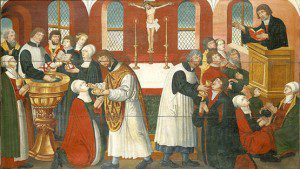 While the Catholic Church is deeply divided over what I call the Pope’s liberal Protestantism, and more and more evangelicals are embracing a progressivism that resembles yesterday’s social gospel, two Anglicans are proposing an Anglican way toward orthodoxy. Cranmer scholar Ashley Null and pastor-theologian John Yates III propose “A Manifesto for Reformation Anglicanism” in the last chapter of Reformation Anglicanism: A Vision for Today’s Global Communion.
Null and Yates proclaim seven theses in their manifesto.
- Reformation Anglicanism is apostolic. That is, it is devoted to the primacy of the apostolic witness in the New Testament, as opposed to liberal Protestantism and the social gospel finding their authority in the social sciences since the 1960s.
- Reformation Anglicanism is Catholic. They remind readers that the Protestant reformers were still Catholics who sought to reform their Church. That was true until Rome excommunicated Luther and until Calvin started, very early on, to meet with others who felt Rome had betrayed the gospel. But this book’s point is that the English reformers who started Anglicanism were devoted to the creeds and the first four general Councils while the worldwide Church was undivided.
- Reformation Anglicanism is “well, Reformational.” In other words, in contrast to the semi-Pelagianism of the late medieval period, the Anglican reformers emphasized less what we do and far more what God has done for us in Christ. In a word, love.
- Reformation Anglicanism is mission-focused. Cranmer tried to influence Europe by promoting a continental summit of Reformation theologians. The Anglican churches sent missionaries to Africa in the nineteenth century, a mission whose long-term result was an African revival that continues to this day and sends African missionaries to now-pagan England and confused America!
- Reformation Anglicanism is episcopal. Anglicanism teaches that having bishops—such as Paul was to the churches he planted—is the bene esse of the church, that is, essential to its well-being. Null and Yates remind us that the bishop’s primary task, as it was for Paul, was to teach and protect orthodoxy.
- Reformation Anglicanism is liturgical. I would add sacramental. Null and Yates point to Cranmer’s development of Morning and Evening Prayer liturgies that combine beautiful prayers from the early church with a Bible-reading schedule that takes participants through most of the Bible every year. It also features sacraments which show and bear Christ in ways that touch all five senses.
- Reformation Anglicanism is transformative. Works-based religion promotes fear and anxiety, while the gospel of God’s love communicated through liturgy and sacraments remakes men and women from the inside out.
In a word, the authors say at the end of their book, Reformation Anglicanism is relevant. Progressive versions of Christianity that strain to keep up to date with the latest fads are actually irrelevant to our deepest needs. Only the ancient testimony to the Trinitarian God who comes to us in the creeds and liturgies and sacraments of the historic church can meet us where we most deeply need God.
Previous Post

November 5, 2017
What Is the Glory of God?
Next Post
November 16, 2017 Is Pope Francis a liberal Protestant?
Browse Our Archives
Select a Category Uncategorized
Select a Month March 2023 November 2022 October 2022 August 2022 July 2022 June 2022 May 2022 April 2022 November 2021 October 2021 August 2021 July 2021 June 2021 May 2021 April 2021 March 2021 February 2021 January 2021 December 2020 November 2020 October 2020 September 2020 July 2020 June 2020 April 2020 March 2020 February 2020 January 2020 August 2019 July 2019 May 2019 April 2019 February 2019 January 2019 December 2018 November 2018 October 2018 August 2018 July 2018 June 2018 May 2018 April 2018 March 2018 February 2018 January 2018 December 2017 November 2017 October 2017 September 2017 August 2017 July 2017 June 2017 May 2017 April 2017 March 2017 February 2017 January 2017 December 2016 November 2016 October 2016 September 2016 August 2016 July 2016 June 2016 May 2016 April 2016 March 2016 February 2016 January 2016 December 2015 November 2015 October 2015 September 2015 August 2015 July 2015 June 2015 May 2015 April 2015 March 2015 February 2015 January 2015 December 2014 November 2014 October 2014 September 2014 August 2014 July 2014 June 2014 May 2014 April 2014 March 2014 February 2014 January 2014 December 2013 November 2013 October 2013 September 2013 August 2013 July 2013 June 2013 May 2013 April 2013 March 2013 February 2013 January 2013 December 2012 November 2012 October 2012 September 2012 August 2012 July 2012 June 2012 May 2012 April 2012 March 2012 February 2012 January 2012 December 2011 November 2011 October 2011 September 2011 August 2011 July 2011 June 2011 May 2011 April 2011 March 2011 February 2011 January 2011 December 2010 November 2010 October 2010
Follow Us!
TAKE THE
Religious Wisdom Quiz
What did Aaron make for the people while Moses was on the mountain?
Select your answer to see how you score.
An altar A silver snake A wooden idol A golden calf
Related posts from The Northampton Seminar


Interview on what difference Jesus' Jewishness makes and...

News from Israel--the election and Messianic Jews

The third rail in conservative churches
TRENDING AT PATHEOS Evangelical

The REST of Your Life: A Creative Wrestles...
This week I had a conversation with a good friend from church....

How the author of the world's best hymn...
I've been working with John Newton for a while now. This makes...

Long before this Lectio Divina, Psalm 130 - the song - started...

What About the Trees? Another Living Parable
After I finished writing the last article about falling leaves as a...

Why Classical Education Is a Conversation, Not a...
Come and Read: Joy in Classical Education When I was a little...

Cornell University has received a great deal of negative publicity and intense...
view all Evangelical blogs
Ad-Free & Subscriber Log-In Subscription Support
- About Us
- 2026 Calendar
- Videos
- Podcasts
- Library of World Religions
- Faith In Media Tracker
- Advertise With Us
- Write for Us
- Privacy Policy
- Terms of Service
- Do Not Sell My Data
- Contact Us
- Radiant Digital
- Manage Newsletter Subscriptions
- Unsubscribe From Notifications
- Sitemap
Copyright 2008-2026, Patheos. All rights reserved.
Subscription Support Ad-Free & Subscriber Log-In
Follow Patheos