
BuddhistCatholicContemplativeEvangelicalGeneral ChristianHinduJewishLatter-day SaintMuslimNew VisionsProgressive Christian
Beliefs
- Buddhist
- Catholic
- Contemplative
- Evangelical
- General Christian
- Hindu
- Jewish
- Latter-day Saint
- More Voices
- Muslim
- New Visions
- Pagan
- Progressive Christian
Topics
- Religion News
- Food and Religion
- Sports and Religion
- Religious Art
- Religious Music and Entertainment
- Religious Events
- History and Religion
- Style and Religion
- Politics and Religion
- Women in Religion
- Recreation Outdoors and Religion
- Business Finance and Religion
- Careers Workplace and Religion
- Education and Religion
- Family Parenting and Religion
- Health Fitness and Religion
- Home and Religion
- Relationships and Religion
- Technology and Religion
- Travel and Religion
Columnists
- Buddhist Columnists
- Business Finance and Religion Columnists
- Careers Workplace and Religion Columnists
- Catholic Columnists
- Contemplative Columnists
- Education and Religion Columnists
- Evangelists Columnists
- Family Parenting and Religion Columnists
- General Christian Columnists
- Health Fitness and Religion Columnists
- Hindu Columnists
- History and Religion Columnists
- Home and Religion Columnists
- Jewish Columnists
- More Voices Columnists
- Latter Day Columnists
- Muslim Columnists
- New Visions Columnists
- Nonreligious Columnists
- Pagan Columnists
- Politics and Religion Columnists
- Progressive Columnists
- Recreation Outdoors and Religion Columnists
- Relationships and Religion Columnists
- Religion News Columnists
- Religious Art Columnists
- Religious Events Columnists
- Religious Music and Entertainment Columnists
- Sports and Religion Columnists
- Style and Religion Columnists
- Technology and Religion Columnists
- Travel and Religion Columnists
- Women in Religion Columnists
Resource Library
- 2026 Calendar
- Library of World Religions
- The 100 Most Holy Places on Earth
- Patheos Answers
- Podcasts
- Videos
- Faith Leaders Database
- Anglican Episcopalian
- Bahai
- Baptist
- Buddhism
- Christianity
- Confucianism
- Eastern Orthodoxy
- Hinduism
- Holiness and Pentecostal
- ISKCON
- Islam
- Judaism
- Lutheran
- Methodist
- The Church of Jesus Christ of Latter-day Saints
- New Age
- Paganism
- Presbytarian and Reformed
- Protestantism
- Religion Behind the Scenes
- Roman Catholic
- Scientology
- Shia Islam
- Sikhism
- Sufism
- Sunni Islam
- Taoism
- Zen
- See all religions
Research Tools
 Ad-Free & Subscriber Log-In Subscription Support
Ad-Free & Subscriber Log-In Subscription Support
Follow Patheos 

- Trending:
- Forgiveness
- |
- Marriage
- |
- Consciousness
- |
- Death Penalty
- |
- Election
- |
- Halloween
 The Northampton Seminar
- Home
- Evangelical
- Religion News
- The Inner Secret of the Anglican Reformation
The Inner Secret of the Anglican Reformation
Last updated on: October 24, 2017 at 8:33 pm by Gerald McDermott
The Inner Secret of the Anglican Reformation 2017-10-24T20:33:48-04:00 Gerald McDermott
Patheos Explore the world's faith through different perspectives on religion and spirituality! Patheos has the views of the prevalent religions and spiritualities of the world.
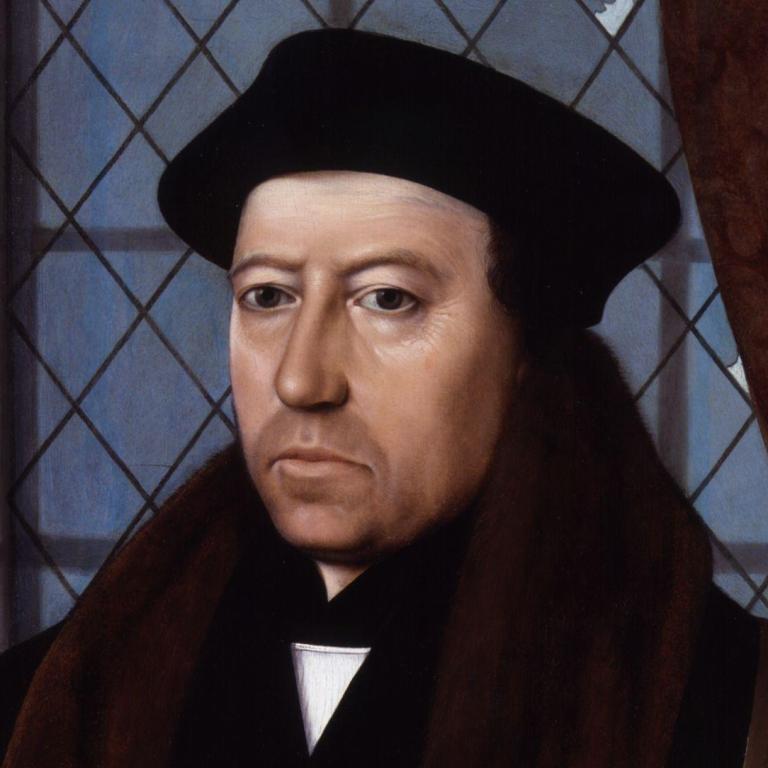 What was behind the Anglican Reformation? What was it that transformed that nation’s religion and politics in the 14th through the 16th centuries?
Cranmer scholar Ashley Null says it was “the power of unconditional love.” This is the title of his chapter in Reformation Anglicanism: A Vision for Today’s Global Communion (Crossway, 2017).
Null writes that the Anglican reformation proceeded in a six-act drama.
The first was a pre-Reformation scriptural meditation reform program. The “curious self-appointed hermit” Richard Rolle (d. 1349) believed Scripture is the divine channel for spiritual power and that the name of Jesus was the sum of the gospel message. His writings circulated among ordinary people who pursued intimacy with God by prayer and meditation. Walter Hilton (c. 1343-1396) wrote The Scale of Perfection, which promised a transformation in desire by meditation on scripture. Oxford philosopher John Wycliffe (d. 1384) rejected the idea of the church as mediator between men and God and advocated Scripture as the sole authority for all knowledge. Erasmus (d. 1536) promoted Scripture as the power that would move people to love God and do good.
The second act in this drama, according to Null, was an underground evangelical movement in the 1520s and 1530s. Luther’s protégé Philip Melanchthon and Cambridge lecturer Thomas Bilney taught that self-love cripples human reason and willpower, and that only “better affections” could set one free. The experience of forgiveness would come from understanding justification by faith, which would transform the emotions and lead to the “born-again” experience. The Bible translator William Tyndale taught the same, that justification by faith would bring the experience of “affective relationship with God” which is the “authentic hallmark of true Christianity.”
Third, King Henry VIII led the Church to break from Rome but did not fully embrace Protestant theology.
Fourth, Thomas Cranmer (1489-1556) guided the English church to full Protestantism under the boy-king Edward VI (1547-1553). Cranmer had studied Luther’s writings when he was in Germany, and discovered from them that “only the unconditional love of God made known in justification by faith saved sinners.” According to Null, he rejected “the whole medieval understanding of salvation” but found support for this in the writings of Augustine.
The fifth act was Catholic restoration to England under Queen Mary (1553-1558), who burned Cranmer and other reformers at the stake.
Finally, there was the restoration of Cranmer’s Protestant church under Elizabeth (1558-1603). Null notes that in the new Book of Common Prayer issued under Elizabeth (1559) words indicating a real presence of the Body and Blood of Jesus in Holy Communion, which had been removed from Cranmer’s second BCP (1552), were reinstated. But Null also notes that the Elizabethan Prayer Book was still “stridently anti-Roman.”
Null observes that Richard Hooker (1554-1600) in his Laws of Ecclesiastical Polity defended the Elizabethan settlement against Puritan insistence on Presbyterian polity and preaching-centered worship. According to Null, Hooker regarded “church order and ceremonies” (polity and worship) as “nonessentials . . . to be determined by national authorities, as guided in specifics by any relevant biblical passages, human wisdom, and church tradition.”
Null’s chapter is an elegant and insightful summary of a complex history. I am not as sure as he is, however, that Cranmer rejected “the whole medieval understanding of salvation.” Cranmer might have thought he was rejecting the whole medieval synthesis, but was that synthesis identical to what Cranmer was rejecting? After all, medieval theology can be regarded as an extended commentary on Augustine, from whom Cranmer learned. And while late medieval theology did teach heretical semi-Pelagianism, more and more Protestant scholars (like the Anglican Alister McGrath) are recognizing that Thomas Aquinas and Martin Luther were not as far apart on justification as has been alleged.
And while it has been oft-observed that for Hooker polity and precise liturgical practices could be varied according to national circumstances, it should also be noted that Hooker insisted that bishops were instituted by Jesus Christ, and that the Eucharist was far more than a memorial of what happened centuries before.
In the Laws VII.5.8, Hooker said that episcopacy was invented by the apostles by the direction of the Holy Spirit: “The authors of episcopal regiment [were] . . . the very blessed apostles themselves, directed therein by the special motion of the Holy Ghost.” Just before these quotes Hooker writes that episcopacy is “that which God himself ordained by his apostles, and the whole Church of Christ approveth and judgeth most convenient.”
On the Eucharist, Hooker argued it is not a “bare resemblance or memorial of things absent.” It is “real participation of Christ and of life in his body and blood by means of this sacrament” (Laws, V.57.5; V.67.2). For Hooker faith was required to participate in Christ by the sacrament, and it was not important to know whether the substance of the bread and wine were altered. But no matter, the important thing was that “or participation of Christ in this sacrament dependeth on the co-operation of his omnipotent power which maketh it his body and blood to us” (Laws, V.67.6). The consecrated elements are “made such instruments as mystical yet truly, invisibly yet really work our communion or fellowship with the person of Jesus Christ as well in that he is man as God, our participation also in the fruit, grace and efficacy of his body and blood” (Laws V.67.11). In other words, for Hooker the Eucharist is not only a remembrance but also the real presence of the Body and Blood of Jesus Christ.
Aside from these quibbles, Null’s chapter is a marvelous introduction to the spiritual and theological history of the Anglican reformation. It provides a plausible answer to the question of what kept driving this tangled history. Null’s answer? The affective power of unconditional love.
Previous Post
October 14, 2017
Did the Church of England begin in the 16th century?
Next Post
October 28, 2017 What did Anglicans mean by 'sola scriptura'?
Browse Our Archives
Select a Category Uncategorized
Select a Month March 2023 November 2022 October 2022 August 2022 July 2022 June 2022 May 2022 April 2022 November 2021 October 2021 August 2021 July 2021 June 2021 May 2021 April 2021 March 2021 February 2021 January 2021 December 2020 November 2020 October 2020 September 2020 July 2020 June 2020 April 2020 March 2020 February 2020 January 2020 August 2019 July 2019 May 2019 April 2019 February 2019 January 2019 December 2018 November 2018 October 2018 August 2018 July 2018 June 2018 May 2018 April 2018 March 2018 February 2018 January 2018 December 2017 November 2017 October 2017 September 2017 August 2017 July 2017 June 2017 May 2017 April 2017 March 2017 February 2017 January 2017 December 2016 November 2016 October 2016 September 2016 August 2016 July 2016 June 2016 May 2016 April 2016 March 2016 February 2016 January 2016 December 2015 November 2015 October 2015 September 2015 August 2015 July 2015 June 2015 May 2015 April 2015 March 2015 February 2015 January 2015 December 2014 November 2014 October 2014 September 2014 August 2014 July 2014 June 2014 May 2014 April 2014 March 2014 February 2014 January 2014 December 2013 November 2013 October 2013 September 2013 August 2013 July 2013 June 2013 May 2013 April 2013 March 2013 February 2013 January 2013 December 2012 November 2012 October 2012 September 2012 August 2012 July 2012 June 2012 May 2012 April 2012 March 2012 February 2012 January 2012 December 2011 November 2011 October 2011 September 2011 August 2011 July 2011 June 2011 May 2011 April 2011 March 2011 February 2011 January 2011 December 2010 November 2010 October 2010
Follow Us!
TAKE THE
Religious Wisdom Quiz
Who was the oldest man recorded in Genesis?
Select your answer to see how you score.
Noah Enoch Methuselah Jared
Related posts from The Northampton Seminar


Interview on what difference Jesus' Jewishness makes and...

News from Israel--the election and Messianic Jews

The third rail in conservative churches
TRENDING AT PATHEOS Evangelical

The REST of Your Life: A Creative Wrestles...
This week I had a conversation with a good friend from church....

How the author of the world's best hymn...
I've been working with John Newton for a while now. This makes...

Long before this Lectio Divina, Psalm 130 - the song - started...

What About the Trees? Another Living Parable
After I finished writing the last article about falling leaves as a...

Why Classical Education Is a Conversation, Not a...
Come and Read: Joy in Classical Education When I was a little...

Cornell University has received a great deal of negative publicity and intense...
view all Evangelical blogs
Ad-Free & Subscriber Log-In Subscription Support
- About Us
- 2026 Calendar
- Videos
- Podcasts
- Library of World Religions
- Faith In Media Tracker
- Advertise With Us
- Write for Us
- Privacy Policy
- Terms of Service
- Do Not Sell My Data
- Contact Us
- Radiant Digital
- Manage Newsletter Subscriptions
- Unsubscribe From Notifications
- Sitemap
Copyright 2008-2026, Patheos. All rights reserved.
Subscription Support Ad-Free & Subscriber Log-In
Follow Patheos