
BuddhistCatholicContemplativeEvangelicalGeneral ChristianHinduJewishLatter-day SaintMuslimNew VisionsProgressive Christian
Beliefs
- Buddhist
- Catholic
- Contemplative
- Evangelical
- General Christian
- Hindu
- Jewish
- Latter-day Saint
- More Voices
- Muslim
- New Visions
- Pagan
- Progressive Christian
Topics
- Religion News
- Food and Religion
- Sports and Religion
- Religious Art
- Religious Music and Entertainment
- Religious Events
- History and Religion
- Style and Religion
- Politics and Religion
- Women in Religion
- Recreation Outdoors and Religion
- Business Finance and Religion
- Careers Workplace and Religion
- Education and Religion
- Family Parenting and Religion
- Health Fitness and Religion
- Home and Religion
- Relationships and Religion
- Technology and Religion
- Travel and Religion
Columnists
- Buddhist Columnists
- Business Finance and Religion Columnists
- Careers Workplace and Religion Columnists
- Catholic Columnists
- Contemplative Columnists
- Education and Religion Columnists
- Evangelists Columnists
- Family Parenting and Religion Columnists
- General Christian Columnists
- Health Fitness and Religion Columnists
- Hindu Columnists
- History and Religion Columnists
- Home and Religion Columnists
- Jewish Columnists
- More Voices Columnists
- Latter Day Columnists
- Muslim Columnists
- New Visions Columnists
- Nonreligious Columnists
- Pagan Columnists
- Politics and Religion Columnists
- Progressive Columnists
- Recreation Outdoors and Religion Columnists
- Relationships and Religion Columnists
- Religion News Columnists
- Religious Art Columnists
- Religious Events Columnists
- Religious Music and Entertainment Columnists
- Sports and Religion Columnists
- Style and Religion Columnists
- Technology and Religion Columnists
- Travel and Religion Columnists
- Women in Religion Columnists
Resource Library
- 2026 Calendar
- Library of World Religions
- The 100 Most Holy Places on Earth
- Patheos Answers
- Podcasts
- Videos
- Faith Leaders Database
- Anglican Episcopalian
- Bahai
- Baptist
- Buddhism
- Christianity
- Confucianism
- Eastern Orthodoxy
- Hinduism
- Holiness and Pentecostal
- ISKCON
- Islam
- Judaism
- Lutheran
- Methodist
- The Church of Jesus Christ of Latter-day Saints
- New Age
- Paganism
- Presbytarian and Reformed
- Protestantism
- Religion Behind the Scenes
- Roman Catholic
- Scientology
- Shia Islam
- Sikhism
- Sufism
- Sunni Islam
- Taoism
- Zen
- See all religions
Research Tools
 Ad-Free & Subscriber Log-In Subscription Support
Ad-Free & Subscriber Log-In Subscription Support
Follow Patheos 

- Trending:
- Forgiveness
- |
- Marriage
- |
- Consciousness
- |
- Death Penalty
- |
- Election
- |
- Halloween
 The Northampton Seminar
- Home
- Evangelical
- Religion News
- Did the Church of England begin in the 16th century?
Did the Church of England begin in the 16th century?
Last updated on: October 14, 2017 at 11:53 am by Gerald McDermott
Did the Church of England begin in the 16th century? 2017-10-14T11:53:18-04:00 Gerald McDermott
Patheos Explore the world's faith through different perspectives on religion and spirituality! Patheos has the views of the prevalent religions and spiritualities of the world.
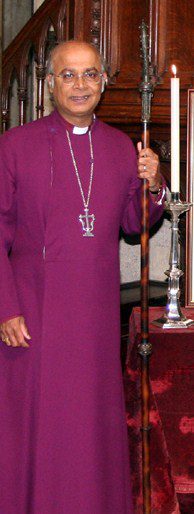 The first in an important new series of books on Anglicanism has appeared: Reformation Anglicanism: A Vision for Today’s Global Communion (Crossway, 2017). This volume, which leads a projected series of six, features chapters by globally-recognized scholars and leaders such as Michael Nazir-Ali, Ashley Null, and Ben Kwashi.
I will treat each of the seven chapters in the next few blogposts. So stay tuned.
The first chapter, “How the Anglican Communion Began and Where It Is Going,” is by Dr Michael Nazir-Ali, formerly Bishop of Rochester, England and now the President of the Oxford Centre for Training, Research, Advocacy and Dialogue. Nazir-Ali was a leading candidate for the Archbishop of Canterbury position when Rowan Williams resigned from the post, and many have lamented his being passed over. Nazir-Ali, who is of Pakistani descent, might have averted the current division in the Communion by virtue of his theological clarity and courage.
Let me sketch highlights of Nazir-Ali’s chapter and then reflect on the question above.
Nazir-Ali notes that when native Briton Saint Alban was martyred in the 3rd century, the Christian Church had already been there for some time, planted perhaps by soldiers who had been sent to the island by the Roman Empire or by what we would call Christian businessmen supplying material needs for the Empire.
Pope Gregory the Great sent Augustine of Canterbury in 597 AD, sparking the emergence of an Anglo-Saxon Christianity throughout England. Celtic Christianity vied with Roman Christianity until the Council of Whitby in 664 AD when the Roman way prevailed.
The English Church’s resistance to Rome began long before the sixteenth century. Parliament’s Praemunire law in 1392 prevented outside powers like Rome from interfering in the English Church.
Oxford philosopher John Wycliffe (1320-1384) called for the final authority of Scripture and denounced transubstantiation.In other words, the Church of England had already assumed a distinctive character before the 16th century. This has been noted in more detail by Martin Thornton in his English Spirituality (Wipf and Stock).
Nazir-Ali writes that Reformation Anglicanism was generally uninterested in world mission, like other Reformation churches in the 16th But this changed in the 18th century, when the Society for Promoting Christian Knowledge (SPCK) ordained the first African, Philip Quaque, in 1765. The Church Missionary Society (CMS) was founded in 1799 as a result of the evangelical revival in the Church of England, led by the preaching of John Wesley and George Whitefield.
Anglicanism became a worldwide communion as a result of three factors, according to Nazir-Ali. First, it spread “coincidentally” as English-speaking peoples moved to the Americas, the Caribbean, Africa, Asia, and the Pacific. “As these people went to new lands, they took their church with them.”
Second, the evangelical revival started mission societies such as the CMS and the Church’s Ministry among the Jewish People (CMJ).
Third, Anglican Catholic missions like the Society for the Propagation of the Gospel (SPG) and the Universities Missions to Central Africa spread their version of Anglicanism focused on church order as well as conversion. They were also insistent that the Church should be free of state interference. Nazir-Ali says they were “suspicious” and “even hostile to the establishment of the Church of England as the official state religion.”
Anglicanism has always had a prophetic edge that gave room for dissent. Nazir-Ali points to high church Anglicans who wanted to distance the Church from government, Anselm’s “insistence that Henry I should take an oath to maintain the liberties of his subjects,” AB of Canterbury Stephen Langton’s pressing King John to uphold the Magna Carta, martyrdoms on both sides of the Reformation in the 16th century, Non-Jurors who were deprived of their sees and livings under William and Mary, and the Anglican Province of South Africa’s resistance to apartheid.
Nazir-Ali notes that Anglican ecclesiology follows (2nd-century) Ignatius’ emphasis on bishops and (3rd-century) Cyprian’s stress on proper autonomy of provinces while rejecting Cyprian’s view that the see of Rome is the principal means of establishing communion.
The former bishop observes that while recent structures like the ACC and Lambeth Conferences have failed to provide doctrinal and ecclesial unity, the Global Anglican Future Conference (GAFCON) and the Catholic Anglican organization Forward in Faith provide the best hopes for future Anglican unity in orthodoxy.
The renewal of Anglicanism, Nazir-Ali argues, “will come about not through the reform of structures . . . but through movements raised up by God.” They will plant churches, renew worship, and campaign for the poor and persecuted.
In sum, Nazir-Ali’s excellent chapter shows 1) that the Church of England started long before the 16th century, 2) has become a worldwide communion because of evangelical and high church missions, and 3) has the promise of fresh reformation and renewal.
Previous Post
September 24, 2017
Why do churches use liturgy?
Next Post
October 22, 2017 The Inner Secret of the Anglican Reformation
Browse Our Archives
Select a Category Uncategorized
Select a Month March 2023 November 2022 October 2022 August 2022 July 2022 June 2022 May 2022 April 2022 November 2021 October 2021 August 2021 July 2021 June 2021 May 2021 April 2021 March 2021 February 2021 January 2021 December 2020 November 2020 October 2020 September 2020 July 2020 June 2020 April 2020 March 2020 February 2020 January 2020 August 2019 July 2019 May 2019 April 2019 February 2019 January 2019 December 2018 November 2018 October 2018 August 2018 July 2018 June 2018 May 2018 April 2018 March 2018 February 2018 January 2018 December 2017 November 2017 October 2017 September 2017 August 2017 July 2017 June 2017 May 2017 April 2017 March 2017 February 2017 January 2017 December 2016 November 2016 October 2016 September 2016 August 2016 July 2016 June 2016 May 2016 April 2016 March 2016 February 2016 January 2016 December 2015 November 2015 October 2015 September 2015 August 2015 July 2015 June 2015 May 2015 April 2015 March 2015 February 2015 January 2015 December 2014 November 2014 October 2014 September 2014 August 2014 July 2014 June 2014 May 2014 April 2014 March 2014 February 2014 January 2014 December 2013 November 2013 October 2013 September 2013 August 2013 July 2013 June 2013 May 2013 April 2013 March 2013 February 2013 January 2013 December 2012 November 2012 October 2012 September 2012 August 2012 July 2012 June 2012 May 2012 April 2012 March 2012 February 2012 January 2012 December 2011 November 2011 October 2011 September 2011 August 2011 July 2011 June 2011 May 2011 April 2011 March 2011 February 2011 January 2011 December 2010 November 2010 October 2010
Follow Us!
TAKE THE
Religious Wisdom Quiz
In Revelation, what is the correct sequence of events in the End Times?
Select your answer to see how you score.
Mark of the beast given, dragon cast to earth, beast rises, false prophet rises Beast rises from sea, dragon cast to earth, mark of the beast given, false prophet rises False prophet rises, dragon cast to earth, beast rises from sea, mark of the beast given Dragon cast to earth, beast rises from sea, false prophet rises from earth, mark of the beast given
Related posts from The Northampton Seminar


Interview on what difference Jesus' Jewishness makes and...

News from Israel--the election and Messianic Jews

The third rail in conservative churches
TRENDING AT PATHEOS Evangelical

The REST of Your Life: A Creative Wrestles...
This week I had a conversation with a good friend from church....

How the author of the world's best hymn...
I've been working with John Newton for a while now. This makes...

Long before this Lectio Divina, Psalm 130 - the song - started...

What About the Trees? Another Living Parable
After I finished writing the last article about falling leaves as a...

Why Classical Education Is a Conversation, Not a...
Come and Read: Joy in Classical Education When I was a little...

Cornell University has received a great deal of negative publicity and intense...
view all Evangelical blogs
Ad-Free & Subscriber Log-In Subscription Support
- About Us
- 2026 Calendar
- Videos
- Podcasts
- Library of World Religions
- Faith In Media Tracker
- Advertise With Us
- Write for Us
- Privacy Policy
- Terms of Service
- Do Not Sell My Data
- Contact Us
- Radiant Digital
- Manage Newsletter Subscriptions
- Unsubscribe From Notifications
- Sitemap
Copyright 2008-2026, Patheos. All rights reserved.
Subscription Support Ad-Free & Subscriber Log-In
Follow Patheos