
BuddhistCatholicContemplativeEvangelicalGeneral ChristianHinduJewishLatter-day SaintMuslimNew VisionsProgressive Christian
Beliefs
- Buddhist
- Catholic
- Contemplative
- Evangelical
- General Christian
- Hindu
- Jewish
- Latter-day Saint
- More Voices
- Muslim
- New Visions
- Pagan
- Progressive Christian
Topics
- Religion News
- Food and Religion
- Sports and Religion
- Religious Art
- Religious Music and Entertainment
- Religious Events
- History and Religion
- Style and Religion
- Politics and Religion
- Women in Religion
- Recreation Outdoors and Religion
- Business Finance and Religion
- Careers Workplace and Religion
- Education and Religion
- Family Parenting and Religion
- Health Fitness and Religion
- Home and Religion
- Relationships and Religion
- Technology and Religion
- Travel and Religion
Columnists
- Buddhist Columnists
- Business Finance and Religion Columnists
- Careers Workplace and Religion Columnists
- Catholic Columnists
- Contemplative Columnists
- Education and Religion Columnists
- Evangelists Columnists
- Family Parenting and Religion Columnists
- General Christian Columnists
- Health Fitness and Religion Columnists
- Hindu Columnists
- History and Religion Columnists
- Home and Religion Columnists
- Jewish Columnists
- More Voices Columnists
- Latter Day Columnists
- Muslim Columnists
- New Visions Columnists
- Nonreligious Columnists
- Pagan Columnists
- Politics and Religion Columnists
- Progressive Columnists
- Recreation Outdoors and Religion Columnists
- Relationships and Religion Columnists
- Religion News Columnists
- Religious Art Columnists
- Religious Events Columnists
- Religious Music and Entertainment Columnists
- Sports and Religion Columnists
- Style and Religion Columnists
- Technology and Religion Columnists
- Travel and Religion Columnists
- Women in Religion Columnists
Resource Library
- 2026 Calendar
- Library of World Religions
- The 100 Most Holy Places on Earth
- Patheos Answers
- Podcasts
- Videos
- Faith Leaders Database
- Anglican Episcopalian
- Bahai
- Baptist
- Buddhism
- Christianity
- Confucianism
- Eastern Orthodoxy
- Hinduism
- Holiness and Pentecostal
- ISKCON
- Islam
- Judaism
- Lutheran
- Methodist
- The Church of Jesus Christ of Latter-day Saints
- New Age
- Paganism
- Presbytarian and Reformed
- Protestantism
- Religion Behind the Scenes
- Roman Catholic
- Scientology
- Shia Islam
- Sikhism
- Sufism
- Sunni Islam
- Taoism
- Zen
- See all religions
Research Tools
 Ad-Free & Subscriber Log-In Subscription Support
Ad-Free & Subscriber Log-In Subscription Support
Follow Patheos 

- Trending:
- Forgiveness
- |
- Marriage
- |
- Consciousness
- |
- Death Penalty
- |
- Election
- |
- Halloween
 The Northampton Seminar
- Home
- Evangelical
- Religion News
- Whatever Happened to God the Father?
Whatever Happened to God the Father?
Last updated on: September 1, 2017 at 11:05 am by Gerald McDermott
Whatever Happened to God the Father? 2017-09-01T11:05:34-04:00 Gerald McDermott
Patheos Explore the world's faith through different perspectives on religion and spirituality! Patheos has the views of the prevalent religions and spiritualities of the world.
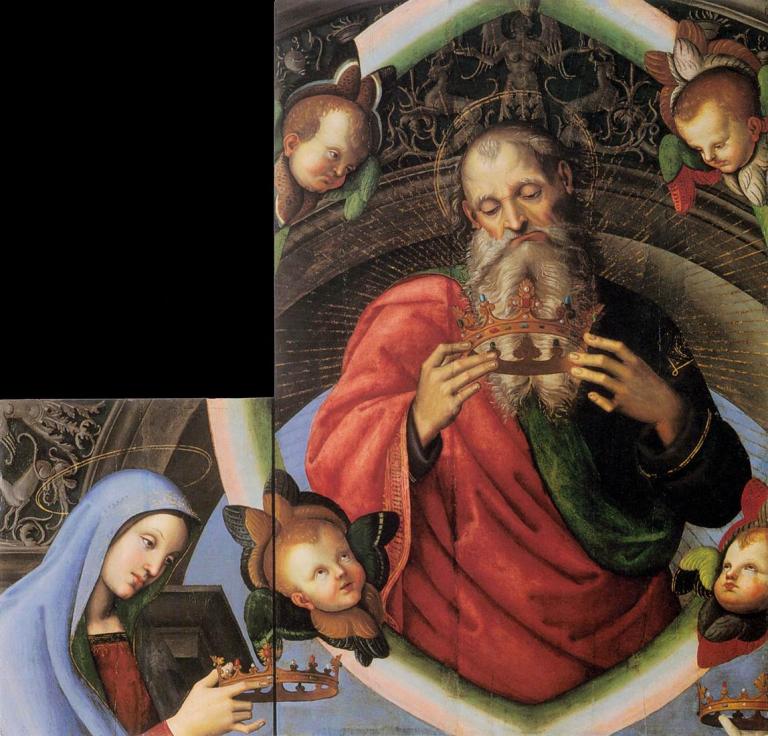 Recently an Anglican theologian asked me, “Have you noticed how few theological books have been published in the last decades on God the Father? Can you name even one?”
He was right. The Father has been lost from view—of both theology and the Church.
In the evangelical world since World War II, Jesus has been the focus of most thinking and worship. There were good reasons for this. Liberal theology in the 20th century had reduced the gospel to the fatherhood of God, the brotherhood of man, and social ethics. Salvation, liberals implied, was the reward for being a nice person.
Evangelicals were right to say, No, the gospel is about Jesus and the cross. They were partly right.
Then in the 1970s there was a new focus on the Holy Spirit. This was in response to the dryness and intellectualism of much of evangelicalism.
We needed more of the spontaneity and power of the Holy Spirit. So now, we heard from pulpits and books, we need to focus on Jesus and the Spirit. Full gospel ministry was about Word and Spirit.
They were partly right. At least two of the three Persons of the Trinity were being taught and preached and prayed.
Then there was feminism. It arose in the 1960s as a major social force, but it wasn’t until the late 70s and early 80s that it started to affect the society and church in visible ways. At first it pleaded simply for equal representation. Then some feminists started suggesting that women are better—not only spiritually but morally—and that men are naturally sexist and stupid. And fathers and husbands are naturally oppressive to both their wives and children. In fact, they have a natural tendency to abuse. The system of the male’s traditional roles in family and society was called “patriarchy,” and it came to be assumed that this was naturally abusive.
Not all theological feminists took it further, but some proceeded to argue that orthodox Christianity’s view of God the Father was abusive. The Father, they charged, abused his Son by sending him to bleed and die in order to forgive people. These feminist theologians said that even using the phrase “God the Father” is hurtful and oppressive.
Now we have the transgender movement. It wants us to believe that sexual differentiation between men and women is not only unimportant but false, and is itself oppressive.
The media have not helped. Long ago TV sitcom and movie writers decided that Father does not know best (younger readers might be shocked to learn that a popular TV show in the ancient world of the 1960s was titled “Father Knows Best”). Fathers are typically depicted as bumbling idiots and/or abusive. They are ridiculed and laughed at. As a result, men are afraid to assert themselves as men—and as fathers and husbands. They are especially afraid to suggest that they might be called to be heads of their families, no matter what “head” might mean. They have been persuaded that the idea of headship is theologically wrong and even immoral.
Let’s turn from our confused (and confusing) culture to the Real World portrayed by Scripture. In the Bible God is presented overwhelmingly as Father. In the Old Testament, God is the Father of Israel. In the New Testament, the great revelation that Jesus brings is of the Father: “Whoever has seen me, has seen the Father” (Jn 14.9). To be saved is to become one with the Son through faith and baptism, and thus to share in Jesus’ sonship. We become the Son’s brothers, as we worship the Father by our being in the Son (Heb 2.9-11). Jesus makes the spectacular promise that by being in Him we can experience the love that the Father has for him (Jn 14.21; 17.26)!
Nearly every time Jesus prayed, it was to the Father. The only exception was his prayer of dereliction on the cross (“My God, my God, why have you forsaken me?”). Yet his other famous prayer from the cross was to the Father: “Father, forgive them, for they know not what they do.”
When Paul prays, it is almost always to the Father. Both of the great prayers of Ephesians are addressed to the Father: “I pray that the God of our Lord Jesus Christ, the Father of glory, may give you a spirit of wisdom and revelation . . . . For this reason, I bow my knees before the Father (Eph 1.17; 3.14). He tells the Colossians, “In our prayers for you, we always thank God, the Father of our Lord Jesus Christ (Col 1.13).
Throughout the New Testament, whenever the Trinitarian God is referred to as simply “God,” it almost always refers to God the Father. The Father is the head of the Trinity: “The head of Christ is God [the Father]” (1 Cor 11.3). That is why the historic church has always taught that our prayer is to the Father, in the Son, by the Holy Spirit. The Spirit joins us to the Son so that we have the authority to pray the Lord’s prayer to the Father.
What does this mean for us? For one thing, it answers one of the most difficult questions today—What does it mean to be a man? To be a man is to be called to be a father—either biologically, or by adoption, or spiritually. Paul was a spiritual father to Timothy and Titus, and to all his churches. He referred to both Timothy and Titus as “my son” (1 Tim 1.2; 2 Tim 1.2; Tit 1.4) and told the Thessalonian Christians that he was their spiritual father: “We cared for you as a father cares for his own children, urging and encouraging you and pleading that you lead a life worthy of God, who calls you into his own Kingdom and glory” (1 Thess 2.11-12).
But what does it mean to be a spiritual father? Scripture suggests that we can learn what this means by watching how God is our Father. “Be perfect as your Heavenly Father is perfect” (Mt 5.48). If our heavenly Father forgives us, we should likewise forgive others (Matt 6.14-15). Since God is compassionate, we should be compassionate. Just as we learn about the Father by submitting to his authority over us, we also learn about his Fatherhood by submitting to the human authorities he has placed over us (Eph 6.1-3; Rom 13.1-7; 1 Pet 5.5). In other words, we cannot be good fathers unless we have learned how to be good sons.
This connection between our human and church families on the one hand, and God’s family on the other, is taught by Scripture. Paul says that “every family on heaven and earth takes its name” from the Father (Eph 3.14).
What else does God the Father teach us about being a man who is called to be a father? First, we are to take responsibility for the spiritual welfare of those God has entrusted to us. Job offered sacrifices on behalf of his children (Job 1.5). Joshua took leadership of his household so that as a household they served the Lord (Josh 24.15).
Taking spiritual responsibility involves teaching. The books of Deuteronomy and Proverbs say a father is a teacher. “Listen, my son, to your father’s instruction” (Prov 1.8; Dt 6.4-9). If you’re a father and feel unfit to teach, make sure your kids get to Sunday School at an orthodox church. Ask your wife to teach if she is better at it.
Taking responsibility also means bringing our family’s needs to God in prayer. The good fathers in the gospels came to Jesus for their children’s needs (e.g., Mt 9.18-26).
Scripture teaches that the husband is the head of the home (Eph 5.22ff; Col 3.18f; 1 P 3.1-2). What does that mean? Paul says the husband is head as Christ is head of the church, for which he laid down his life. Therefore being head does not mean bossing or domineering or making all the decisions. It means serving the family and laying down our lives for them in self-denial every day. It means praying for them every day, and making sure they get to an orthodox church each week for worship and learning. It means digging into God and his Word on a continual basis. Set the example by going to adult Sunday School with your wife.
I don’t have space to elaborate on these, but being a spiritual head who imitates God as Father also means 1) providing materially (or caring for the kids so that your wife can provide materially), 2) giving good gifts (Jesus said a good father gives an egg and not a snake), 3) working with your wife to administer discipline to your children (“God disciplines those he loves, as a father the son he delights in” Prov 3.12), 4) covering regularly with love (“How great is the love the Father has given us, that we should be called children of God; 1 Jn 3.1), thus being 5) an all-round agent of blessing.
In conclusion, we men are called to worship God the Father as we are joined to the Son by the Spirit. We are called to be spiritual fathers to our biological and adopted children, and to others in the church who need mentoring. We learn how to be fathers by imitating how God treats us as our heavenly Father, and this happens as we grow as disciples of Christ the Son. Growth takes place as we pray daily, read the Scriptures, and take advantage of the means of grace at church, especially the sacraments.
Previous Post

August 26, 2017
Charlottesville and racism
Next Post
August 31, 2017 Podcast: How I changed my mind
Browse Our Archives
Select a Category Uncategorized
Select a Month March 2023 November 2022 October 2022 August 2022 July 2022 June 2022 May 2022 April 2022 November 2021 October 2021 August 2021 July 2021 June 2021 May 2021 April 2021 March 2021 February 2021 January 2021 December 2020 November 2020 October 2020 September 2020 July 2020 June 2020 April 2020 March 2020 February 2020 January 2020 August 2019 July 2019 May 2019 April 2019 February 2019 January 2019 December 2018 November 2018 October 2018 August 2018 July 2018 June 2018 May 2018 April 2018 March 2018 February 2018 January 2018 December 2017 November 2017 October 2017 September 2017 August 2017 July 2017 June 2017 May 2017 April 2017 March 2017 February 2017 January 2017 December 2016 November 2016 October 2016 September 2016 August 2016 July 2016 June 2016 May 2016 April 2016 March 2016 February 2016 January 2016 December 2015 November 2015 October 2015 September 2015 August 2015 July 2015 June 2015 May 2015 April 2015 March 2015 February 2015 January 2015 December 2014 November 2014 October 2014 September 2014 August 2014 July 2014 June 2014 May 2014 April 2014 March 2014 February 2014 January 2014 December 2013 November 2013 October 2013 September 2013 August 2013 July 2013 June 2013 May 2013 April 2013 March 2013 February 2013 January 2013 December 2012 November 2012 October 2012 September 2012 August 2012 July 2012 June 2012 May 2012 April 2012 March 2012 February 2012 January 2012 December 2011 November 2011 October 2011 September 2011 August 2011 July 2011 June 2011 May 2011 April 2011 March 2011 February 2011 January 2011 December 2010 November 2010 October 2010
Follow Us!
TAKE THE
Religious Wisdom Quiz
Love is patient, love is kind. Love does not _____ or boast...
Select your answer to see how you score.
Envy Brag Scream
Related posts from The Northampton Seminar


Interview on what difference Jesus' Jewishness makes and...

News from Israel--the election and Messianic Jews

The third rail in conservative churches
TRENDING AT PATHEOS Evangelical

The REST of Your Life: A Creative Wrestles...
This week I had a conversation with a good friend from church....

How the author of the world's best hymn...
I've been working with John Newton for a while now. This makes...

Long before this Lectio Divina, Psalm 130 - the song - started...

What About the Trees? Another Living Parable
After I finished writing the last article about falling leaves as a...

Why Classical Education Is a Conversation, Not a...
Come and Read: Joy in Classical Education When I was a little...

Cornell University has received a great deal of negative publicity and intense...
view all Evangelical blogs
Ad-Free & Subscriber Log-In Subscription Support
- About Us
- 2026 Calendar
- Videos
- Podcasts
- Library of World Religions
- Faith In Media Tracker
- Advertise With Us
- Write for Us
- Privacy Policy
- Terms of Service
- Do Not Sell My Data
- Contact Us
- Radiant Digital
- Manage Newsletter Subscriptions
- Unsubscribe From Notifications
- Sitemap
Copyright 2008-2026, Patheos. All rights reserved.
Subscription Support Ad-Free & Subscriber Log-In
Follow Patheos