
BuddhistCatholicContemplativeEvangelicalGeneral ChristianHinduJewishLatter-day SaintMuslimNew VisionsProgressive Christian
Beliefs
- Buddhist
- Catholic
- Contemplative
- Evangelical
- General Christian
- Hindu
- Jewish
- Latter-day Saint
- More Voices
- Muslim
- New Visions
- Pagan
- Progressive Christian
Topics
- Religion News
- Food and Religion
- Sports and Religion
- Religious Art
- Religious Music and Entertainment
- Religious Events
- History and Religion
- Style and Religion
- Politics and Religion
- Women in Religion
- Recreation Outdoors and Religion
- Business Finance and Religion
- Careers Workplace and Religion
- Education and Religion
- Family Parenting and Religion
- Health Fitness and Religion
- Home and Religion
- Relationships and Religion
- Technology and Religion
- Travel and Religion
Columnists
- Buddhist Columnists
- Business Finance and Religion Columnists
- Careers Workplace and Religion Columnists
- Catholic Columnists
- Contemplative Columnists
- Education and Religion Columnists
- Evangelists Columnists
- Family Parenting and Religion Columnists
- General Christian Columnists
- Health Fitness and Religion Columnists
- Hindu Columnists
- History and Religion Columnists
- Home and Religion Columnists
- Jewish Columnists
- More Voices Columnists
- Latter Day Columnists
- Muslim Columnists
- New Visions Columnists
- Nonreligious Columnists
- Pagan Columnists
- Politics and Religion Columnists
- Progressive Columnists
- Recreation Outdoors and Religion Columnists
- Relationships and Religion Columnists
- Religion News Columnists
- Religious Art Columnists
- Religious Events Columnists
- Religious Music and Entertainment Columnists
- Sports and Religion Columnists
- Style and Religion Columnists
- Technology and Religion Columnists
- Travel and Religion Columnists
- Women in Religion Columnists
Resource Library
- 2026 Calendar
- Library of World Religions
- The 100 Most Holy Places on Earth
- Patheos Answers
- Podcasts
- Videos
- Faith Leaders Database
- Anglican Episcopalian
- Bahai
- Baptist
- Buddhism
- Christianity
- Confucianism
- Eastern Orthodoxy
- Hinduism
- Holiness and Pentecostal
- ISKCON
- Islam
- Judaism
- Lutheran
- Methodist
- The Church of Jesus Christ of Latter-day Saints
- New Age
- Paganism
- Presbytarian and Reformed
- Protestantism
- Religion Behind the Scenes
- Roman Catholic
- Scientology
- Shia Islam
- Sikhism
- Sufism
- Sunni Islam
- Taoism
- Zen
- See all religions
Research Tools
 Ad-Free & Subscriber Log-In Subscription Support
Ad-Free & Subscriber Log-In Subscription Support
Follow Patheos 

- Trending:
- Forgiveness
- |
- Marriage
- |
- Consciousness
- |
- Death Penalty
- |
- Election
- |
- Halloween
 The Northampton Seminar
- Home
- Evangelical
- Religion News
- The New Supersessionism
The New Supersessionism
Last updated on: July 20, 2017 at 11:17 am by Gerald McDermott
The New Supersessionism 2017-07-20T11:17:34-04:00 Gerald McDermott
Patheos Explore the world's faith through different perspectives on religion and spirituality! Patheos has the views of the prevalent religions and spiritualities of the world.
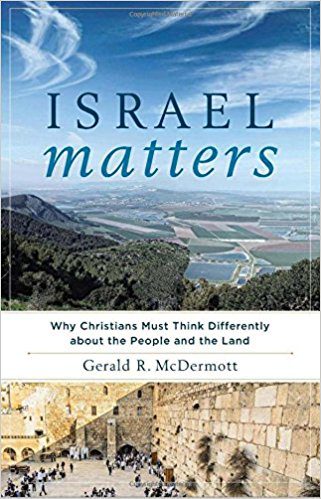 I appreciate Patrick Schreiner’s sensitive and nuanced review of my Israel Matters at the Gospel Coalition on July 14. But while he tries to steer a “third way” between the New Christian Zionism and supersessionism, I fear he runs aground on a new version of supersessionism.
To his credit, Schreiner gets right the basic theses of the book—that the church does not replace Israel and that the people and land of Israel still matter to God. He recognizes that the book rejects all the distinctive features of classic dispensationalism, and that the New Christian Zionism is compatible with covenant theology. I agree with him that Jesus fulfills the Law in a new way.
Yet Schreiner thinks the New Christian Zionism will still be considered dispensationalist. Why? He does not clearly say, but suggests the answer when he asserts that the new covenant was “already inaugurated (both spiritually and materially).” In other words, he seems to think that any eschatology which sees something happening on the ground (materially) before “the final consummation” will be considered dispensationalist.
Strange, because the authors of the New Testament seem to see things happening on the ground before the end of the world–and Schreiner would say the NT is not dispensationalist! Paul says that some day the “fullness of the Gentiles” will come to an end, the “partial hardening that has come upon Israel” will come to an end, and “in this way all Israel will be saved” (Rom 11:25-26). Jesus predicts that one day in the future Jerusalem will welcome him (Lk 13:34-35). Perhaps he meant this would be coincident with “the restoration of the kingdom to Israel” which he implied was still to come, just before he ascended to the Father (Ac 1:6). When the disciples asked him when this would be, he did not dismiss their question as silly or too “material.” He merely said it was not for them to know “the times or seasons that the Father has fixed” (1:7).
Peter was also looking forward to something on the ground before the final consummation. In his second speech in Jerusalem he spoke of the coming “times of restoration of all things which God spoke through the mouth of his holy prophets from ancient time” (Ac 3:21). The word Peter uses for “restoration” is the same word (apokatastasis) used in the Septuagint (the Greek translation of the Old Testament which the early church used as its Bible) for God’s future return of Jews from all over the world to Israel. For Peter, this return and restoration were still to come.
Schreiner’s clear difference with me is on the relation between the church and Israel. He insists that the church is the New or True Israel. He neglects to mention my argument that the word “Israel” is used eighty times in the New Testament, and that in every case it stands for the Jewish people or polity or land of Israel. Schreiner asserts that the church is “called the Israel of God” in Gal. 6:16. But a straightforward reading of that verse’s context suggests that “Israel” there is quite Jewish. Paul contrasts those who do walk by this “rule” of “new creation” (in which “circumcision” at the end of the day is not ultimate) with those who do not walk by this rule. He wishes peace and mercy on those who walk by this rule. Then he adds that he wishes the same peace and mercy for another group that might seem not to walk by this rule: “the Israel of God.” Who are the ones who do not believe that Jesus brings a new creation? Jews who reject Jesus as Messiah. They were the majority of Israel in Paul’s day. Yet he still calls them “of God.” They are still important to God.
That is one reading of this text, without any background knowledge of Paul’s Judaism. But consider this: the blessing at the end (“Peace be upon them and mercy . . . upon . . . Israel”) is probably Paul’s short form (as rabbis often gave short forms of longer biblical texts) of the last benediction of the Amidah, the prayer recited three times a day by Jews then and now: “Grant peace, goodness, and blessing, grace and kindness and compassion, upon us and upon all Israel your people.”
Schreiner concludes his critique with what he thinks is a claim that will undermine my case: that Christ fulfills Israel and Law by corporately embodying both. But I agree with every bit of this statement! And I go further: Christ does not fulfill the Law in the old way but by showing the inner meaning of the Law and Israel. This is what the rabbis said the messiah would do: he would give us the Law of Messiah, or as most English bibles translate it, “the Law of Christ” (1 Cor 9:21).
Hence where we finally disagree is on how Christ fulfills all of the Law during the course of history. In other words, we differ on the eschatological “already but not yet.” Schreiner’s realized eschatology posits that everything has already happened, and there is nothing left on the ground to see except Christ’s appearance at the consummation. I have argued in Israel Matters that the history of redemption is both “already” and “not yet.” Redemption is not only spiritual but also material. This is true for us as individuals but also for the whole world. And not only for our souls but also our bodies. All the saints and all the world will be renewed to become “the new heavens and the new earth.”
The history of the Jews is part of that final renewal. Their land will be at the center. The Lamb will stand “on Mount Zion” in the final stage of history (Rev 14:1), and the new earth will be centered in Jerusalem, which has twelve gates named after “the twelve tribes of the sons of Israel” (Rev 21:2, 12). At some point before that consummation, the nations will “trample” upon “the holy city for forty-two months.” What city is this? It is the one “where their Lord was crucified” (Rev 11:2, 8).
Does Schreiner avoid supersessionism at the end of the day? As long as he insists that the church is the True Israel, and that there is nothing more to expect before the consummation, it seems unlikely. For according to his eschatology, the Jewish people after 33 AD seem no more important than any other: some accept Jesus and some don’t. He understands my position on the land of Israel but seems not to accept it. So for him, it seems, neither the Jewish people nor the land of Israel have theological significance anymore. That is classic supersessionism.
Previous Post

July 4, 2017
20-somethings on freedom
Next Post

July 17, 2017 The Chinese Bonhoeffer
Browse Our Archives
Select a Category Uncategorized
Select a Month March 2023 November 2022 October 2022 August 2022 July 2022 June 2022 May 2022 April 2022 November 2021 October 2021 August 2021 July 2021 June 2021 May 2021 April 2021 March 2021 February 2021 January 2021 December 2020 November 2020 October 2020 September 2020 July 2020 June 2020 April 2020 March 2020 February 2020 January 2020 August 2019 July 2019 May 2019 April 2019 February 2019 January 2019 December 2018 November 2018 October 2018 August 2018 July 2018 June 2018 May 2018 April 2018 March 2018 February 2018 January 2018 December 2017 November 2017 October 2017 September 2017 August 2017 July 2017 June 2017 May 2017 April 2017 March 2017 February 2017 January 2017 December 2016 November 2016 October 2016 September 2016 August 2016 July 2016 June 2016 May 2016 April 2016 March 2016 February 2016 January 2016 December 2015 November 2015 October 2015 September 2015 August 2015 July 2015 June 2015 May 2015 April 2015 March 2015 February 2015 January 2015 December 2014 November 2014 October 2014 September 2014 August 2014 July 2014 June 2014 May 2014 April 2014 March 2014 February 2014 January 2014 December 2013 November 2013 October 2013 September 2013 August 2013 July 2013 June 2013 May 2013 April 2013 March 2013 February 2013 January 2013 December 2012 November 2012 October 2012 September 2012 August 2012 July 2012 June 2012 May 2012 April 2012 March 2012 February 2012 January 2012 December 2011 November 2011 October 2011 September 2011 August 2011 July 2011 June 2011 May 2011 April 2011 March 2011 February 2011 January 2011 December 2010 November 2010 October 2010
Follow Us!
TAKE THE
Religious Wisdom Quiz
Who cried out, "My God, my God, why have you forsaken me?" while dying?
Select your answer to see how you score.
Paul Jesus Stephen David
Related posts from The Northampton Seminar


Interview on what difference Jesus' Jewishness makes and...

News from Israel--the election and Messianic Jews

The third rail in conservative churches
TRENDING AT PATHEOS Evangelical

The REST of Your Life: A Creative Wrestles...
This week I had a conversation with a good friend from church....

How the author of the world's best hymn...
I've been working with John Newton for a while now. This makes...

Long before this Lectio Divina, Psalm 130 - the song - started...

What About the Trees? Another Living Parable
After I finished writing the last article about falling leaves as a...

Why Classical Education Is a Conversation, Not a...
Come and Read: Joy in Classical Education When I was a little...

Cornell University has received a great deal of negative publicity and intense...
view all Evangelical blogs
Ad-Free & Subscriber Log-In Subscription Support
- About Us
- 2026 Calendar
- Videos
- Podcasts
- Library of World Religions
- Faith In Media Tracker
- Advertise With Us
- Write for Us
- Privacy Policy
- Terms of Service
- Do Not Sell My Data
- Contact Us
- Radiant Digital
- Manage Newsletter Subscriptions
- Unsubscribe From Notifications
- Sitemap
Copyright 2008-2026, Patheos. All rights reserved.
Subscription Support Ad-Free & Subscriber Log-In
Follow Patheos